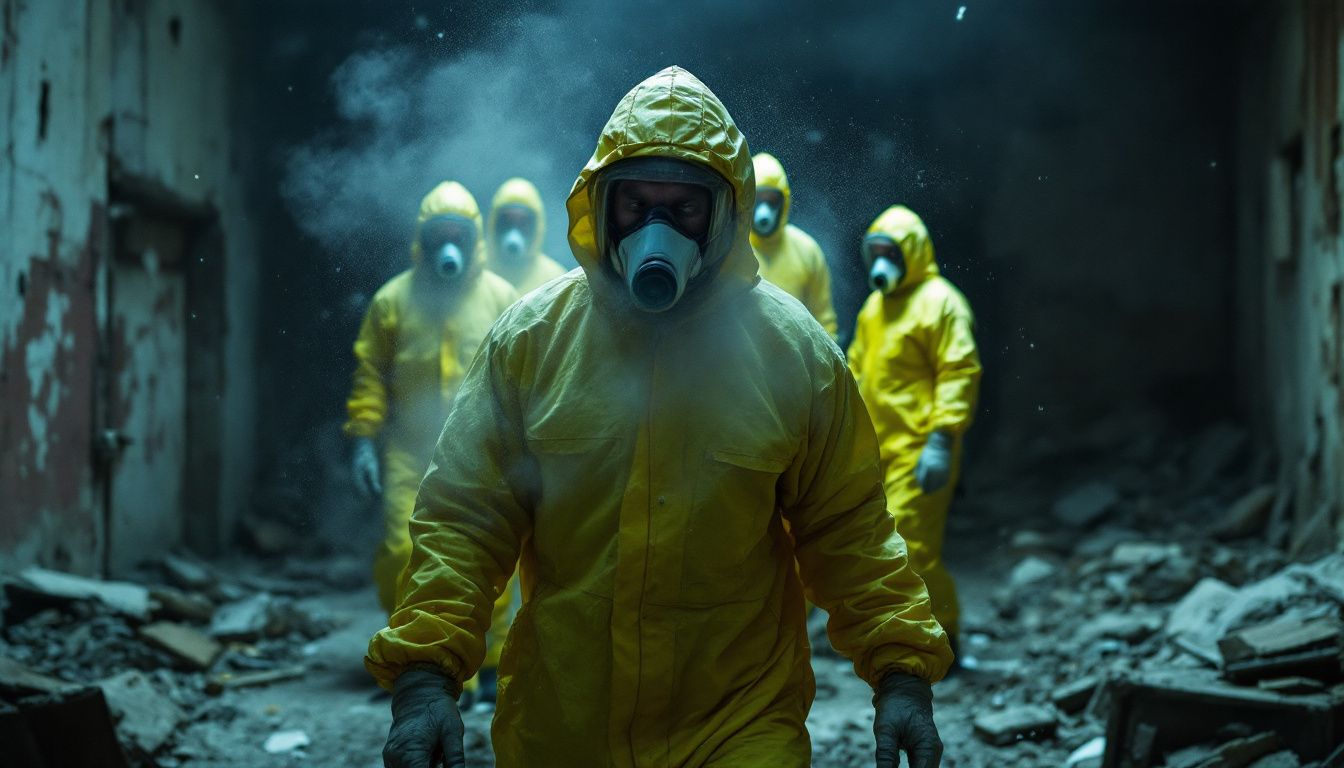
What to Do When Asbestos Is Disturbed: Emergency Asbestos Cleanup Protocols
An unexpected asbestos disturbance is one of the most serious situations any building manager or property owner can face. Whether it’s caused by accidental damage, a fire, flood, or unplanned building work, asbestos cleanup after an emergency demands immediate, structured action — not guesswork. Get it wrong and you risk serious harm to occupants, workers, and anyone nearby.
This post walks you through exactly what to do, from the moment asbestos is suspected to the point where a contaminated area is declared safe. Every step matters.
Why Emergency Asbestos Cleanup Is Different From Planned Removal
Planned asbestos removal happens under controlled conditions. Surveys are completed in advance, licensed contractors are appointed, and the work follows a pre-agreed method statement.
Emergency asbestos cleanup is the opposite — it happens without warning, often in chaotic circumstances, and the risks of exposure are immediate. Asbestos fibres are microscopic. You cannot see them, smell them, or taste them. When asbestos-containing materials (ACMs) are disturbed — whether by impact, fire damage, or water — those fibres become airborne and can be inhaled by anyone in the vicinity.
This is what makes the first few minutes of an asbestos emergency so critical. The Control of Asbestos Regulations sets out clear legal duties for those managing buildings and responding to asbestos incidents. Failure to follow proper protocols is not just a health risk — it carries significant legal consequences.
Immediate Actions: The First Steps After a Suspected Disturbance
Speed matters, but panic doesn’t help. Follow these steps in order as soon as an asbestos disturbance is suspected.
Stop All Work Immediately
The moment anyone suspects asbestos has been disturbed, all activity in the affected area must stop. This is non-negotiable. Continuing to work risks spreading fibres further and increasing the number of people exposed.
Nobody should re-enter the area until it has been assessed by a competent person. This applies to maintenance staff, cleaners, and anyone else who might otherwise think they’re being helpful by tidying up.
Establish an Exclusion Zone
Cordon off the affected area immediately using physical barriers — plastic sheeting, barrier tape, and clearly visible warning signs at every access point. The exclusion zone should extend beyond the immediately visible damage to account for airborne fibre spread.
Switch off any ventilation systems serving the affected area if it’s safe to do so. Fans and air conditioning units can carry asbestos fibres into adjacent spaces, significantly widening the contamination zone.
Evacuate the Area
Move all people away from the exclusion zone calmly and quickly. If anyone has been in the area when the disturbance occurred, note their names and contact details — this information will be needed for health monitoring purposes and for any subsequent investigation.
Do not allow anyone back into the area for any reason until air quality testing confirms it is safe to do so.
Contact a Licensed Asbestos Contractor
Emergency asbestos cleanup must be carried out by a licensed contractor. Under the Control of Asbestos Regulations, licensed work is required for the removal of most ACMs, particularly those that are friable (crumbly or easily damaged) or in poor condition.
This is not work that can be done by general builders or maintenance staff. For professional asbestos removal in an emergency, contact a licensed specialist as soon as the exclusion zone is established. Reputable contractors can respond quickly and will bring the specialist equipment and trained personnel needed to make the area safe.
Notifying the Right People
Asbestos incidents carry legal notification requirements. Knowing who to contact — and when — is part of any responsible emergency response.
Inform Building Management and Senior Staff
The person responsible for the building must be informed immediately. In commercial and institutional settings, this typically means the facilities manager, building manager, or health and safety officer. They hold responsibility for coordinating the response and ensuring legal duties are met.
Keep a written record of when the incident was discovered, who was informed, and what actions were taken. This documentation will be essential if the incident is later investigated by the Health and Safety Executive (HSE).
Notify the HSE Where Required
Certain asbestos incidents must be reported to the HSE under RIDDOR (Reporting of Injuries, Diseases and Dangerous Occurrences Regulations). If workers have been exposed to asbestos as a result of the incident, or if the disturbance constitutes a dangerous occurrence, a formal report is required.
Your licensed contractor and health and safety adviser can confirm whether your specific incident triggers a reporting obligation.
Communicate With Occupants and Stakeholders
Be honest and clear with anyone who may have been affected. Building occupants, staff, and visitors who were near the incident area need to be told what happened, what the risks are, and what steps are being taken. Vague or evasive communication creates panic — clear, factual information does not.
If the building is a school, landlord-managed property, or workplace, there may be additional communication obligations to parents, tenants, or employees. Take advice from your health and safety team on what’s required.
Identifying and Assessing the Contamination
Before any cleanup work begins, the extent of the contamination must be properly assessed. This is not a visual inspection job — it requires specialist knowledge and, in most cases, air monitoring.
Visual Identification of Asbestos-Containing Materials
ACMs vary widely in appearance. Common examples include:
- Sprayed coatings on structural steelwork or concrete ceilings
- Pipe lagging and thermal insulation
- Ceiling tiles and floor tiles (particularly older 9×9 inch vinyl tiles)
- Cement products including corrugated roofing sheets and gutters
- Textured coatings on walls and ceilings (such as Artex)
- Insulating board used as fire protection around doors and in partition walls
If your building was constructed before 2000, any of these materials could contain asbestos. Visual identification alone is never sufficient — laboratory analysis of a sample is the only way to confirm whether a material contains asbestos.
In an emergency, the safest assumption is that any suspect material in a pre-2000 building does contain asbestos until proven otherwise.
Air Quality Monitoring
Air monitoring is a critical part of emergency asbestos cleanup. UKAS-accredited analysts must carry out airborne fibre testing before, during, and after any removal work. This testing measures the concentration of asbestos fibres in the air and determines whether it is safe for people to re-enter the area.
Monitoring equipment is placed at multiple points within and around the exclusion zone. Results are assessed against the control limit set out in the Control of Asbestos Regulations and HSE guidance document HSG264.
If fibre levels remain elevated, cleanup work continues until the area meets the required standard. Do not allow anyone back into a contaminated area based on visual inspection alone — only a clear air test result from a UKAS-accredited laboratory confirms the area is safe.
The Asbestos Cleanup Process: What Licensed Contractors Do
Once the exclusion zone is established and the contamination assessed, the licensed contractor takes charge of the cleanup. Here is what that process involves.
Sealing and Containment
Before removal begins, the contaminated area is fully sealed. This typically involves erecting a negative pressure enclosure — a sealed structure using heavy-duty polythene sheeting — which prevents fibres from escaping into adjacent areas.
Negative pressure units (NPUs) continuously draw air out of the enclosure through HEPA filters, ensuring any airborne fibres are captured rather than released. All ventilation systems serving the area remain switched off throughout this process. Entry to the enclosure is controlled through an airlock system with decontamination facilities.
Personal Protective Equipment
Workers entering the contaminated area must wear appropriate PPE throughout. This includes:
- Disposable coveralls (Type 5 minimum)
- Respiratory protective equipment (RPE) — typically a half-face or full-face respirator with P3 filters, or a powered air-purifying respirator
- Disposable gloves and boot covers
PPE is removed in the decontamination unit before workers exit the enclosure, following a strict sequence to avoid transferring contamination to clean areas.
Removal and Decontamination
Asbestos-containing material is removed carefully using wet methods where possible — dampening the material reduces the release of fibres into the air. Surfaces are then thoroughly cleaned using industrial vacuum cleaners fitted with HEPA filters. Standard vacuum cleaners must never be used, as they will simply release fibres back into the air through their exhaust.
Once the bulk material is removed, all surfaces within the enclosure are wiped down and vacuumed repeatedly until the contractor is satisfied the area is clean. Air monitoring is then carried out to confirm fibre levels have fallen to an acceptable standard before the enclosure is dismantled.
Asbestos Waste Disposal
Asbestos waste is classified as hazardous waste and must be disposed of at a licensed facility. All removed material and contaminated PPE must be double-bagged in heavy-duty polythene sacks, sealed, and clearly labelled with asbestos hazard warnings.
Waste is transported in sealed, labelled containers by a licensed waste carrier and accompanied by the appropriate hazardous waste consignment notes. Keep copies of all waste transfer documentation — this is a legal requirement and forms part of your audit trail should the incident ever be investigated.
Pre-Emergency Preparedness: Reducing the Risk Before an Incident Happens
The best way to manage an asbestos emergency is to be prepared for one before it happens. Buildings constructed before 2000 are required by law to have an asbestos management plan in place if they are non-domestic premises. Even for residential landlords, knowing what’s in your building is essential.
Commission a Management Survey
A management survey identifies the location, type, and condition of all ACMs within a building. This information forms the basis of your asbestos register and management plan — the documents that tell you exactly what you’re dealing with if an emergency occurs.
Without a survey, you have no baseline. You don’t know what materials are present, where they are, or what condition they’re in. That makes emergency response significantly slower and more dangerous.
Keep Your Asbestos Register Up to Date
An asbestos register is only useful if it’s current. Every time building work is carried out, every time ACMs are disturbed or removed, and every time a re-inspection is conducted, the register must be updated.
A stale register can be worse than no register at all — it creates false confidence and can send emergency responders in the wrong direction.
Train Your Staff
Anyone who manages or works in a building containing ACMs must receive appropriate asbestos awareness training. This doesn’t mean training them to remove asbestos — it means training them to recognise potential ACMs, understand the risks, and know what to do if they suspect a disturbance.
HSE guidance is clear that awareness training is a legal requirement for those who may encounter ACMs in the course of their work.
Have an Emergency Plan Ready
Your asbestos management plan should include a clear emergency response procedure. Who is the first point of contact? Who authorises the exclusion zone? Which licensed contractor do you call?
Having these answers written down before an incident occurs means your team can act quickly and correctly under pressure, rather than making critical decisions in a panic.
After the Cleanup: Returning the Area to Use
Once the licensed contractor has completed the removal and decontamination work, a four-stage clearance procedure is typically followed before the area is handed back.
- Visual inspection — an independent analyst inspects the enclosure for any remaining debris or visible contamination
- Air monitoring inside the enclosure — air samples are taken and analysed to confirm fibre levels are below the clearance indicator
- Enclosure dismantling — once the internal air test is passed, the enclosure is carefully dismantled
- Final air monitoring — a final round of air sampling confirms the wider area is safe for reoccupation
This clearance process must be carried out by an independent UKAS-accredited analyst — not the contractor who carried out the removal. This independence is a legal requirement and provides an unbiased assessment of whether the area is genuinely safe.
Once clearance is confirmed in writing, the area can be returned to use. Update your asbestos register to reflect the removal, and ensure your management plan is revised accordingly.
Asbestos Cleanup Across the UK: Location Matters
Emergency asbestos incidents can happen anywhere, and response times matter. Whether you’re managing a commercial property in the capital and need an asbestos survey London team on site quickly, dealing with an incident in the North West and require an asbestos survey Manchester specialist, or facing an emergency in the Midlands where an asbestos survey Birmingham professional can assess the situation fast — having access to a nationwide network of qualified surveyors and licensed contractors is critical.
Local knowledge also matters. Surveyors familiar with the building stock in your area will know which construction types and periods are most likely to contain specific ACMs, helping to speed up assessment and response.
Common Mistakes That Make Asbestos Emergencies Worse
Even well-intentioned responses can cause serious harm if the wrong decisions are made in the first few minutes. Avoid these common errors:
- Sweeping or vacuuming debris — ordinary cleaning equipment spreads fibres rather than containing them
- Leaving ventilation running — HVAC systems distribute fibres throughout the building
- Assuming it’s safe because it looks clean — asbestos fibres are invisible to the naked eye
- Using unqualified contractors — unlicensed removal is illegal for most ACMs and creates additional liability
- Failing to document the incident — poor record-keeping creates serious problems if the HSE investigates
- Re-entering the area before clearance testing — even after visual cleanup, fibre levels may remain dangerously elevated
Each of these mistakes can turn a manageable incident into a major enforcement action or, worse, a long-term health consequence for those exposed.
Frequently Asked Questions
What counts as an asbestos emergency?
Any unplanned disturbance of ACMs counts as an asbestos emergency. This includes accidental damage during maintenance work, structural damage caused by fire or flood, vandalism, or any situation where ACMs have been broken, drilled, sanded, or otherwise disturbed without prior assessment. If there is any doubt about whether a material contains asbestos, treat it as an emergency until confirmed otherwise.
Can I carry out asbestos cleanup myself?
No. Emergency asbestos cleanup involving most ACMs — particularly those that are friable or in poor condition — must be carried out by a contractor licensed by the HSE. Attempting to clean up asbestos without the correct training, equipment, and licence is illegal and extremely dangerous. Even for lower-risk materials that fall outside the licensed work threshold, specialist training and appropriate RPE are still required.
How long does emergency asbestos cleanup take?
The duration depends on the size of the affected area, the type and quantity of ACMs involved, and the results of air monitoring at each stage. A small, contained incident might be resolved within a day or two. Larger or more complex incidents — particularly those involving friable materials or extensive contamination — can take several days. Your licensed contractor will be able to give you a realistic timeframe once they have assessed the situation.
Do I need to report an asbestos disturbance to the HSE?
It depends on the circumstances. Under RIDDOR, certain asbestos-related incidents must be reported to the HSE — particularly where workers have been exposed, or where the incident constitutes a dangerous occurrence. Your health and safety adviser and licensed contractor can confirm whether your incident triggers a formal reporting obligation. When in doubt, seek advice promptly rather than assuming no report is needed.
What should I do if I think I’ve been exposed to asbestos?
If you believe you were present when asbestos was disturbed, make sure your details are recorded by the person coordinating the emergency response. Inform your GP and explain the circumstances of the potential exposure. A single short-term exposure does not guarantee illness, but it should be documented for health monitoring purposes. The HSE and NHS both provide guidance on the long-term health monitoring available to those with a history of asbestos exposure.
Get Expert Help From Supernova Asbestos Surveys
Supernova Asbestos Surveys has completed over 50,000 surveys across the UK, working with property managers, facilities teams, landlords, and contractors to keep buildings safe and legally compliant. Whether you need an urgent survey to assess a suspected disturbance, advice on your asbestos management plan, or support arranging licensed removal, our team is ready to help.
Don’t wait until an emergency forces your hand. Call us today on 020 4586 0680 or visit asbestos-surveys.org.uk to find out how we can help you prepare for — and respond to — any asbestos situation.