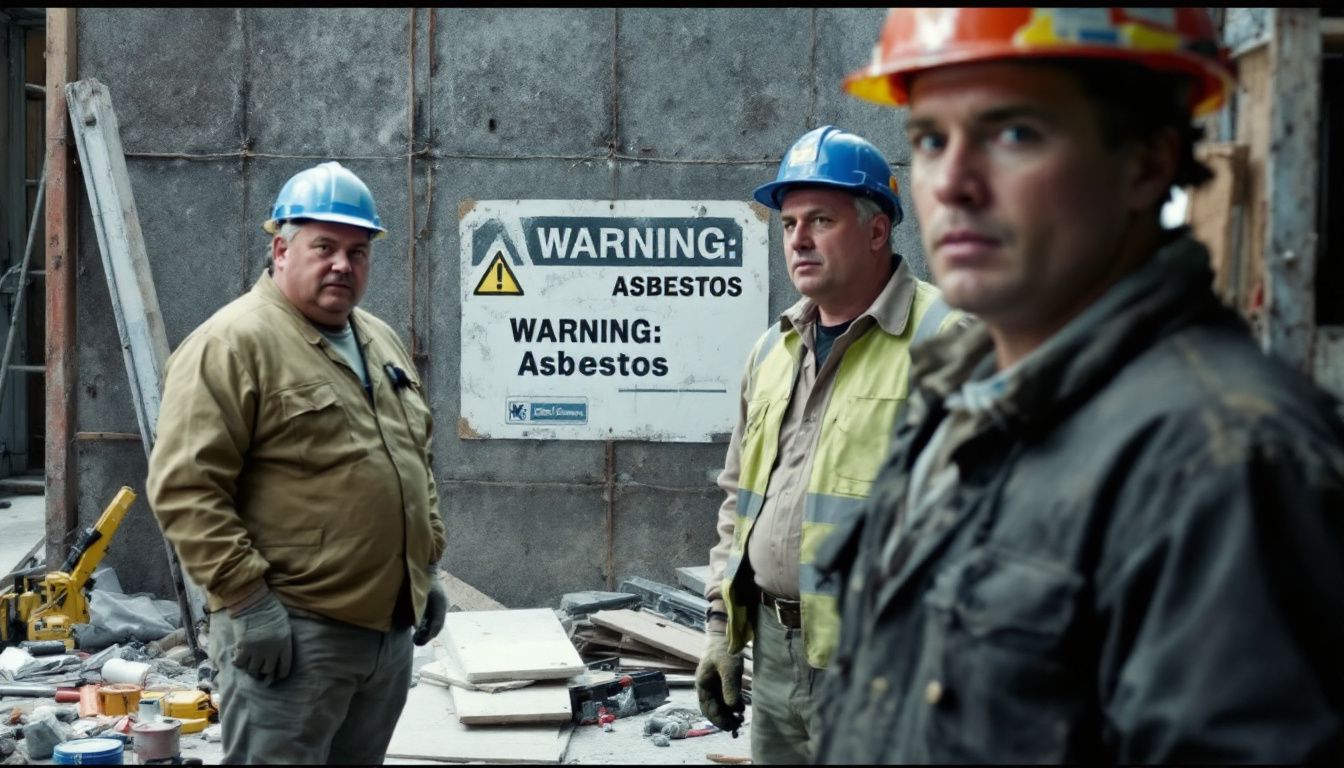
What to Do After Inhaling Dust That Could Contain Asbestos
Breathing in dust is something most of us barely think about — until you realise the material you’ve just disturbed might contain asbestos. Knowing what to do after inhaling dust in a potentially contaminated environment could be the most important thing you do today. The steps you take in the minutes and hours that follow matter enormously, both for your immediate safety and your long-term health.
Whether you’re a property manager, a tradesperson, or a homeowner who’s just drilled into an unexpected material, this post walks you through exactly what to do — in the right order — if you suspect you’ve inhaled asbestos-containing dust.
Why Asbestos Dust Is Different From Ordinary Dust
Not all dust is equal. Ordinary household dust is unpleasant but largely harmless. Asbestos dust is in a different category entirely — when asbestos-containing materials (ACMs) are disturbed, they release microscopic fibres that can be inhaled deep into the lungs.
Once lodged, those fibres don’t leave. Over time, they can cause serious and life-limiting diseases including mesothelioma, asbestosis, and lung cancer. These diseases can take decades to develop, which is why exposure often goes unrecognised until it’s too late.
Buildings constructed or refurbished before 2000 carry the highest risk. Asbestos was used in everything from ceiling tiles and floor coverings to pipe lagging, roof sheets, and textured coatings like Artex. If your building falls into this category and you’ve recently disturbed materials without a prior survey, take this seriously.
Immediate Steps: What to Do After Inhaling Dust
If you believe you’ve inhaled dust from a material that may contain asbestos, act immediately and calmly. Panic causes rapid breathing, which increases the volume of air — and potential fibres — you’re drawing in.
1. Stop Work and Leave the Area
Put down your tools and walk away from the area without disturbing anything further. Don’t sweep, brush, or attempt to clean up the dust — every additional movement risks releasing more fibres into the air.
Alert anyone else in the vicinity and move everyone to a clean, well-ventilated space away from the affected area. Fresh air won’t reverse any exposure, but it stops the situation from getting worse.
2. Don’t Shake or Brush Your Clothing
Your instinct might be to brush dust off your clothes. Don’t. Shaking or brushing contaminated clothing releases fibres back into the air where they can be inhaled again — by you or by someone else nearby.
If your clothing is visibly dusty, remove it carefully. Roll garments inward from the outside, folding the contaminated surfaces in on themselves. Place everything into a sealed plastic bag and label it clearly as potential asbestos waste. Put on clean clothing before doing anything else.
3. Wash Your Hands and Face Thoroughly
Use running water and soap to wash your hands, face, and any exposed skin. Avoid touching your face before washing. Do not use a dry cloth to wipe your face — this can grind fibres into the skin or cause you to inhale them.
If you wear contact lenses, remove them carefully and dispose of them. Rinse your eyes gently with clean water if they feel irritated.
4. Seek Medical Advice
Contact your GP or call NHS 111 to report the potential exposure. Be honest and specific: describe what material you disturbed, how long you were in the area, and how much dust you believe you inhaled.
A single exposure does not automatically mean you will develop an asbestos-related disease. However, it’s essential that the exposure is recorded in your medical history. If you develop symptoms in the future — breathlessness, a persistent cough, chest pain — that record becomes critical for diagnosis and any legal claim.
If you’re an employee, report the incident to your employer immediately. They have a legal duty to record it under RIDDOR (Reporting of Injuries, Diseases and Dangerous Occurrences Regulations).
Seal Off and Isolate the Affected Area
Once everyone is safely out, the affected space must be isolated to prevent further contamination. Close all doors and windows leading to the area. If possible, switch off any ventilation or air conditioning systems that could spread fibres to other parts of the building.
Place clear warning signs at every entry point — DANGER – DO NOT ENTER – SUSPECTED ASBESTOS — at eye level, visible from a distance. Use barrier tape to cordon off the zone. No one should re-enter until a licensed professional has assessed and cleared the area.
Do not attempt to clean up the dust yourself using a domestic vacuum cleaner. Standard vacuums are not designed for asbestos and will simply blow fibres back into the air through the exhaust. Only specialist HEPA-filtered equipment used by trained contractors is appropriate.
Identify Whether Asbestos Is Actually Present
Suspicion alone isn’t enough to confirm asbestos exposure — you need to know what you’re actually dealing with. The only way to confirm whether a material contains asbestos is through laboratory analysis of a sample.
If the building has never been surveyed, now is the time to arrange one. A management survey is the standard starting point for most occupied buildings — it identifies the location, condition, and risk level of any ACMs present, giving you a proper asbestos register to work from.
If a previous survey has already been carried out, check the asbestos register to see whether the disturbed material was identified. If it was listed as a known ACM, you have confirmation of exposure. If it wasn’t previously surveyed, you’ll need further investigation.
For buildings where a survey has already been completed, a re-inspection survey can assess whether previously identified materials have deteriorated or been disturbed, and update the risk assessment accordingly.
If you need a quick answer on a specific material before calling in a surveyor, a postal testing kit allows you to collect a sample safely and have it analysed by an accredited laboratory.
Record the Incident Properly
Documentation is not a bureaucratic afterthought — it’s a legal requirement and a vital health record. As soon as you are in a safe location, write down everything you can remember:
- The date and time the incident occurred
- The exact location within the building
- What work was being carried out and by whom
- A description of the material that was disturbed
- The approximate duration of exposure
- Names of everyone who was present or potentially exposed
- What immediate steps were taken
Take photographs of the affected area if it is safe to do so from a distance. These images may be needed for insurance purposes, HSE reporting, or future legal proceedings.
If you are an employer or duty holder, you must notify the HSE of any incident involving uncontrolled asbestos exposure under RIDDOR. Failure to report is itself a criminal offence under health and safety legislation.
Arrange for Professional Asbestos Removal
Once the area is isolated and the presence of asbestos is confirmed or strongly suspected, licensed removal is the only appropriate next step. Under the Control of Asbestos Regulations, certain categories of asbestos work — particularly involving higher-risk materials such as sprayed coatings, insulation board, and pipe lagging — must only be carried out by HSE-licensed contractors.
Even for lower-risk materials, it is strongly advisable to use trained professionals rather than attempt any remediation yourself. Licensed contractors will carry out air monitoring before, during, and after the work to confirm that fibre levels are safe before the area is reoccupied.
Supernova’s asbestos removal service covers the full process — from initial assessment through to licensed removal, waste disposal, and a clearance certificate confirming the area is safe to reoccupy. Our teams operate across the UK and can respond promptly to emergency situations.
Understanding Your Legal Duties as a Duty Holder
If you manage or own a non-domestic property — or a residential building with communal areas — you have a legal duty under the Control of Asbestos Regulations to manage asbestos risk. This means knowing where ACMs are located, assessing their condition, and having a written management plan in place.
An uncontrolled exposure incident is often a sign that this duty has not been fully met. The HSE’s guidance document HSG264 sets out clearly how surveys should be conducted and how the results should be used to manage ongoing risk.
If an incident has occurred on your premises, the HSE may investigate. Having a current asbestos register, a management plan, and records of any surveys or re-inspections will demonstrate that you have taken your responsibilities seriously. The absence of these records makes your position significantly more difficult.
It’s also worth noting that asbestos management sits alongside other building safety obligations. If your property requires a fire risk assessment, this should be kept current alongside your asbestos management plan — both are legal requirements for most non-domestic premises.
What Happens to Your Health After Asbestos Exposure?
It’s natural to feel anxious after a potential exposure incident. Understanding the medical reality — rather than catastrophising — is the most helpful approach.
A single, brief exposure to asbestos dust carries a much lower risk than prolonged or repeated exposure over years. The diseases associated with asbestos — mesothelioma, asbestosis, pleural plaques — are predominantly associated with occupational exposure over extended periods, as experienced by workers in industries such as shipbuilding, construction, and insulation fitting in the mid-twentieth century.
That said, no exposure to asbestos fibres is considered entirely without risk. The appropriate response is to record the exposure, seek medical advice, and ensure the source is properly dealt with so it cannot happen again. Your GP can refer you to an occupational health specialist if you have concerns.
Keep all documentation of the incident, as this will support any future medical assessment or compensation claim if you develop symptoms years down the line.
Preventing It From Happening Again
The best way to manage asbestos risk is to know exactly where it is before any work begins. A thorough survey of your property gives you the information you need to protect workers, contractors, and occupants from unexpected exposure.
Before any refurbishment, demolition, or intrusive maintenance work on a pre-2000 building, a demolition survey is legally required for buildings earmarked for demolition or major structural work. This involves intrusive inspection of all areas to be disturbed — it’s the only way to confirm whether materials in walls, floors, or ceiling voids contain asbestos before a contractor puts a drill through them.
Proactive management is always cheaper, faster, and safer than dealing with the aftermath of an uncontrolled exposure incident. Don’t wait for an emergency to find out what’s in your building.
Supernova operates nationwide. Whether you need an asbestos survey London, an asbestos survey Manchester, or an asbestos survey Birmingham, our BOHS P402-qualified surveyors are available across the country, often with same-week appointments.
Speak to Supernova Asbestos Surveys
If you’ve experienced a potential asbestos exposure incident, or you want to ensure your building is properly surveyed before any work begins, Supernova Asbestos Surveys is here to help. With over 50,000 surveys completed nationwide, we have the expertise and resource to respond quickly and professionally.
Call us on 020 4586 0680 or visit asbestos-surveys.org.uk to book a survey, request an emergency assessment, or speak to one of our qualified surveyors today.
Frequently Asked Questions
What should I do immediately after inhaling dust that might contain asbestos?
Leave the area immediately without disturbing anything further. Move to fresh air, remove and bag any contaminated clothing without shaking it, wash your hands and face thoroughly with soap and running water, and seek medical advice from your GP or NHS 111. Report the incident to your employer or, if you are the duty holder, to the HSE under RIDDOR. The area should be sealed off and no one should re-enter until a licensed professional has assessed it.
Does a single exposure to asbestos dust mean I will get an asbestos-related disease?
Not necessarily. A single, brief exposure carries a significantly lower risk than prolonged occupational exposure over many years. However, no level of asbestos fibre inhalation is considered entirely without risk, which is why it’s essential to record the exposure in your medical history and seek advice from your GP. They can refer you to an occupational health specialist if needed.
How do I know if the dust I inhaled actually contained asbestos?
You cannot tell by sight, smell, or feel whether a dust contains asbestos fibres. The only way to confirm whether a material contains asbestos is through laboratory analysis. If the building has an existing asbestos register, check whether the disturbed material was previously identified. If not, arrange a management survey or use a postal testing kit to have a sample analysed by an accredited laboratory.
Who is legally responsible for managing asbestos in a building?
Under the Control of Asbestos Regulations, the duty to manage asbestos falls on the person who has responsibility for maintenance and repair of non-domestic premises — typically the building owner, employer, or managing agent. This duty holder must ensure an up-to-date asbestos register is in place, that the condition of any ACMs is monitored, and that anyone who might disturb them is informed of their location.
Can I clean up asbestos dust myself with a vacuum cleaner?
No. Standard domestic vacuum cleaners are not suitable for asbestos contamination — they will blow microscopic fibres back into the air through the exhaust, making the situation significantly worse. Only specialist HEPA-filtered equipment operated by trained and licensed contractors should be used to clean up asbestos dust. Seal off the area and wait for professional assistance.