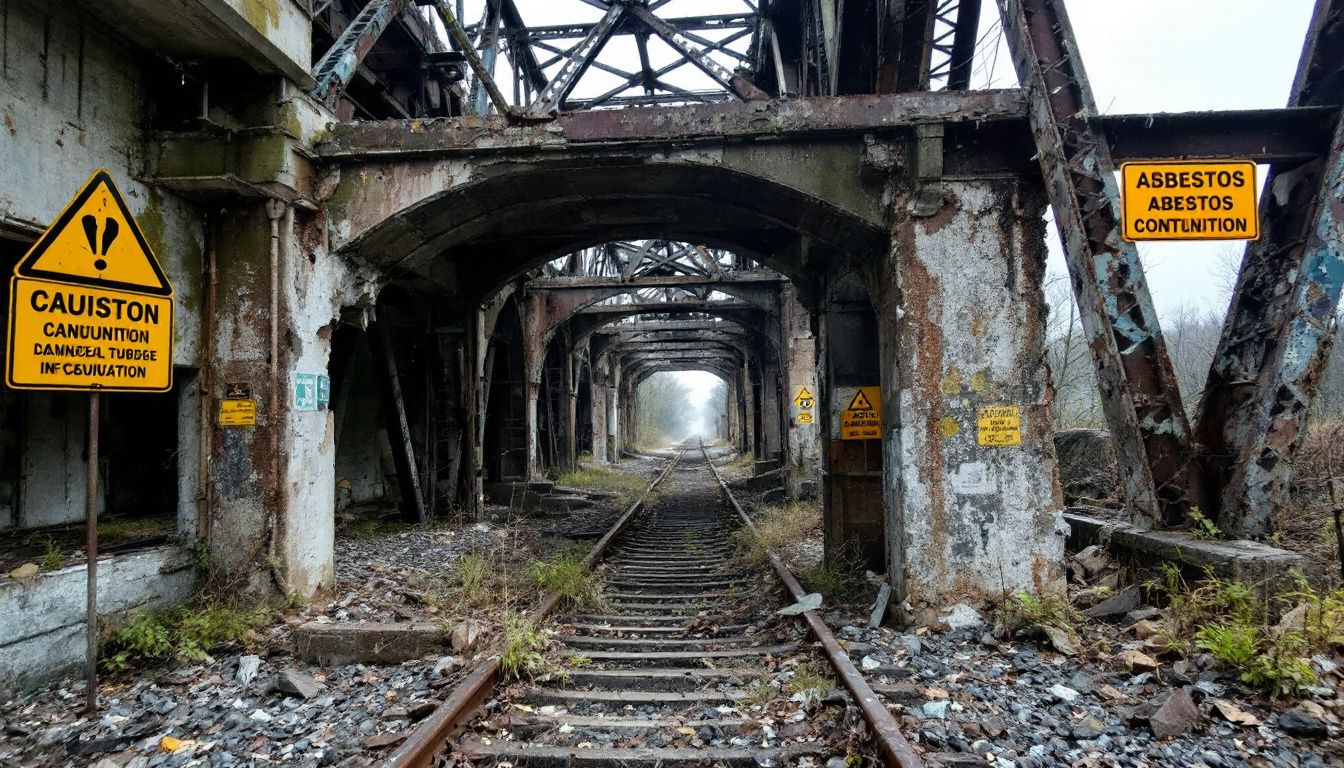
Railroad Asbestos: Managing the Hidden Danger in Railway Bridges and Tunnels
Railway bridges and tunnels across the UK contain one of the most persistent occupational hazards in the built environment: railroad asbestos. Buried within walls, wrapped around structural steelwork, and sprayed across ceilings, asbestos-containing materials (ACMs) were embedded into rail infrastructure for well over a century — and much of it is still there today.
If you manage, maintain, or work on railway structures, understanding where asbestos was used, what risks it poses, and what the law requires of you is not optional. It is a legal and moral obligation.
Why Asbestos Was So Widely Used in Railway Infrastructure
Asbestos was considered a wonder material for much of the 19th and 20th centuries. It was cheap, abundant, and extraordinarily effective at resisting heat, fire, and mechanical stress — exactly the properties engineers needed when constructing railway structures designed to last decades.
Steam locomotives generated enormous heat. Tunnels needed fire-resistant linings. Bridges required materials that could withstand vibration, temperature extremes, and persistent moisture. Asbestos ticked every box, which is why its use in rail infrastructure was so widespread and so varied.
Insulation in Steam Locomotive Systems
Steam engines relied heavily on asbestos insulation to manage the intense heat produced by boilers, fireboxes, and pipework. Crocidolite (blue asbestos) was particularly favoured for this purpose due to its exceptional heat resistance. It was applied to pipes, wrapped around boilers, and used throughout engine rooms and locomotive sheds.
British railways continued using crocidolite until 1967, when the evidence of its severe health risks became impossible to ignore. Even after its removal from new projects, the material remained in place across thousands of structures already built.
Fireproofing in Bridges and Tunnels
Fire was a constant concern in enclosed railway environments. Asbestos was sprayed onto structural steelwork, incorporated into ceiling and wall panels, and mixed into coatings applied to metal beams throughout bridges and tunnels. This fireproofing was considered state-of-the-art at the time.
Regulations later required the removal of all asbestos-based fireproofing materials. However, removal was not always complete, and some materials were encapsulated rather than extracted — meaning they may still be present beneath newer surface layers.
Structural Reinforcement Materials
Asbestos was also mixed into concrete and other composite materials to improve tensile strength and longevity. Amosite (brown asbestos) was commonly used in structural packers — small but critical components placed beneath concrete slabs to maintain stability and load distribution.
Some products marketed as alternatives to asbestos-based packers were later found to contain chrysotile (white asbestos), meaning even structures built with supposedly safer materials may still harbour ACMs. Any railway structure built before the year 2000 should be treated as potentially containing asbestos until a professional survey confirms otherwise.
The Health Risks of Railroad Asbestos Exposure
Asbestos is not dangerous when it remains undisturbed and intact. The hazard arises when fibres are released into the air — during drilling, cutting, demolition, or even routine maintenance work that disturbs aged or deteriorating materials.
Once inhaled, asbestos fibres become permanently lodged in lung tissue. The body cannot break them down or expel them. Over time, they cause progressive and irreversible damage.
Diseases Linked to Asbestos Exposure
The diseases caused by asbestos exposure are serious, often fatal, and typically take decades to manifest — which is why many rail workers exposed in the 1960s and 1970s are only now receiving diagnoses.
- Mesothelioma: A rare and aggressive cancer affecting the lining of the lungs, abdomen, or heart. Almost exclusively caused by asbestos exposure and currently incurable.
- Asbestos-related lung cancer: Significantly elevated risk among those with a history of asbestos exposure, particularly smokers.
- Asbestosis: Progressive scarring of lung tissue that causes increasing breathlessness and reduced lung function.
- Pleural thickening: Thickening of the membrane surrounding the lungs, restricting breathing capacity.
Rail maintenance workers, tunnel engineers, and demolition crews are among those at highest risk. The greatest danger comes not from intact asbestos, but from fibres released during maintenance, repair, or demolition work on ageing structures.
Environmental Contamination
Railroad asbestos does not only threaten workers. When ACMs deteriorate or are disturbed without proper controls, fibres can contaminate surrounding soil and waterways.
Track ballast — the crushed stone beneath railway lines — can become contaminated with asbestos fragments shed from deteriorating materials in nearby structures. Wind and water can carry these fibres beyond the immediate work area, creating risks for communities living or working near railway lines. Rail operators are required to test and manage ballast contamination as part of their broader environmental and safety obligations.
Identifying Asbestos-Containing Materials in Railway Structures
Asbestos cannot be identified by sight alone. Many ACMs look identical to non-hazardous alternatives. Textured coatings, insulation boards, cement panels, and pipe lagging all require professional sampling and laboratory analysis to confirm whether asbestos is present.
What a Professional Asbestos Survey Involves
A professional asbestos survey conducted by a qualified surveyor is the only reliable way to identify and map ACMs in a railway structure. Surveyors will carry out a thorough visual inspection of all accessible areas, take material samples from suspected ACMs, and submit those samples to an accredited laboratory for analysis.
The results are compiled into a detailed asbestos register — a document that records the location, condition, and risk level of every identified ACM. This register forms the foundation of any ongoing asbestos management plan and must be made available to anyone who may disturb those materials during future work.
Types of Survey for Rail Infrastructure
Two main types of survey apply to railway structures, and choosing the right one depends on what work is planned.
- Management survey: A management survey identifies ACMs that could be disturbed during normal occupancy or routine maintenance. It is suitable for the ongoing management of structures that are not being significantly altered.
- Demolition survey: A demolition survey is required before any major repair, refurbishment, or demolition work begins. It is more intrusive than a management survey and is designed to locate all ACMs that could be disturbed during the planned works.
Both survey types must be carried out in accordance with HSG264, the HSE’s guidance document on asbestos surveying. Cutting corners on survey quality in a railway environment is not just a regulatory failure — it is a direct risk to worker safety.
Legal and Regulatory Framework for Railroad Asbestos Management
Managing asbestos in railway infrastructure is governed by a clear and enforceable legal framework in the UK. Ignorance of these requirements is not a defence — and the consequences of non-compliance can include enforcement action, prosecution, and significant financial penalties.
The Control of Asbestos Regulations
The Control of Asbestos Regulations are the primary piece of legislation governing asbestos management in the UK. They place a duty on anyone responsible for non-domestic premises — including railway structures — to manage asbestos within those premises.
Key requirements include:
- Identifying the presence and condition of ACMs through professional surveys
- Assessing the risk posed by those materials
- Producing and maintaining a written asbestos management plan
- Ensuring that anyone who may work on or disturb ACMs is informed of their presence
- Notifying the HSE before undertaking licensable asbestos work
- Ensuring that all licensable work is carried out by an HSE-licensed contractor
Not all asbestos work requires a licence, but work involving sprayed asbestos, asbestos insulation, and asbestos insulating board — all common in railway infrastructure — is licensable and must be carried out by an HSE-licensed contractor.
The Role of the HSE and ORR
The Health and Safety Executive (HSE) is the primary regulatory body for asbestos management in the UK. They oversee licensable asbestos work, issue licences to qualified contractors, and have the authority to inspect, investigate, and prosecute where regulations are breached.
The Office of Rail and Road (ORR) has specific oversight responsibilities for health and safety on the UK rail network. For lower-risk asbestos work on railway property, the ORR may take the lead regulatory role. For higher-risk, licensable work, the HSE’s requirements take precedence.
Safety officers must maintain detailed records of all asbestos-related work, including survey results, risk assessments, removal activities, and air monitoring data. These records must be retained and made available to regulators on request.
Notification Requirements
Before any licensable asbestos work begins on a railway structure, the duty holder must notify the relevant enforcing authority — typically the HSE. This notification must be submitted in advance of the work starting and must include details of the work to be carried out, the location, the contractor involved, and the methods to be used.
Failure to notify is a criminal offence under the Control of Asbestos Regulations.
Best Practice for Asbestos Removal and Disposal in Rail Projects
When asbestos must be removed from a railway bridge or tunnel, the process must be managed with precision. Poor removal practice is arguably more dangerous than leaving ACMs in place, because it releases fibres that would otherwise remain contained.
Establishing a Controlled Work Area
Before any removal work begins, the affected area must be sealed off from the rest of the structure and from public access. This typically involves erecting a negative pressure enclosure — a contained workspace maintained at lower air pressure than the surrounding environment, preventing fibres from escaping.
Workers inside the enclosure must wear appropriate personal protective equipment (PPE), including disposable coveralls, respiratory protective equipment (RPE) rated to the appropriate standard, and gloves. All PPE must be disposed of as asbestos waste after use.
Removal, Bagging, and Disposal
Asbestos waste must be double-bagged in clearly labelled, heavy-duty polythene bags and transported to a licensed waste disposal facility. The bags must be sealed immediately and should not be overfilled or allowed to tear.
All asbestos waste is classified as hazardous waste under UK law. Its transport and disposal are subject to strict controls, including the use of licensed waste carriers and the completion of consignment notes for every load. These records must be retained.
Our asbestos removal services cover railway and industrial structures across the UK, carried out by licensed professionals who understand the specific challenges of working in live or partially operational rail environments.
Air Monitoring During and After Removal
Air monitoring is a critical safeguard during asbestos removal. Background air samples are taken before work begins to establish a baseline. Samples are then taken throughout the removal process to confirm that fibre levels within the enclosure remain within safe limits.
Once removal is complete, a four-stage clearance procedure is carried out before the enclosure is dismantled. This includes a thorough visual inspection, air testing by an independent analyst, and a final certificate of reoccupation. No area should be released for normal use until all four stages have been satisfactorily completed.
Managing Railroad Asbestos During Ongoing Maintenance
Not every situation calls for immediate removal. Where ACMs are in good condition and are not likely to be disturbed, a managed-in-place approach may be appropriate — provided it is properly documented and regularly reviewed.
This approach requires a robust asbestos management plan that specifies how ACMs will be monitored, what work restrictions apply in areas where they are present, and what actions will be taken if their condition deteriorates. The plan must be reviewed at regular intervals and updated whenever new information becomes available.
Informing Contractors and Maintenance Teams
Every contractor, maintenance worker, or engineer who may encounter ACMs during their work must be informed of their presence before work begins. This is not a courtesy — it is a legal requirement under the Control of Asbestos Regulations.
The asbestos register must be readily accessible and shared with relevant parties as a matter of course. Anyone planning intrusive work on a structure with known ACMs must review the register and plan their work accordingly.
Training Requirements for Rail Workers
Workers who may encounter asbestos during their duties — even if they are not carrying out asbestos work directly — must receive appropriate asbestos awareness training. This training should cover what asbestos is, where it is likely to be found, what the health risks are, and what to do if suspected ACMs are encountered.
For workers carrying out non-licensable asbestos work, additional training to the appropriate standard is required. Licensed asbestos contractors must ensure their operatives hold the relevant qualifications and that those qualifications are kept current.
Railroad Asbestos Surveys Across the UK
Railway infrastructure exists in every corner of the UK, and so does the need for professional asbestos management. Whether you are managing a Victorian viaduct in the capital or a post-war tunnel in the north, the legal obligations are the same — and so are the risks.
If your railway structure is located in or around London, our team provides specialist asbestos survey London services covering bridges, tunnels, depots, and associated infrastructure across the city and surrounding areas.
For rail assets in the north-west, our asbestos survey Manchester team offers the same standard of professional survey and management support, with local knowledge of the region’s extensive Victorian and post-war rail network.
In the Midlands, our asbestos survey Birmingham service covers the full range of railway structure types, from listed bridges to operational maintenance depots requiring careful survey planning around live rail operations.
Frequently Asked Questions
What is railroad asbestos and where is it typically found?
Railroad asbestos refers to asbestos-containing materials (ACMs) used throughout railway infrastructure, including bridges, tunnels, locomotive sheds, depots, and station buildings. Common locations include pipe lagging, sprayed coatings on structural steelwork, ceiling and wall panels, insulation boards, and structural packers beneath concrete slabs. Any railway structure built before 2000 should be treated as potentially containing asbestos until a professional survey confirms otherwise.
Is railroad asbestos still a risk today?
Yes. The use of asbestos in construction was not fully banned in the UK until 1999, and vast quantities of ACMs installed throughout the 20th century remain in place across the rail network. Provided these materials are undisturbed and in good condition, they do not pose an immediate risk. However, any maintenance, repair, or demolition work that disturbs them can release dangerous fibres. Regular monitoring and professional surveys are essential to manage this ongoing risk.
Who is legally responsible for managing asbestos in railway structures?
Under the Control of Asbestos Regulations, the duty to manage asbestos falls on whoever is responsible for maintaining or controlling non-domestic premises — including railway infrastructure. This typically means the asset owner or operator, such as Network Rail for the national network, or private operators for heritage lines and industrial rail facilities. The duty holder must identify ACMs, assess their condition, produce a management plan, and ensure relevant workers are informed.
Do I need a licensed contractor to remove asbestos from a railway structure?
In most cases, yes. Work involving sprayed asbestos coatings, asbestos insulation, and asbestos insulating board — all of which are common in railway infrastructure — is classified as licensable work under the Control of Asbestos Regulations. This means it must be carried out by a contractor holding a current HSE licence. Using an unlicensed contractor for licensable work is a criminal offence and puts workers and the public at serious risk.
What type of asbestos survey does a railway structure need?
The type of survey required depends on what work is planned. A management survey is appropriate for ongoing maintenance and routine occupancy, identifying ACMs that could be disturbed during day-to-day activities. A demolition or refurbishment survey is required before any significant repair, alteration, or demolition work begins. Both must be carried out in accordance with HSG264 by a qualified surveyor. If you are unsure which type of survey applies to your situation, contact a professional asbestos surveying company for guidance.
Get Expert Help Today
If you need professional advice on asbestos in your property, our team of qualified surveyors is ready to help. With over 50,000 surveys completed across the UK, Supernova Asbestos Surveys delivers clear, actionable reports you can rely on.
Call us on 020 4586 0680 or visit asbestos-surveys.org.uk for a free, no-obligation quote.