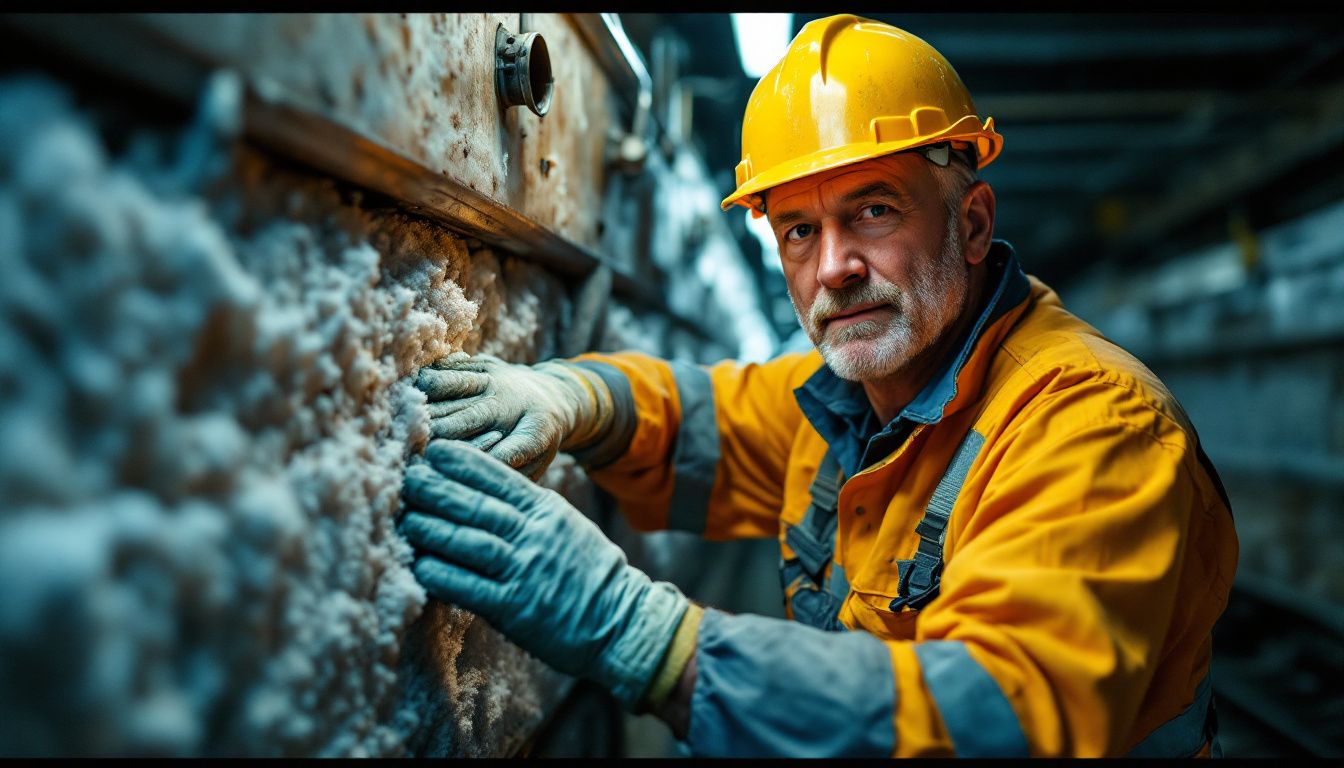
ACMs in Railway: What Every Dutyholder Needs to Know
Asbestos-containing materials (ACMs) in railway infrastructure represent one of the most persistent occupational health challenges in the UK transport sector. From Victorian-era station buildings to rolling stock manufactured right up until the late 1990s, the presence of ACMs in railway environments demands rigorous, ongoing management — not a one-off tick-box exercise.
If you manage, own, or maintain railway property or rolling stock, understanding how ACMs in railway settings are identified, monitored, and controlled is not optional. It is a legal duty under the Control of Asbestos Regulations, enforced jointly by the Health and Safety Executive (HSE) and the Office of Rail and Road (ORR).
Why ACMs in Railway Environments Are a Unique Challenge
Railway infrastructure presents a distinctly complex asbestos management problem. Unlike a single commercial building, a railway network spans thousands of structures — stations, depots, signal boxes, bridges, tunnels, and rolling stock — many of which were built or refurbished during the decades when asbestos use was at its peak.
The range of materials involved is broad. Asbestos was used in railway environments across a wide variety of applications:
- Thermal insulation on pipework and boilers
- Fire-resistant panels within carriages
- Ceiling tiles and floor coverings across station buildings
- Brake linings and gaskets on rolling stock
- The fabric of depot buildings themselves
Each material type carries its own risk profile depending on its condition, location, and the likelihood of disturbance. What makes ACMs in railway settings particularly demanding to manage is the combination of constant footfall, ongoing maintenance activity, and the sheer age of the infrastructure.
A station concourse with damaged ceiling tiles is not an abstract risk — it is a live exposure hazard for workers and the public every single day. Vibration from passing trains, temperature fluctuations in unheated structures, and the physical demands of maintenance activity can all accelerate deterioration in ways that simply do not apply to a standard office building.
Identifying ACMs in Railway Structures and Rolling Stock
The starting point for any compliant asbestos management programme in the rail sector is a thorough, professional survey. No dutyholder can manage what they have not properly identified.
Management Surveys for Operational Areas
For railway buildings and structures that remain in operational use, a management survey is the appropriate first step. This type of survey is designed to locate ACMs in areas likely to be accessed during normal occupation and routine maintenance, assessing the condition of those materials and assigning a risk rating to inform the management plan.
In a railway context, management surveys typically cover station buildings, platform structures, staff welfare facilities, signal boxes, and accessible areas of depot buildings. Surveyors will take representative samples of suspect materials and submit them to a UKAS-accredited laboratory for analysis under polarised light microscopy.
Demolition and Refurbishment Surveys Before Intrusive Work
Before any refurbishment, upgrade, or demolition work takes place — whether on a station, a depot, or a carriage — a full demolition survey is required. This is a more intrusive process that involves accessing concealed areas, breaking into voids, and sampling materials that would not be disturbed under normal use.
This matters enormously in the rail sector, where infrastructure upgrades and rolling stock refurbishments are routine. A depot team carrying out what appears to be straightforward maintenance on a concrete floor may unknowingly disturb amosite asbestos incorporated into the substrate. A pre-works survey removes that uncertainty before anyone is put at risk.
Maintaining an Accurate Asbestos Register
Every identified ACM must be recorded in a detailed asbestos register. This document should include the precise location of each material, its type, condition, surface treatment, accessibility, and assigned risk score.
In a railway environment, this register needs to be granular — a vague reference to “asbestos present in the depot” is not sufficient when maintenance teams need to work safely in specific areas. The register must be kept up to date and made available to anyone who may disturb the materials, including contractors. This is a legal requirement under the duty to manage provisions of the Control of Asbestos Regulations.
Regular Monitoring and Re-Inspection of ACMs
Identifying ACMs is only the beginning. Materials that are in good condition and are not being disturbed can often be safely managed in place — but that management requires consistent, documented monitoring.
A re-inspection survey should be carried out at regular intervals — typically annually, or more frequently where materials are in a deteriorating condition or located in high-traffic areas. Re-inspections assess whether the condition of known ACMs has changed, whether any new damage has occurred, and whether the risk rating assigned during the original survey remains appropriate.
In railway environments, re-inspection programmes need to account for the dynamic nature of the infrastructure. Vibration from passing trains, temperature fluctuations in unheated structures, and the physical demands of maintenance activity can all accelerate the deterioration of ACMs. A material that was in good condition twelve months ago may not be today.
Air Monitoring During Maintenance Work
Where maintenance or repair work is taking place near known ACMs, air monitoring should be carried out before, during, and after the work. This involves collecting air samples and analysing them for asbestos fibre concentrations.
Results inform decisions about whether additional controls are needed and confirm that an area is safe to reoccupy after work is completed. Rail workers and their supervisors should be trained to recognise the signs of ACM deterioration — crumbling insulation, damaged ceiling tiles, worn floor coverings — and to report these promptly so that risk assessments can be updated and remedial action taken.
Safe Removal and Disposal of ACMs in Railway Settings
When ACMs are in a condition where management in place is no longer appropriate — or where planned works will disturb them — asbestos removal is required. In the rail sector, this is rarely straightforward given the complexity of the structures and the need to minimise disruption to operational services.
Only licensed asbestos removal contractors may carry out work with the most hazardous asbestos materials, including sprayed coatings, lagging, and insulating board. Attempting to cut costs by using unlicensed contractors is not only illegal — it is genuinely dangerous.
For asbestos removal in railway environments, the practical steps include:
- Establishing a clearly demarcated controlled area with appropriate warning signage
- Using wet suppression methods to minimise fibre release during removal
- Employing H-class vacuum equipment rated for asbestos fibre capture
- Double-bagging all waste in UN-approved packaging with correct hazard labelling
- Decontaminating tools, equipment, and personnel before leaving the work area
- Conducting a thorough visual inspection and air clearance test before reopening the area
- Disposing of waste only at a licensed waste disposal facility via a registered waste carrier
Detailed records of all removal work — including waste transfer notes — must be retained. These form part of the evidence trail that demonstrates compliance with the Control of Asbestos Regulations.
Packaging and Transport of Asbestos Waste
The transport of asbestos waste is governed by the Agreement concerning the International Carriage of Dangerous Goods by Road (ADR). Current ADR requirements specify that asbestos waste must be double-bagged — with an inner bag designed to prevent dust escape and an outer bag providing additional containment — and transported separately from other hazardous materials.
Transport documentation must confirm that the carriage is being conducted under the applicable special provision. Rail companies and their contractors must ensure that waste transport arrangements are reviewed and updated to reflect current ADR requirements. Non-compliance carries significant legal and reputational risk.
The Regulatory Framework Governing ACMs in Railway
The regulatory landscape for ACMs in railway environments involves two principal enforcement bodies working in a coordinated way. Dutyholders must understand both bodies’ remit to remain fully compliant.
The Role of the HSE
The Health and Safety Executive is the primary enforcer of the Control of Asbestos Regulations across Great Britain, including in the rail sector. The HSE’s HSG264 guidance document — Asbestos: The Survey Guide — sets out the standards that surveyors and dutyholders must follow when identifying and managing ACMs.
Every survey carried out by a reputable surveying company will be conducted in accordance with HSG264. The HSE also publishes its Asbestos Essentials guidance, which provides task-specific advice for workers who may encounter asbestos during maintenance activities — particularly relevant for railway maintenance teams undertaking minor work near ACMs without requiring a full licensed removal operation.
The Role of the ORR
The Office of Rail and Road holds specific responsibilities in relation to asbestos in the railway sector, including oversight of market regulations concerning asbestos-containing products and the issuing of permits under REACH regulations. The ORR works alongside the HSE through a formal memorandum of understanding that defines each body’s responsibilities, ensuring that asbestos management in the rail sector is subject to coherent, joined-up enforcement.
Dutyholders in the rail sector should be aware that both bodies have the authority to inspect, investigate, and prosecute failures in asbestos management. The consequences of non-compliance — improvement notices, prohibition notices, prosecution, and unlimited fines — are severe.
Fire Safety and Asbestos: An Overlooked Intersection
Asbestos management and fire safety are not entirely separate concerns in railway buildings. Many of the materials used to line walls, ceilings, and structural elements in older railway buildings served a dual purpose — fire resistance and thermal insulation — and may contain asbestos.
Any fire risk assessment carried out in a railway building should be informed by the asbestos register. This ensures that proposed fire safety improvements — such as installing new fire stops, upgrading cladding, or modifying ceiling voids — do not inadvertently disturb ACMs without prior assessment and appropriate controls in place.
Treating fire safety and asbestos management as separate workstreams is a common mistake in older railway buildings. The two disciplines must be coordinated from the outset of any building works or safety review. Failing to do so does not just create regulatory risk — it creates genuine danger for the people working in and around those structures.
Practical Steps for Railway Dutyholders
If you are responsible for managing asbestos in a railway environment, the following actions form the foundation of a compliant and effective management programme:
- Commission a professional survey of all structures and rolling stock for which you hold dutyholder responsibility. Do not rely on historical records alone — survey data degrades in accuracy over time.
- Establish and maintain an asbestos register that is accessible to all relevant personnel and contractors before they begin any work.
- Implement a re-inspection programme with documented intervals appropriate to the condition and location of each ACM.
- Train all relevant staff — including maintenance workers, contractors, and supervisors — in asbestos awareness, so they can recognise potential ACMs and understand the correct reporting procedures.
- Ensure that any planned works involving disturbance of ACMs are preceded by a refurbishment and demolition survey and carried out by appropriately licensed contractors.
- Keep records of all surveys, re-inspections, risk assessments, removal works, and waste disposal — these are not optional extras, they are legal requirements.
- Coordinate asbestos management with fire safety reviews to ensure that no works are carried out in isolation from the other.
- Review your management plan regularly — at least annually, and whenever there is a significant change to the structure, use, or condition of a building or vehicle.
The duty to manage asbestos does not diminish over time. If anything, as railway infrastructure ages further, the demands on dutyholders become greater, not lesser.
Supernova Asbestos Surveys: Specialist Support Across the UK
Supernova Asbestos Surveys has completed over 50,000 surveys across the UK, working with dutyholders in complex, high-demand environments including transport infrastructure. Our surveyors are fully trained in accordance with HSG264, and all sample analysis is conducted by UKAS-accredited laboratories.
We provide management surveys, demolition and refurbishment surveys, re-inspection programmes, and asbestos removal support — everything a railway dutyholder needs to maintain a compliant, robust asbestos management programme.
We operate nationally, with dedicated teams covering asbestos survey London, asbestos survey Manchester, and asbestos survey Birmingham, as well as across the rest of England, Scotland, and Wales.
To discuss your requirements or book a survey, call us on 020 4586 0680 or visit asbestos-surveys.org.uk.
Frequently Asked Questions
What types of ACMs are most commonly found in railway environments?
Railway environments contain a wide range of ACMs, including thermal insulation on pipework and boilers, fire-resistant panels in rolling stock, ceiling tiles and floor coverings in station buildings, brake linings and gaskets, and asbestos incorporated into the fabric of depot buildings. Each material carries a different risk profile depending on its type, condition, and likelihood of disturbance.
Who is responsible for managing ACMs in railway settings?
The dutyholder — the person or organisation that has responsibility for maintaining or repairing non-domestic premises — holds the legal duty to manage asbestos under the Control of Asbestos Regulations. In railway settings, this may include network operators, train operating companies, depot managers, and property owners, depending on the specific structure or asset in question.
How often should ACMs in railway buildings be re-inspected?
As a general rule, re-inspections should be carried out at least annually. However, where materials are in a deteriorating condition, located in high-traffic areas, or subject to vibration and temperature fluctuation — all common factors in railway environments — more frequent re-inspections may be required. The re-inspection interval should be determined by the risk rating assigned to each ACM.
Do both the HSE and the ORR have enforcement powers over asbestos in the rail sector?
Yes. Both the Health and Safety Executive and the Office of Rail and Road have enforcement responsibilities in relation to asbestos in the railway sector. They operate under a formal memorandum of understanding that defines their respective roles. Both bodies can inspect, investigate, and take enforcement action — including prosecution — against dutyholders who fail to comply with their obligations.
When is licensed asbestos removal required in a railway context?
Licensed removal is required when work involves the most hazardous asbestos materials, including sprayed coatings, lagging, and asbestos insulating board (AIB). In railway settings, these materials are commonly found in older depot buildings, plant rooms, and rolling stock. Only contractors holding a licence issued by the HSE may carry out this work. Attempting to use unlicensed contractors for licensable work is a criminal offence.