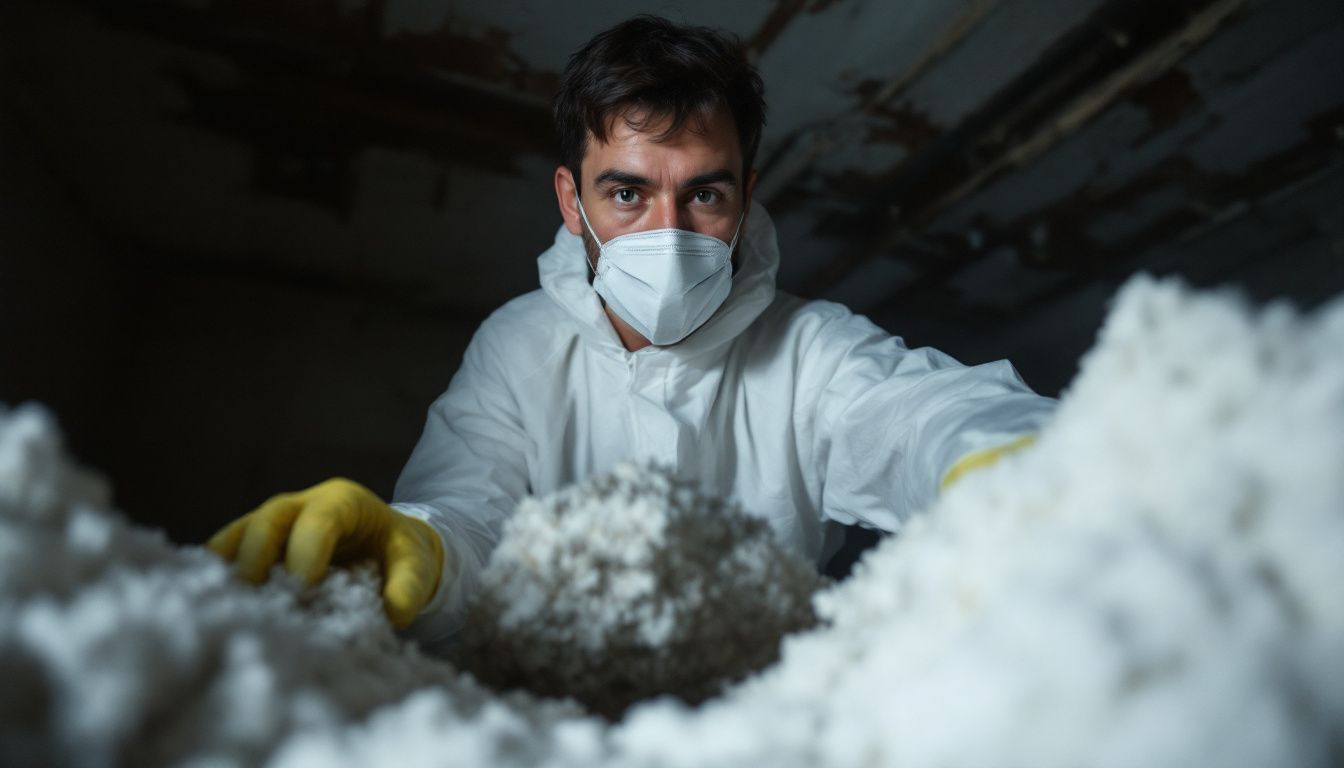
What Asbestos Abatement Really Means — And Why Getting It Wrong Is Deadly
Asbestos abatement is not a DIY job, a shortcut, or a cost-cutting exercise. When it goes wrong, people die — and in the UK, asbestos-related diseases claim thousands of lives every year. The fibres are invisible, the diseases take decades to appear, and by the time symptoms show, the damage is already done.
Whether you manage a commercial property, own an older residential building, or are planning renovation work, understanding what proper asbestos abatement involves — and what happens when it is handled incorrectly — could protect lives, including your own.
What Is Asbestos Abatement?
Asbestos abatement refers to the process of identifying, managing, and removing asbestos-containing materials (ACMs) from a building or site. It covers everything from initial surveying and sampling through to encapsulation, controlled removal, and safe disposal.
In the UK, asbestos abatement is governed by the Control of Asbestos Regulations, which set out strict duties for duty holders, licensed contractors, and anyone who may disturb asbestos-containing materials during maintenance or refurbishment work. The Health and Safety Executive (HSE) publishes detailed guidance — most notably HSG264 — which outlines surveying standards and best practice for managing asbestos safely.
Proper asbestos abatement is not just about physical removal. It includes:
- Conducting the correct type of asbestos survey before any work begins
- Identifying all ACMs and assessing their condition and risk
- Developing a management or remediation plan
- Using licensed contractors where required by law
- Containing the work area to prevent fibre release
- Disposing of asbestos waste legally at approved sites
- Maintaining records and health surveillance for workers
Skipping or cutting corners on any of these steps creates serious risks — for workers, building occupants, and the surrounding community.
The Health Risks of Improper Asbestos Abatement
When asbestos abatement is carried out without proper controls, microscopic fibres are released into the air. These fibres are so small they are invisible to the naked eye, yet they are one of the most dangerous occupational hazards ever identified.
What Happens When You Inhale Asbestos Fibres
Once asbestos fibres are inhaled, they lodge deep in the lung tissue. The body cannot break them down or expel them. Over time, these fibres cause chronic inflammation and scarring, leading to serious and often fatal diseases.
The latency period — the gap between exposure and the appearance of symptoms — is typically between 15 and 60 years. This means someone exposed during a poorly managed abatement project today may not become ill until well into the 2040s or beyond. By then, tracing the cause is difficult, but the damage is irreversible.
Mesothelioma
Mesothelioma is a rare and aggressive cancer of the lining of the lungs, abdomen, or heart. It is almost exclusively caused by asbestos exposure and carries a very poor prognosis. There is no cure, and most patients survive less than two years after diagnosis.
The UK has one of the highest rates of mesothelioma in the world — a direct legacy of widespread industrial asbestos use in the twentieth century. Cases continue to rise in occupational groups exposed decades ago, including construction workers, shipyard workers, and — notably — teachers and school staff who worked in buildings containing asbestos insulation boards and ceiling tiles.
Asbestosis and Chronic Lung Disease
Asbestosis is a chronic lung condition caused by prolonged inhalation of asbestos fibres. The lungs become scarred and stiff, making breathing increasingly difficult. There is no treatment to reverse the scarring, and the condition progressively worsens over time.
Symptoms include persistent dry cough, shortness of breath, chest tightness, and fatigue. Many people do not notice symptoms until the disease is already advanced. Asbestosis also significantly increases the risk of developing lung cancer.
Lung Cancer
Asbestos exposure is a well-established cause of lung cancer, particularly in people who also smoke. The combination of asbestos and tobacco significantly multiplies the risk. Workers involved in poorly controlled asbestos abatement — or those in the vicinity of such work — face elevated risk even from relatively short-term exposure.
Who Is at Risk During Poorly Managed Abatement Work
The risks of improper asbestos abatement do not stop at the person doing the work. Fibres released during uncontrolled removal can travel far beyond the immediate work area, affecting people who may have no idea the work is even taking place.
Workers Without Proper Training or Equipment
Anyone handling asbestos-containing materials without the correct protective equipment (PPE) and training is at serious risk. The Control of Asbestos Regulations require employers to provide appropriate respiratory protective equipment (RPE) — including properly fitted respirators with HEPA filtration — along with disposable coveralls, gloves, and boots.
Inadequate PPE is one of the most common failures in improper asbestos abatement. A poorly fitted respirator, a missing seal, or reusing contaminated coveralls can all result in significant fibre inhalation.
Training is equally critical. Workers must be able to identify ACMs, understand the risks, set up containment correctly, and follow decontamination procedures. The HSE requires that workers involved in licensed asbestos work receive appropriate training, with regular refresher courses. Employers who bypass this requirement are not just breaking the law — they are putting their workforce at serious risk of fatal disease.
Building Occupants and Nearby Residents
Asbestos fibres released during poorly controlled abatement work do not stay in the work area. They can migrate through ventilation systems, settle on surfaces, contaminate clothing, and spread to adjacent rooms or neighbouring properties.
Children, elderly people, and those with existing respiratory conditions are particularly vulnerable. Schools present a well-documented risk — many older school buildings contain asbestos materials, and the rising rate of mesothelioma among former teachers reflects the long-term consequences of exposure in these environments.
Residents living near commercial or industrial sites where asbestos abatement is being carried out can also be affected if adequate containment and air monitoring are not in place. Proper site management, including negative pressure enclosures and air clearance testing, is essential to protect the public.
Environmental Consequences of Poor Asbestos Disposal
Asbestos abatement does not end when the material is removed from a building. Improper disposal creates lasting environmental contamination that affects soil, water, and wildlife — and the consequences can persist for generations.
Soil and Water Contamination
Asbestos waste that is fly-tipped or disposed of incorrectly can break down over time, releasing fibres into the soil. These fibres can leach into groundwater and enter watercourses, creating risks for both ecosystems and human health.
All asbestos waste in the UK must be double-bagged in heavy-duty polythene, clearly labelled, and transported to a licensed waste facility. Failure to follow these procedures is a criminal offence under environmental legislation — not just a breach of health and safety law.
Impact on Wildlife and Ecosystems
Asbestos contamination in the environment affects wildlife in ways that are difficult to reverse. Birds may incorporate loose fibres into nesting material; small mammals may disturb contaminated soil; aquatic life in polluted watercourses is exposed to fibres that accumulate through the food chain.
Remediation of contaminated land is expensive, technically complex, and time-consuming. Preventing contamination through correct asbestos abatement procedures in the first place is always preferable — and far cheaper — than attempting to clean up after illegal or negligent disposal.
Legal and Financial Consequences of Getting Asbestos Abatement Wrong
The legal framework around asbestos abatement in the UK is robust, and the penalties for non-compliance are significant. The HSE takes enforcement seriously, and both individuals and organisations face severe consequences for breaching the Control of Asbestos Regulations.
Fines and Prosecution
Individuals found to have breached asbestos regulations can face fines and, in serious cases, custodial sentences. Companies face potentially unlimited fines, and prosecutions can follow even where no one has yet been made ill — the risk created by non-compliance is itself sufficient grounds for enforcement action.
Carrying out licensable asbestos work without a licence from the HSE is a particularly serious offence. Licensed contractors are required to notify the relevant enforcing authority before work begins, maintain health surveillance for workers, and keep records for decades after the work is completed.
Civil Liability and Compensation Claims
Beyond regulatory penalties, businesses and property owners face civil liability for harm caused by improper asbestos abatement. If a worker, building occupant, or member of the public develops an asbestos-related disease that can be linked to negligent abatement work, compensation claims can be substantial.
Health records for workers involved in asbestos work must be retained for 40 years after the last exposure. This long retention period reflects the latency of asbestos-related diseases and ensures that liability cannot simply be buried with the passage of time.
Insurance Implications
Property owners and developers who fail to manage asbestos correctly face significant increases in insurance premiums — or may find that claims related to asbestos exposure are excluded from their cover entirely. Insurers assess asbestos risk carefully, and a history of non-compliance or improper abatement work will affect the cost and availability of cover for years to come.
What Proper Asbestos Abatement Looks Like
Understanding what correct asbestos abatement involves helps property owners and managers recognise when a contractor is cutting corners. The following steps are standard practice for any compliant abatement project.
- Survey and identification: A qualified surveyor carries out an asbestos survey to locate and characterise all ACMs before any work begins. For refurbishment or demolition projects, a demolition survey is required under HSG264 to ensure no ACMs are missed before structural work commences.
- Risk assessment and planning: The type, condition, and location of ACMs determines the appropriate abatement method — removal, encapsulation, or management in place. A written plan of work is produced before any licensed work starts.
- Notification: For licensed work, the contractor must notify the relevant enforcing authority at least 14 days before work commences.
- Containment: The work area is sealed off using polythene sheeting and negative pressure units to prevent fibre release beyond the enclosure.
- Controlled removal: Workers in full PPE carry out the removal using wet methods and correct tools to minimise fibre release. The material is double-bagged immediately.
- Air monitoring: Personal and background air monitoring is conducted throughout the work. A four-stage clearance procedure — including a visual inspection and air clearance test — must be passed before the enclosure is dismantled.
- Waste disposal: All asbestos waste is transported to a licensed waste facility by a registered waste carrier.
Cutting any of these steps creates risk. If a contractor cannot explain their process clearly or is unwilling to provide documentation, that is a serious warning sign. For projects involving significant structural work, professional asbestos removal by a licensed contractor is not optional — it is a legal requirement.
Warning Signs That Asbestos Abatement Is Being Handled Incorrectly
Not every property owner or manager is an asbestos expert, but there are clear red flags that suggest abatement work is not being carried out to the required standard. Knowing what to look for could prevent a serious health incident.
- No asbestos survey carried out before work begins
- Workers not wearing appropriate RPE or disposable coveralls
- No visible containment or enclosure around the work area
- Asbestos waste not being bagged and labelled correctly
- Contractor unable to produce their HSE licence for licensable work
- No notification submitted to the enforcing authority before licensed work starts
- No air clearance certificate issued after removal is complete
- Asbestos debris left on site or disposed of in general waste skips
If you observe any of these issues during abatement work on a property you are responsible for, stop the work immediately and seek advice from a qualified asbestos professional. The HSE can also be contacted to report unsafe asbestos work.
Why the Right Survey Must Come Before Any Abatement Work
Asbestos abatement cannot be planned without accurate survey data. Attempting removal without knowing the full extent and condition of ACMs in a building is one of the most common causes of uncontrolled fibre release — and one of the most avoidable.
Different survey types serve different purposes. A management survey is appropriate for ongoing management of ACMs in an occupied building. A refurbishment and demolition survey is required before any intrusive work takes place, as it involves accessing areas that a management survey does not.
Attempting to proceed with abatement based on incomplete or outdated survey information puts everyone at risk. If ACMs are disturbed unexpectedly because they were not identified in advance, the consequences can be severe — for health, for compliance, and for liability.
Asbestos Abatement Across the UK: Regional Considerations
Asbestos-containing materials are found throughout the UK’s built environment, particularly in buildings constructed before the year 2000. The concentration of older commercial, industrial, and residential stock in major cities means that asbestos abatement is a day-to-day reality for property managers and contractors across the country.
In the capital, the sheer volume of older buildings — from Victorian terraces to post-war office blocks — means demand for professional asbestos abatement is consistently high. If you need an asbestos survey London clients can access fully accredited surveyors with deep knowledge of the city’s building stock.
The north of England has a particularly significant industrial legacy, with many former manufacturing and warehouse facilities requiring careful asbestos management. For an asbestos survey Manchester property owners can rely on experienced local surveyors familiar with the region’s commercial and industrial heritage.
In the Midlands, a mix of post-war housing, retail, and light industrial premises means asbestos abatement requirements are equally varied. An asbestos survey Birmingham carried out by a qualified professional provides the foundation for any safe and legally compliant abatement project in the region.
Regardless of location, the legal requirements and health risks are identical. The standard of asbestos abatement must be the same whether the site is a listed building in central London or a warehouse on the outskirts of Birmingham.
Frequently Asked Questions
What is the difference between asbestos abatement and asbestos removal?
Asbestos abatement is the broader term, covering all methods of managing asbestos-containing materials — including removal, encapsulation, and ongoing management in place. Asbestos removal specifically refers to the physical extraction of ACMs from a building. Not all abatement projects involve removal; in some cases, encapsulating or sealing ACMs in good condition is the safest and most appropriate approach.
Do I need a licensed contractor for all asbestos abatement work?
Not all asbestos work requires a licensed contractor, but the most hazardous types do. Work involving asbestos insulation, asbestos insulation board, and asbestos coating must be carried out by an HSE-licensed contractor. Some lower-risk work falls into the category of notifiable non-licensed work (NNLW), which still requires notification and health surveillance even without a full licence. Your asbestos surveyor can advise which category applies to your specific situation.
How long does asbestos abatement take?
The duration depends on the scale of the project, the type and volume of ACMs involved, and the complexity of the site. A small domestic removal may take a day or two; a large commercial or industrial abatement project can run for weeks. The four-stage clearance procedure — which must be completed before the enclosure is dismantled — adds time but is a non-negotiable part of any compliant project.
What happens if asbestos is found unexpectedly during building work?
Work must stop immediately. The area should be vacated and sealed off to prevent further disturbance. A qualified asbestos surveyor should be called to assess the material and advise on the appropriate next steps. Continuing work after discovering suspected ACMs without professional assessment is a serious breach of the Control of Asbestos Regulations and creates significant health and legal risk.
Can I stay in my property during asbestos abatement work?
This depends on the nature and location of the work. For minor, low-risk abatement work in a separate, well-contained area, it may be possible to remain on site. For licensed removal work — particularly in occupied or shared buildings — it is usually necessary for occupants to vacate the affected areas. Your contractor should provide clear guidance on this as part of the pre-work planning process, and any decision should be based on a proper risk assessment.
Get Professional Asbestos Abatement Support from Supernova
Supernova Asbestos Surveys has completed over 50,000 surveys across the UK, providing property owners, managers, and contractors with the accurate, actionable information they need to manage asbestos safely and legally. Our accredited surveyors operate nationwide, with specialist knowledge of the full range of building types — from residential properties to large-scale commercial and industrial sites.
Whether you need a management survey, a refurbishment and demolition survey, or guidance on planning a compliant asbestos abatement project, our team is ready to help. We work quickly, report clearly, and give you the information you need to make the right decisions.
Call us on 020 4586 0680 or visit asbestos-surveys.org.uk to book a survey or speak to one of our specialists today.