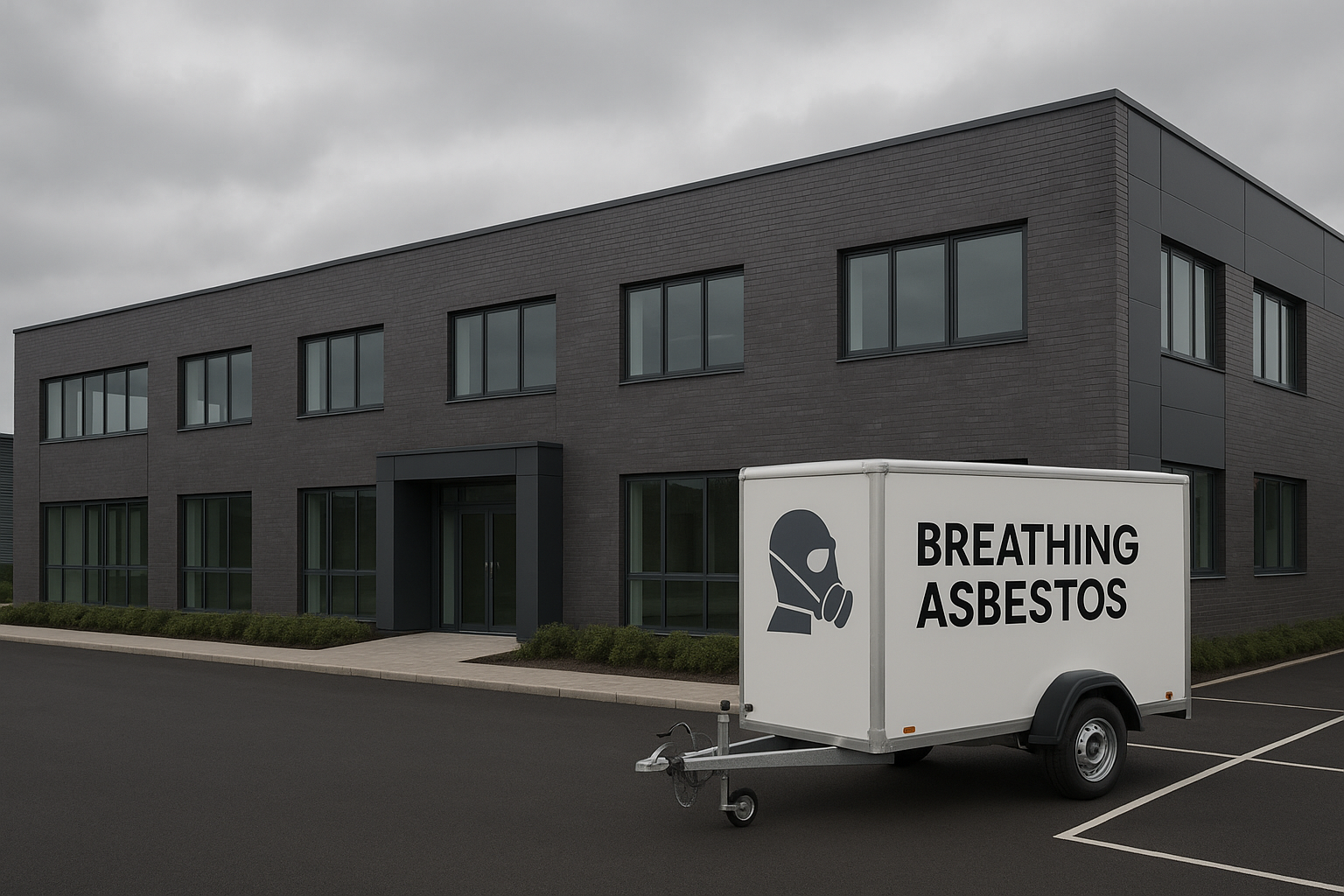
What a Breathing Trailer for Asbestos Work Actually Does — and Why It Matters
When a job involves high-risk asbestos removal, a breathing trailer for asbestos work can be the difference between a controlled, compliant project and a genuinely dangerous one. Yet property managers and dutyholders are routinely handed a list of equipment that will be on site without any real explanation of what it does or why it has been specified.
That knowledge gap creates risk. If you understand what a breathing trailer for asbestos work does, when it is needed, and how it fits into the wider control plan, you are in a far stronger position to appoint the right contractor — and to identify poor practice before it becomes a serious problem.
What Is a Breathing Trailer for Asbestos Work?
A breathing trailer for asbestos work is a mobile unit that supplies clean, breathable compressed air to operatives using airline respiratory equipment. It is typically deployed on larger or more hazardous licensed removal projects where disposable masks or standard reusable respirators do not offer sufficient protection for the task at hand.
You may also hear it referred to as a supplied air trailer, airline breathing unit, or breathing air trailer. The principle is consistent: rather than each worker relying on a self-contained cylinder alone, operatives connect to a central system that delivers a continuous air supply while they work inside the enclosure.
This setup is particularly relevant where the asbestos-containing material is highly friable, the enclosure is large, or the work is expected to run for extended periods. Pipe lagging removal, sprayed coatings, and certain insulation board projects are common examples where a breathing trailer for asbestos may form part of the site arrangement.
How It Works on Site
The trailer is positioned in a clean area outside the contaminated enclosure. Airline hoses are run safely through to the work area, and operatives wear suitable breathing apparatus connected to the trailer system. The unit typically includes air compression, filtration, pressure regulation, hose management, and monitoring equipment.
Workers also carry emergency escape sets in case the airline supply is interrupted. This is not optional — it is a fundamental safety requirement when operatives are dependent on a supplied air system inside a contaminated space.
Why Respiratory Protection Is Central to Asbestos Removal
Asbestos fibres are microscopic and can remain airborne for long periods once disturbed. You cannot rely on sight or smell to judge exposure levels, which is why respiratory protection must be selected on the basis of risk assessment, task type, fibre release potential, and the practical demands of the job.
The Control of Asbestos Regulations require exposure to be prevented where reasonably practicable and otherwise reduced to the lowest level achievable. Suitable respiratory protective equipment is one of the core control measures — but it only works when it matches the risk and sits within a properly planned system of work.
For dutyholders, the practical point is straightforward: do not treat masks and breathing systems as a tick-box item. Ask what level of protection is being provided, why it has been selected, and how workers will decontaminate before leaving the enclosure.
- Low-risk work may use lower-level respiratory protection where the risk assessment supports it
- Higher-risk non-licensed work may require more robust face-fit dependent equipment
- Licensed asbestos removal often calls for full-face or supplied-air systems
- Extended duration or highly friable removal may justify a breathing trailer for asbestos operations
When Is a Breathing Trailer for Asbestos Actually Needed?
Not every asbestos job requires one. A breathing trailer for asbestos work is generally used where the risk level, duration, or working conditions make supplied air the sensible or necessary option. The decision should come from the contractor’s risk assessment, plan of work, and understanding of HSE guidance including HSG264.
If a contractor cannot clearly explain why a breathing trailer is or is not being used on a given project, that should prompt serious questions.
Common Situations Where It May Be Required
- Removal of highly friable asbestos-containing materials such as sprayed coatings or thermal insulation
- Large licensed enclosures where workers need to remain inside for extended periods
- Projects with several operatives working simultaneously
- Tasks where tight-fitting RPE is not suitable for certain workers following face-fit testing
- Removal work where the highest level of respiratory protection is specified in the risk assessment
A breathing trailer for asbestos is not there to make the site look well-equipped. It is there because some jobs demand a dependable source of breathable air that can support multiple workers safely and continuously throughout the working day.
When It May Not Be Necessary
Short-duration, lower-risk, non-licensed work may not require supplied air systems. In those cases, suitably selected and face-fit tested respirators may be sufficient, provided the work method, material condition, and expected exposure support that choice.
The material type matters considerably here. Cement sheets in good condition present a very different risk profile from deteriorated lagging or loose insulation. The right answer always depends on the actual risk — not assumptions based on the word asbestos alone.
The Main Types of Breathing Equipment Used for Asbestos Work
A breathing trailer for asbestos removal sits at the higher end of respiratory control, but understanding the full range of equipment helps you assess whether a contractor’s approach is appropriate for the task.
Disposable FFP3 Masks
FFP3 disposable masks are associated with lower-risk asbestos tasks and can be suitable for some non-licensed work. They are single-use items and only function correctly when properly fitted. A poor seal, facial hair, or incorrect use can significantly reduce protection — they are not a catch-all solution and should never be treated as one.
Half-Face Respirators with P3 Filters
These offer reusable protection for certain asbestos tasks where the risk assessment supports their use. Filters must be changed at the correct intervals, and the mask must be cleaned and maintained properly. Face-fit testing is essential — these are tight-fitting respirators and an untested fit provides no reliable assurance of protection.
Full-Face Respirators with P3 Filters
Full-face units provide a higher protection level than half masks and also protect the eyes. They are often used for more demanding asbestos tasks where a tighter control standard is needed. Even so, some licensed work goes beyond what this type of equipment can reasonably support, particularly over long working periods.
Powered Air-Purifying Respirators
Powered systems use a motor to draw air through filters and deliver it to the wearer. They can improve comfort and reduce some of the difficulties associated with prolonged wear of tight-fitting masks. These systems still require careful selection, proper maintenance, and use within the limits of the equipment specification.
Supplied Air Breathing Apparatus
This is where a breathing trailer for asbestos comes into the picture. Supplied air systems provide clean air directly from a central source, allowing workers to operate for longer without the limitations of self-contained cylinders. For high-risk asbestos removal, this is often the most practical and protective arrangement available.
Key Components of a Breathing Trailer for Asbestos Projects
If you are reviewing a contractor’s site setup, it helps to know what a properly equipped unit should include. A breathing trailer for asbestos work is considerably more than a compressor on wheels.
- Air compressor: provides the continuous airflow needed for multiple users simultaneously
- Filtration and purification system: removes contaminants such as oil, moisture, and other impurities from the air supply
- Pressure regulation: keeps delivery pressure stable and within safe operating limits
- Monitoring equipment: allows checks on air quality and overall system performance
- Airline hose reels: manage hose lengths safely and reduce trip hazards on site
- Connection points for operatives: enable several workers to use the system at once
- Emergency escape sets: provide backup protection if the main air supply is interrupted
The trailer must be maintained in line with the manufacturer’s instructions and checked before and during use. Clean breathing air is not negotiable — if air quality is not controlled and monitored throughout the project, the entire system fails its purpose.
Breathing Trailer vs Decontamination Unit: Not the Same Thing
This is one of the most common points of confusion on asbestos projects. A breathing trailer for asbestos work supplies breathable air to operatives inside the enclosure. A decontamination unit provides workers with a safe, controlled route to leave the contaminated area without carrying fibres out with them.
On licensed work, both are typically required — one does not replace the other.
What a Decontamination Unit Does
A decontamination unit, commonly referred to as a DCU, is divided into three distinct stages. Workers move from the dirty end through the shower and into the clean end, removing contamination in a controlled sequence.
- Dirty end: contaminated outer clothing is removed and bagged as asbestos waste
- Shower section: workers wash thoroughly before proceeding
- Clean end: clean clothing is put on and equipment is managed appropriately
If a site is carrying out high-risk removal without proper decontamination arrangements in place, that is a serious concern and a clear indicator of inadequate planning.
Other Control Measures That Work Alongside a Breathing Trailer for Asbestos
A breathing trailer for asbestos does not make a project safe on its own. It has to sit within a full control strategy that prevents fibre spread, protects workers, and keeps the site compliant with regulatory requirements.
Enclosures and Negative Pressure Units
Licensed asbestos removal is typically carried out inside a sealed enclosure. Negative pressure units help ensure air flows into the enclosure rather than out of it, reducing the risk of contaminated air escaping to surrounding areas. These units use high-efficiency filtration and must be properly sized, installed, and monitored throughout the project.
Wet Removal Techniques
Wetting asbestos-containing materials helps reduce fibre release during disturbance. Depending on the material, contractors may use injection systems, sprays, or controlled wet stripping methods. Dry removal of friable asbestos without specific justification and suitable alternative controls is a major warning sign.
Shadow Vacuuming
H-type vacuums designed for hazardous dusts are used to capture fibres as work progresses. This technique is standard good practice during removal work. Domestic or general commercial vacuums are entirely unsuitable for asbestos work and should never be present on a licensed removal site.
Personal Protective Equipment
Operatives also require suitable protective clothing, gloves, footwear, and clear procedures for donning and doffing PPE in the correct order. Poor doffing practice can undo effective respiratory protection very quickly — it is a step that demands as much attention as the equipment itself.
Air Monitoring and Clearance
Air testing plays a vital role before, during, and after licensed removal. Once work is complete, the area must pass the required clearance procedures before it can be handed back for normal use. That handover process should never be rushed — if the enclosure has not been properly cleaned and cleared, occupancy must not resume.
Legal Duties and HSE Expectations
Anyone commissioning asbestos work should understand the legal framework at a practical level. The Control of Asbestos Regulations place duties on both contractors and those who appoint them. Appointing a licensed contractor for notifiable licensed work is a legal requirement, not a preference.
The HSE expects that licensed contractors will notify relevant work in advance, maintain a detailed plan of work, and demonstrate that all control measures — including respiratory protection — have been properly considered and implemented. A breathing trailer for asbestos operations should be documented within that plan where it is required.
Dutyholders who appoint contractors without checking their licence status, plan of work, or control arrangements are exposing themselves to significant legal and financial risk — as well as the obvious risk to worker and occupant health.
What to Check Before Work Starts
- Confirm the contractor holds a current HSE licence for the work being carried out
- Review the plan of work and confirm it specifies the respiratory protection to be used and why
- Check that decontamination and waste disposal arrangements are clearly described
- Ask how air monitoring will be conducted during and after removal
- Confirm the clearance certificate process and who will issue it
If a contractor is reluctant to answer these questions clearly, that is important information in itself.
Breathing Trailers and Asbestos Surveys Across the UK
Understanding the equipment involved in asbestos removal starts with knowing what materials are present in your building. A properly conducted asbestos survey is the foundation of any safe removal project — without it, contractors cannot plan their work accurately and dutyholders cannot discharge their legal obligations.
Whether you are managing a commercial property in the capital and need an asbestos survey London teams can carry out promptly, overseeing industrial premises in the north and need an asbestos survey Manchester specialists can deliver, or responsible for sites in the Midlands requiring an asbestos survey Birmingham professionals can complete to the required standard — the survey must come first.
The survey findings will directly inform the removal contractor’s risk assessment, plan of work, and decisions about equipment including whether a breathing trailer for asbestos is required on your particular project.
Frequently Asked Questions
What is a breathing trailer for asbestos work and who needs one?
A breathing trailer for asbestos work is a mobile unit that provides a continuous supply of clean, filtered, compressed air to workers carrying out high-risk asbestos removal inside a sealed enclosure. It is typically required on licensed removal projects involving highly friable materials, large enclosures, extended working periods, or multiple operatives. The decision on whether one is needed should be made by the contractor based on a thorough risk assessment and in line with HSE guidance.
Is a breathing trailer the same as a decontamination unit?
No. These are two separate pieces of equipment that serve different purposes. A breathing trailer supplies clean air to workers inside the contaminated enclosure. A decontamination unit — or DCU — provides a controlled, staged route for workers to exit the contaminated area safely without spreading asbestos fibres. On licensed removal projects, both are typically required and one cannot substitute for the other.
Do all asbestos removal jobs require a breathing trailer?
No. Shorter-duration, lower-risk, non-licensed asbestos work may be carried out with suitably selected and face-fit tested respirators, provided the risk assessment supports that approach. A breathing trailer for asbestos is generally specified for higher-risk licensed work where continuous, reliable respiratory protection for multiple workers is required over extended periods. The contractor’s risk assessment and plan of work should clearly justify whichever approach is taken.
What happens if a breathing trailer fails during asbestos removal?
Operatives using supplied air systems are required to carry emergency escape sets — self-contained backup breathing equipment that provides protection if the main air supply is interrupted. Work inside the enclosure must stop until the supply is restored and confirmed safe. This is a non-negotiable requirement, not a precaution that can be waived. Any contractor who does not have emergency escape sets available for all operatives using supplied air is operating unsafely.
How does a breathing trailer fit into the wider asbestos removal control plan?
A breathing trailer for asbestos is one element of a multi-layered control strategy. It works alongside sealed enclosures, negative pressure units, wet removal methods, H-type vacuuming, personal protective equipment, decontamination procedures, and air monitoring to create a system that minimises fibre release and protects both workers and the surrounding environment. No single measure makes a project safe in isolation — the entire system must be properly planned, implemented, and monitored throughout.
Talk to Supernova Asbestos Surveys
Supernova Asbestos Surveys has completed over 50,000 surveys nationwide and works with property managers, dutyholders, and contractors across the UK. Whether you need a survey to establish what is present before removal work begins, or you want to understand your obligations as a dutyholder, our team can help you move forward with clarity and confidence.
Call us on 020 4586 0680 or visit asbestos-surveys.org.uk to find out more about our services and to book a survey at your property.