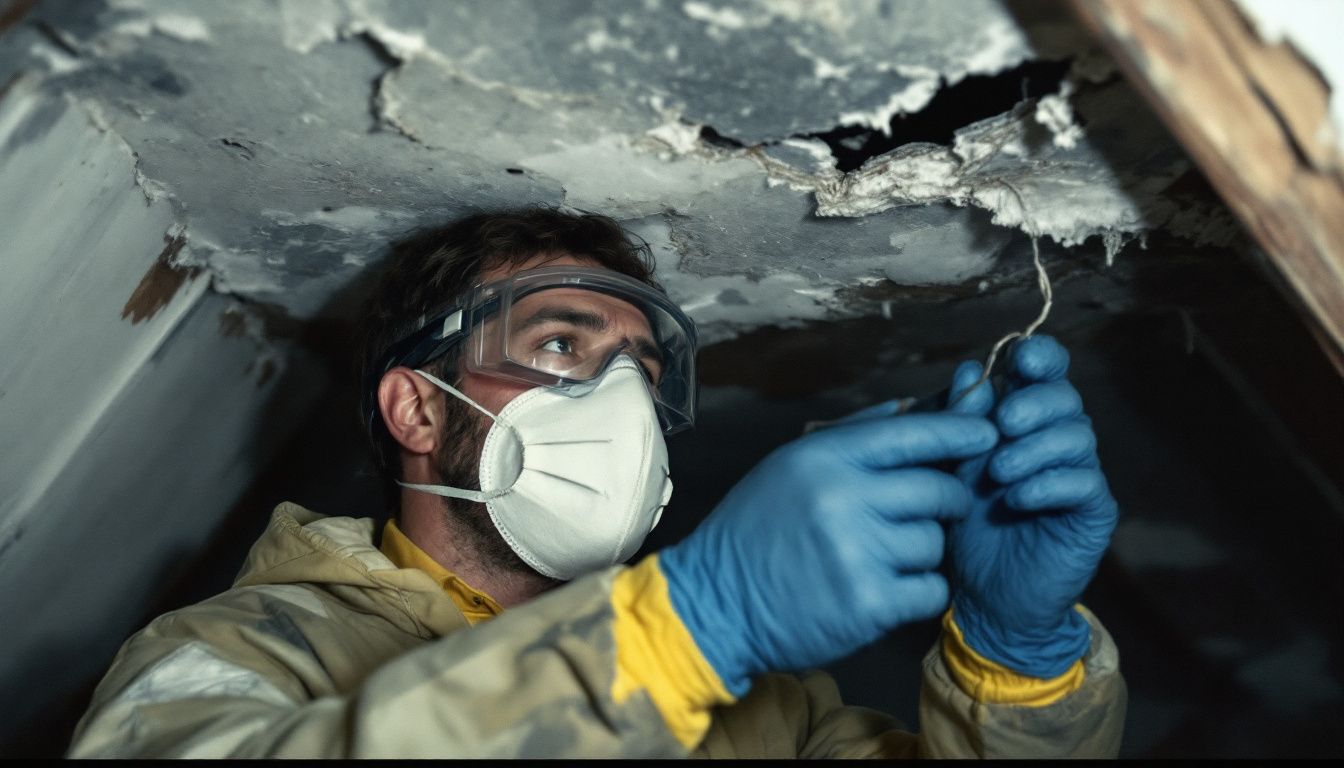
What Is Asbestos Abatement — and Why Does It Matter in the UK?
Asbestos abatement is the process of identifying, managing, and safely removing asbestos-containing materials (ACMs) from buildings. In the UK, it sits among the most tightly regulated activities in the entire construction and property sector — and for very good reason.
Millions of buildings constructed before 2000 still contain asbestos in some form. The Health and Safety Executive (HSE) consistently identifies asbestos exposure as the single largest cause of work-related deaths in Britain. For any property owner, employer, or facilities manager, understanding what proper asbestos abatement involves is not a matter of choice — it is a legal and moral responsibility.
The Health Risks That Make Asbestos Abatement Non-Negotiable
Asbestos fibres are microscopic. When ACMs are disturbed, those fibres become airborne and can be inhaled without any immediate warning signs. The damage they cause is slow, silent, and often irreversible by the time symptoms appear.
The diseases linked to asbestos exposure include some of the most serious conditions in occupational medicine:
- Mesothelioma — a cancer of the lining of the lungs or abdomen, almost exclusively caused by asbestos exposure and almost always fatal
- Asbestos-related lung cancer — carries a very poor prognosis, particularly when combined with smoking
- Asbestosis — irreversible scarring of lung tissue that progressively restricts breathing
- Diffuse pleural thickening — thickening of the membrane surrounding the lungs, causing breathlessness and reduced lung function
- Pleural plaques — calcified patches on the lung lining, indicating past exposure
What makes these diseases particularly devastating is the latency period. Symptoms typically take between 15 and 60 years to appear after initial exposure, meaning a diagnosis often arrives when the disease is already at an advanced stage.
Young workers face a compounded risk — the longer their remaining lifespan, the more time these conditions have to develop. This is precisely why asbestos abatement cannot be treated as a box-ticking exercise. The consequences of inadequate management are measured in lives, not paperwork.
The Environmental Consequences of Poor Asbestos Management
The harm caused by improper asbestos abatement does not stop at human health. Asbestos fibres released into the environment can contaminate soil and water, persisting for decades and posing ongoing risks to local communities and wildlife.
Soil and Water Contamination
When ACMs are disposed of carelessly — or illegally fly-tipped — fibres can leach into the ground and enter nearby water sources. This type of contamination is extremely difficult and costly to remediate once it has occurred.
Proper containment and disposal are therefore not just legal requirements; they are genuine environmental responsibilities. Every piece of asbestos waste correctly packaged, labelled, and transported to a licensed facility is one less source of long-term environmental harm.
The Challenge of Asbestos in Landfill
The UK generates significant volumes of asbestos waste each year, the majority of which ends up in licensed landfill sites. While licensed facilities must follow strict protocols for accepting and storing asbestos waste, the volume involved creates ongoing pressure on available capacity.
Emerging recycling technologies offer some promise, with certain processes capable of converting asbestos into inert materials. However, until such methods are widely available and commercially viable, proper containment in licensed facilities remains the accepted standard.
The UK Legal Framework Governing Asbestos Abatement
Asbestos abatement in the UK is governed by a robust and detailed regulatory framework. Anyone managing or commissioning asbestos work needs to understand the key legislation and guidance that applies to them.
The Control of Asbestos Regulations
The Control of Asbestos Regulations form the primary legal instrument governing all asbestos work in Great Britain. They set out clear duties for employers, building owners, and contractors, covering everything from initial identification through to final disposal.
Key requirements under the regulations include:
- A duty to manage asbestos in non-domestic premises, requiring identification of ACMs and the creation of an asbestos management plan
- Mandatory licensing for higher-risk asbestos work — only HSE-licensed contractors may carry out notifiable licensed work
- Specific requirements for notification, supervision, and health surveillance of workers engaged in licensed asbestos work
- Strict controls on the use of personal protective equipment (PPE) and respiratory protective equipment (RPE)
- Obligations to maintain records of asbestos work and worker health monitoring for a minimum of 40 years
The regulations also distinguish between licensed, notifiable non-licensed, and non-licensed asbestos work — each category carrying different procedural requirements. If you are unsure which category applies to your situation, seek professional advice before any work begins.
HSE Guidance and HSG264
The HSE publishes detailed technical guidance to support compliance with the regulations. HSG264 sets out the standards for conducting asbestos surveys, defining survey types, sampling requirements, and the competency standards expected of surveyors.
Licensed contractors must hold a valid HSE licence and are subject to audit. The HSE can issue improvement notices, prohibition notices, and refer cases for prosecution where serious breaches are identified.
The Consequences of Non-Compliance
The penalties for breaching asbestos regulations in the UK are substantial. Magistrates’ courts can impose significant fines for certain offences, while Crown Court proceedings carry unlimited fines. Custodial sentences are also possible in the most serious cases.
Beyond financial penalties, non-compliance exposes employers and property owners to civil liability, reputational damage, and the very real possibility that workers or building occupants suffer lasting harm.
Key Steps in Proper Asbestos Abatement
Effective asbestos abatement follows a structured process. Each stage is important, and none should be skipped or rushed.
Step 1: Asbestos Surveys and Risk Assessment
Before any abatement work can begin, you need to know exactly what you are dealing with. An asbestos survey carried out by a competent, accredited surveyor is the starting point for all asbestos management decisions.
For occupied commercial buildings, a management survey is the appropriate starting point. This identifies ACMs present under normal occupancy conditions, assesses their condition and risk, and feeds directly into an asbestos management plan.
Where refurbishment or demolition work is planned, a more intrusive demolition survey is required. This involves accessing areas that would normally remain undisturbed — above ceilings, within wall cavities, beneath floors — to ensure all ACMs are identified before any structural work begins.
Risk assessments should consider:
- The type of asbestos present — white, brown, or blue — all are hazardous
- The condition of the material and its likelihood of releasing fibres
- The location of the material and the likelihood of disturbance
- The number of people who could potentially be exposed
Step 2: Planning and Notification
Licensed asbestos removal work must be notified to the HSE at least 14 days before work commences. This requirement ensures the regulator is aware of planned high-risk activities and allows for inspection if necessary.
A detailed method statement and risk assessment must be prepared before work begins. This document should cover containment arrangements, PPE and RPE requirements, air monitoring protocols, waste management procedures, and emergency arrangements.
Step 3: Safe Removal and Containment
The physical removal of asbestos must be carried out by trained operatives following strict procedural controls. For licensed work, only HSE-licensed contractors may undertake the removal.
Standard safe removal procedures include:
- Establishing a controlled work area with physical barriers and warning signage
- Creating a negative pressure enclosure to prevent fibres escaping the work zone
- Ensuring all workers wear appropriate RPE — typically a minimum of FFP3 or a half-mask respirator with P3 filter — and disposable coveralls
- Using wet suppression techniques to minimise fibre release during removal
- Removing materials as whole as possible, avoiding unnecessary breakage
- Conducting regular air monitoring throughout the work to verify containment is effective
- Cleaning the work area thoroughly using a Type H vacuum and wet wiping before removing the enclosure
- Conducting a thorough visual inspection and, where required, clearance air testing before the area is reoccupied
Step 4: Waste Handling and Disposal
Asbestos waste is classified as hazardous waste under UK legislation and must be handled accordingly. All waste must be double-bagged — the inner bag should be red and clearly labelled with hazard warnings, while the outer bag must also carry appropriate hazard markings.
Asbestos cement sheets and similar rigid materials should be wrapped whole in heavy-gauge polythene sheeting rather than broken up. Breaking these materials significantly increases fibre release and creates unnecessary risk.
Waste must be transported by a registered waste carrier and disposed of at a site licensed to accept hazardous asbestos waste. All waste movements must be documented using hazardous waste consignment notes, which must be retained for a minimum of three years.
Step 5: Clearance Testing and Sign-Off
Before a work area can be handed back for normal use, a four-stage clearance procedure must be followed. This includes a thorough visual inspection by an independent analyst, air testing to confirm that fibre concentrations are below the clearance indicator, and formal written sign-off.
The clearance indicator used in the UK is 0.01 fibres per millilitre of air — a far more stringent standard than the control limit applied during work. Achieving clearance demonstrates that the abatement has been effective and the area is safe for reoccupation.
Who Can Carry Out Asbestos Abatement Work?
Not all asbestos work requires a licensed contractor, but the highest-risk activities do. The distinction matters enormously.
Licensed work — which includes the removal of sprayed asbestos coatings, asbestos insulation, and asbestos insulating board — must only be carried out by companies holding a current HSE asbestos licence. You can verify a contractor’s licence status on the HSE website before appointing them.
Notifiable non-licensed work covers activities with a lower risk profile but still requires notification to the relevant enforcing authority, health surveillance for workers, and detailed record-keeping.
Non-licensed work encompasses the lowest-risk activities, such as minor disturbance of asbestos cement in good condition. Even here, appropriate precautions must be taken — there is no such thing as completely risk-free asbestos work.
For any project requiring asbestos removal, always verify the contractor’s credentials before appointing them. A reputable contractor will readily provide evidence of their HSE licence, their insurance, and their workers’ training records.
When Asbestos Abatement Is Not Removal: The Management Option
Abatement does not always mean physical removal. In some circumstances, managing ACMs in place — rather than disturbing them — is the safer and more appropriate course of action.
If an ACM is in good condition and is unlikely to be disturbed during normal building use, leaving it in place with a robust management plan can be perfectly acceptable under the Control of Asbestos Regulations. Encapsulation — sealing the material with a specialist coating to prevent fibre release — is another option used in certain situations.
The decision between removal and management should always be made on the basis of a professional risk assessment. Removal is not automatically the right answer, and unnecessary disturbance of ACMs in good condition can itself create risk.
That said, where refurbishment, demolition, or significant building work is planned, removal of ACMs before work begins is almost always the correct approach. Managing ACMs in place is only viable where the material will remain genuinely undisturbed.
Asbestos Abatement Across the UK: Location Matters
The need for professional asbestos abatement is not confined to any one region. The UK’s building stock is ageing across the board, and ACMs are found in properties of every type — from Victorian terraces to 1980s office blocks.
In London, the sheer density of older commercial and residential buildings means demand for asbestos surveys and abatement services is consistently high. Whether you manage a listed building in the City or a warehouse in East London, professional assessment is essential. Our team provides asbestos survey London services across all boroughs and property types.
In the North West, older industrial and commercial premises frequently contain legacy ACMs from the region’s manufacturing heritage. Our asbestos survey Manchester service covers the full range of survey types required under HSG264, from management surveys through to pre-demolition assessments.
The Midlands presents similar challenges, with a substantial stock of post-war commercial and industrial buildings that commonly contain asbestos insulating board, ceiling tiles, and pipe lagging. Our asbestos survey Birmingham team brings the same rigorous standards to every project, regardless of building type or size.
Wherever your property is located, the fundamental requirements of proper asbestos abatement remain the same. Competent surveying, thorough risk assessment, licensed removal where required, and correct waste disposal are non-negotiable regardless of geography.
Practical Guidance for Property Owners and Facilities Managers
If you are responsible for a non-domestic building constructed before 2000, here is what you should be doing right now:
- Commission an asbestos survey if one has not been carried out recently, or if the existing register is out of date
- Review your asbestos management plan — it should be a living document, reviewed regularly and updated whenever the condition of ACMs changes or building work is planned
- Brief your maintenance team — anyone who might disturb ACMs during routine maintenance must be made aware of their location and condition
- Appoint only licensed contractors for higher-risk removal work — check their HSE licence before signing any contract
- Keep records — your asbestos register, survey reports, waste consignment notes, and clearance certificates should all be retained and readily accessible
- Plan ahead for refurbishment — never allow structural or refurbishment work to begin without first establishing whether ACMs are present in the affected areas
The duty to manage asbestos is not a one-off task. It is an ongoing responsibility that requires regular attention and professional support.
Frequently Asked Questions
What is the difference between asbestos abatement and asbestos removal?
Asbestos abatement is the broader term covering all methods of managing and controlling asbestos-containing materials, including removal, encapsulation, and ongoing management in place. Asbestos removal is one specific form of abatement — the physical extraction and disposal of ACMs from a building. Not all abatement projects involve removal; in some cases, managing materials in situ is the appropriate approach.
Do I legally have to remove asbestos from my building?
Not necessarily. The Control of Asbestos Regulations place a duty to manage asbestos in non-domestic premises, but this does not automatically mean removal. If ACMs are in good condition and are not likely to be disturbed, managing them in place with a robust asbestos management plan is a legally acceptable approach. Removal is generally required when refurbishment or demolition work is planned that would disturb the materials.
How do I know if I need a licensed contractor for asbestos abatement?
The type of contractor required depends on the nature of the asbestos work. Licensed work — including the removal of sprayed asbestos coatings, asbestos insulation, and asbestos insulating board — must only be carried out by HSE-licensed contractors. You can check a contractor’s current licence status on the HSE website. If you are uncertain which category your project falls into, seek advice from a qualified asbestos consultant before any work begins.
How long does asbestos abatement take?
The duration of an asbestos abatement project depends on the volume of material involved, its location within the building, the type of asbestos present, and the access arrangements required. A small encapsulation job might be completed in a single day, while a large-scale removal project in a commercial building could take several weeks. Your contractor should provide a clear programme of works before the project begins, including the clearance testing and sign-off stage.
What happens if asbestos is found unexpectedly during building work?
If ACMs are discovered unexpectedly during refurbishment or maintenance work, work in the affected area must stop immediately. The area should be secured and access restricted. A competent asbestos surveyor should be called in to assess the material, and no further work should proceed until the ACMs have been properly identified, assessed, and either managed or removed by an appropriately qualified contractor. Continuing work after an unexpected find without taking these steps is a serious breach of the Control of Asbestos Regulations.
Get Professional Asbestos Abatement Support from Supernova
Supernova Asbestos Surveys has completed over 50,000 surveys across the UK, working with property owners, facilities managers, housing associations, local authorities, and contractors of every size. Our UKAS-accredited surveyors operate nationwide, delivering management surveys, demolition surveys, and specialist asbestos consultancy to the highest standards.
Whether you need a straightforward management survey for a single commercial unit or a full pre-demolition assessment for a large-scale development, our team has the experience and accreditation to deliver it correctly.
Call us today on 020 4586 0680 or visit asbestos-surveys.org.uk to request a quote or speak with one of our surveyors about your requirements.