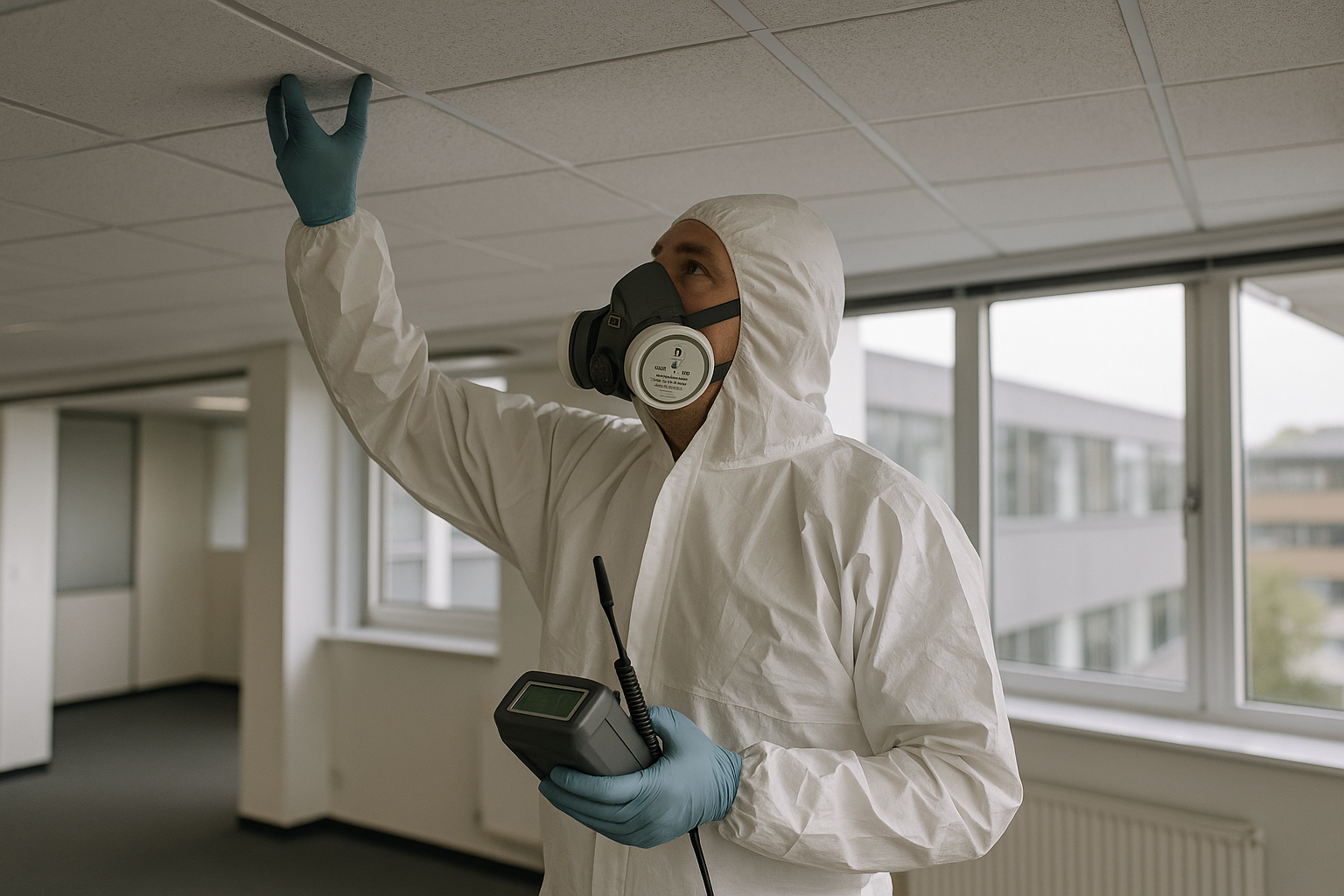
Replacing old windows can uncover a problem that has been quietly sitting in the building fabric for decades. Window asbestos removal becomes a live issue the moment trims are pulled away, infill panels are exposed, or old sealants and boards start to break up around an opening.
If the property was built or refurbished before 2000, asbestos should be treated as a realistic possibility until a competent survey proves otherwise. That applies to houses, flats, schools, offices, shops, warehouses and communal areas just as much as it does to heavy industrial sites.
Why window asbestos removal is still a common issue
Asbestos was used widely because it was durable, heat resistant and cheap to include in construction products. Around windows, it often appears in surrounding materials rather than the frame itself, which is why it is so often missed until replacement works begin.
Common locations include:
- Glazing putty and older sealants
- Asbestos cement infill panels and external surrounds
- Insulating board in reveals, soffits, liners and boxing
- Textured coatings close to window openings
- Packers, gaskets and rope seals in some older systems
- Panels beneath window frames or around lintels
That matters because disturbing asbestos-containing materials can release fibres. A straightforward window upgrade can quickly turn into a health and safety issue if the work starts without proper checks.
Where asbestos may be found around windows
People often assume asbestos only turns up in boiler rooms or industrial premises. In reality, asbestos in domestic and commercial buildings is common, especially in older housing stock and premises that have had multiple refurbishments over the years.
You cannot identify asbestos reliably by sight alone. Some asbestos-containing materials look almost identical to non-asbestos products, so guessing is unsafe and can lead to unnecessary exposure or legal problems.
Internal areas around the opening
- Boards in reveals and behind trims
- Panels below windows
- Insulating board around lintels
- Textured coatings on nearby walls and ceilings
- Old mastics and packing compounds
External areas around the opening
- Asbestos cement sheets and infill panels
- Soffits and cladding sections close to the frame
- External sills and weathering details
- Sealants and putties in older installations
If you own the building, you should arrange proper checks before any work starts. If you are a tenant, report any concern to the landlord or managing agent and avoid disturbing the material yourself.
For non-domestic properties and communal parts of residential buildings, dutyholders must manage asbestos under the Control of Asbestos Regulations. That means identifying likely asbestos-containing materials, assessing the risk, recording their location and preventing accidental disturbance.
Choose the right survey before window asbestos removal
The correct survey depends on what is planned. Getting this wrong is one of the main reasons window projects are delayed after work has already started.

If the building is in normal occupation and you need to identify accessible asbestos-containing materials for day-to-day management, a management survey is usually the starting point. This helps locate materials that could be disturbed during routine use or minor maintenance.
If the planned works will disturb the structure around the window opening, a refurbishment survey is normally required. This is intrusive by design and is intended to uncover hidden materials before contractors begin opening up the area.
If part or all of the building is being taken down, a demolition survey is required before demolition proceeds. That survey is used to identify asbestos throughout the area due to be demolished, including materials that are not visible during normal occupation.
Survey work should follow HSG264, and sampling should be analysed by a competent laboratory. A survey is not just paperwork. It is what allows you to plan the work safely, choose the right contractors and avoid exposing occupants or trades.
Practical steps before you book installers
- Check the age and refurbishment history of the building.
- Tell the surveyor exactly what window works are planned.
- Do not allow fitters to remove trims or panels before the survey.
- Share the asbestos report with every contractor on site.
- Stop work immediately if suspect materials are found unexpectedly.
If you manage multiple premises, a planned asbestos management survey programme can reduce disruption and help you stay ahead of recurring maintenance risks.
What the law expects from property owners and dutyholders
Window asbestos removal is not just a technical issue. It also sits within clear legal duties. The Control of Asbestos Regulations require asbestos risks to be identified and managed, particularly in non-domestic premises and communal areas.
In practice, that means you should not allow work to begin on older premises without understanding whether asbestos is present in the work area. If contractors are brought in without the right information, the dutyholder can still face the consequences if asbestos is disturbed.
HSE guidance is clear on the basics:
- Identify asbestos before work starts
- Assess the condition and risk of the material
- Choose the correct method of control
- Use trained and competent people
- Prevent the spread of contamination
- Dispose of waste properly
- Keep records where required
For a property manager, the practical point is simple. Do not treat window replacement as a standard maintenance item in an older building until asbestos risk has been checked properly.
When window asbestos removal is needed and when it may not be
Not every asbestos-containing material around a window has to be removed immediately. If it is in good condition, sealed, and unlikely to be disturbed, it may sometimes be managed in place.
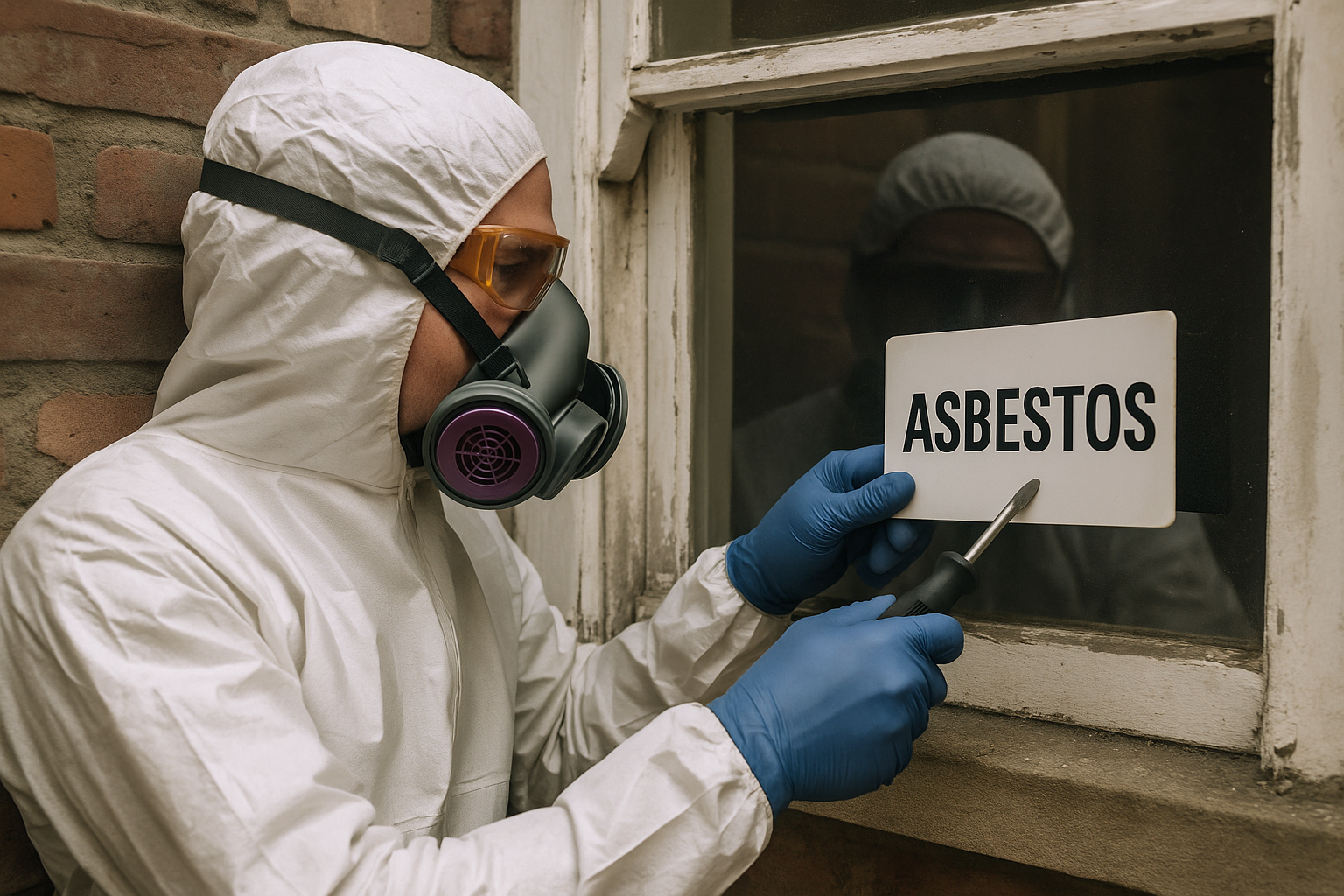
That changes once window works are planned. If the project involves drilling, cutting, removing frames, opening up reveals or disturbing surrounding boards and panels, the safer option is often controlled asbestos removal before the main trade starts.
The right decision depends on:
- The type of asbestos-containing material
- Its condition and friability
- How close it is to the planned works
- Whether removal can be carried out without excessive breakage
- Whether the area is occupied during the project
Insulating board and other higher-risk materials usually need more stringent controls than asbestos cement. A cracked infill panel, damaged board or crumbling putty should never be treated as a routine snagging issue.
Working with textured coatings and asbestos cement around windows
Not all asbestos work is licensed, but all of it needs proper planning and control. The category of work depends on the material, its condition and the method being used.
Textured coatings near windows
Textured coatings around reveals and adjoining walls can contain asbestos. Work on these coatings is often non-licensed, but that does not mean untrained people should scrape or sand them off casually.
Where textured coatings are in the work area, contractors should follow relevant HSE guidance and use methods that minimise fibre release. That can include controlled wetting, careful hand removal, suitable personal protective equipment and correct cleaning procedures.
Power sanding and aggressive scraping are the sort of shortcuts that create dust and spread contamination. If the coating is in the way of the planned works, deal with it in a controlled manner before the window installation starts.
Asbestos cement around windows
Asbestos cement is one of the most common products found during window replacement. It may appear in infill panels, soffits, cladding sections or external surrounds.
Work with asbestos cement can often be non-licensed if the material is intact and removed whole with minimal breakage. Even then, controls are essential:
- Use trained workers
- Avoid power tools that generate dust
- Remove fixings carefully
- Keep sheets and panels intact wherever possible
- Use controlled wetting where appropriate
- Clean with Class H vacuum equipment or damp wiping
- Package and label waste correctly
If the material is badly damaged, friable or likely to break apart, the risk level changes. Specialist advice should be taken before any window asbestos removal proceeds.
Can you carry out window asbestos removal yourself?
In most cases, no. DIY window asbestos removal is where avoidable exposure often happens, usually because someone assumes a board, putty or coating is harmless and starts cutting into it.
Non-licensed work does not mean no training, no planning and no controls. Even lower-risk asbestos work still requires a risk assessment, safe methods, suitable equipment, correct waste handling and a lawful disposal route.
Do not attempt the work yourself if:
- You do not know exactly what the material is
- The material is damaged, dusty or already breaking up
- The job involves insulating board or another higher-risk product
- You plan to sand, cut, drill or use power tools
- You have no suitable packaging or disposal arrangements
- The area is occupied and contamination could spread
If asbestos is confirmed and removal is needed, use specialists rather than relying on a general builder or window fitter. That one decision can prevent delays, contamination and enforcement problems.
Safe process for window asbestos removal
The safest projects follow a clear order. Jumping straight to removal without checking the material type, condition and work category is where mistakes happen.
- Recognise the risk. If the building is older, assume asbestos may be present around the window.
- Arrange the correct survey. Match the survey to the scope of works.
- Review the report. Confirm what materials are present and where.
- Assess the work category. Decide whether the task is licensed, non-licensed or notifiable non-licensed work.
- Use competent contractors. Make sure everyone understands the asbestos information before starting.
- Control the area. Isolate the work zone, protect occupants and prevent spread.
- Remove carefully. Minimise breakage and dust generation.
- Clean properly. Use suitable methods and equipment, not sweeping or standard vacuum cleaners.
- Dispose of waste lawfully. Package, label and transport it correctly.
- Update records. Keep reports and waste documentation accessible for future works.
This order saves time and money because it prevents aborted jobs and emergency call-outs after accidental disturbance. It also keeps the project aligned with the Control of Asbestos Regulations, HSG264 and wider HSE guidance.
Disposal of asbestos waste after window asbestos removal
One of the biggest mistakes after window asbestos removal is treating the waste like ordinary building rubble. Asbestos waste must be packaged, labelled, transported and disposed of through the correct route.
You cannot put asbestos waste in a standard skip, mix it with general debris or leave it for routine collection. Waste handling should be planned before the job starts, not improvised when the old panel or board is already on the ground.
Safe disposal essentials
- Double-wrap or bag waste in suitable packaging
- Label it clearly
- Store it securely to prevent damage or tampering
- Use an authorised route for transport and disposal
- Keep the relevant paperwork for the type of work being undertaken
If you find fly-tipped boards or debris near garages, service yards, estates or bin stores, do not break it up or move it casually. Keep people away, avoid sweeping, and arrange for it to be assessed properly.
For property managers, this matters in communal areas. Suspect asbestos waste left in a car park or yard can expose tenants, maintenance staff and contractors if it is not isolated quickly.
Practical advice before replacing old windows
Most problems with window asbestos removal can be avoided with a few sensible checks carried out early. The earlier asbestos is considered, the easier the project is to manage.
- Do not allow strip-out on pre-2000 properties without the right survey
- Ask specifically about reveals, infill panels, soffits and external surrounds
- Keep occupants away from damaged suspect materials
- Do not sweep debris or use a standard vacuum on suspect dust
- Pause work if hidden boards, cement sheets or textured coatings are exposed
- Make sure the asbestos report is shared with every trade on site
- Build time for asbestos checks into the programme before installers are booked
If replacement windows form part of a larger project, make sure the survey matches the actual scope. A routine management inspection is not enough if the works involve opening up the structure.
That is especially relevant in schools during holiday works, social housing programmes, office refurbishments and mixed-use buildings where different contractors may be working in sequence.
Property types where window asbestos removal is often needed
Window asbestos removal is not limited to one sector. It appears across a wide range of property types, especially where original materials remain in place or older refurbishments have been covered over.
- Domestic houses and flats
- Social housing and communal blocks
- Schools and colleges
- Offices and local authority buildings
- Retail units and mixed-use premises
- Warehouses and industrial units
- Healthcare settings
- Public buildings with repeated maintenance works
In occupied buildings, the challenge is often balancing safety with minimal disruption. In refurbishment and strip-out projects, the priority is making sure the survey is intrusive enough to identify hidden materials before trades begin.
Local support for surveys and asbestos planning
If your project is based in the capital, Supernova can help with an asbestos survey London service tailored to planned works and occupied buildings. For sites in the North West, our asbestos survey Manchester team can assist with surveys and asbestos planning before window replacement starts.
For Midlands properties, our asbestos survey Birmingham service supports landlords, managing agents, schools and commercial premises. Local support matters because fast, competent surveying can prevent a window programme from stalling once contractors are already booked.
Keep records after the work is complete
Good asbestos management does not end when the immediate task is finished. Reports, waste documentation, contractor details and updated site records should all be easy to find when the next maintenance or refurbishment job is planned.
If another contractor returns in six months to replace more windows, they should be able to follow the trail from survey to action without guessing what was removed, what remains, and what controls were used. Clear records reduce repeat disruption and help prove that the work was managed properly.
Why early planning makes window asbestos removal safer
The safest projects are the ones planned before anyone picks up a pry bar or scraper. Window asbestos removal is manageable when the material is identified properly, the work category is understood and competent specialists are involved from the start.
Leave asbestos checks until the day of installation and you risk delays, contamination, extra cost and unnecessary exposure. Plan early, choose the right survey, and make sure the information reaches every contractor on site.
If you need expert help with surveys, sampling or removal planning, Supernova Asbestos Surveys can support projects nationwide. We provide surveying and asbestos advice for homes, commercial buildings, schools, industrial sites and communal areas. Call 020 4586 0680 or visit asbestos-surveys.org.uk to book the right service for your property.
Frequently Asked Questions
Can I carry out window asbestos removal myself?
Usually, no. Even where work may fall into a lower-risk category, it still requires training, safe methods, suitable equipment and lawful disposal arrangements. If you do not know exactly what the material is, stop and arrange a survey.
How do I know if material around a window contains asbestos?
You cannot confirm asbestos by sight alone. The reliable route is a professional survey with sampling where appropriate. Older putties, boards, cement panels, textured coatings and packing materials can all contain asbestos.
Does every asbestos-containing material near a window need to be removed?
No. Some materials can be managed in place if they are in good condition and unlikely to be disturbed. If window works will affect the area, removal or another controlled solution may be necessary before installation starts.
What survey do I need before replacing windows?
That depends on the work. For normal occupation and routine management, a management survey may be suitable. If the works will disturb the building fabric, a refurbishment survey is usually required. If demolition is planned, a demolition survey is needed.
Can window fitters remove asbestos materials as part of the job?
Not unless they are competent for the specific asbestos work involved and the job has been assessed properly. General installers should not disturb suspect materials without the right information, controls and disposal arrangements in place.