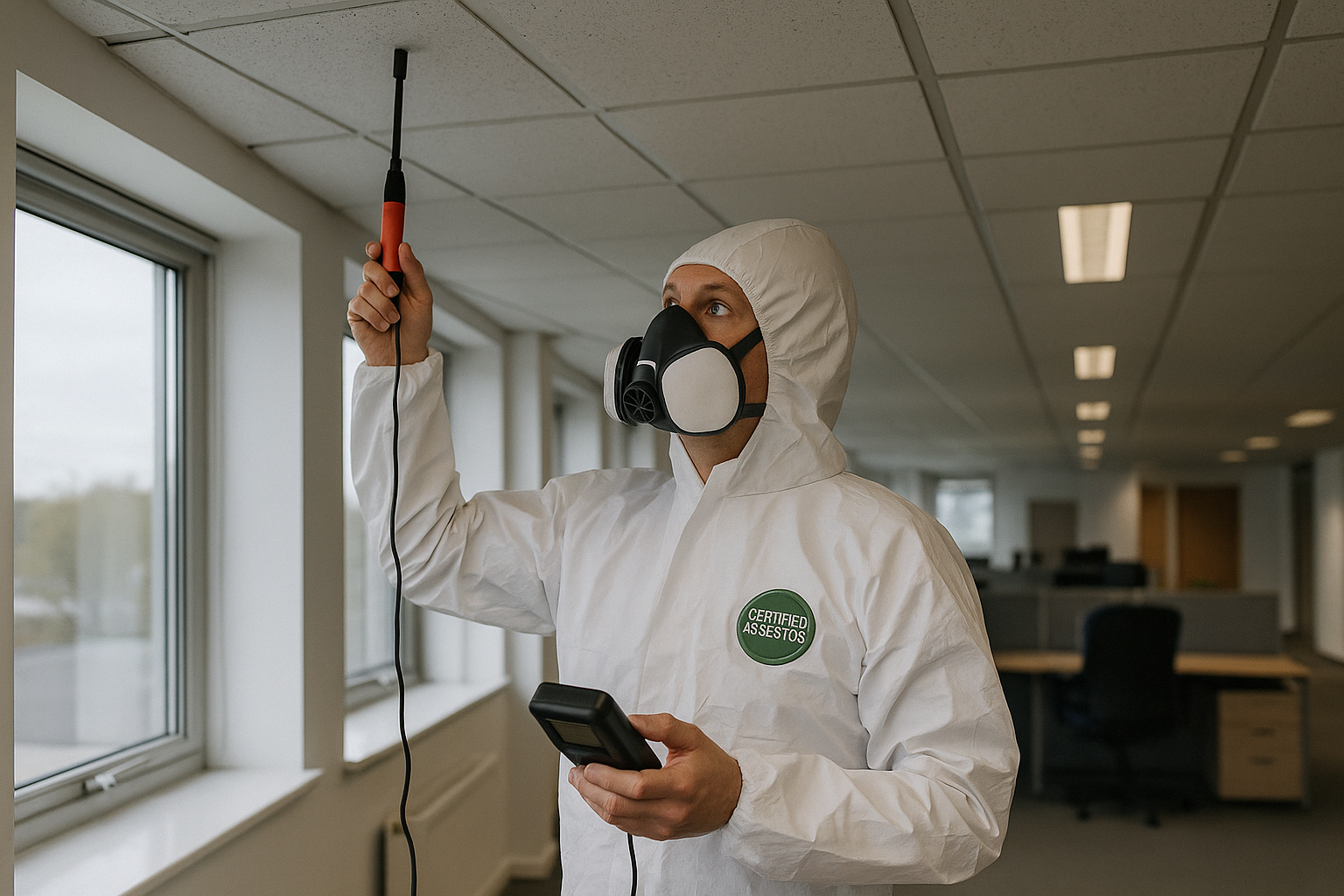
What Is Asbestos Abatement and Why Does It Matter in UK Buildings?
Disturb asbestos in the wrong way and a routine maintenance job can turn into a serious health crisis. Asbestos abatement is the controlled process of managing, repairing, encapsulating or removing asbestos-containing materials so fibres do not become airborne and put people at risk. For property owners, landlords, facilities managers and contractors, knowing when action is needed — and what form that action should take — is not optional.
In the UK, asbestos abatement is tightly governed by the Control of Asbestos Regulations, supported by HSE guidance and the survey standards set out in HSG264. Guesswork has no place in this process. If you manage an older building, plan refurbishment works, or have uncovered suspicious materials during maintenance, the safest first step is always to identify what you are dealing with before anyone drills, cuts, sands or strips anything out.
What Asbestos Abatement Actually Means
People often use the term asbestos abatement as shorthand for removal, but it covers far more than that. It refers to any measure taken to reduce the risk posed by asbestos-containing materials — whether that means leaving them in place under a management plan, sealing them, enclosing them, repairing minor damage, or arranging licensed removal.
The right approach depends on three factors:
- What the material is
- What condition it is in
- How likely it is to be disturbed
Asbestos in good condition and unlikely to be damaged may not require removal at all. Damaged insulation board, deteriorating pipe lagging or debris in an accessible area may need urgent action by a competent contractor. That is exactly why asbestos abatement should always begin with a proper survey and risk assessment — not assumptions based on the age or appearance of a building.
Why Asbestos Remains a Serious Issue in UK Buildings
Asbestos was used extensively in UK construction for its fire resistance, insulating properties and durability. It is present in a significant number of domestic, commercial, industrial and public buildings, particularly those built or refurbished before the UK ban on its use came into force.
You cannot identify asbestos reliably by sight alone. Some products look completely harmless, while higher-risk materials can be hidden behind finishes, inside service risers or above suspended ceilings. Common locations where asbestos-containing materials may be found include:
- Textured coatings (such as Artex)
- Ceiling tiles
- Asbestos insulating board panels
- Pipe lagging and boiler insulation
- Floor tiles and bitumen adhesive
- Cement roof sheets, soffits and gutters
- Sprayed coatings on structural steelwork
- Partition walls
- Service ducts and risers
- Toilet cisterns and other moulded products
The risk does not come simply from asbestos being present. The danger arises when fibres are released through damage, deterioration or building work carried out without adequate controls.
Why Asbestos Exposure Is Dangerous
Asbestos fibres are microscopic and can remain suspended in the air when materials are disturbed. Once inhaled, they can become permanently lodged in the lungs and may lead to serious diseases, including asbestosis, mesothelioma and asbestos-related lung cancer.
Symptoms rarely appear immediately. The long latency period between exposure and illness is one of the key reasons asbestos abatement must be handled carefully and in strict accordance with UK legal duties. There is no safe threshold for exposure to certain asbestos fibre types.
Why Early Identification Saves Time and Money
Finding asbestos before maintenance or refurbishment begins gives you real options. Work can be planned properly, the right controls put in place, and disruption kept to a minimum. Discover it after materials have already been broken open on site and the situation becomes significantly more expensive, more disruptive and potentially far more dangerous — for workers, occupants and your legal position.
How Asbestos Abatement Starts: Survey, Sampling and Assessment
The first stage of any asbestos abatement process is understanding what is present. That means arranging the correct type of survey for your building and the work you have planned.
Management Surveys
If the premises are occupied and you need to manage asbestos during normal use, a management survey is typically the right starting point. Its purpose is to locate, as far as reasonably practicable, any asbestos-containing materials that could be damaged or disturbed during normal occupation — including foreseeable maintenance activities.
Refurbishment Surveys
If the building is due for intrusive works, structural alteration or a full strip-out, you will usually need a refurbishment survey. This is a more intrusive process designed to locate asbestos in the specific areas affected by the planned works. It should always be completed before any contractors move in.
Both survey types should be carried out by competent professionals following the principles of HSG264. Depending on findings, samples will be taken for laboratory analysis to confirm whether asbestos is present and what type of product is involved.
What a Survey Helps You Decide
A proper survey supports practical, evidence-led decisions, including:
- Whether materials can remain in place under a management plan
- Whether repair or encapsulation is appropriate
- Whether licensed removal is required
- How contractors should work safely in the affected area
- What information must be recorded in the asbestos register and management plan
Under the Control of Asbestos Regulations, dutyholders of non-domestic premises have a legal duty to manage asbestos. That includes taking reasonable steps to find out if asbestos is present, assessing the risk and making sure the information is shared with anyone liable to disturb it.
Types of Asbestos Abatement: Management, Encapsulation and Removal
Not every asbestos issue ends with a full strip-out. Effective asbestos abatement means choosing the control measure that genuinely matches the risk — not defaulting to the most drastic option.
1. Managing Asbestos in Place
If asbestos-containing materials are in good condition and unlikely to be disturbed, they may be left in place and managed. This is a common and entirely lawful approach in occupied buildings where removal would create unnecessary disruption or introduce additional risk.
Management typically involves:
- Recording the material in an asbestos register
- Labelling or marking the location where appropriate
- Monitoring condition at regular intervals
- Ensuring contractors are informed before any work starts nearby
- Reviewing and updating the management plan regularly
This approach only works if the material remains stable and the location is properly controlled. It is not a permanent fix — it is an ongoing management responsibility.
2. Encapsulation or Enclosure
Some asbestos-containing materials can be made safer by sealing the surface or enclosing the material so fibres cannot escape easily. This may be suitable where asbestos is in reasonable condition but requires extra protection — for example, ahead of planned works in the surrounding area.
Encapsulation is not a shortcut and should never be treated as one. It still requires a proper assessment, correct specification and ongoing monitoring to ensure the treatment remains effective.
3. Asbestos Removal
Where asbestos is damaged, friable, likely to be disturbed, or stands in the way of planned works, removal becomes necessary. The method depends on the product type, its condition and its risk category under the regulations.
If removal is required, specialist contractors must be used. For many higher-risk materials, licensed work is mandatory under UK law. Professional asbestos removal should always be planned around the survey findings, a detailed risk assessment, a method statement and appropriate waste controls — not carried out on the fly.
The Asbestos Abatement Process Step by Step
Good asbestos abatement follows a clear, logical sequence. Skipping steps is precisely where serious problems begin.
- Identify the material. No one should disturb a suspect material without first checking whether asbestos is present. Review existing survey information and commission further inspection if there are any gaps.
- Assess the risk. The material type, condition, surface treatment, accessibility and likelihood of disturbance all influence the level of risk. The planned activity matters too — replacing a light fitting is very different from demolishing a partition wall.
- Decide the correct control measure. The answer may be to manage, repair, encapsulate, enclose or remove. That decision must be evidence-led, not based on convenience or cost alone.
- Plan the work properly. Before any asbestos work begins, the contractor should prepare a suitable plan of work. For higher-risk work, notification requirements may apply and only appropriately licensed contractors can undertake the task. Planning should cover access arrangements, segregation, control measures, PPE, RPE, decontamination, air monitoring where required, and waste handling.
- Set up containment. Where removal or other intrusive work is needed, the area should be segregated to prevent fibre spread. For higher-risk licensed work, this can include a full enclosure with negative pressure units, controlled entry and decontamination procedures.
- Carry out the work using controlled techniques. Asbestos abatement must minimise fibre release at every stage. Techniques include careful wetting, shadow vacuuming with H-class equipment, and removing materials in whole sections where possible. Dry stripping, uncontrolled power tool use and general demolition methods are not acceptable where asbestos fibres could be released.
- Clean, inspect and verify. After work is complete, the area must be thoroughly cleaned using appropriate methods. Depending on the scope of work, a visual inspection and air testing may be required before the space is handed back for use.
- Dispose of waste correctly. Asbestos waste is classified as hazardous waste and must be packaged, labelled, transported and disposed of in line with legal requirements. It must only go to authorised disposal facilities. Never put asbestos waste into general skips or standard site waste streams.
Legal Requirements for Asbestos Abatement in the UK
Asbestos abatement is not purely a technical matter — it is a legal compliance issue with serious consequences for those who get it wrong. The main framework is the Control of Asbestos Regulations, supported by detailed HSE guidance.
For dutyholders and property managers, the key obligations are:
- Take reasonable steps to identify asbestos in non-domestic premises
- Assess the risk from any asbestos-containing materials found
- Keep an up-to-date asbestos register and management plan where required
- Provide relevant information to anyone who may disturb asbestos
- Ensure all asbestos work is carried out by competent people
- Use licensed contractors where the work legally requires it
Survey work should align with HSG264. All work involving asbestos should also follow relevant HSE task guidance and safe systems of work appropriate to the material and activity involved.
Does Every Asbestos Job Need a Licensed Contractor?
No — but the distinction matters enormously. Some lower-risk work may fall into the category of non-licensed or notifiable non-licensed work, depending on the material type and the specific task. However, many higher-risk materials and activities do require a licensed contractor under UK law.
This is a technical distinction that property owners and facilities managers should not attempt to make without specialist advice. If there is any doubt at all, seek guidance from a competent asbestos professional before any work begins.
What Happens If You Get It Wrong?
The consequences of poor asbestos abatement can be severe. Workers, tenants, contractors and visitors may be exposed to harmful fibres. Enforcement action, project delays, wider area contamination and significantly higher clean-up costs are all realistic outcomes. A straightforward planned job can become a major incident if asbestos is disturbed without the right controls in place.
Practical Advice for Property Managers, Landlords and Contractors
Most asbestos problems are made worse by rushed decisions. A few consistent habits make a significant difference.
Before Maintenance or Refurbishment
- Check whether an asbestos survey already exists and whether it is still current and relevant
- Make sure contractors review the asbestos information before starting any work
- Stop work immediately if suspect materials are uncovered unexpectedly
- Arrange the correct type of survey for the planned activity
- Do not rely on age, appearance or previous assumptions
If Suspect Asbestos Is Found Damaged
- Keep people away from the area immediately
- Do not sweep, vacuum or brush up debris with standard equipment
- Do not drill, cut or remove anything
- Restrict access where possible
- Call a competent asbestos professional for advice without delay
When Choosing a Contractor
- Confirm they are competent for the specific type of asbestos work involved
- Check they understand the survey findings and have reviewed the relevant information
- Ask how they plan to control fibre release, manage waste and handle decontamination
- Verify their licensing status where licensed work is required
Asbestos Abatement Across the UK: Where We Work
Asbestos abatement requirements are consistent across England, Scotland and Wales under the same regulatory framework, but local knowledge matters when it comes to building stock, planning considerations and logistics.
Supernova Asbestos Surveys provides asbestos surveying and support services across the country. If you need an asbestos survey London properties require, our teams are experienced with the full range of commercial, residential and mixed-use stock found across the capital. For those in the North West, our asbestos survey Manchester service covers the city and surrounding areas. In the Midlands, our asbestos survey Birmingham team works across the region’s diverse building types, from Victorian terraces to large industrial premises.
Wherever you are based, the process starts with the right survey — carried out by competent professionals who understand what they are looking for and what to do with what they find.
Frequently Asked Questions
What is the difference between asbestos abatement and asbestos removal?
Asbestos abatement is a broader term that covers all methods of managing and reducing risk from asbestos-containing materials. This includes leaving materials in place under a management plan, encapsulating or enclosing them, and removing them. Asbestos removal is one specific method within the wider abatement process — used when materials are damaged, friable or standing in the way of planned works.
Do I need a survey before asbestos abatement work can begin?
Yes, in almost all circumstances. A survey identifies what materials are present, where they are and what condition they are in. Without this information, it is not possible to make informed decisions about the correct abatement approach, and contractors cannot plan or price the work safely. Under HSG264, survey work should be carried out by competent professionals before any intrusive building work begins.
Who is legally responsible for asbestos abatement in a commercial building?
Under the Control of Asbestos Regulations, the dutyholder is responsible for managing asbestos in non-domestic premises. This is typically the building owner, employer or person in control of the premises. The duty includes identifying asbestos, assessing the risk, maintaining an asbestos register and management plan, and ensuring anyone who may disturb asbestos has the information they need.
Can asbestos abatement work be carried out while a building is occupied?
It depends on the type of work and the materials involved. Some lower-risk management activities can take place in occupied buildings with appropriate controls and communication. Higher-risk work, including licensed removal, will typically require the affected area to be vacated and properly segregated. A competent asbestos professional should advise on what is appropriate for the specific situation.
How do I know if a contractor is qualified to carry out asbestos abatement?
For licensed work, contractors must hold a licence issued by the HSE. You can verify licence status directly with the HSE. For all asbestos work, contractors should be able to demonstrate competence, provide a suitable plan of work, and show they understand the survey findings and relevant regulations. Asking for evidence of training, experience and insurance is entirely reasonable before any work begins.
Talk to Supernova Asbestos Surveys
Supernova Asbestos Surveys has completed over 50,000 surveys across the UK. Whether you need a survey to start the asbestos abatement process, advice on your management obligations, or support coordinating removal work, our team is ready to help.
Call us on 020 4586 0680 or visit asbestos-surveys.org.uk to find out more or book a survey.