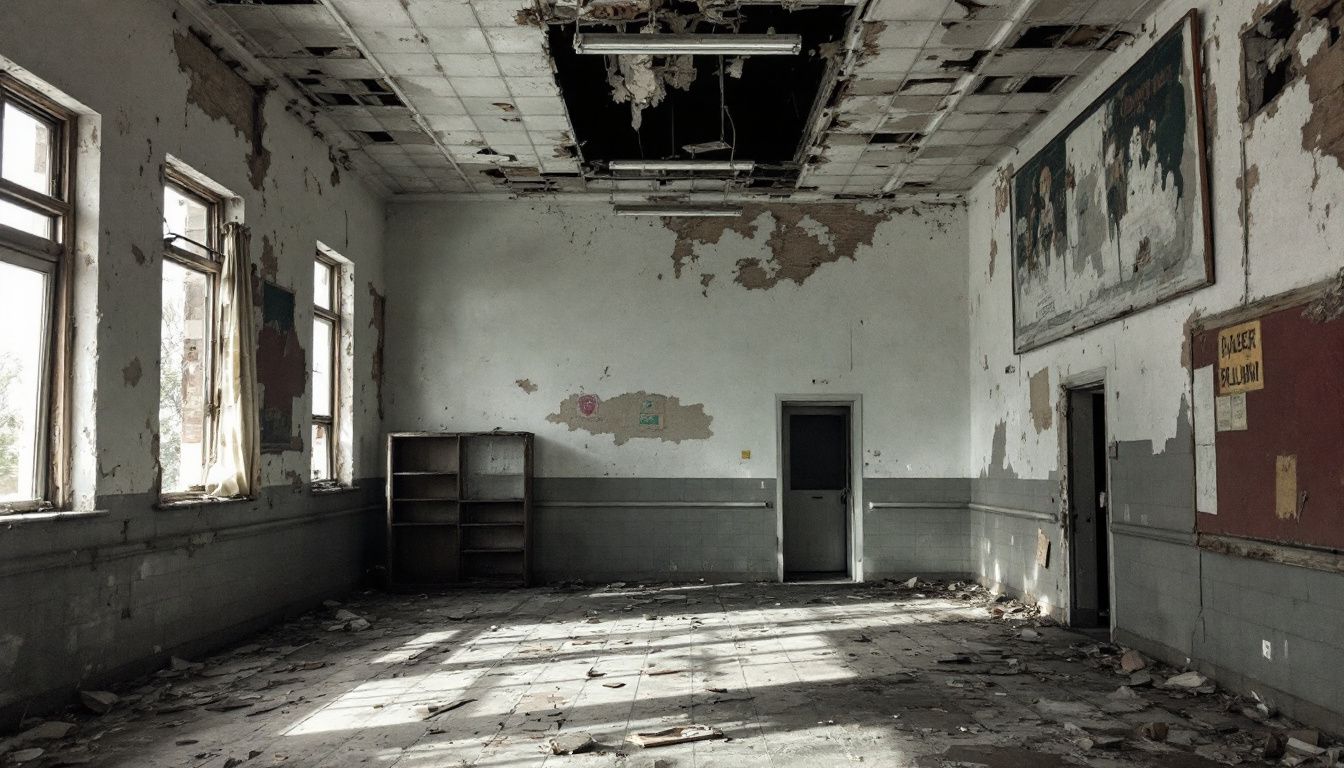
Why Proactive Asbestos Management Is the Smartest Decision You Can Make for a Public Building
Asbestos doesn’t announce itself. It sits quietly inside walls, beneath floor tiles, around pipe lagging, and above suspended ceilings — and in the majority of UK public buildings constructed before 2000, it’s still there right now. A proactive asbestos approach doesn’t wait for fibres to become airborne before taking action. It identifies, monitors, and manages risk before anyone gets hurt, before enforcement notices land on desks, and before legal costs spiral out of control.
For anyone responsible for a school, hospital, council building, or any other public property, understanding what proactive asbestos management actually involves — and why it matters — is not optional. It’s a legal duty and a moral one.
What Does Proactive Asbestos Management Actually Mean?
Reactive asbestos management means responding to problems once they’ve already occurred — a contractor disturbs pipe lagging during a routine repair, fibres are released, and a full emergency response is triggered. Proactive asbestos management flips that entirely.
A proactive approach involves commissioning a thorough asbestos survey, maintaining a live asbestos register, conducting scheduled reinspections, training relevant staff, and planning all building works around known asbestos-containing materials (ACMs). It treats asbestos as an ongoing management responsibility rather than a one-off box to tick.
The difference in outcomes — for occupant health, for legal compliance, and for long-term cost — is significant. Buildings managed reactively are far more likely to experience incidents, enforcement action, and the kind of reputational damage that takes years to recover from.
The Legal Framework: What the Regulations Actually Require
The Control of Asbestos Regulations place a clear duty on those who manage non-domestic premises to manage the risk from asbestos. Regulation 4 — often called the “duty to manage” — applies to any non-domestic building that may contain asbestos. It is not limited to high-risk environments.
It covers offices, schools, GP surgeries, leisure centres, libraries, and every other public building where people work or visit. Under this duty, the responsible person must:
- Identify whether ACMs are present, and if so, where and in what condition
- Assess the risk of anyone being exposed to those materials
- Prepare and implement a written asbestos management plan
- Ensure the plan is reviewed and monitored regularly
- Provide information about ACM locations to anyone who might disturb them
HSE guidance, including HSG264, sets out the standards for asbestos surveys and how they feed into management plans. Failing to comply can result in enforcement action, prosecution, and unlimited fines — as well as the far more serious consequence of someone developing an asbestos-related disease.
Records relating to asbestos management must be retained for 40 years. That alone tells you how seriously regulators treat this issue.
The Key Benefits of a Proactive Asbestos Plan
Protecting the Health of Building Occupants
Asbestos-related diseases — including mesothelioma, asbestosis, and asbestos-related lung cancer — are caused by inhaling microscopic fibres. These diseases have long latency periods, often taking decades to develop after exposure. By the time symptoms appear, the damage is done and irreversible.
A proactive asbestos management plan dramatically reduces the likelihood of fibre release in the first place. When building managers know exactly where ACMs are, what condition they’re in, and which areas require restricted access, the risk of accidental disturbance falls sharply.
Maintenance workers don’t drill into asbestos-insulated boards by mistake. Contractors don’t sand down artex ceilings without appropriate controls. Prevention is the only effective health intervention here — there is no cure for mesothelioma.
Avoiding the Financial Cost of Reactive Management
Emergency asbestos responses are expensive. When asbestos is disturbed without prior identification, the affected area must be sealed, air monitoring must be conducted, specialist remediation contractors must be brought in, and the building or a section of it may need to close.
Planned asbestos management, by contrast, allows organisations to budget for surveys, reinspections, and any necessary removal or encapsulation work in a controlled, cost-effective way. Problems are caught while they’re still small, and materials in poor condition are identified before they deteriorate to the point of fibre release.
That’s a far cheaper outcome than dealing with a contamination incident after the fact — both financially and in terms of the human cost involved.
Maintaining Legal Compliance and Avoiding Enforcement
HSE inspectors can and do visit public buildings to check that duty holders are meeting their obligations under the Control of Asbestos Regulations. A building without an up-to-date asbestos management plan, or one where the asbestos register hasn’t been reviewed in years, is a building at serious risk of enforcement action.
Proactive management keeps you on the right side of the law continuously, not just at the point of an inspection. It also means that if a contractor is injured or a member of the public is exposed to asbestos, you have documented evidence that you took your duty of care seriously. That documentation can be the difference between a manageable situation and a devastating legal outcome.
Building Confidence Among Occupants and Stakeholders
Schools, hospitals, and council buildings are trusted public spaces. When the people who use them — parents, patients, staff, visitors — know that asbestos is being managed transparently and professionally, that trust is reinforced. When they find out it wasn’t, the reputational damage can be lasting.
Clear communication about asbestos management, including accessible information about where ACMs are located and what controls are in place, demonstrates accountability. It shows that the organisation running the building takes its responsibilities seriously.
The Core Components of an Effective Asbestos Management Plan
A Professional Asbestos Survey
Everything starts with an accurate, HSG264-compliant asbestos survey carried out by a qualified surveyor. For most public buildings, a management survey is the appropriate starting point — it identifies ACMs in accessible areas and assesses their condition and risk.
Where significant refurbishment or demolition work is planned, a demolition survey is required, which involves more intrusive investigation to ensure all ACMs are identified before any structural work begins.
The survey produces a detailed report identifying the location, type, extent, and condition of all ACMs found, along with a priority risk score for each. This forms the foundation of the asbestos register and every management decision that follows from it.
The Asbestos Register
The asbestos register is a live document — not something to be filed away and forgotten. It records the location, type, and condition of every ACM identified in the building, along with the risk assessment for each one. It should include photographs, floor plans or annotated drawings, and clear descriptions that allow anyone working in the building to understand exactly where the hazards are.
Crucially, the register must be made available to any contractor before they begin work. This is a legal requirement under the Control of Asbestos Regulations, and it’s one of the most effective ways to prevent accidental disturbance.
Risk Assessment and Prioritisation
Not all ACMs present the same level of risk. The risk from asbestos depends on the type of material, its condition, its location, and how likely it is to be disturbed. Asbestos cement panels on an external roof that are in good condition and inaccessible to building users present a very different risk profile from damaged sprayed asbestos coating in a boiler room that maintenance staff access regularly.
A sound asbestos management plan prioritises action based on risk. High-risk materials in poor condition in frequently accessed areas require immediate attention — whether that means encapsulation, removal, or strict access controls. Lower-risk materials in good condition may simply require periodic monitoring.
Spending the safety budget where it matters most is only possible when risk has been properly assessed.
Regular Monitoring and Reinspections
ACMs in good condition that are being left in place must be monitored. The condition of asbestos materials can change through physical damage, water ingress, vibration, or simply deterioration over time. A material that was low-risk two years ago may have deteriorated significantly since then.
Best practice involves periodic visual checks by trained building staff, supplemented by formal reinspections carried out by a qualified asbestos professional at least annually. Any changes in condition must be recorded in the asbestos register and the risk assessment updated accordingly.
Where building work is planned that might affect areas near ACMs, an additional inspection before work commences is essential. The asbestos register should also be reviewed and updated following any such work.
Staff Training
Everyone who works in a building containing asbestos — including maintenance staff, cleaners, security personnel, and facilities managers — should receive asbestos awareness training. They don’t need to be asbestos specialists, but they do need to know:
- What asbestos is and why it’s dangerous
- Where ACMs are located in the building they work in
- What to do if they suspect they’ve found or disturbed asbestos
- Who to report concerns to
- What they must never do — drill, sand, cut, or otherwise disturb suspected ACMs without proper assessment
Contractors working in the building need to be informed about ACMs before starting any job. This isn’t just good practice — it’s a legal obligation on the duty holder under the Control of Asbestos Regulations.
Communication and Documentation: The Backbone of Proactive Asbestos Management
A proactive asbestos plan only works if the right information reaches the right people at the right time. That means clear, accessible communication with everyone who uses or works in the building — not just the facilities team.
Practical communication measures include:
- Clearly labelled ACM locations using appropriate signage
- Digital or physical floor plans showing asbestos locations, available to all contractors
- A straightforward reporting mechanism for staff to flag suspected damage or new finds
- Regular updates to building users when surveys, reinspections, or remediation work are taking place
- Briefings for new staff as part of induction
Documentation underpins everything. The asbestos register, reinspection records, training certificates, contractor briefing records, air monitoring results, and details of any remediation work should all be retained and organised. These records must be kept for 40 years — and in practice, a well-organised digital system makes this far more manageable than paper files.
Proactive Asbestos Management Across Different Public Building Types
Schools and Educational Buildings
Schools present a particular challenge because of the vulnerability of occupants and the volume of activity — including maintenance work — that takes place during term time and holidays. A proactive asbestos approach in schools means ensuring that all maintenance and refurbishment work is planned around the asbestos register.
Teaching and support staff should receive appropriate awareness training, and the management plan should be reviewed regularly to reflect any changes to the building or its ACMs. Given the age profile of much of the UK’s school building stock, the likelihood of ACMs being present is high — and the stakes of getting management wrong are higher still.
Hospitals and Healthcare Premises
Healthcare buildings often contain a wide variety of ACMs, particularly in older estates where asbestos was used extensively in pipe lagging, ceiling tiles, and wall panels. The combination of continuous occupation, complex maintenance requirements, and vulnerable patients makes proactive asbestos management absolutely critical in this setting.
Any planned works must be carefully coordinated around both the asbestos register and the operational needs of the building. Unplanned asbestos disturbance in a hospital environment is not just a regulatory failure — it’s a direct threat to patient safety.
Council Buildings and Local Authority Estates
Local authorities often manage large and diverse property portfolios, including offices, leisure centres, libraries, and community halls. A consistent, organisation-wide approach to proactive asbestos management is essential — one that standardises survey requirements, register formats, reinspection schedules, and contractor briefing procedures across all properties.
Central oversight also helps prioritise spending across the estate, directing resources toward the buildings and materials that present the greatest risk.
Choosing a Qualified Asbestos Surveyor
The quality of your asbestos management plan is only as good as the survey it’s built on. Always use a surveying company whose staff hold recognised qualifications — look for surveyors certificated under the British Occupational Hygiene Society (BOHS) P402 scheme or equivalent. The company itself should ideally hold UKAS accreditation for asbestos surveying.
Be wary of surveys that seem unusually cheap or quick. A thorough management survey of a large public building takes time to do properly, and cutting corners at the survey stage creates risk that will cost far more to address later.
Supernova Asbestos Surveys operates nationwide, with local teams covering major cities and regions. Whether you need an asbestos survey in London, an asbestos survey in Manchester, or an asbestos survey in Birmingham, our surveyors are experienced in working across all types of public buildings and complex estates.
Making the Case Internally for Proactive Asbestos Investment
Budget pressures in the public sector are real, and asbestos management can sometimes struggle to compete for funding against more visible priorities. But the financial case for proactive management is straightforward when you set it against the alternative.
A single emergency asbestos response — involving area closure, specialist decontamination, air monitoring, and potential legal exposure — will typically cost many times more than a year’s worth of planned survey and monitoring activity. Factor in the potential for enforcement action, civil claims, and reputational damage, and the return on investment from a proactive approach becomes compelling.
Present it to decision-makers not as a compliance cost, but as risk management. The question isn’t whether you can afford to invest in proactive asbestos management — it’s whether you can afford not to.
Frequently Asked Questions
What is the difference between proactive and reactive asbestos management?
Proactive asbestos management involves identifying, assessing, and controlling asbestos-containing materials before any disturbance or incident occurs. It includes commissioning surveys, maintaining a live asbestos register, conducting regular reinspections, and training staff. Reactive management, by contrast, only responds once asbestos has already been disturbed — which is far more costly, more dangerous, and more likely to result in regulatory enforcement.
Who is legally responsible for asbestos management in a public building?
Under Regulation 4 of the Control of Asbestos Regulations, the “duty holder” is responsible. This is typically the owner of the building or the person or organisation with clear responsibility for its maintenance and repair — such as a local authority, academy trust, NHS trust, or facilities management provider. Where responsibility is shared between multiple parties, a written agreement should clarify who holds the duty.
How often should an asbestos management plan be reviewed?
There is no fixed statutory interval, but HSE guidance makes clear that the asbestos management plan must be kept up to date. In practice, this means reviewing it at least annually and updating it whenever there is a change in the condition of ACMs, following any building work that could have affected asbestos-containing materials, or when new ACMs are identified. The asbestos register itself should be treated as a live document and updated continuously.
Does a management survey cover all types of building work?
A management survey covers accessible areas and is designed to manage asbestos in a building during normal occupation. It is not sufficient for refurbishment or demolition work. If you are planning significant structural works, a demolition and refurbishment survey is required — this is a more intrusive investigation that identifies all ACMs that could be disturbed during the planned works. Using a management survey alone for refurbishment projects puts contractors and building users at serious risk.
What should I do if I suspect asbestos has been disturbed in my building?
Stop all work in the affected area immediately and prevent access. Do not attempt to clean up any debris yourself. Contact a licensed asbestos contractor to assess the situation and, if necessary, arrange air monitoring and decontamination. Notify your asbestos management plan holder and update the asbestos register once the situation has been assessed. If employees or members of the public may have been exposed, you should also consider your reporting obligations under RIDDOR.
Get Expert Proactive Asbestos Support from Supernova
Supernova Asbestos Surveys has completed over 50,000 surveys across the UK, working with schools, hospitals, local authorities, and a wide range of other public sector organisations. Our surveyors are fully qualified, and every survey we produce is HSG264-compliant and ready to form the foundation of a robust asbestos management plan.
Whether you’re starting from scratch with a first-time survey, need a reinspection of an existing register, or are planning refurbishment work that requires more intrusive investigation, we can help. Call us on 020 4586 0680 or visit asbestos-surveys.org.uk to request a quote or speak to one of our surveyors directly.