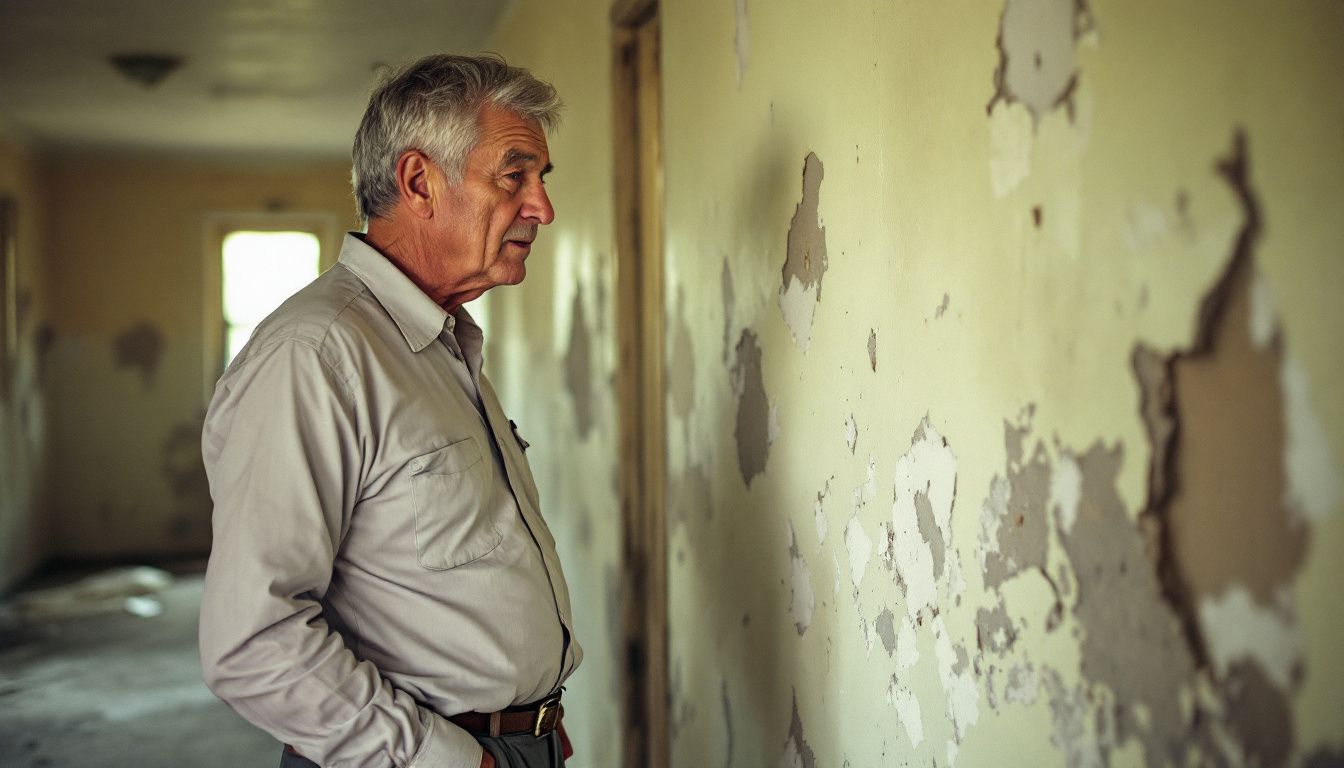
The Material Often Found in Buildings Is a Safety Risk Most People Never See Coming
Asbestos is a material often found in buildings that is a safety risk hiding in plain sight. It sits behind plasterboard, wrapped around pipework, pressed into floor tiles, and sprayed onto structural steelwork in millions of UK properties built or refurbished before 2000. Schools, hospitals, offices, council buildings, and public spaces across the country contain it.
The danger is rarely obvious. In most cases, the materials look completely ordinary — indistinguishable from anything else in the building fabric. That invisibility is precisely what makes asbestos one of the most serious ongoing public health issues in the United Kingdom, and why anyone responsible for a building has both a legal and a moral duty to understand it.
Why This Material Often Found in Buildings Is a Safety Risk Unlike Any Other
Asbestos fibres are microscopic. When asbestos-containing materials are disturbed — through drilling, cutting, sanding, or even vigorous cleaning — those fibres become airborne. You cannot see them, smell them, or taste them.
Once inhaled, they lodge permanently in lung tissue. The body cannot break down or expel asbestos fibres. Over time, they cause scarring, inflammation, and cellular damage that can take decades to manifest as disease.
This latency period — typically 20 to 50 years between exposure and diagnosis — is part of what makes asbestos so treacherous. The UK has one of the highest rates of asbestos-related disease in the world, a direct consequence of the material’s widespread use throughout the twentieth century.
Thousands of people die every year from conditions directly attributable to asbestos exposure. A significant number of those exposures occurred in public buildings during entirely ordinary daily activity — not on industrial sites, not in specialist trades, but in classrooms, corridors, and offices.
Where Asbestos Hides in Public and Commercial Buildings
Asbestos was not used in one or two building materials — it was used in dozens. Its properties made it attractive to builders and manufacturers: fire-resistant, thermally insulating, cheap, and durable. In buildings constructed or refurbished before 2000, asbestos can appear almost anywhere.
Pipe Lagging and Thermal Insulation
One of the most common locations is around pipework and boilers. Pipe lagging — the wrapping used to insulate hot water and heating pipes — frequently contained asbestos in older buildings. Boiler rooms, plant rooms, and service corridors in schools, hospitals, and public offices are particularly high-risk areas.
The danger intensifies during maintenance work. A plumber or heating engineer who cuts through old lagging without knowing it contains asbestos can release a significant quantity of fibres into a confined space. This is why the Control of Asbestos Regulations places strict duties on building owners to identify and communicate the presence of asbestos-containing materials before any work begins.
Ceiling and Floor Tiles
Textured ceiling coatings — often called Artex — were widely used in public buildings and domestic properties. Many formulations produced before the mid-1980s contained chrysotile asbestos. Similarly, vinyl floor tiles from the same era frequently contained asbestos as a binding agent.
In good condition, these materials are not necessarily an immediate risk. The problem arises when tiles crack, are sanded, or are removed without proper precautions. A floor tile being lifted with a chisel, or a ceiling being scraped before repainting, can release fibres without anyone realising what they have disturbed.
Roof Sheets and External Guttering
Asbestos cement was used extensively in roofing, particularly for flat-roofed extensions, outbuildings, garages, and industrial-style school buildings. Corrugated asbestos cement roof sheets were considered a practical, affordable solution for decades.
Over time, weathering degrades these materials, and they can begin to shed fibres into the surrounding environment. Guttering, downpipes, and rainwater goods were also manufactured using asbestos cement. Buildings with these features require regular inspection to assess their condition and determine whether they pose a risk to occupants or maintenance workers.
Sprayed Coatings and Structural Fireproofing
In larger public buildings — particularly those constructed during the 1950s to 1970s — sprayed asbestos coatings were applied directly to structural steelwork and concrete as fireproofing. This is one of the most hazardous forms of asbestos because the material is friable: it crumbles easily and releases fibres at the slightest disturbance.
These coatings are often hidden behind suspended ceilings or cladding, making them easy to overlook during a visual inspection. Only a thorough management survey, conducted by a qualified surveyor, can reliably locate them and assess the risk they present.
Other Common Locations
Beyond these primary locations, asbestos has been found in a wide range of other building materials, including:
- Insulating board used in partition walls, fire doors, and ceiling tiles
- Decorative textured coatings on walls and ceilings
- Rope seals and gaskets in boilers and heating equipment
- Bitumen-based damp-proof courses and roofing felts
- Soffit boards and fascias on older buildings
- Reinforced cement panels used as external cladding
The sheer range of materials means that any building constructed before 2000 should be treated as potentially containing asbestos until a professional survey confirms otherwise.
The Health Effects of Asbestos Exposure
The diseases caused by asbestos exposure are serious, often terminal, and entirely preventable. Every case of mesothelioma diagnosed in the UK today is the result of an exposure that happened years or decades ago — in many cases, in a public building or workplace where the risk was not properly managed.
Mesothelioma
Mesothelioma is a cancer of the mesothelium — the thin membrane lining the lungs, chest wall, and abdomen. It is almost exclusively caused by asbestos exposure. There is no cure, and survival rates remain poor despite advances in treatment.
The disease typically presents 30 to 50 years after the original exposure. Many victims were not asbestos workers — they were teachers, office staff, hospital employees, and members of the public who spent time in buildings where asbestos was present and disturbed during routine maintenance or refurbishment.
Lung Cancer
Asbestos exposure significantly increases the risk of lung cancer, and that risk multiplies considerably in people who also smoke. Unlike mesothelioma, lung cancer has multiple causes — but asbestos is a well-established and significant one.
Symptoms include a persistent cough, chest pain, shortness of breath, and unexplained weight loss. Because these symptoms overlap with many other conditions, diagnosis is often delayed, and the link to asbestos exposure is not always made. This underscores the importance of understanding and documenting exposure history.
Asbestosis
Asbestosis is a chronic lung disease caused by the scarring of lung tissue following prolonged asbestos exposure. The fibres trigger an inflammatory response that leads to fibrosis — a stiffening of the lungs that progressively impairs breathing. There is no treatment that reverses the damage.
People with asbestosis experience increasing breathlessness, a persistent dry cough, and chest tightness. The condition tends to worsen over time, even after exposure has ceased, and in severe cases it can be fatal.
Pleural Disease
Asbestos can also cause non-malignant changes to the pleura — the membrane surrounding the lungs. Pleural plaques are areas of thickened, calcified tissue that are generally benign but serve as a marker of significant asbestos exposure.
Pleural thickening and pleural effusion are more serious conditions that can cause significant breathing difficulties and may indicate the early stages of mesothelioma. Anyone with a history of asbestos exposure who develops respiratory symptoms should seek medical advice promptly.
Legal Duties for Building Owners and Managers
The Control of Asbestos Regulations sets out clear legal duties for those who own, occupy, or manage non-domestic premises. The duty to manage asbestos applies to anyone responsible for maintenance and repair of a building. This is not a voluntary standard — it is a legal obligation with serious consequences for non-compliance.
What the Duty to Manage Requires
The duty to manage requires responsible persons to take reasonable steps to find out whether asbestos-containing materials are present in their premises. Where asbestos is found — or presumed to be present — they must assess its condition, determine the risk it poses, and put in place a written asbestos management plan.
That plan must be kept up to date, shared with anyone who might disturb the materials (including contractors and maintenance staff), and reviewed regularly. The HSE’s guidance document HSG264 provides the technical framework for how asbestos surveys should be conducted and how findings should be recorded and acted upon.
Types of Asbestos Survey
There are two main types of asbestos survey recognised under HSG264:
- Management survey: The standard survey used to locate asbestos-containing materials that could be disturbed during normal occupation and routine maintenance. It involves sampling and assessment of accessible areas. An asbestos management survey is the starting point for most duty holders and forms the basis of an asbestos management plan.
- Refurbishment and demolition survey: Required before any major refurbishment or demolition work. It is more intrusive and aims to locate all asbestos-containing materials in the affected area, including those that may be concealed. If you are planning significant building works, a demolition survey is a legal requirement before work begins.
Building managers should ensure they commission the right type of survey for their circumstances. Getting this wrong — commissioning a management survey when a demolition survey is required — can leave both the duty holder and contractors exposed to serious legal and health risks.
Record Keeping and Contractor Communication
Records of asbestos surveys, management plans, and removal works must be maintained and kept accessible. Before any contractor begins work on a building, the responsible person must inform them of the location and condition of any known or presumed asbestos-containing materials.
Failure to do so puts both the contractor and building occupants at risk — and exposes the duty holder to significant legal liability. This duty applies whether you manage a small office or a large public building.
How Asbestos Surveys Work in Practice
An asbestos survey is not simply a visual inspection. A qualified surveyor will systematically assess the building, taking samples from materials suspected to contain asbestos and sending them to an accredited laboratory for analysis.
The results are compiled into a detailed report that maps the location, type, condition, and risk rating of every asbestos-containing material found. Good survey reports are practical documents — they tell building managers exactly where asbestos is, what condition it is in, and what action, if any, is required.
Materials in good condition that are unlikely to be disturbed may simply require monitoring. Materials in poor condition, or in areas where work is planned, may require encapsulation or professional asbestos removal.
What Happens If Asbestos Is Found?
Finding asbestos in a building does not automatically mean it needs to be removed. In many cases, asbestos-containing materials that are in good condition and are unlikely to be disturbed can be safely managed in place. The key is knowing where they are and keeping that information current.
When asbestos does need to be removed — because it is in poor condition, because it is being disturbed by planned works, or because a building is being demolished — the work must be carried out by a licensed contractor. Attempting to remove certain categories of asbestos without the appropriate licence is a criminal offence under the Control of Asbestos Regulations.
Licensed removal contractors are trained and equipped to work safely with asbestos, using specialist containment, respiratory protective equipment, and disposal procedures that prevent fibre release. The waste must be disposed of at a licensed facility — it cannot go into general waste streams.
Protecting Occupants During Routine Building Use
For most buildings, the greatest risk does not come from asbestos simply being present — it comes from asbestos being disturbed unknowingly. A maintenance engineer drilling through a wall, a cleaner using an abrasive pad on an old floor tile, or a decorator sanding a textured ceiling: these are the scenarios that cause real-world fibre release.
Practical steps building managers can take include:
- Commissioning an asbestos survey if one has not been carried out, or if the existing one is out of date
- Ensuring the asbestos register is accessible to all relevant staff and contractors
- Briefing maintenance contractors on the presence and location of asbestos-containing materials before any work begins
- Implementing a permit-to-work system for any activity that could disturb building fabric
- Reviewing the asbestos management plan annually and after any significant works or changes to the building
- Arranging re-inspection of known asbestos-containing materials to monitor their condition over time
These are not bureaucratic exercises — they are the practical measures that prevent exposure. The legal framework exists because these steps save lives.
Asbestos Surveys Across the UK
The need for professional asbestos surveying is the same regardless of where your building is located. Whether you manage a Victorian school, a 1970s office block, or a public leisure facility, the legal duties are identical and the risks are real.
If you manage a property in the capital, an asbestos survey London from a qualified team ensures your legal duties are met and your occupants are protected. For those responsible for buildings in the north-west, an asbestos survey Manchester gives you the same rigorous, accredited assessment. And for property managers in the Midlands, an asbestos survey Birmingham provides the local expertise and national standards your building requires.
Supernova Asbestos Surveys operates nationwide, with surveyors experienced in every type of property — from listed buildings to modern commercial premises, from small offices to large public estates. Every survey we carry out follows HSG264 guidance and is conducted by qualified, accredited professionals.
Get Expert Help Managing Asbestos in Your Building
Asbestos is a material often found in buildings that is a safety risk — but it is a manageable one when handled correctly. The combination of a thorough survey, a clear management plan, and well-informed contractors is what keeps building occupants safe and duty holders compliant.
Supernova Asbestos Surveys has completed over 50,000 surveys across the UK. Our team provides fast, accurate, accredited asbestos surveys for commercial, public, and residential properties of every type. We can advise you on the right survey for your circumstances, produce a clear and actionable report, and support you through every stage of asbestos management.
Call us on 020 4586 0680 or visit asbestos-surveys.org.uk to book a survey or speak to one of our specialists.
Frequently Asked Questions
Is asbestos still present in UK buildings today?
Yes. Asbestos was used extensively in UK construction until it was fully banned in 1999. Any building constructed or refurbished before 2000 may contain asbestos-containing materials. Surveys of schools, hospitals, offices, and public buildings continue to find asbestos in a wide range of locations, from pipe lagging to floor tiles and ceiling coatings.
How do I know if my building contains asbestos?
You cannot tell by looking. Asbestos-containing materials are visually indistinguishable from non-asbestos equivalents in most cases. The only reliable way to determine whether asbestos is present is to commission a professional asbestos survey, where a qualified surveyor takes samples and has them analysed by an accredited laboratory.
What are my legal obligations as a building manager?
Under the Control of Asbestos Regulations, anyone responsible for maintaining a non-domestic building has a duty to manage asbestos. This includes identifying whether asbestos is present, assessing the risk it poses, producing a written management plan, and sharing that information with contractors before any work begins. HSG264 provides the technical framework for meeting these duties.
Does asbestos always need to be removed?
Not necessarily. Asbestos-containing materials that are in good condition and are unlikely to be disturbed can often be safely managed in place. Removal is required when materials are in poor condition, when they will be disturbed by planned works, or when a building is being demolished. Any licensed removal must be carried out by a contractor holding the appropriate HSE licence.
How long does an asbestos survey take?
The duration depends on the size and complexity of the building. A survey of a small commercial premises might take a few hours, while a large public building could take a full day or more. Laboratory analysis of samples typically takes a few working days, after which a detailed written report is produced. Supernova Asbestos Surveys aims to turn around reports promptly so you can act on the findings without delay.