Making Asbestos Claims Against the Royal Navy: What Former Servicemen and Dockyard Workers Need to Know
If you served in the Royal Navy or worked in a British shipyard, there is a strong chance you were exposed to asbestos — often without warning, without protective equipment, and without any understanding of the risk you were taking. Decades later, that exposure is causing mesothelioma, lung cancer, asbestosis, and pleural thickening in thousands of former workers and servicemen across the UK. Asbestos claims against the Royal Navy are among the most significant areas of industrial disease litigation in the country, and understanding your rights could make a life-changing difference to you and your family.
Why Royal Navy Ships Contained So Much Asbestos
Asbestos was considered a wonder material throughout most of the twentieth century. It was cheap, fireproof, resistant to salt water and chemicals, and highly effective as an insulator — properties that made it almost irresistible to naval architects and engineers.
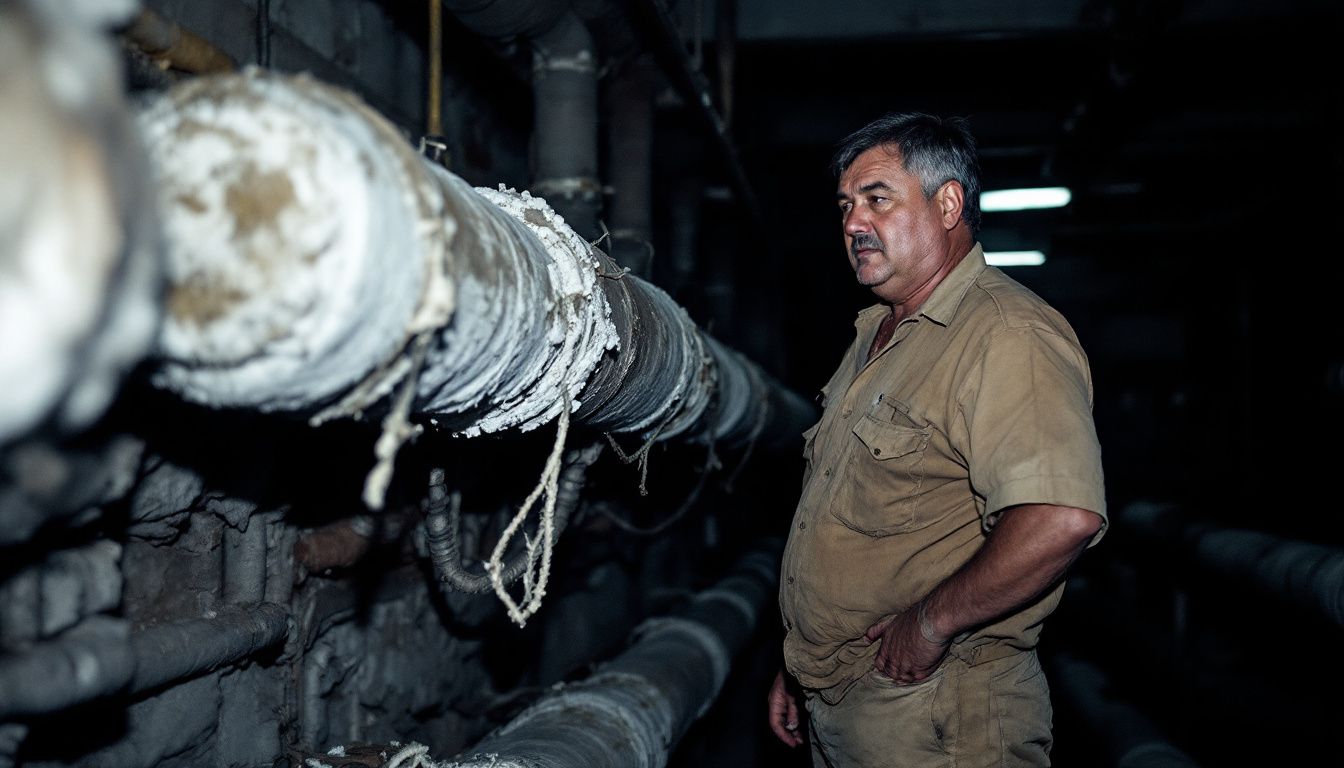
Ships were packed with asbestos-containing materials from bow to stern. Engine rooms, boiler spaces, pipe lagging, bulkheads, deckheads, sleeping quarters, and mess areas all contained asbestos in various forms. Servicemen who worked below decks — engineers, stokers, electricians, and damage control ratings — were exposed to the highest concentrations of asbestos fibres on a daily basis.
The Royal Navy began formally acknowledging the problem and started removing asbestos insulation from vessels in 1963. However, many ships continued to carry significant quantities of asbestos-containing materials well into the 1980s. Repair and refit work carried out in dockyards — including those at Portsmouth, Devonport, and Rosyth — continued to expose both naval personnel and civilian dockyard workers for many years after the risks were well understood.
Where Asbestos Was Found on Royal Navy Vessels
- Pipe and boiler insulation in engine rooms and boiler spaces
- Sprayed asbestos coatings on bulkheads and deckheads
- Asbestos rope and gaskets used in high-temperature pipework
- Insulating boards used in accommodation spaces and mess decks
- Fire-resistant doors and panels throughout the vessel
- Asbestos cement used in deck and hull construction
- Electrical insulation on cables and switchgear
The Health Consequences of Royal Navy Asbestos Exposure
Asbestos fibres, once inhaled, lodge permanently in lung tissue. The body cannot break them down or expel them. Over time — typically between 20 and 50 years — these fibres cause serious and often fatal diseases.
This long latency period is one of the most cruel aspects of asbestos-related illness. Many former Royal Navy personnel who served in the 1950s, 1960s, and 1970s are only now receiving diagnoses. By the time symptoms appear, the disease is frequently at an advanced stage.
Mesothelioma
Mesothelioma is a cancer of the lining of the lungs, abdomen, or heart. It is almost exclusively caused by asbestos exposure and has no cure. The prognosis is typically poor, with most patients surviving less than 18 months from diagnosis. Former Royal Navy personnel are disproportionately represented among mesothelioma victims in the UK.
Lung Cancer
Asbestos exposure significantly increases the risk of lung cancer, particularly in those who also smoked. The combination of cigarette smoke and asbestos fibres creates a substantially elevated risk compared to either factor alone. Lung cancer caused by occupational asbestos exposure is a compensable condition under UK law.
Asbestosis
Asbestosis is a chronic lung disease caused by the scarring of lung tissue. It makes breathing progressively more difficult and has no effective treatment beyond managing symptoms. Many former shipyard workers and naval personnel live with significant disability as a result of this condition.
Pleural Thickening and Pleural Plaques
Pleural thickening involves the hardening and thickening of the membrane surrounding the lungs, restricting breathing. Pleural plaques are areas of scar tissue on the pleura and, while not themselves symptomatic, are a clear marker of significant asbestos exposure. Their presence can support a legal claim and may indicate an increased risk of more serious disease in the future.
Asbestos Claims Against the Royal Navy: The Legal Framework
Asbestos claims against the Royal Navy are made against the Ministry of Defence (MoD), which is the legal successor to the employer responsibilities of the Admiralty and earlier naval authorities. These are civil claims in negligence, not criminal proceedings, and the burden of proof is the civil standard — on the balance of probabilities.
The law recognises that employers — including the MoD — had a duty of care to protect workers from foreseeable harm. Given that the dangers of asbestos were known to industry and government from at least the 1930s, courts have consistently found that failure to protect naval personnel and dockyard workers from asbestos exposure constituted a breach of that duty.
Who Can Make a Claim?
You may be entitled to bring asbestos claims against the Royal Navy if you fall into one of the following categories:
- You served in the Royal Navy and were exposed to asbestos during your service
- You worked as a civilian in a Royal Navy dockyard and were exposed to asbestos
- You are the family member of a former naval serviceman or dockyard worker who has died from an asbestos-related disease
- You were a contractor working on Royal Navy vessels or in naval facilities
Claims can be brought by the individual affected or, in cases where the person has died, by their estate and dependants. There is no requirement to have kept payslips or service records — specialist solicitors who handle these cases are experienced in tracing employment history through official records.
Time Limits for Asbestos Claims
In England and Wales, personal injury claims must generally be brought within three years of the date of knowledge — that is, within three years of when you knew or ought reasonably to have known that you had an asbestos-related condition caused by your exposure. For mesothelioma and other asbestos diseases, this is typically the date of diagnosis.
This means that even if your exposure happened 40 years ago, you may still be within the time limit to claim. Do not assume it is too late without taking specialist legal advice.
What Compensation Can Be Recovered in Royal Navy Asbestos Claims?
Compensation in asbestos claims is intended to reflect the full impact of the disease on your life and the lives of those who depend on you. Claims typically include several distinct heads of damage.
General Damages
General damages compensate for pain, suffering, and loss of amenity — the impact of the disease on your quality of life, your ability to enjoy activities, and your relationships. For serious conditions such as mesothelioma, these awards can be substantial.
Special Damages
Special damages cover financial losses that can be calculated, including:
- Loss of earnings, both past and future
- Cost of medical treatment and care
- Travel expenses for hospital appointments
- Cost of adaptations to the home
- Care provided by family members
Government Schemes and Benefits
In addition to civil claims against the MoD, former naval personnel and dockyard workers may be entitled to payments under government compensation schemes. The Diffuse Mesothelioma Payment Scheme provides payments to those who cannot trace a former employer or their insurer. Industrial Injuries Disablement Benefit may also be available for those with prescribed asbestos-related diseases.
A specialist asbestos disease solicitor will advise you on all available routes to compensation, not just the civil claim route.
Steps to Take If You Believe You Have Been Exposed to Royal Navy Asbestos
If you served in the Royal Navy or worked in a naval dockyard and are concerned about asbestos exposure, the following steps are the most important ones to take without delay.
- See your GP. Explain your occupational history and request referral to a respiratory specialist if you have any symptoms such as breathlessness, persistent cough, or chest pain. Early diagnosis gives more treatment options.
- Gather what records you can. Service records, employment records, payslips, and witness statements from former colleagues can all support a legal claim. Do not worry if you have limited documentation — specialist solicitors can help trace your history.
- Contact a specialist asbestos disease solicitor. Not all personal injury solicitors have the expertise to handle asbestos claims. Look for a firm with a dedicated industrial disease team and experience of claims against the MoD.
- Check entitlement to government benefits. You may be entitled to Industrial Injuries Disablement Benefit or payments under the Diffuse Mesothelioma Payment Scheme regardless of whether you pursue a civil claim.
- Tell your family. Family members who regularly laundered work clothing contaminated with asbestos dust may also have a claim for secondary exposure — sometimes called domestic or household exposure.
The Ongoing Legacy of Asbestos in UK Industry and the Built Environment
The UK banned the import and use of all forms of asbestos in 1999 and 2000. However, the legacy of decades of use in shipbuilding, construction, manufacturing, and the armed forces continues to cause deaths every year. The UK consistently has one of the highest rates of mesothelioma in the world, a direct consequence of the scale of asbestos use in British industry throughout the twentieth century.
The Royal Navy’s use of asbestos was not exceptional — it reflected the standard industrial practice of the era. What was exceptional was the intensity of exposure for those who worked in confined spaces below decks, often for years at a time, with no respiratory protection and no warning of the risk they were taking.
The consequences of that exposure are still being felt. New diagnoses of mesothelioma and other asbestos-related diseases continue to emerge, and they will continue to do so for many years to come given the long latency periods involved.
Asbestos Surveys and Your Legal Obligations Today
While legal claims focus on historic exposure, the management of asbestos in existing buildings — including former naval facilities, dockyard buildings, and industrial premises — remains a live concern under the Control of Asbestos Regulations. Any non-domestic property built before the year 2000 may contain asbestos-containing materials, and duty holders are legally required to identify, assess, and manage that risk.
Failing to do so is not only a criminal offence — it also exposes workers and visitors to the same kind of risk that has caused so much suffering in the Royal Navy and shipbuilding industries. The duty to manage asbestos is not optional, and ignorance of its presence is not a defence.
A management survey identifies the location, type, and condition of asbestos-containing materials in a building so that a proper asbestos management plan can be put in place. This is the standard survey required for occupied premises where no major works are planned.
Where refurbishment or renovation works are planned, a refurbishment survey goes further, identifying all asbestos-containing materials that could be disturbed during the work. This type of survey is a legal requirement before any intrusive works begin.
For properties being demolished — including older industrial and commercial buildings with connections to historic naval or manufacturing use — a demolition survey is required to locate every asbestos-containing material before any demolition work commences. All three survey types must be carried out by a competent surveyor following the methodology set out in HSG264.
Asbestos Surveys Across the UK
At Supernova Asbestos Surveys, our surveyors are fully qualified and experienced across all property types and sectors. We have completed over 50,000 surveys nationwide and understand the specific challenges posed by older industrial and commercial buildings where asbestos use was widespread.
If your premises are in the capital, our asbestos survey London service covers the full range of property types, including historic industrial and commercial buildings across all London boroughs.
For those managing properties in the north-west — including areas with historic connections to shipbuilding and heavy industry — our asbestos survey Manchester team provides fast, thorough surveys carried out by qualified surveyors with local knowledge.
In the Midlands, our asbestos survey Birmingham service supports duty holders across the region in meeting their legal obligations under HSE guidance and HSG264.
Frequently Asked Questions
Can I make asbestos claims against the Royal Navy if I served decades ago?
Yes. The time limit for asbestos claims runs from the date of knowledge — typically the date you were diagnosed with an asbestos-related condition — not the date of exposure. Even if your service was 40 or 50 years ago, you may still be within the legal time limit. Always take specialist legal advice before assuming a claim is out of time.
What if the person who was exposed has already died?
Claims can still be brought after the death of the person who was exposed. Their estate and dependants can pursue a claim on their behalf. A specialist asbestos disease solicitor can advise on the process, including claims under the Fatal Accidents Act and the Law Reform (Miscellaneous Provisions) Act.
Do I need to have kept my service records or employment documents to make a claim?
No. While records can be helpful, they are not essential. Specialist solicitors who handle asbestos claims against the Royal Navy and the MoD are experienced in tracing service and employment history through official sources. Witness statements from former colleagues can also support a claim where documentary evidence is limited.
Can family members claim if they were exposed to asbestos brought home on work clothing?
Yes. Secondary or domestic exposure — where family members inhaled asbestos fibres from contaminated work clothing that was brought home and laundered — is a recognised basis for a legal claim. If a family member has developed an asbestos-related disease as a result of this kind of exposure, they may be entitled to compensation.
Is a professional asbestos survey required for former naval or dockyard buildings?
Yes. Any non-domestic building constructed before 2000 — including former naval facilities, dockyard buildings, and associated commercial premises — may contain asbestos-containing materials. Under the Control of Asbestos Regulations, duty holders are legally required to manage that risk, and a professional asbestos survey is the essential first step. Contact Supernova Asbestos Surveys on 020 4586 0680 or visit asbestos-surveys.org.uk to arrange a survey.
Talk to Supernova Asbestos Surveys Today
If you are a property manager, employer, or duty holder responsible for premises that may contain asbestos — whether connected to historic naval use or not — Supernova Asbestos Surveys can help you meet your legal obligations quickly and professionally. With over 50,000 surveys completed nationwide, we have the experience and expertise to handle properties of every age, type, and complexity.
Call us today on 020 4586 0680 or visit asbestos-surveys.org.uk to book a survey or speak to one of our qualified surveyors about your requirements.