The Silent Threat: Why Preventing Asbestos-Related Lung Diseases Through Education and Awareness Saves Lives
Asbestos is still present in hundreds of thousands of buildings across the UK, and it continues to kill more people here than in almost any other country in the world. Preventing asbestos-related lung diseases through education and awareness is not a box-ticking exercise — it is a genuine, life-saving priority for anyone who owns, manages, or works in older properties.
Understanding the risks, knowing where asbestos hides, and acting responsibly when you find it can mean the difference between a healthy life and a devastating diagnosis decades down the line. With the right knowledge and the right professional support, those risks are entirely manageable.
What Are Asbestos-Related Lung Diseases?
Asbestos fibres, when disturbed, become airborne and can be inhaled deep into the lungs. Once lodged there, the body cannot expel them. Over time — often 20 to 40 years — these fibres cause serious, frequently fatal diseases.
The main asbestos-related conditions are:
- Mesothelioma — A rare and aggressive cancer of the lining of the lungs (pleura) or abdomen. It is almost exclusively caused by asbestos exposure and carries a very poor prognosis.
- Asbestos-related lung cancer — Distinct from mesothelioma, this is a malignancy within the lung tissue itself. Asbestos exposure significantly increases risk, particularly in smokers.
- Asbestosis — A chronic lung condition caused by prolonged exposure to asbestos fibres, leading to progressive scarring (fibrosis) of lung tissue, breathlessness, and a reduced quality of life.
- Pleural plaques and pleural effusion — Thickening or fluid build-up around the lungs, which can cause chest discomfort and breathing difficulties.
- Diffuse pleural thickening — Extensive scarring of the pleural lining, which can severely restrict lung function.
The long latency period between exposure and diagnosis is what makes asbestos so insidious. A builder who worked with asbestos-containing materials in the 1980s may only receive a diagnosis today. This delay also means the full scale of the problem is still unfolding across the UK.
Recognising the Warning Signs
Symptoms of asbestos-related lung diseases often develop gradually and are easy to dismiss in the early stages. Anyone with a history of asbestos exposure should be alert to the following:
- Persistent shortness of breath, particularly during physical activity
- A chronic, worsening cough that does not resolve
- Chest tightness or pain
- Unexplained fatigue and weight loss
- Finger clubbing (widening and rounding of the fingertips), which can indicate advanced lung disease
If you or someone you know has a history of working with or around asbestos and is experiencing any of these symptoms, seek medical advice promptly. Early detection significantly improves treatment options and quality of life.
Inform your GP of any past asbestos exposure — even if it was decades ago. Do not wait for symptoms to become severe before seeking help.
Where Does Asbestos Hide? Identifying Exposure Risks
Any building constructed or refurbished before the year 2000 in the UK may contain asbestos-containing materials (ACMs). The UK’s full ban on asbestos use came into force in 1999, but the mineral had been used extensively in construction for decades before that.
Common locations where asbestos is found include:
- Pipe and boiler lagging in plant rooms and basements
- Sprayed coatings on structural steelwork and ceilings
- Ceiling tiles and textured coatings (such as Artex)
- Floor tiles and the adhesive used to fix them
- Insulating board used in partition walls, fire doors, and ceiling panels
- Roof sheeting and guttering made from asbestos cement
- Gaskets and rope seals in older heating systems
- Window putty and decorative coatings in older properties
- Electrical panel boards and cable insulation
Asbestos in good condition and left undisturbed poses a low risk. The danger arises when ACMs are damaged, drilled, cut, sanded, or otherwise disturbed — releasing microscopic fibres into the air.
This is why awareness of where ACMs are located is so fundamental to prevention. You cannot protect yourself from something you do not know is there.
Who Is Most at Risk?
Occupational exposure remains the primary route by which people develop asbestos-related diseases. Trades with historically high exposure include plumbers, electricians, carpenters, laggers, shipbuilders, and demolition workers.
Secondary exposure is also well-documented. Family members of workers who brought fibres home on their clothing have also developed mesothelioma — a sobering reminder that the risks extend well beyond the workplace.
The Building Trades Workforce
Today, the highest-risk group is arguably the building trades workforce. Maintenance workers, heating engineers, and construction teams working on pre-2000 buildings regularly encounter asbestos without always being aware of it.
This is precisely why preventing asbestos-related lung diseases through education and awareness is so critical for these groups. Without targeted training and clear information, the exposure continues — and so does the harm.
Domestic DIY: An Underestimated Risk
Homeowners carrying out DIY projects in older properties are increasingly recognised as a vulnerable group. Drilling into walls, sanding floors, removing ceiling tiles, or disturbing old pipe lagging without knowing what materials are present can cause significant fibre release.
Unlike professional workers, most homeowners have no asbestos awareness training whatsoever. This knowledge gap is one of the most important targets for public education efforts, and closing it requires straightforward, accessible information rather than technical jargon.
The UK Legal Framework: What Duty Holders Must Know
The Control of Asbestos Regulations place clear legal duties on those responsible for non-domestic premises. These are not optional guidelines — they are enforceable law, and breaches can result in significant fines and prosecution.
Under these regulations, duty holders must:
- Assess whether asbestos is present in their premises
- Presume materials contain asbestos unless there is strong evidence they do not
- Produce and maintain a written asbestos management plan
- Monitor the condition of any known ACMs
- Provide information about the location and condition of ACMs to anyone likely to disturb them
- Ensure that any work involving asbestos is carried out by suitably trained and, where required, licensed contractors
The HSE’s guidance document HSG264 sets out the standards for asbestos surveying and is the definitive reference for anyone commissioning or conducting surveys in the UK. Compliance with HSG264 is the benchmark against which survey quality is measured by regulators.
Domestic property owners have fewer legal obligations, but they still have a duty of care to contractors working in their homes. Commissioning a survey before any renovation or refurbishment work is strongly advisable.
Preventive Measures: How to Reduce the Risk of Exposure
Prevention is far more effective — and far less costly — than dealing with the consequences of asbestos exposure. The following measures are practical steps that property managers, employers, and building owners can take right now.
Commission a Professional Asbestos Survey
The first and most important step is to know what you are dealing with. A professional asbestos survey, conducted by a UKAS-accredited surveyor in accordance with HSG264, will identify the location, type, and condition of any ACMs in your building.
There are two main types of survey:
- A management survey identifies ACMs that could be disturbed during normal occupancy and maintenance. It is required for all non-domestic premises and forms the foundation of any asbestos management plan.
- A demolition survey is a more intrusive inspection required before any major building work, renovation, or demolition. It ensures that no ACMs are inadvertently disturbed during works.
Supernova Asbestos Surveys operates nationwide, with specialist teams covering major cities. Whether you need an asbestos survey London, an asbestos survey Manchester, or an asbestos survey Birmingham, our accredited surveyors can mobilise quickly and deliver results you can rely on.
Maintain an Up-to-Date Asbestos Register
Once a survey has been completed, the findings must be documented in an asbestos register. This register should record the location, type, condition, and risk rating of every ACM identified.
The register must be kept up to date and made available to contractors before they begin any work on the premises. An outdated or incomplete register is a serious liability — if a contractor disturbs asbestos because they were not informed of its presence, the duty holder faces both legal consequences and moral responsibility for any resulting harm.
Safe Handling and Disposal of Asbestos Materials
When ACMs need to be removed — whether because they are deteriorating or because building work requires it — the removal must be handled correctly. Licensed asbestos removal contractors are legally required for work involving the most hazardous types of asbestos, including sprayed coatings, asbestos insulating board, and pipe lagging.
Key safety protocols during asbestos removal include:
- Enclosing the work area with polythene sheeting and maintaining negative air pressure
- Wetting materials to suppress fibre release
- Using respiratory protective equipment (RPE) appropriate to the task
- Double-bagging all waste in clearly labelled, UN-approved sacks
- Disposing of waste only at licensed hazardous waste sites
- Conducting air clearance testing before the enclosure is dismantled
Professional asbestos removal carried out by licensed contractors provides the safest outcome for everyone involved — workers, occupants, and the wider public.
The Role of Personal Protective Equipment
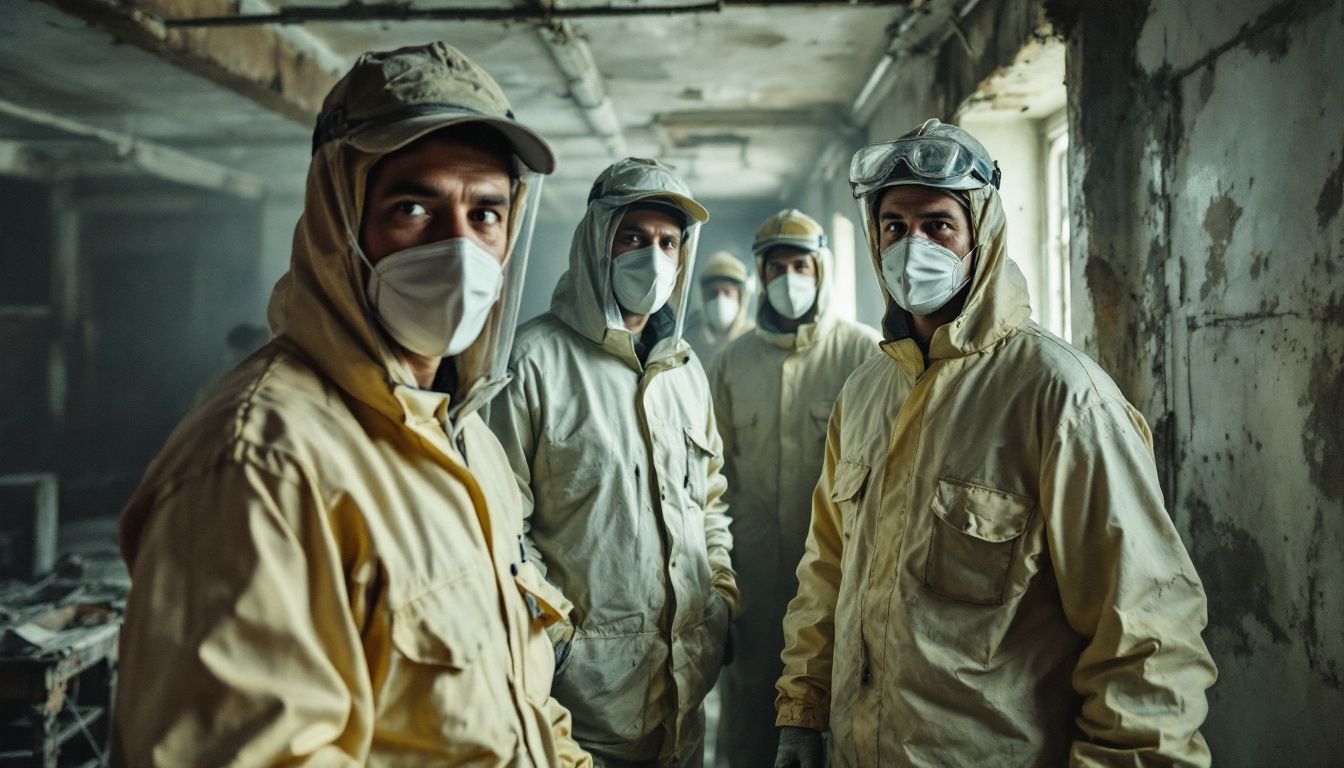
For any work that may disturb asbestos, appropriate PPE is non-negotiable. The correct PPE for asbestos work typically includes:
- A disposable coverall (Type 5, Category 3) — worn once and disposed of as asbestos waste
- Respiratory protective equipment (RPE) — at minimum a half-face FFP3 disposable mask, or a full-face respirator with P3 filter for higher-risk work
- Disposable gloves and boot covers
PPE must be properly fitted, regularly inspected, and used correctly. Wearing a mask around your neck or under your chin provides no protection whatsoever.
Training on correct donning and doffing procedures is essential — removing contaminated PPE incorrectly can itself cause exposure.
Education and Awareness: The Cornerstone of Preventing Asbestos-Related Lung Diseases
Preventing asbestos-related lung diseases through education and awareness is not simply about informing people that asbestos is dangerous — most people already know that in general terms. The challenge is translating that general awareness into specific, practical knowledge that changes behaviour on the ground.
Training Requirements for Workers
The Control of Asbestos Regulations require that anyone liable to disturb asbestos during their work must receive appropriate training. This applies not just to asbestos removal contractors, but to a wide range of trades including electricians, plumbers, plasterers, and general maintenance workers.
Training should cover:
- The properties of asbestos and its effects on health
- The types of ACMs likely to be encountered and how to identify them
- How to avoid creating asbestos dust and what to do if you suspect you have disturbed ACMs
- The correct use, fitting, and disposal of PPE
- Emergency procedures and who to contact
The HSE provides clear guidance on the levels of training required for different types of asbestos work. Employers have a legal duty to ensure their workers are adequately trained before they are exposed to the risk — this is not something that can be delegated or ignored.
Raising Public Awareness Beyond the Workplace
Beyond the workplace, public awareness plays an important role in reducing asbestos-related harm. Homeowners, tenants, and community members all need access to clear, accurate information about the risks posed by asbestos in older buildings.
Key messages that public awareness campaigns should communicate include:
- Any building built before 2000 may contain asbestos — do not assume otherwise
- Asbestos that is undisturbed and in good condition is generally safe to leave in place
- Never attempt to remove or disturb suspected ACMs without professional advice
- A professional survey is the only reliable way to identify what is present in your building
- If in doubt, stop work and seek expert guidance before proceeding
Local authorities, housing associations, and trade bodies all have a role to play in disseminating this information. The more widely these messages reach, the fewer people will be harmed by preventable exposure.
The Importance of Schools and Young People
Young people entering the construction and maintenance trades are a particularly important audience for asbestos education. Many will spend their entire careers working in buildings that contain ACMs, and the habits they develop early will shape their risk profile for decades.
Incorporating asbestos awareness into apprenticeship programmes, vocational training, and health and safety inductions is a straightforward step that can have a significant long-term impact. Employers and training providers should treat this as a standard element of onboarding — not an optional extra.
The Ongoing Public Health Challenge
Despite decades of campaigning and tightening regulation, asbestos-related diseases remain a significant public health burden in the UK. The lag between exposure and diagnosis means that cases diagnosed today often reflect exposures that occurred many years ago — but new exposures are still happening, and their consequences will continue to emerge for decades to come.
The good news is that the tools to prevent new cases already exist. Professional surveys, robust management plans, proper training, and clear public information are all available and effective. The challenge is ensuring they are consistently applied.
Every property manager who commissions a survey, every employer who trains their workforce, and every homeowner who pauses before drilling into an old wall is contributing to a reduction in future harm. These individual actions, taken at scale, are what preventing asbestos-related lung diseases through education and awareness actually looks like in practice.
Ready to Protect Your Building and the People in It?
Supernova Asbestos Surveys has completed over 50,000 surveys nationwide, helping property owners, managers, and employers meet their legal obligations and protect the people in their buildings. Our UKAS-accredited surveyors work to HSG264 standards and provide clear, actionable reports that make managing asbestos straightforward.
Whether you need a management survey, a demolition survey, or expert advice on asbestos removal, we are ready to help. Call us today on 020 4586 0680 or visit asbestos-surveys.org.uk to book your survey or request a quote.
Frequently Asked Questions
How do asbestos-related lung diseases develop?
When asbestos-containing materials are disturbed, microscopic fibres become airborne and can be inhaled into the lungs. The body cannot remove these fibres, and over time — typically 20 to 40 years — they cause inflammation and scarring that can lead to conditions including mesothelioma, asbestosis, and asbestos-related lung cancer. The long latency period means that people exposed decades ago are still being diagnosed today.
Is asbestos in my building dangerous if I leave it alone?
Asbestos-containing materials that are in good condition and are not being disturbed generally pose a low risk. The danger arises when ACMs are damaged, drilled, cut, or sanded, releasing fibres into the air. The best approach is to have a professional survey carried out so you know exactly what is present, where it is, and what condition it is in — then manage it accordingly.
Who is legally responsible for managing asbestos in a building?
Under the Control of Asbestos Regulations, the duty to manage asbestos falls on the person or organisation responsible for maintaining non-domestic premises — typically the building owner, employer, or facilities manager. This duty holder must assess whether ACMs are present, maintain an asbestos register, and ensure that anyone working in the building is informed of the location and condition of any ACMs.
What training do workers need before working in buildings that may contain asbestos?
The Control of Asbestos Regulations require that any worker who is liable to disturb asbestos during their work receives appropriate asbestos awareness training. This includes trades such as electricians, plumbers, plasterers, and maintenance workers — not just specialist asbestos contractors. Training must cover the health risks, how to identify potential ACMs, how to avoid disturbing them, and what to do if accidental disturbance occurs.
When do I need a licensed contractor to remove asbestos?
Licensed asbestos removal contractors are legally required for work involving the most hazardous ACMs, including sprayed asbestos coatings, asbestos insulating board, and pipe lagging. Some lower-risk work may be carried out by notifiable non-licensed contractors, and a smaller category of work is non-notifiable. A professional asbestos survey will identify the types of ACMs present and advise on the appropriate level of contractor required for any removal work.