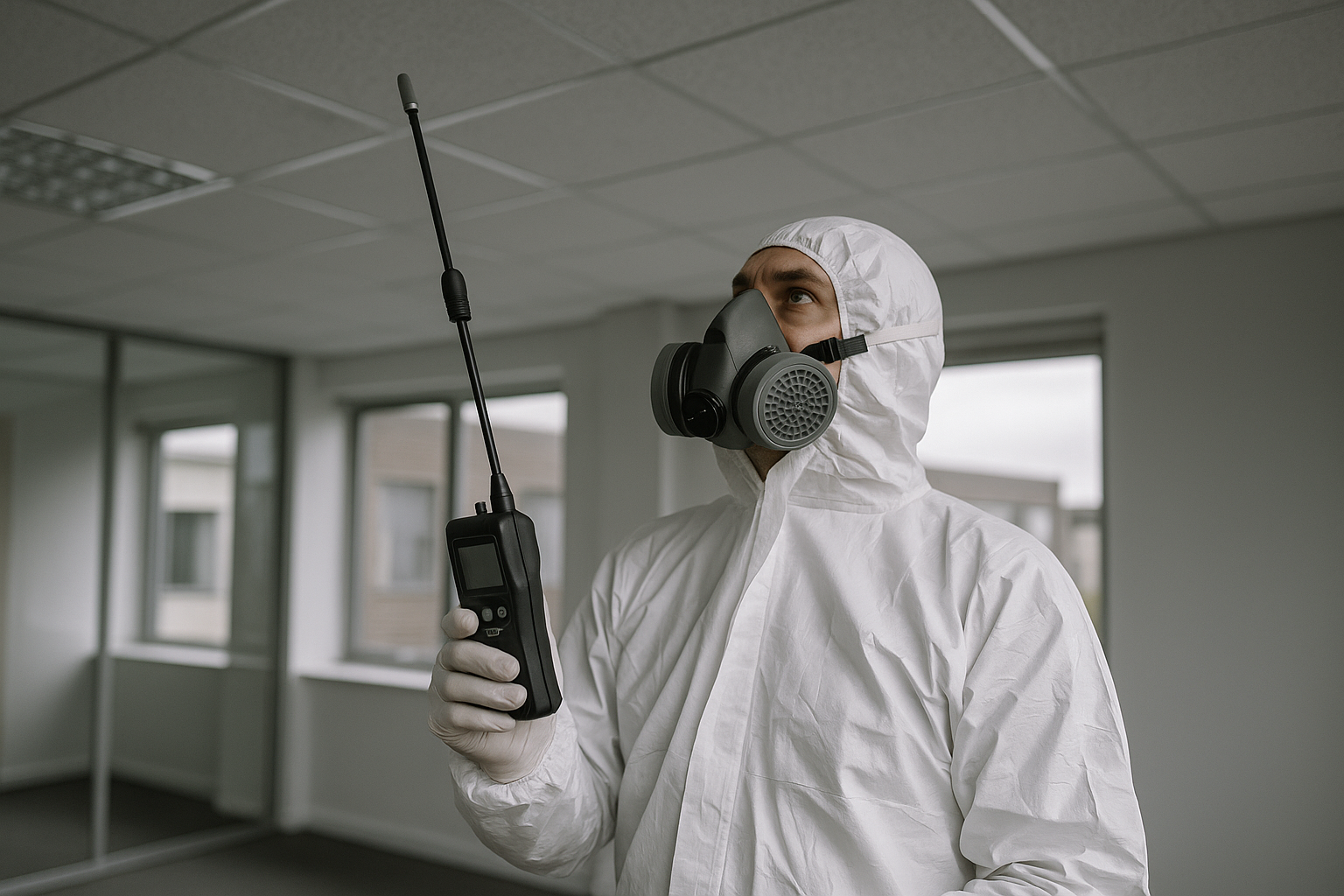
Start stripping out an older property without understanding the asbestos report requirements that apply to your situation, and you risk far more than a delayed project. You could expose tradespeople, occupants and neighbours to asbestos fibres, breach your legal duties, and turn a straightforward renovation into a costly compliance problem.
For UK property owners, landlords, facilities teams and project managers, asbestos reporting is not a box-ticking exercise. It is a practical step that informs safe work, helps contractors plan properly, and demonstrates that you have taken reasonable action under the Control of Asbestos Regulations and relevant HSE guidance, including HSG264.
What Do Asbestos Report Requirements Actually Mean?
When people talk about asbestos report requirements, they usually mean the survey, sampling and written documentation needed before managing, refurbishing or demolishing a building that may contain asbestos-containing materials. The exact requirement depends on the building, the planned works and whether the property is domestic or non-domestic.
In simple terms, the report must give you enough reliable information to manage asbestos safely or to carry out intrusive works without disturbing hidden materials unexpectedly.
A proper asbestos report should clearly set out:
- The type of survey completed
- The areas inspected and any limitations on access
- Suspected or confirmed asbestos-containing materials
- Sample results where testing has been carried out
- Material assessments and condition notes
- Photographs and location details
- Recommendations for management, removal or further action
If the report is vague, incomplete or based on the wrong survey type, it may be of little practical use when work starts on site.
Why Asbestos Report Requirements Matter Before Renovation
Many UK properties built before 2000 may contain asbestos in textured coatings, floor tiles, insulation board, pipe lagging, cement products, soffits, ceiling panels and other materials. You cannot safely rely on age, appearance or guesswork alone.
If contractors cut, drill or remove materials without knowing what is present, asbestos fibres can be released into the air and spread through the work area. The health consequences of fibre exposure — including mesothelioma and asbestosis — are serious and irreversible.
From a project management perspective, getting the right report early helps you:
- Plan works realistically and avoid unexpected stoppages
- Brief contractors accurately before they mobilise
- Budget for removal or encapsulation if needed
- Protect occupants and workers throughout the project
- Demonstrate evidence of compliance if challenged
It also prevents one of the most common mistakes in renovation projects: commissioning a basic survey when the work actually requires a more intrusive survey type.
Which Asbestos Survey Do You Need?
Choosing the correct survey type is one of the most important parts of meeting asbestos report requirements. HSE guidance and HSG264 make a clear distinction between surveys for normal occupation and surveys for intrusive construction work.
Management Survey
A management survey is designed for the normal occupation and use of a building. Its purpose is to locate, as far as reasonably practicable, the presence and extent of any suspected asbestos-containing materials that could be disturbed during routine occupancy, maintenance or minor installation work.
This survey is usually appropriate where the building remains in everyday use and no major intrusive works are planned. It helps dutyholders manage asbestos in place rather than remove it.
A management survey report will typically include:
- Accessible areas inspected during the visit
- Presumed or sampled materials with condition notes
- Material assessments and priority for management actions
- Recommendations for ongoing monitoring or labelling
It is not a substitute for a refurbishment or demolition survey where the building fabric will be disturbed.
Refurbishment Survey
If you are upgrading kitchens, bathrooms, plant rooms, office suites or any part of a building where the fabric will be opened up, an asbestos refurbishment survey is usually required. This survey is intrusive — it may involve opening floors, ceilings, risers, boxing, service voids and wall linings.
The aim is to find asbestos in the area affected by the planned works before any contractor starts cutting or removing material. For renovation projects, this is often the survey that satisfies the practical side of asbestos report requirements.
Without it, hidden asbestos can remain undiscovered until demolition or strip-out is already underway — which is far more disruptive and expensive to deal with.
Demolition Survey
Where a building, or part of it, is to be demolished, a demolition survey is required. This is fully intrusive and intended to locate asbestos-containing materials throughout the entire structure so they can be removed or managed before demolition proceeds.
The survey may involve destructive inspection techniques, and the area should usually be vacant before the work is carried out. Attempting demolition without this survey in place is a serious breach of the Control of Asbestos Regulations.
What Should Be Included in an Asbestos Report?
Not all reports are equal. To meet asbestos report requirements properly, the document needs to be clear, specific and genuinely usable by the people making decisions on site. A report that sits in a filing cabinet and cannot be acted upon has limited value.
Property and Client Details
The report should identify the property address, client name, survey date, surveyor details and the scope of the inspection. Reports are often shared between owners, managing agents, contractors and consultants, so accuracy here is essential from the outset.
Survey Type and Scope
The report must state clearly whether it is a management, refurbishment or demolition survey. It should also define exactly which areas were included and which were excluded from the inspection.
Partial coverage is one of the biggest sources of confusion on refurbishment projects. If only part of a building was surveyed, that must be obvious in the document — not buried in a footnote.
Methodology and Limitations
HSG264 expects surveys to be planned and carried out systematically. The report should explain how the inspection was completed, whether samples were taken, and what limitations affected access during the visit.
Common limitations include:
- Locked or inaccessible rooms
- Live electrical risks preventing access to voids
- Fixed finishes that could not be opened during a management survey
- Occupied areas where intrusive access was not possible
Where limitations exist, do not assume inaccessible areas are asbestos-free. They need to be treated as unknown and addressed before any work begins in those zones.
Findings and Asbestos Locations
The core of the report is the findings section. Each suspected or confirmed asbestos-containing material should be listed with enough detail to locate it on site. This typically includes:
- Room or area reference
- Material description and type
- Extent or approximate quantity
- Surface treatment and current condition
- Accessibility and likelihood of disturbance
- Photographs to support identification
Good reporting helps site teams find the material quickly and avoid accidental disturbance during adjacent works.
Sample Results and Asbestos Testing
Where samples are taken, the report should include the laboratory results alongside the relevant material entries. If you need standalone sampling or confirmation of a specific material, professional asbestos testing is the right next step.
In some cases, clients need fast follow-up sampling in isolated areas before a decision can be made about whether to proceed. Where materials have not been sampled, they may be presumed to contain asbestos unless proven otherwise — which affects how contractors must treat them on site.
Material Assessment and Risk Context
An asbestos report often includes a material assessment to indicate how easily fibres could be released if the material is disturbed. This is a useful indicator, but it should not be mistaken for a full judgement on whether refurbishment can proceed safely.
For planned works, the practical question is straightforward: will this material be disturbed by the job? If the answer is yes, managing it in place may not be sufficient, and removal or other controls may be required before work starts.
Recommendations and Next Actions
The report should end with practical recommendations. These may include:
- Leave and manage in place with regular monitoring
- Repair minor damage to prevent fibre release
- Label or protect materials to alert future workers
- Arrange licensed or non-licensed removal before works commence
- Carry out further access or additional survey work in excluded areas
- Share findings with contractors before the project starts
This section is where a useful report earns its value. It should tell you what to do next, not simply record what was found.
Who Needs to Comply With Asbestos Report Requirements?
The answer depends on the property type and the work being planned. In non-domestic premises, the duty to manage asbestos is clearly set out under the Control of Asbestos Regulations. That duty typically applies to employers, landlords, managing agents and anyone with maintenance responsibility for the building.
Domestic properties are slightly different, but asbestos report requirements still matter where contractors are working. If tradespeople are carrying out refurbishment or demolition in a home built before 2000, asbestos information may still be needed to protect them from exposure — regardless of whether the owner has a formal legal duty.
In practice, the people who most often need asbestos reports include:
- Commercial landlords and managing agents
- Facilities managers and estates teams
- Housing associations and registered providers
- Schools, academies and further education providers
- NHS trusts and care providers
- Developers and principal contractors
- Homeowners planning intrusive renovation works
If you commission works and others may disturb the building fabric, you should assume asbestos information will be needed unless the building is positively confirmed to be asbestos-free.
When Should You Arrange the Report?
Early. That is the simplest and most effective advice on this subject. One of the most damaging project mistakes is waiting until builders are ready to start before commissioning the survey. By that point, if asbestos is found, the programme can stall while extra survey work, additional sampling or licensed removal is arranged.
That delay costs money, disrupts occupants and can damage relationships with contractors who are already mobilised.
To stay ahead of asbestos report requirements, follow this sequence:
- Define the planned works clearly, including all areas that will be disturbed
- Identify the correct survey type for those works
- Commission the survey with a competent, experienced surveyor
- Review the report in detail before finalising the project programme
- Arrange any removal, encapsulation or further investigation required
- Issue the relevant asbestos information to all contractors before work starts
If the scope changes mid-project, review the report again. A survey for one room does not automatically cover the corridor, riser or adjoining service void that gets opened up later in the programme.
Common Mistakes That Lead to Non-Compliance
Most asbestos compliance problems stem from poor planning rather than deliberate avoidance. The good news is that they are almost always preventable with a little foresight.
Using the Wrong Survey Type
A management survey is not sufficient for intrusive refurbishment. If walls, ceilings, floors or fixed joinery will be opened up, you need a refurbishment survey covering the affected area — not a management-level inspection. Using the wrong survey type is one of the most common compliance errors on renovation projects.
Relying on an Old Report Without Review
An asbestos report from a previous survey may no longer reflect the current condition of materials, especially if works have been carried out since it was produced. Before starting new works, check when the existing report was produced, what areas it covered, and whether conditions have changed.
If materials have been disturbed, damaged or partially removed, a fresh survey or additional sampling may be needed before the report can be relied upon.
Failing to Share the Report With Contractors
Having a report is only useful if the right people see it. Under the Control of Asbestos Regulations, relevant asbestos information must be made available to anyone likely to disturb the material. That means contractors, subcontractors and any trades working in the building.
A report that exists but has not been shared provides very limited protection if something goes wrong on site.
Assuming Domestic Properties Are Exempt
Homeowners sometimes believe that because they live in a private dwelling, asbestos regulations do not apply to them. The formal duty to manage sits with non-domestic dutyholders, but the health risk to tradespeople is identical regardless of property type.
Any competent contractor working in a pre-2000 home should be asking about asbestos before they start. If you cannot provide that information, the responsible approach is to arrange a survey before works begin.
Asbestos Surveys Across the UK
Asbestos report requirements apply to properties across the country, from large commercial estates to individual residential properties. Whether you are managing a portfolio or planning a single home renovation, the same principles apply: get the right survey, get it early, and make sure the report is usable.
Supernova Asbestos Surveys operates nationwide. If you are based in the capital and need an asbestos survey London clients trust for accuracy and turnaround, our team covers the full London area. For projects in the North West, our asbestos survey Manchester service handles everything from commercial premises to housing stock. And for projects in the Midlands, an asbestos survey Birmingham can be arranged quickly to keep your programme on track.
With over 50,000 surveys completed across the UK, Supernova has the experience and capacity to support projects of any size or complexity.
How to Choose a Competent Surveyor
The quality of an asbestos report is only as good as the surveyor who produced it. HSG264 sets out clear expectations for surveyor competence, including appropriate training, qualifications and experience.
When selecting a surveyor, look for:
- BOHS P402 qualification or equivalent for building surveys and bulk sampling
- Membership of a recognised professional body such as BOHS or RSPH
- UKAS-accredited laboratory used for sample analysis
- Clear methodology and reporting format aligned with HSG264
- Experience with the specific building type and survey scope required
- Professional indemnity and public liability insurance
A surveyor who cannot explain their methodology or whose reports lack the detail described in this article is unlikely to meet the standard expected under current HSE guidance. Do not commission a survey purely on price — the cost of an inadequate report can far exceed any initial saving.
It is also worth confirming that the surveyor will carry out their own asbestos testing using an accredited laboratory, rather than presuming all materials without analysis. Presumption is acceptable in some circumstances under HSG264, but where certainty is needed before intrusive works, laboratory confirmation is the only reliable approach.
Keeping Your Asbestos Report Up to Date
An asbestos report is not a one-time document. For non-domestic premises, the duty to manage asbestos requires an ongoing management plan that is reviewed and updated regularly. The report forms the foundation of that plan, but it needs to remain current.
Practical steps to keep your asbestos information accurate include:
- Recording any changes to materials following maintenance or minor works
- Re-inspecting known asbestos-containing materials at regular intervals
- Updating the register when materials are removed, encapsulated or newly discovered
- Commissioning a fresh survey before any significant change of use or refurbishment
- Ensuring new staff with maintenance responsibilities are aware of the register and its contents
If the building changes hands, the asbestos register should be passed on to the new owner or managing agent. Gaps in the chain of information are a common cause of accidental exposure during subsequent works.
Frequently Asked Questions
Do I need an asbestos report before renovating a domestic property?
There is no formal legal duty on homeowners to commission an asbestos survey before renovation, but any contractor working in a pre-2000 property is entitled to asbestos information before they start work. If you cannot confirm the building is asbestos-free, the responsible approach is to arrange a survey. This protects tradespeople and prevents costly disruption if asbestos is discovered mid-project.
What is the difference between a management survey and a refurbishment survey?
A management survey is designed for buildings in normal use and identifies asbestos-containing materials that could be disturbed during routine occupancy or minor maintenance. A refurbishment survey is intrusive and required before any works that will open up the building fabric. If you are planning renovation work, a management survey alone is unlikely to meet asbestos report requirements for the scope of the project.
How long does an asbestos report remain valid?
There is no fixed expiry date for an asbestos report, but its reliability depends on whether conditions in the building have changed since it was produced. For non-domestic premises, the asbestos register should be reviewed regularly as part of the management plan. Before any new works, always check whether the existing report covers the areas affected and whether any materials have been disturbed, damaged or removed since the survey was carried out.
Can I use an asbestos report from a previous owner?
Yes, provided it is sufficiently detailed, covers the relevant areas and accurately reflects current conditions. Review the report carefully before relying on it. If it is several years old, if works have been carried out since it was produced, or if the survey type does not match your planned works, you should commission a new survey or targeted additional sampling before proceeding.
Who is responsible for providing asbestos information to contractors?
Under the Control of Asbestos Regulations, anyone with responsibility for maintaining or managing a non-domestic building must share relevant asbestos information with contractors before they carry out any work that could disturb asbestos-containing materials. In practice, this means the dutyholder — whether a landlord, managing agent, employer or facilities manager — must ensure contractors have seen the asbestos register before work begins.
Get Your Asbestos Report Right First Time
Meeting asbestos report requirements does not have to be complicated, but it does require the right survey type, a competent surveyor and a report that is genuinely usable when work starts on site. Get those elements right and you protect people, keep your project moving and demonstrate compliance with the Control of Asbestos Regulations.
Supernova Asbestos Surveys has completed over 50,000 surveys across the UK. Our surveyors are fully qualified, our reports are clear and actionable, and we work across all sectors — from housing associations and commercial landlords to developers and individual homeowners.
To arrange a survey or discuss your requirements, call us on 020 4586 0680 or visit asbestos-surveys.org.uk.