DIY Renovations and Asbestos: What Every UK Homeowner Must Know Before Picking Up a Tool
Millions of UK homes built before 2000 contain asbestos, and most homeowners have no idea it’s there until they’ve already disturbed it. A weekend renovation project — stripping a ceiling, pulling up old floor tiles, knocking through a partition wall — can release microscopic fibres that cause fatal diseases decades later.
Understanding where asbestos hides, what the law requires, and how to protect yourself isn’t optional. It’s essential.
Where Asbestos Hides in UK Homes
Asbestos was used extensively in UK construction right up until its full ban in 1999. That means any property built or refurbished before 2000 could contain it — and often does, in places you’d never expect.
Common Asbestos-Containing Materials
The most frequently encountered asbestos-containing materials (ACMs) in domestic properties include:
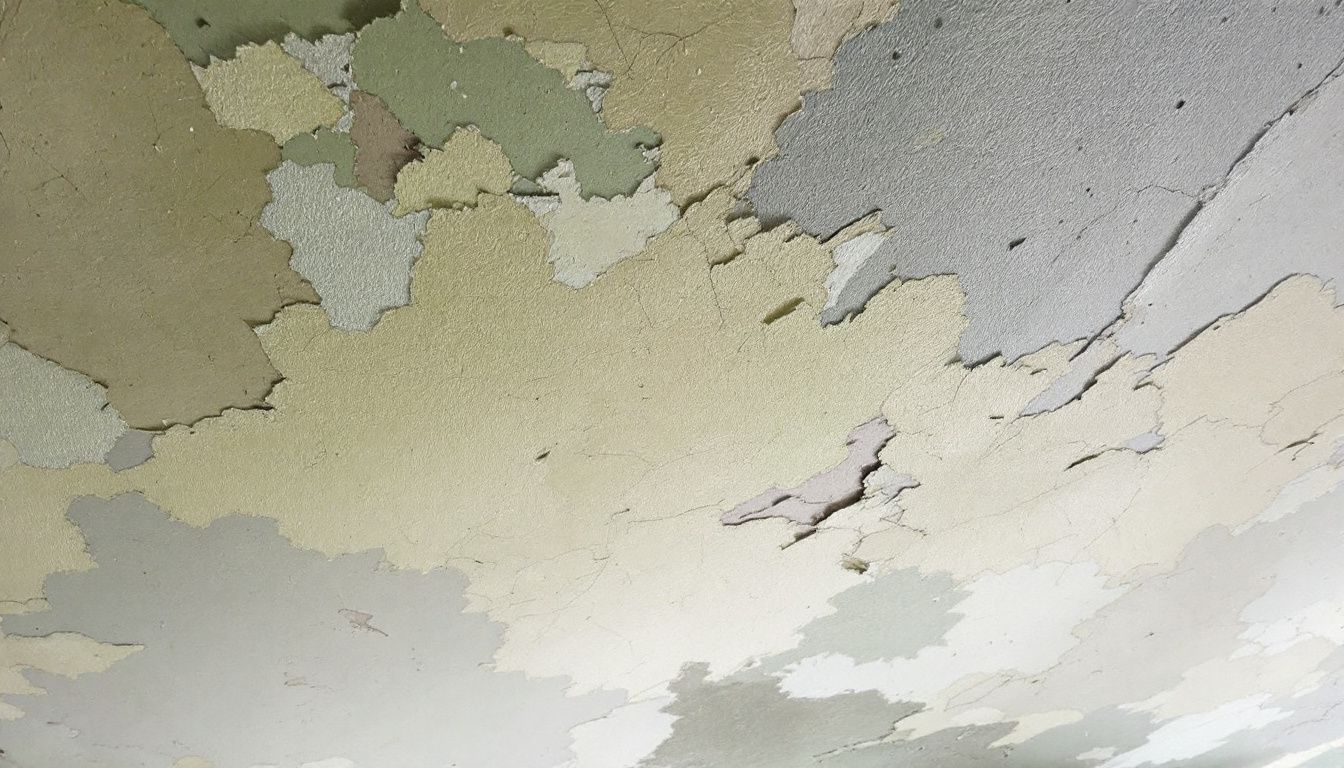
- Artex and textured coatings — applied to ceilings and walls throughout the 1970s and 1980s
- Cement roof tiles and corrugated sheets — common on garages, outbuildings, and shed roofs
- Pipe lagging and boiler insulation — often found wrapped around heating systems and tanks
- Vinyl floor tiles and their adhesive backing — particularly in kitchens and bathrooms
- Bath panels and toilet cisterns — manufactured with asbestos composites in older properties
- Partition walls and ceiling tiles — especially in properties that were commercially used or converted
- Loose-fill insulation in loft spaces — one of the most hazardous forms, as fibres disperse easily
- Door panels and window surrounds — asbestos board was widely used as a fire-resistant lining
- Guttering, fascias, and soffits — asbestos cement products were standard on pre-2000 properties
The critical point is that you cannot identify asbestos by sight alone. A material that looks completely ordinary — a smooth ceiling, a flat floor tile, a grey roof sheet — could contain asbestos fibres.
Only laboratory sample analysis carried out by a UKAS-accredited facility can confirm whether a material contains asbestos. Never assume a material is safe because it looks unremarkable.
Why a Professional Asbestos Survey Is Non-Negotiable Before Any Renovation
Before you lift a hammer, book an asbestos survey. This isn’t bureaucratic box-ticking — it’s the single most important step you can take to protect yourself, your family, and any tradespeople working on your property.
A professional surveyor will inspect every area of your property likely to be disturbed during the planned work. They’ll take samples from suspect materials, send them to a UKAS-accredited laboratory for analysis, and produce a detailed report identifying the location, type, and condition of any ACMs found.
The survey report does two crucial things. First, it tells you exactly what’s present and where, so you can plan your project around it. Second, it gives you a legal record — essential if you ever sell the property or employ contractors.
If you’re planning work in the capital, our asbestos survey London service covers the full city with rapid turnaround times. For properties in the North West, our asbestos survey Manchester team operates across Greater Manchester and the surrounding region. Homeowners in the Midlands can rely on our asbestos survey Birmingham service for thorough, accredited inspections.
Types of Asbestos Survey
There are two main types of survey relevant to homeowners planning renovation work.
A management survey identifies ACMs that could be disturbed during normal occupation and low-level maintenance. It’s suitable for general property management and assessing the condition of materials already in place.
A refurbishment survey is required before any intrusive work begins. This is a more thorough inspection that involves accessing all areas likely to be disturbed, including behind walls, above suspended ceilings, and beneath floors. For DIY renovations, this is almost always the appropriate choice.
Where an entire structure is being taken down, a demolition survey is required instead, covering every part of the building before any work commences. HSE guidance document HSG264 sets out the standards surveyors must meet, and any reputable company will work to these requirements.
What to Do If You Discover Asbestos Mid-Renovation
Sometimes asbestos is discovered unexpectedly — you’ve already started work and something doesn’t look right. Perhaps you’ve broken into a ceiling void and found loose grey material, or you’ve noticed fibrous strands in the material you’ve just cut through.
Act immediately. Do not carry on and hope for the best.
Step One: Stop All Work
Put down your tools and leave the area. Do not attempt to clean up dust or debris. Do not continue cutting, drilling, or sanding — every second you continue working increases the volume of fibres released into the air.
Step Two: Seal Off the Area
Close all doors and windows in the affected space to prevent fibres spreading through the property. If possible, seal gaps under doors with damp towels or plastic sheeting, and turn off any ventilation or air conditioning systems serving the area.
Place clear warning signs at entry points and ensure no one enters the space — including children and pets — until it has been assessed by a licensed professional.
Step Three: Contact a Licensed Asbestos Surveyor
Ring a licensed asbestos surveyor or removal contractor immediately. They will assess the situation, take samples if required, and advise on next steps. The Health and Safety Executive (HSE) maintains a register of licensed asbestos contractors, and your local authority’s environmental health team can also provide guidance.
Do not attempt to remove the material yourself. Under the Control of Asbestos Regulations, certain types of asbestos work are restricted to licensed contractors. Even for notifiable non-licensed work, strict controls apply — and domestic DIY is not exempt from the legal framework where asbestos is concerned.
The Legal Framework: What UK Law Requires
The Control of Asbestos Regulations is the primary piece of legislation governing asbestos in the UK. While it places the heaviest duties on employers and those managing non-domestic premises, it has direct relevance to homeowners commissioning renovation work.
If you employ contractors — builders, plumbers, electricians — to work on your property, you have a legal responsibility to inform them of any known asbestos. If you have not had a survey carried out, you cannot fulfil this duty. Contractors who unknowingly disturb asbestos face serious health risks, and you could face legal liability.
Key legal requirements relevant to home renovations include:
- Carrying out a refurbishment survey before any intrusive work begins on a property that may contain asbestos
- Ensuring all sample analysis is carried out by a UKAS-accredited laboratory
- Using licensed contractors for the removal of higher-risk asbestos materials, including sprayed coatings, lagging, and asbestos insulating board
- Ensuring asbestos waste is disposed of at a licensed facility — it is classified as hazardous waste under UK law
- Keeping records of asbestos surveys, removal work, and disposal documentation
Asbestos waste cannot be placed in your household bins or taken to a standard recycling centre. It must be double-bagged in clearly labelled asbestos waste sacks and transported to a licensed hazardous waste facility. Your local council can advise on approved disposal sites in your area.
The Health Risks: Why Asbestos Demands Serious Respect
Asbestos fibres are invisible to the naked eye. When asbestos-containing materials are disturbed, these microscopic fibres become airborne and can be inhaled without any awareness at all. Once lodged in lung tissue, they cannot be expelled by the body.
The diseases caused by asbestos exposure include:
- Mesothelioma — a cancer of the lining of the lungs and chest cavity, almost exclusively caused by asbestos exposure and invariably fatal
- Asbestos-related lung cancer — linked specifically to fibre inhalation, with a similar mechanism to smoking-related lung cancer
- Asbestosis — scarring of the lung tissue that progressively reduces breathing capacity
- Pleural plaques and pleural thickening — changes to the lining of the lungs that can cause breathlessness and chest pain
These conditions typically take between 20 and 50 years to develop after exposure. That long latency period is precisely why asbestos feels abstract to many people — you don’t feel the damage being done. But the consequences are devastating, and they are irreversible.
Asbestos remains the single largest cause of work-related deaths in the UK. Tradespeople — plumbers, electricians, carpenters — who worked on older properties throughout their careers account for a significant proportion of cases. DIY enthusiasts who’ve renovated their own homes are increasingly represented in those figures too.
Safe Asbestos Removal: What the Process Looks Like
Where asbestos is identified and needs to be removed — either because it’s damaged, deteriorating, or in the way of planned work — the removal must be handled correctly. For certain high-risk materials, this means engaging a licensed contractor.
Professional asbestos removal follows a structured process designed to protect both the occupants of the property and the workers carrying out the job. A reputable contractor will:
- Establish a controlled work area, typically using an enclosure with negative pressure ventilation to prevent fibres escaping
- Wet the asbestos material before removal to suppress fibre release
- Remove materials carefully and place them directly into sealed, labelled asbestos waste bags
- Carry out thorough decontamination of the work area and all equipment
- Conduct air monitoring before, during, and after removal to confirm fibre levels are safe
- Provide a clearance certificate confirming the area is safe to re-enter and work can resume
Never be tempted to remove asbestos yourself to save money. The short-term saving is not worth the long-term risk — to your health or your legal position.
Personal Protective Equipment: The Basics
If you are in a situation where you must be near a suspect material — for example, while waiting for a surveyor to attend — the following PPE provides a baseline level of protection. This is not a substitute for professional assessment and removal.
- Respirator with FFP3 rating or higher — standard dust masks provide no protection against asbestos fibres
- Disposable coveralls (Type 5) — to prevent fibres contaminating your clothing
- Nitrile or rubber gloves — extending past the wrist and sealed with tape at the cuff
- Safety goggles — sealed against the face to prevent eye exposure
- Disposable boot covers — to prevent tracking fibres to other areas
All disposable PPE must be double-bagged and disposed of as asbestos waste after use. Do not take contaminated clothing into other areas of your home.
Health Monitoring After Asbestos Exposure
If you believe you have been exposed to asbestos during a DIY project, inform your GP as soon as possible. Make a clear record of the date, duration, and nature of the exposure — this information will be important for any future health monitoring.
Your GP can refer you to an occupational health specialist if appropriate. Regular monitoring may include lung function tests and chest imaging to detect any early changes.
The key message is: don’t wait for symptoms. By the time asbestos-related diseases produce noticeable symptoms, significant damage has already occurred. Keep a written record of any asbestos-related incidents at your property, including survey reports, removal certificates, and correspondence with contractors. These records could be critical for both health and legal purposes in the future.
Frequently Asked Questions
How do I know if my home contains asbestos?
You cannot determine whether a material contains asbestos by looking at it. The only reliable way to confirm the presence of asbestos is through laboratory analysis of a physical sample taken by a qualified surveyor. If your property was built or significantly refurbished before 2000, you should treat suspect materials as potentially containing asbestos until proven otherwise.
Can I carry out a DIY renovation if I think there might be asbestos present?
No. If you suspect asbestos may be present in the area you intend to work on, you must have a refurbishment survey carried out before any work begins. Disturbing asbestos without prior assessment puts you, your family, and any contractors at serious risk — and may place you in breach of the Control of Asbestos Regulations.
Is asbestos only found in old properties?
Asbestos was fully banned from use in new construction in the UK in 1999. However, any property built or refurbished before that date could contain asbestos-containing materials. This includes properties that may look modern on the surface but have older structural elements beneath. Refurbishment work carried out in the 1980s and 1990s is particularly likely to have introduced ACMs.
Do I need a licensed contractor to remove all types of asbestos?
Not all asbestos removal requires a licensed contractor, but the highest-risk materials — including sprayed coatings, asbestos lagging, and asbestos insulating board — must only be handled by HSE-licensed contractors. Other work may fall into the category of notifiable non-licensed work, which still requires notification to the relevant authority and adherence to strict controls. A professional surveyor will advise you on the appropriate route for your specific situation.
What should I do with asbestos waste after removal?
Asbestos waste is classified as hazardous waste under UK law and must not be placed in household bins or taken to a standard recycling centre. It must be double-bagged in clearly labelled asbestos waste sacks and transported to a licensed hazardous waste disposal facility. Your local council can advise on approved sites in your area. A licensed removal contractor will handle all waste disposal as part of their service.
Book Your Asbestos Survey With Supernova
Supernova Asbestos Surveys has completed over 50,000 surveys nationwide. Our UKAS-accredited team provides fast, thorough, and fully compliant surveys for homeowners, landlords, and contractors across the UK.
Don’t start your renovation without the facts. Call us today on 020 4586 0680 or visit asbestos-surveys.org.uk to book your survey or request a quote.