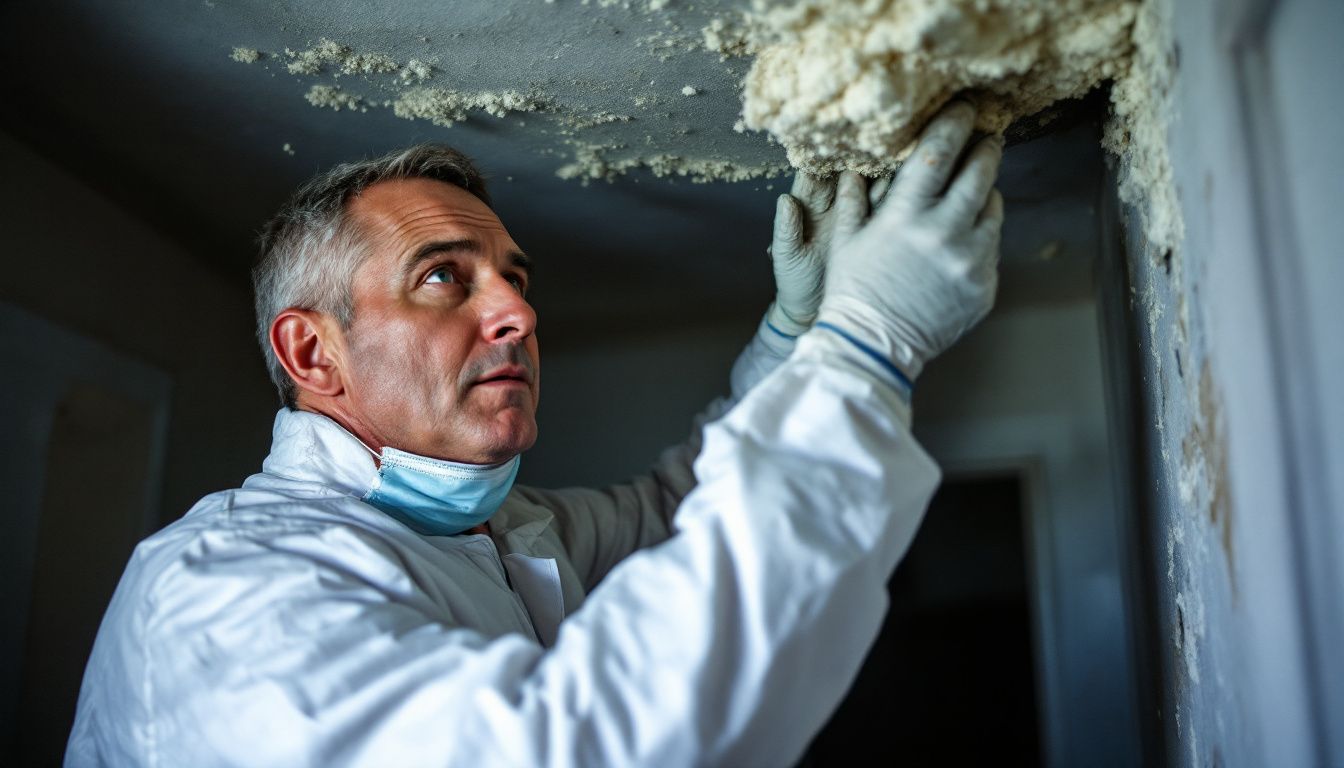
Thinking About Removing Artex? Read This Before You Touch a Thing
Artex was everywhere in British homes built before 2000 — those swirling, stippled, and patterned ceilings that were once considered the height of interior fashion. Now, millions of homeowners want them gone. But before you hire a plasterer or pick up a scraper, there is something you need to know: removing Artex from older properties can be one of the most dangerous home improvement jobs you will ever attempt.
The reason is straightforward. Artex applied before 2000 frequently contains chrysotile (white asbestos). Disturb it without knowing what is in it, and you could be releasing carcinogenic fibres into the air of your own home. This is not scaremongering — it is a well-established position held by the Health and Safety Executive (HSE).
Why Artex and Asbestos Go Hand in Hand
Artex was a popular textured coating product used extensively across UK homes from the 1960s through to the late 1990s. During much of this period, chrysotile asbestos was added to the mix as a binding agent, improving the material’s strength and workability.
The use of asbestos in products like Artex was eventually banned in the UK, but properties decorated before that point may still have original coatings on their ceilings and walls. If your home was built or refurbished before 2000, there is a realistic possibility that your Artex contains asbestos.
The fibres themselves are invisible to the naked eye. You cannot tell by looking at Artex whether it contains asbestos — the only way to know for certain is through professional asbestos testing carried out by a qualified specialist.
The Real Risk When Removing Artex
Asbestos in Artex is generally considered a lower-risk material compared to pipe lagging or sprayed coatings — but that does not mean it is safe to disturb. The risk level rises sharply the moment you start scraping, sanding, or grinding.
When asbestos-containing materials are disturbed, microscopic fibres become airborne. These fibres can be inhaled and become lodged deep in the lungs, where they can remain for decades. Diseases linked to asbestos exposure include mesothelioma, asbestosis, and lung cancer — all of which have long latency periods, meaning symptoms may not appear until 20 to 40 years after exposure.
Dry scraping or sanding Artex is particularly dangerous because it generates fine dust. Even a brief period of exposure without proper respiratory protection carries real risk. This is why the HSE is explicit: do not disturb suspected asbestos-containing materials without first establishing what you are dealing with.
What Makes Removing Artex Different From Other Asbestos Jobs?
Many homeowners assume that because Artex is a lower-risk material, they can handle it themselves. This misunderstanding leads to unnecessary exposure every year. The distinction between lower-risk and no-risk is critical — and it is one that the regulations take seriously.
Artex is also found on large surface areas — entire ceilings, sometimes entire rooms — which means the total volume of material being disturbed during removal is significant. More surface area means more potential fibre release, and that scale matters when assessing the overall risk.
There is also a practical issue: most people removing Artex are doing so as part of a wider renovation. Plasterers, builders, and decorators can all be exposed if nobody has checked the material beforehand. You have a responsibility to protect not just yourself, but anyone working in your home.
What to Do Before Removing Artex in an Older Property
Step 1: Assume It Contains Asbestos Until Proven Otherwise
If your property was built or last decorated before 2000, treat any Artex as potentially asbestos-containing. This is the safest and most sensible starting position.
Do not scrape, sand, apply heat, or drill into the surface until you have had it tested by a professional. Even well-intentioned DIY preparation work — like drilling a small hole to check the ceiling structure — can release fibres if the material contains asbestos.
Step 2: Commission a Professional Asbestos Survey
For properties where you are planning renovation work — including ceiling or wall refurbishment — you need an asbestos refurbishment survey carried out by a qualified surveyor before any work begins. This type of survey is specifically designed to identify asbestos-containing materials in areas that will be disturbed during planned works.
If you are not planning immediate intrusive work but want to understand what is present in your building, an asbestos management survey is the appropriate starting point. It involves a thorough visual inspection and sampling of accessible materials, giving you a clear picture of where asbestos exists and in what condition.
Both survey types are governed by HSG264, the HSE’s guidance document on asbestos surveying. Surveys must be carried out by competent, trained professionals — not building contractors or general tradespeople.
Step 3: Have Samples Tested in an Accredited Laboratory
If a surveyor suspects a material contains asbestos, samples are taken and sent to a UKAS-accredited laboratory for analysis. This is the only reliable way to confirm the presence or absence of asbestos fibres.
Do not attempt to take your own samples from Artex. Cutting or scraping the material to collect a sample releases the same fibres you are trying to avoid. Leave sampling to professionals who have the correct personal protective equipment (PPE) and the training to do it safely.
You can find out more about the process on our dedicated asbestos testing page.
Your Options for Dealing With Artex That Contains Asbestos
Once you have confirmation that your Artex contains asbestos, you have several options. The right choice depends on the condition of the material, your renovation plans, and your budget.
Option 1: Leave It Alone
If the Artex is in good condition — not crumbling, flaking, or damaged — and you do not need to disturb it, leaving it in place is often the safest and most cost-effective approach. Asbestos that is intact and undisturbed poses a very low risk.
In this case, the material should be recorded in an asbestos register and monitored periodically. A management survey will help you establish this register and put a management plan in place. Any future tradespeople working in the property must be informed of the asbestos location before they start work.
Option 2: Encapsulate It
Encapsulation involves sealing the Artex surface with a specialist coating that binds the fibres and prevents them from becoming airborne. This is a recognised method of managing asbestos-containing textured coatings and is often used when full removal is not practical or necessary.
Encapsulation does not remove the asbestos — it manages it in place. The material will still need to be recorded and monitored, and any future work on the ceiling or wall will still require the same precautions.
Option 3: Overboard It
One popular approach for domestic properties is to fix a new layer of plasterboard directly over the existing Artex ceiling. This seals the material beneath without disturbing it, avoids the cost and complexity of full removal, and gives a smooth, modern finish.
This approach is only suitable where the existing ceiling structure can support the additional weight. The work must also be planned carefully to avoid drilling or cutting into the Artex during installation. A surveyor should advise on whether this is appropriate for your specific situation.
Option 4: Professional Removal
If you need the Artex fully removed — perhaps because of a significant refurbishment or because the material is in poor condition — this must be carried out by a licensed or notifiable non-licensed contractor, depending on the specific material and risk level.
Textured coatings containing asbestos are generally classified as notifiable non-licensed work (NNLW) under the Control of Asbestos Regulations. This means:
- The work must be notified to the relevant enforcing authority before it begins
- Workers must receive appropriate training and hold relevant qualifications
- Health records must be maintained for workers involved in the work
- Waste must be disposed of correctly as classified hazardous waste
The work is not always licensable, but it must always be done correctly. Professional asbestos removal contractors will use wet methods to suppress dust, set up containment areas, wear appropriate PPE including P3 respirators and disposable coveralls, and ensure all waste is disposed of lawfully.
The Legal Framework: What the Regulations Say
The Control of Asbestos Regulations set out clear legal duties for anyone managing or working with asbestos in the UK. These regulations apply to both commercial and domestic settings, though the specific duties vary depending on the context.
For non-domestic premises, there is a legal duty to manage asbestos. The person responsible for the building must identify asbestos-containing materials, assess the risk they pose, and put a management plan in place.
For domestic properties, the regulations still apply to anyone carrying out work that may disturb asbestos. Carrying out notifiable non-licensed work without proper notification, training, or health surveillance is a criminal offence. Ignorance of the law is not a defence.
If you hire a contractor who does not follow the rules, you could also face liability as the client commissioning the work. Always check that any contractor you appoint understands their obligations under the Control of Asbestos Regulations before work begins. The HSE’s guidance document HSG264 provides detailed technical guidance on asbestos surveying and is the standard reference for surveyors and duty holders across the UK.
What a Professional Artex Removal Job Actually Looks Like
Understanding what a professional asbestos removal job involves helps you assess whether a contractor is doing things properly — or cutting corners.
Pre-Work Survey and Planning
Before any removal work starts, a refurbishment survey must be completed and a detailed method statement and risk assessment prepared. The contractor must notify the relevant enforcing authority — either the HSE or the local authority, depending on the premises — before notifiable work begins.
Setting Up the Work Area
The work area is sealed off using heavy-duty polythene sheeting, with all gaps, vents, and openings taped shut. A decontamination unit — typically a series of compartments allowing workers to remove contaminated PPE safely — is set up at the entrance to the work area.
Wet Removal Techniques
Artex is wetted thoroughly before removal to suppress dust. Workers use low-pressure sprayers to apply water mixed with a wetting agent, keeping the material damp throughout the process. Dry scraping or sanding is never acceptable when asbestos is present.
Waste Handling and Disposal
All asbestos waste must be double-bagged in heavy-duty, clearly labelled asbestos waste sacks — typically red inner bags and clear outer bags with hazard warnings. The waste is classified as hazardous and must be transported and disposed of at a licensed waste facility. A waste transfer note must accompany every load.
Air Monitoring and Clearance
After removal is complete, a thorough visual inspection is carried out, followed by air monitoring to ensure fibre levels have returned to acceptable background levels before the area is cleared for reoccupation. This clearance certificate is an important document — always ask your contractor for a copy.
Can You Remove Artex Yourself If It Does Not Contain Asbestos?
If your Artex has been tested and confirmed asbestos-free, the removal process is far more straightforward. You can scrape, sand, or skim over it using standard DIY methods. That said, you should still wear a dust mask rated FFP3 as a precaution, since any fine dust can irritate the respiratory system.
Common DIY methods for removing asbestos-free Artex include:
- Wet scraping — applying warm water or a proprietary Artex softener to the surface, leaving it to soak in, then scraping with a wide blade. This is the most common approach and keeps dust to a minimum.
- Steaming — using a wallpaper steamer to soften the coating before scraping. Effective on thicker applications.
- Skimming over — applying a skim coat of plaster directly over the Artex to create a smooth finish. This avoids removal entirely and is popular with plasterers.
- Overboarding — as described above, fixing new plasterboard over the existing surface. Works well on ceilings where the structure allows it.
Even when Artex is confirmed asbestos-free, take sensible precautions. Work in a well-ventilated space, protect flooring and furniture, and dispose of waste responsibly.
Removing Artex in Rented Properties and Commercial Buildings
If you are a landlord, property manager, or business owner, the rules around removing Artex are even more stringent. The duty to manage asbestos in non-domestic premises is a legal requirement under the Control of Asbestos Regulations, not simply best practice.
Before any refurbishment work takes place in a commercial building, school, office, or rental property, a full asbestos survey is legally required. Failing to commission one before work begins puts workers, tenants, and occupants at risk — and exposes you to significant legal liability.
Supernova Asbestos Surveys works with landlords, property managers, and building owners across the country. Whether you need an asbestos survey in London, an asbestos survey in Manchester, or an asbestos survey in Birmingham, our qualified surveyors are ready to help.
Key Takeaways: Removing Artex Safely
To summarise the most important points before you make any decisions about your Artex:
- Never assume it is safe. Any Artex in a property built or decorated before 2000 must be treated as potentially asbestos-containing until tested.
- Get it tested first. Professional asbestos testing by a UKAS-accredited specialist is the only way to know for certain what you are dealing with.
- Choose the right survey. If renovation work is planned, you need a refurbishment survey. If you simply want to know what is present, a management survey is the starting point.
- Do not DIY if asbestos is present. Removal of asbestos-containing Artex must be carried out by trained, qualified contractors following the Control of Asbestos Regulations.
- Consider your options carefully. Full removal is not always necessary. Encapsulation or overboarding may be safer, cheaper, and equally effective depending on your circumstances.
- Keep records. Whether you remove, encapsulate, or leave the material in place, document it properly and inform any future contractors before they start work.
Get Expert Help With Removing Artex Safely
Supernova Asbestos Surveys has completed over 50,000 surveys nationwide. Our qualified surveyors understand the risks associated with textured coatings and can give you a clear, accurate picture of what is in your property — before anyone picks up a scraper.
We offer management surveys, refurbishment surveys, asbestos testing, and removal coordination across the UK. Call us on 020 4586 0680 or visit asbestos-surveys.org.uk to book your survey today.
Frequently Asked Questions
Is all Artex dangerous?
Not all Artex contains asbestos. Artex applied after the late 1990s is unlikely to contain asbestos fibres, as the use of asbestos in such products was banned in the UK. However, Artex in properties built or decorated before 2000 should always be tested by a qualified professional before any work is carried out. You cannot tell by looking at it whether asbestos is present.
Can I remove Artex myself?
Only if the material has been tested and confirmed asbestos-free by a UKAS-accredited laboratory. If asbestos is present, removal must be carried out by trained contractors in accordance with the Control of Asbestos Regulations. Attempting to remove asbestos-containing Artex yourself is illegal, dangerous, and can cause serious long-term health consequences.
How much does it cost to have Artex tested for asbestos?
The cost of professional asbestos testing varies depending on the number of samples required and the size of the property. As a general guide, a standard asbestos survey including laboratory analysis is a relatively modest investment compared to the cost of dealing with an asbestos incident. Contact Supernova Asbestos Surveys on 020 4586 0680 for a no-obligation quote.
What happens if I disturb asbestos-containing Artex accidentally?
Stop work immediately. Vacate the area and do not re-enter until a qualified asbestos professional has assessed the situation. Do not use a domestic vacuum cleaner on asbestos dust — this will spread fibres further. Contact a licensed asbestos contractor to carry out a clean-up, and seek advice from the HSE if necessary.
Do I need a survey before plastering over Artex?
Yes — if the property was built or decorated before 2000, plastering over Artex involves drilling, cutting, and working in close proximity to the surface, all of which can disturb asbestos-containing material. A refurbishment survey must be completed before any such work begins. Your plasterer should not start work without confirmation of what the existing surface contains.