Asbestos in Old Houses UK: What Every Homeowner Must Know Before Renovating
Millions of UK homes still contain asbestos — and the vast majority of owners have no idea it’s there. If your property was built before 2000, asbestos in old houses UK-wide is likely hiding behind your walls, beneath your floors, or above your head right now. Before you pick up a drill or call in a builder, you need to understand exactly what you’re dealing with.
Asbestos was used extensively in UK construction from the 1950s through to the late 1990s. It was cheap, durable, and highly effective at resisting fire and heat — which is precisely why it ended up in so many building products. The UK banned all forms of asbestos in 1999, but that ban didn’t reach back into the walls of existing properties. Those fibres are still there, and they’re still dangerous.
Why Asbestos in Old Houses UK Remains a Serious Health Hazard
Asbestos only becomes dangerous when it’s disturbed. Intact, undamaged asbestos-containing materials (ACMs) generally pose a low risk. The problem starts the moment someone sands, drills, cuts, or demolishes a material that contains it.
When ACMs are disturbed, microscopic fibres are released into the air. These fibres are invisible to the naked eye and can remain airborne for hours. Once inhaled, they become permanently lodged in lung tissue and can trigger serious diseases — including mesothelioma, asbestosis, and lung cancer — often decades after the original exposure.
The HSE recognises asbestos-related disease as one of the most significant occupational and domestic health hazards in the UK. For homeowners planning renovations, that risk is very real and should not be underestimated.
Where Asbestos Hides in Older UK Properties
Understanding where asbestos is likely to be found is the first step in protecting yourself. The list of products that historically contained asbestos is longer than most people expect.
Insulation Materials
Asbestos was used extensively as an insulating material throughout the mid-to-late twentieth century. You’ll find it in loft insulation, wall cavity insulation, and wrapped around pipes and boilers. In some properties, loose asbestos insulation was sprayed directly onto structural steelwork.
This type of sprayed coating is among the most dangerous because it tends to be friable — meaning it crumbles easily and releases fibres with minimal disturbance. If you’re planning a loft conversion, wall alterations, or any work near pipework in an older property, this is a serious concern.
Floor Tiles and Adhesive Backing
Vinyl floor tiles manufactured before 2000 frequently contained chrysotile (white asbestos). The tiles themselves can contain asbestos, but so can the adhesive used to fix them down. This catches many homeowners off guard — they assume the tiles are safe, but disturbing the backing compound releases fibres just as readily.
Drilling, cutting, or forcibly lifting old vinyl tiles without prior testing is a significant risk. Even heating the adhesive to soften it for removal can release fibres. Always have old flooring assessed before any removal work begins.
Textured Wall and Ceiling Coatings
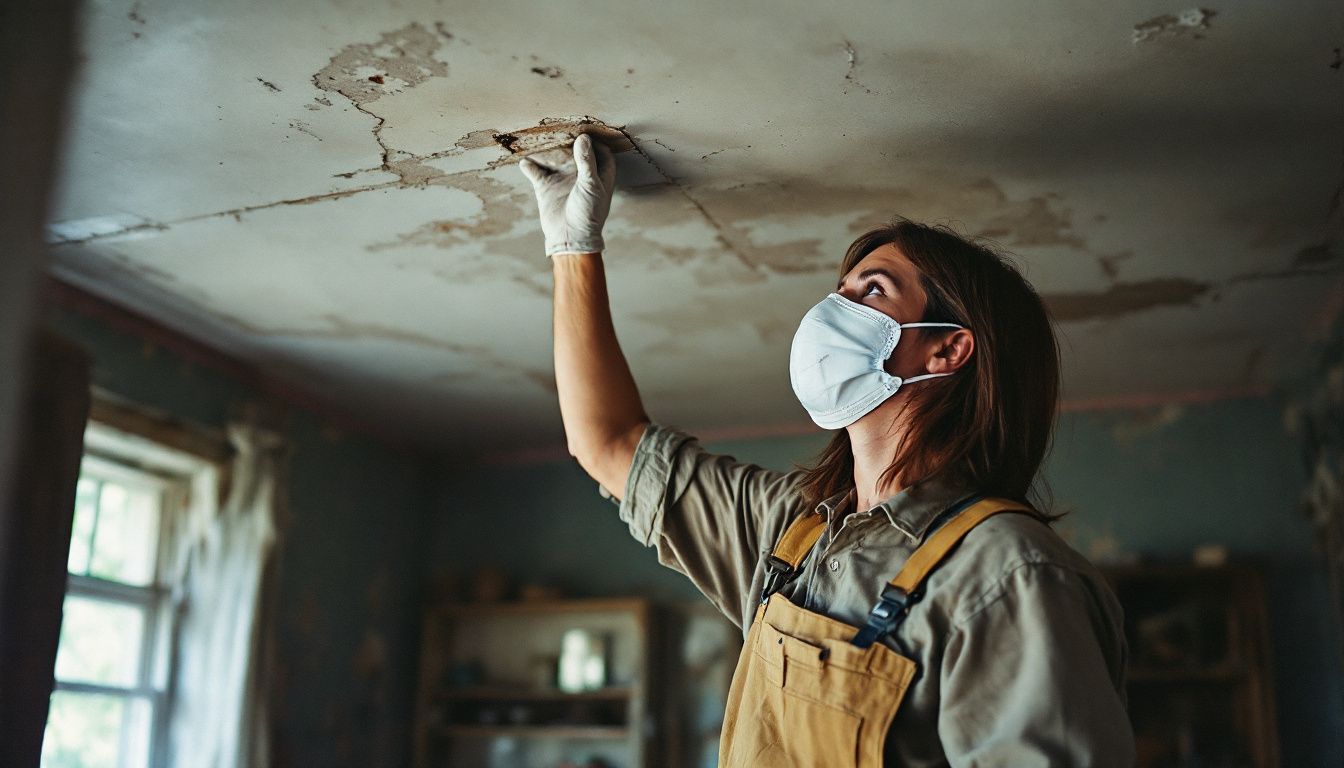
Artex and similar textured coatings were enormously popular in UK homes during the 1970s and 1980s. That distinctive swirled or stippled finish on ceilings was applied using a product that, in many cases, contained chrysotile asbestos. The UK ban on white asbestos didn’t come into effect until 1999, meaning textured coatings applied right up to that point could contain it.
The risk becomes critical when homeowners try to skim over or remove these coatings. Sanding Artex is particularly hazardous — it generates fine dust that carries asbestos fibres throughout the room and beyond. If your home has textured ceilings or walls and was built or decorated before 1999, treat them as potentially containing asbestos until proven otherwise.
Roofing Sheets, Guttering, and Outbuildings
Corrugated asbestos cement was a standard roofing material for garages, outbuildings, and extensions built before the 1980s. It was also used in flat roofing felt and in guttering systems. From a distance, it can look like ordinary concrete or slate.
Weathering causes asbestos cement to become increasingly brittle over time, which raises the risk of fibre release during storms, repairs, or clearance work. If you have an older outbuilding, garage, or extension with a corrugated roof, have it assessed before any maintenance work is carried out.
Pipe Lagging and Boiler Casings
Hot water pipes, central heating systems, and boilers in older UK homes were routinely insulated with asbestos lagging. This material was wrapped around pipes in airing cupboards, under floors, and in wall cavities. Boiler casings and flue pipes could also contain asbestos insulation board.
As these systems age, the lagging deteriorates and becomes loose and crumbly. Any work involving old pipework or heating systems — including replacing a boiler — requires a check for asbestos lagging before work begins. Disturbing degraded pipe lagging is one of the more common causes of accidental asbestos exposure in domestic properties.
Other Locations to Be Aware Of
Beyond the main risk areas above, asbestos was also used in a wide range of other building products:
- Asbestos insulation board (AIB) used in partition walls, ceiling tiles, and fire doors
- Roof soffits and fascias on older properties
- Toilet cisterns and window sill panels in some older builds
- Garage and shed walls constructed from asbestos cement sheets
- Decorative coatings applied to external walls
If your property was built before 1985, the likelihood of finding asbestos in multiple locations is high. Even properties built between 1985 and 1999 may contain certain ACMs, particularly textured coatings and floor tiles.
How to Identify Asbestos in an Old House
You cannot identify asbestos by sight alone. There is no reliable visual test — asbestos fibres are microscopic, and many asbestos-containing materials look identical to non-asbestos alternatives. The only way to confirm whether a material contains asbestos is through laboratory analysis of a sample taken by a qualified professional.
Warning Signs That Should Prompt a Survey
While you can’t identify asbestos visually, certain circumstances should put you on high alert:
- Your property was built or significantly renovated before 2000
- You can see crumbling or damaged insulation around pipes or in the loft
- The property has textured ceilings or walls with a swirled or patterned finish
- There are corrugated sheets on garage or outbuilding roofs
- Old vinyl floor tiles are present, particularly in kitchens or bathrooms
- The property has an original boiler or heating system that has never been replaced
In any of these situations, the sensible course of action is to commission a professional asbestos survey before any renovation work begins.
The Role of a Professional Asbestos Survey
A professional asbestos survey, carried out in accordance with HSG264 guidance, is the only reliable method for identifying and assessing ACMs in a property. There are two main types of survey, and choosing the right one depends on what you’re planning to do with the property.
A management survey is used to locate and assess the condition of ACMs that could be disturbed during normal occupancy and routine maintenance. This is the standard survey for most occupied properties and gives you a clear picture of what’s present and how it should be managed.
A demolition survey is required before any major renovation, refurbishment, or demolition work. This is a more intrusive survey that may involve opening up walls, lifting floors, and accessing concealed areas to ensure all ACMs are identified before work begins.
A qualified surveyor will take samples of suspect materials and send them to an accredited laboratory for analysis. You’ll receive a written report detailing the location, type, and condition of any ACMs found, along with clear recommendations for management or removal.
Where We Operate
Supernova Asbestos Surveys provides professional surveys across the UK. If you’re planning renovation work in the capital, our asbestos survey London service covers properties across the city. We also provide specialist surveys for properties in the Midlands through our asbestos survey Birmingham team, and across the North West via our asbestos survey Manchester service.
What to Do If Asbestos Is Found in Your Home
Finding asbestos in your home doesn’t automatically mean it needs to be removed. The Control of Asbestos Regulations set out a clear framework for managing ACMs, and in many cases, management in situ — leaving the material undisturbed and monitoring its condition — is the appropriate course of action.
However, if you’re planning renovation work that will disturb the material, or if the ACM is already damaged and deteriorating, removal will be necessary.
When Asbestos Removal Becomes Necessary
Removal is required when:
- The material is in poor condition and actively releasing fibres
- Planned renovation work will disturb or demolish the area containing ACMs
- The material poses an ongoing risk to occupants that cannot be managed effectively through monitoring alone
Removal must be carried out by a licensed contractor for the most hazardous types of asbestos, including asbestos insulation, asbestos insulation board, and sprayed asbestos coatings. Our asbestos removal service is carried out by fully licensed specialists who work in compliance with all relevant HSE regulations and the Control of Asbestos Regulations.
Safe Disposal of Asbestos Waste
Asbestos waste cannot be placed in ordinary household bins or skips. All asbestos-containing waste must be double-bagged in heavy-duty polythene bags, clearly labelled with hazard warnings, and transported to a licensed disposal site by a registered waste carrier.
A licensed asbestos contractor will manage all of this on your behalf and provide the necessary waste transfer documentation. Attempting to dispose of asbestos waste yourself is not only dangerous — it’s a criminal offence that can result in significant fines.
Protecting Your Family During Home Renovations
The most important step you can take is to commission a survey before any work starts. This applies whether you’re planning a major extension or simply replacing a bathroom. Many homeowners assume that small jobs carry small risks, but even drilling a single hole through an asbestos-containing ceiling tile can release a significant number of fibres.
If you’re working in an older property and you suspect you’ve disturbed asbestos — stop immediately. Leave the area, close doors and windows to contain any fibres, and contact a licensed asbestos professional. Do not attempt to clean up the area yourself.
Builders and tradespeople working in older properties have a legal duty under the Control of Asbestos Regulations to take reasonable steps to determine whether asbestos is present before beginning work. If you’re hiring contractors, make sure they have a clear plan for managing potential asbestos exposure and that they’re aware of the property’s age and construction history.
Your Legal Responsibilities as a Homeowner
The Control of Asbestos Regulations primarily place duties on employers and those in control of non-domestic premises. However, homeowners have practical responsibilities when it comes to protecting contractors and other workers who carry out work in their properties.
If you commission renovation work on an older property without disclosing the potential presence of asbestos and a contractor is subsequently exposed, you could face significant legal and financial consequences. Commissioning a survey before work begins is not just good practice — it’s the responsible thing to do.
For commercial or rental properties, the duty to manage asbestos is a legal requirement under the Control of Asbestos Regulations. A written asbestos management plan must be in place, reviewed regularly, and made available to anyone carrying out work on the premises. Failure to comply can result in enforcement action by the HSE.
Key Steps Before Starting Any Renovation on an Older Property
To summarise the practical steps every homeowner should take before renovation work begins:
- Establish the age of your property. If it was built or refurbished before 2000, assume ACMs may be present.
- Commission a professional asbestos survey. Choose the right survey type for your situation — management or refurbishment/demolition.
- Review the survey report carefully. Understand what has been found, where it is, and what condition it’s in.
- Follow the surveyor’s recommendations. If management in situ is appropriate, put a monitoring plan in place. If removal is needed, use a licensed contractor.
- Inform your contractors. Share the survey report with any tradespeople working on the property before they begin.
- Keep records. Retain all survey reports, laboratory results, and waste transfer documentation for future reference.
These steps protect you, your family, and anyone else who works in or visits your home. They also protect you legally and financially if questions arise in the future.
Frequently Asked Questions
How do I know if my house contains asbestos?
The only reliable way to confirm the presence of asbestos is through a professional survey and laboratory analysis of samples. Visual inspection alone is not sufficient, as asbestos-containing materials often look identical to non-asbestos alternatives. If your property was built or refurbished before 2000, it should be treated as potentially containing asbestos until a survey confirms otherwise.
Is asbestos in old houses dangerous if I leave it alone?
Asbestos that is in good condition and left completely undisturbed generally poses a low risk. The danger arises when ACMs are damaged, deteriorating, or disturbed through drilling, cutting, sanding, or demolition. Even materials that appear intact should be professionally assessed, as their condition can change over time and may not be obvious to the untrained eye.
Do I need a licensed contractor to remove asbestos from my home?
For the most hazardous types of asbestos — including asbestos insulation, asbestos insulation board, and sprayed coatings — removal must be carried out by an HSE-licensed contractor. For lower-risk materials, a contractor with appropriate training and certification may be able to carry out the work, but professional assessment should always come first to determine the correct approach.
What does an asbestos survey involve?
A professional surveyor will inspect the property, identify suspect materials, and take samples for laboratory analysis in accordance with HSG264 guidance. You’ll receive a written report detailing the location, type, and condition of any ACMs found, along with recommendations for management or removal. The survey type — management or refurbishment/demolition — will depend on the work you’re planning to carry out.
Can I sell a house that contains asbestos?
Yes, you can sell a property that contains asbestos. There is no legal requirement to remove asbestos before selling. However, you are expected to disclose known information about the property’s condition to prospective buyers, and having a current asbestos survey report available can provide reassurance and help the sale proceed more smoothly. Buyers and their solicitors are increasingly asking for this documentation.
Get Expert Help From Supernova Asbestos Surveys
With over 50,000 surveys completed across the UK, Supernova Asbestos Surveys has the experience and accreditation to help you understand and manage asbestos risks in your property. Whether you need a management survey before routine maintenance or a full refurbishment survey ahead of a major renovation, our qualified team will give you the clear, accurate information you need to proceed safely.
Don’t start renovation work on an older property without getting the facts first. Call us on 020 4586 0680 or visit asbestos-surveys.org.uk to book your survey today.