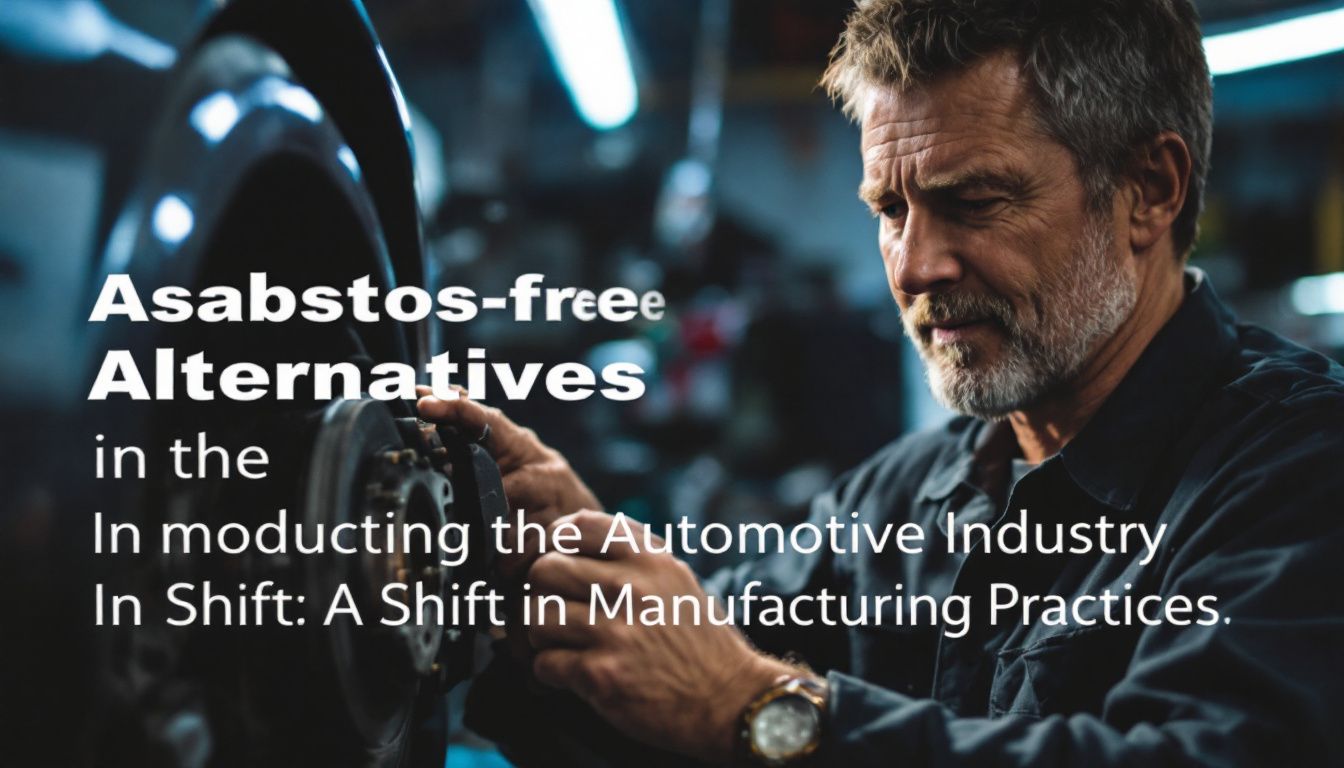
Why the Automotive Industry Had to Walk Away from Asbestos
For decades, asbestos was the automotive industry’s material of choice. Heat-resistant, cheap, and seemingly ideal for brake pads, clutch facings, and gaskets — it appeared to solve every engineering problem at once. Then came the science, the illness data, and the legal reckoning.
Today, the push towards asbestos free material in vehicle manufacturing is not simply a regulatory formality. It represents a fundamental shift in how the industry thinks about worker safety, environmental responsibility, and long-term product performance.
If you own or manage premises where automotive maintenance takes place — or if you’re responsible for a commercial fleet — this matters directly to you. Asbestos doesn’t only live in buildings. It lived in cars, vans, and lorries too.
How Asbestos Ended Up in Vehicles in the First Place
Asbestos has genuinely remarkable natural properties. It resists heat, doesn’t conduct electricity, and binds well with other materials. For automotive engineers working through the early and mid-twentieth century, it was almost too good to refuse.
Manufacturers weren’t being reckless — they simply didn’t have the toxicological data we have today. By the time that data arrived, asbestos was already embedded across entire supply chains, from raw material suppliers through to the workshops fitting replacement parts.
The Parts Most Commonly Affected
- Brake pads and linings — Asbestos offered exceptional heat resistance during braking, but the fine dust generated during wear was directly inhaled by mechanics and drivers alike.
- Clutch facings and discs — High-friction components relied on asbestos to handle the thermal demands of repeated engagement and release.
- Gaskets and seals — Engine gaskets, particularly head gaskets, used compressed asbestos sheet to create reliable seals under extreme pressure and temperature.
- Heat shields and insulation — Asbestos-based insulation lined engine bays and exhaust systems to protect surrounding components from heat damage.
The irony is that the very act of using these components — braking, changing gears, servicing an engine — released the fibres that caused harm. Mechanics working in poorly ventilated garages bore the greatest exposure risk.
The Health Case Against Asbestos in Vehicles
Asbestos fibres are microscopic. When disturbed, they become airborne and can be inhaled deep into the lungs, where they remain permanently. The body cannot expel them, and over years or decades, they cause progressive and often fatal damage.
The diseases linked to asbestos exposure include:
- Mesothelioma — A rare and aggressive cancer of the lining of the lungs or abdomen, caused almost exclusively by asbestos exposure. It typically presents 20 to 50 years after first exposure.
- Asbestosis — Chronic scarring of lung tissue that restricts breathing and progressively worsens over time.
- Lung cancer — Asbestos exposure significantly increases the risk, particularly in combination with smoking.
- Pleural thickening — Scarring of the membrane surrounding the lungs, causing breathlessness and chest pain.
For automotive workers — mechanics, brake fitters, clutch specialists — the occupational risk was substantial. Many mesothelioma cases diagnosed in older workers today trace directly back to garage environments from the 1960s through to the 1980s.
Regulatory Bans That Changed Automotive Manufacturing
The UK was among the earlier adopters of asbestos restrictions. Blue and brown asbestos (crocidolite and amosite) were banned in 1985. White asbestos (chrysotile) followed in 1999, completing a full prohibition across all commercial and industrial applications, including automotive manufacturing.
The Control of Asbestos Regulations reinforced these protections by placing clear legal duties on employers and building owners. Those duties include managing asbestos-containing materials, ensuring proper training for anyone who might encounter them, and preventing unnecessary exposure.
The global direction of travel is unambiguous: asbestos has no place in modern manufacturing. For the automotive sector, this meant an urgent search for asbestos free material alternatives that could genuinely match or exceed the performance of what they were replacing.
If your premises include a garage or workshop — and the building predates the mid-1980s — the structure itself may also contain asbestos. Arranging an asbestos survey London property managers and building owners rely on can identify any remaining asbestos-containing materials before maintenance or refurbishment work disturbs them.
The Best Asbestos Free Material Alternatives in Automotive Use
Finding a genuine like-for-like replacement for asbestos was not straightforward. Its combination of heat resistance, tensile strength, and binding properties is genuinely unusual. However, materials science has advanced considerably, and the alternatives now available are in many cases superior to the original.
Ceramic Fibres and Ceramic Composites
Ceramic materials can withstand extremely high temperatures without degrading, making them highly effective in brake pads and heat shields where thermal performance is non-negotiable. Ceramic brake pads generate less dust than their predecessors, produce less noise during braking, and tend to last longer under normal driving conditions.
They are non-toxic and do not release harmful fibres when worn. For high-performance and commercial vehicles, ceramic composites have become the default choice across the industry.
Aramid Fibres
Aramid fibres — the same family of materials used in body armour — offer an impressive combination of heat resistance, tensile strength, and low weight. In brake and clutch systems, they handle the thermal and mechanical demands of repeated friction without breaking down.
Replacing heavier asbestos-containing components with aramid-based alternatives contributes to measurable improvements in fuel efficiency and handling. They are also far safer for workers handling them during manufacture or servicing.
High-Performance Plastics and Polymers
For sealing applications — gaskets, O-rings, and similar components — materials such as PTFE (polytetrafluoroethylene) and PEEK (polyether ether ketone) have largely taken over from compressed asbestos sheet. These polymers resist chemical attack, handle extreme temperatures, and maintain their integrity under sustained pressure.
They are inert, non-toxic, and do not degrade in ways that release harmful particles. Engine gaskets made from these materials perform reliably across the full range of operating conditions a vehicle will encounter.
Basalt Fibres
Basalt fibres are produced by melting volcanic rock and drawing it into fine threads. The result is a material that resists high temperatures, does not combust, and offers excellent mechanical strength.
Vehicle manufacturers are increasingly using basalt fibre composites for thermal insulation, fire-resistant barriers, and structural reinforcement. The material is derived from an abundant natural resource, making it relatively sustainable from a supply chain perspective.
Eco-Friendly and Bio-Based Materials
Beyond high-performance technical materials, the automotive industry has also explored more sustainable insulation options. Recycled cotton, cork board, and cellulose-based insulation all offer useful thermal and acoustic properties for lower-stress applications within vehicles.
These materials reduce reliance on petrochemical-derived products, lower manufacturing emissions, and can incorporate significant proportions of recycled content. They won’t replace ceramic fibres in a brake pad, but they have genuine applications in cabin insulation and under-bonnet lining.
Innovation Pushing Asbestos Free Material Further
The shift away from asbestos has not simply been about finding substitutes — it has accelerated genuine innovation in materials science.
Hybrid Organic-Inorganic Composites
Researchers have developed materials that combine the flexibility of organic compounds with the thermal stability of inorganic ones. These hybrid composites can be precisely engineered for specific performance characteristics — a level of customisation that asbestos never offered.
In braking systems, this means materials optimised for a particular vehicle weight, typical operating temperature range, and expected service interval. The result is better performance and longer component life.
Nanotechnology in Heat-Resistant Composites
Nanoengineered materials — incorporating particles such as graphene or carbon nanotubes at the molecular level — represent the frontier of asbestos replacement technology. These composites are lighter than conventional materials, stronger under mechanical stress, and more effective at managing heat.
In practical terms, this translates to brake components that dissipate heat more efficiently, reducing fade during sustained braking, and engine seals that maintain their integrity over longer service intervals. Their extended service life also reduces the frequency of replacement and disposal.
The Real-World Benefits of Switching to Asbestos Free Material
The case for asbestos free material in automotive applications goes well beyond regulatory compliance. The benefits are practical and measurable.
Worker and Consumer Health
The most significant benefit is the elimination of exposure risk. Mechanics no longer generate clouds of asbestos dust when machining brake drums or replacing clutch plates. Factory workers assembling components are not inhaling fibres that will lodge permanently in their lungs.
For consumers, the reduction in brake dust containing toxic material is equally important. Modern ceramic and aramid-based brake pads produce dust that, while not entirely benign, does not carry the catastrophic long-term health risks associated with asbestos.
Environmental Improvement
Asbestos-containing waste requires specialist disposal and is classified as hazardous. Every asbestos-containing brake pad or gasket removed during a service had to be managed accordingly — adding cost and complexity to the waste stream.
Asbestos free material alternatives do not carry these disposal burdens. Many can be recycled or disposed of through standard industrial waste channels. The cumulative environmental benefit across millions of vehicle services annually is substantial.
Performance Gains
Modern alternatives frequently outperform the asbestos-containing materials they replaced. Ceramic brake pads last longer, produce less noise, and perform more consistently across a range of temperatures. Aramid-based clutch facings handle higher thermal loads with less wear. PTFE gaskets maintain their seal more reliably over extended service intervals.
The transition was driven by necessity, but the outcome has been better products.
Challenges That Remain
The transition to asbestos free material has not been without difficulty, and some challenges persist — particularly in global supply chains and legacy vehicle maintenance.
Cost Pressures on Manufacturers
Advanced materials like ceramic composites and aramid fibres are more expensive to produce than the asbestos they replaced. For manufacturers operating on tight margins, particularly in the commercial vehicle and aftermarket sectors, this creates genuine pressure.
In some lower-cost global markets, asbestos-containing brake components are still manufactured and sold — creating risks for mechanics and consumers who may not be aware of what they are handling. Anyone sourcing parts through non-standard supply chains should be alert to this risk.
Legacy Vehicles and Older Premises
Vehicles manufactured before the UK’s asbestos ban may still contain original asbestos-containing components. Classic car restorers, fleet managers operating older vehicles, and mechanics servicing vintage machinery all face the possibility of encountering asbestos in the parts they handle.
The same principle applies to the buildings where that work takes place. Garages, workshops, and vehicle maintenance facilities built before the mid-1980s may contain asbestos in their fabric — in roof sheets, floor tiles, pipe lagging, or partition walls. If you operate a workshop in a major city, arranging an asbestos survey Manchester or asbestos survey Birmingham specialists can carry out will establish exactly what’s present and what duty of care applies to you.
Under the Control of Asbestos Regulations, anyone managing non-domestic premises has a legal duty to manage asbestos. That duty doesn’t disappear because the building is used as a garage rather than an office.
Global Supply Chain Risks
Even where UK and European regulations prohibit asbestos-containing components, parts imported from countries with less stringent controls can still enter the market. Counterfeit or non-compliant brake pads and gaskets have been identified in aftermarket supply chains.
The practical advice for any garage owner or fleet manager is straightforward: source parts from reputable, traceable suppliers. If a price seems unusually low for a safety-critical component, that’s reason enough to ask questions about its origin and composition.
What This Means for Property and Fleet Managers Today
If you manage a commercial property that includes vehicle maintenance facilities, your responsibilities extend in two directions. You need to be confident that the components being used in your workshop are genuine asbestos free material alternatives. And you need to be equally confident that the building itself has been properly assessed.
HSE guidance is clear that asbestos-containing materials in good condition and left undisturbed do not necessarily require immediate removal. But they do require identification, recording, and ongoing management. Any maintenance or refurbishment work that might disturb them requires a management plan and, in many cases, a licensed contractor.
A professional asbestos survey — whether a management survey to establish what’s present, or a refurbishment and demolition survey ahead of building work — is the starting point for meeting your legal duties and protecting the people who work in your premises.
The shift to asbestos free material in vehicles is largely complete in the UK. The equivalent shift in how we manage asbestos in the built environment is an ongoing responsibility, not a historical footnote.
Frequently Asked Questions
Is asbestos still used in car parts sold in the UK?
No. The UK banned all forms of asbestos, including in automotive components, by 1999. Brake pads, clutch facings, gaskets, and other vehicle parts manufactured and sold in the UK must be asbestos free. However, non-compliant parts imported from countries with less stringent regulations have occasionally been identified in aftermarket supply chains, which is why sourcing from reputable suppliers remains essential.
What are the main asbestos free material alternatives used in brake pads today?
Modern brake pads use ceramic fibres, aramid fibres (such as Kevlar), and various organic composite materials in place of asbestos. Ceramic brake pads are now the most widely used in passenger and commercial vehicles, offering superior heat resistance, lower dust production, and longer service life compared to older asbestos-based formulations.
Can older vehicles still contain asbestos components?
Yes. Vehicles manufactured before the UK’s asbestos ban may still contain original asbestos-containing brake linings, clutch facings, or gaskets — particularly if they haven’t been serviced or had those components replaced. Classic car restorers and mechanics working on vintage vehicles should treat these components as potentially hazardous and follow appropriate precautions, including using respiratory protection and disposing of waste through licensed channels.
Does my garage or workshop building need an asbestos survey?
If your garage or workshop was built before the year 2000, an asbestos survey is strongly advisable and may be a legal requirement under the Control of Asbestos Regulations. Asbestos was used in many building materials — including roof sheets, floor tiles, wall panels, and pipe insulation — that are commonly found in commercial and industrial premises. A management survey will identify what’s present so you can meet your duty to manage it properly.
Who is responsible for managing asbestos in a commercial workshop or garage?
The duty holder — typically the owner or manager of the non-domestic premises — is legally responsible for managing asbestos under the Control of Asbestos Regulations. This includes identifying asbestos-containing materials, maintaining a written asbestos register, assessing the condition of those materials, and ensuring anyone who might disturb them is informed. Failure to comply can result in enforcement action by the HSE.
Get Professional Asbestos Support from Supernova
Whether you manage a vehicle workshop, a commercial fleet facility, or any other non-domestic premises, Supernova Asbestos Surveys has the expertise to help you meet your legal obligations and protect your people.
With over 50,000 surveys completed nationwide, our UKAS-accredited team provides management surveys, refurbishment and demolition surveys, and asbestos testing services across the UK. We work quickly, report clearly, and give you the practical information you need to act.
Call us on 020 4586 0680 or visit asbestos-surveys.org.uk to book your survey or speak to one of our specialists.