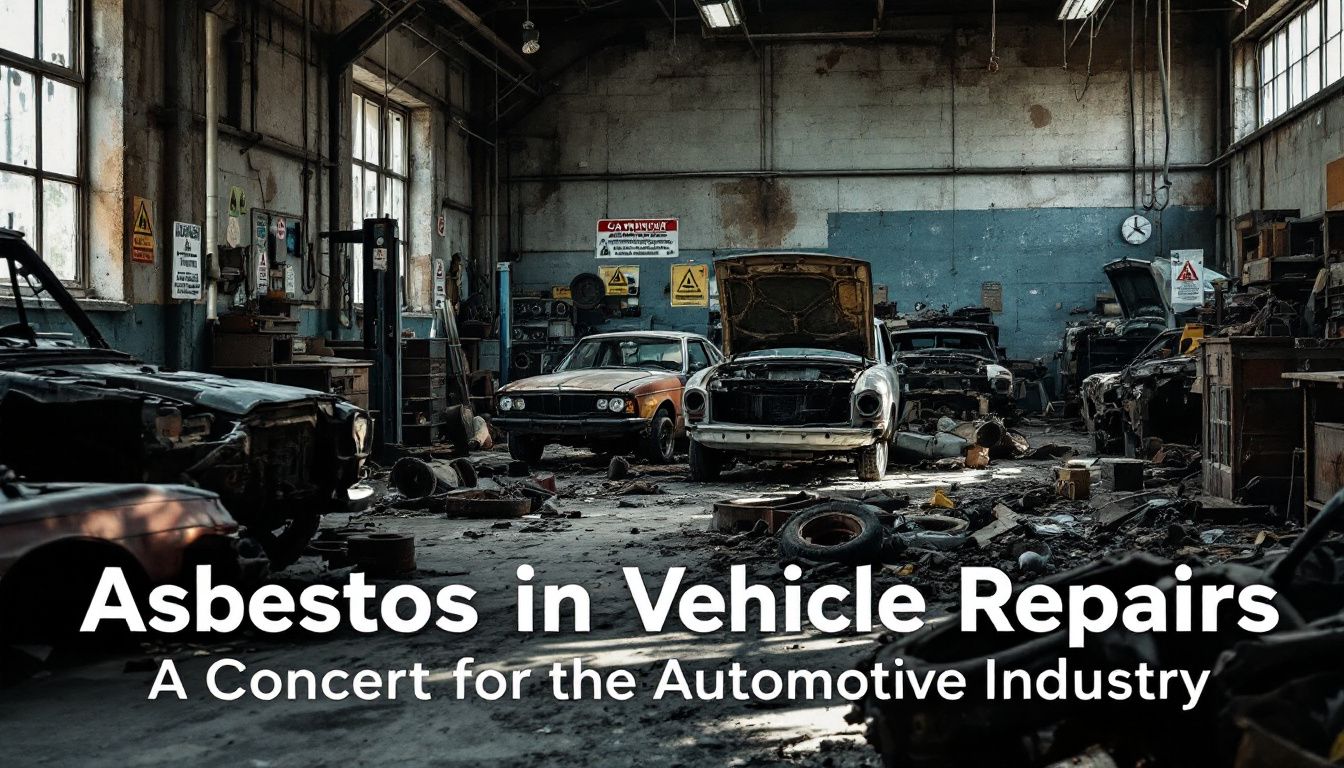
Health and Safety in the Automotive Industry: The Asbestos Risk That Hasn’t Gone Away
Most people associate asbestos with crumbling Victorian buildings and post-war construction sites. But health and safety in the automotive industry carries its own asbestos legacy — one that continues to put mechanics, restorers, and garage workers at genuine risk, decades after the material was banned from new vehicles.
Older car parts still circulate through workshops, salvage yards, and private garages every single day. If you work on vehicles or manage a garage, understanding this risk is not optional. It is a legal and moral obligation.
How Asbestos Ended Up in Vehicle Components
Asbestos was prized for one key property: it could withstand extreme heat without degrading. That made it an obvious choice for vehicle components that generate significant friction and thermal stress.
Manufacturers used it widely from the mid-twentieth century onwards. Some components continued to contain asbestos well into the early 2000s before regulations finally closed the door on its use in new vehicles.
Brake Pads and Linings
Brake pads and linings were among the most common asbestos-containing components in older vehicles. Cars manufactured before 1973 used asbestos almost universally in braking systems due to its heat resistance. Some brake shoes continued to contain asbestos as late as 2004.
Mechanics replacing or inspecting these components risked disturbing accumulated brake dust — dust that could carry asbestos fibres. The particles are invisible to the naked eye and remain suspended in the air long after work has stopped.
Many mechanics had no idea what they were breathing in. Exposure during brake work was measurably harmful over a working lifetime, even at levels that appeared superficially low.
Clutch Components
Clutch plates and facings were another significant source of asbestos in vehicles. Replacing a worn clutch meant disturbing accumulated dust from friction material that could contain chrysotile asbestos.
Airborne chrysotile levels during clutch work have been recorded at up to 30 fibres per millilitre in poorly ventilated environments — a figure that underscores how serious the risk was for workshop staff working without adequate protection.
Gaskets and Seals
Engine gaskets were used to create airtight seals between components, and many contained asbestos for its heat and chemical resistance. Cutting, scraping, or grinding old gasket material to remove it from mating surfaces releases fibres directly into the breathing zone of the person doing the work.
This was routine maintenance carried out in countless garages across the UK — often without any awareness that hazardous material was involved.
Why Health and Safety in the Automotive Industry Still Has a Live Asbestos Problem
Health and safety in the automotive industry cannot treat asbestos as a historical footnote. Legacy components remain in circulation, and the risks are very much present for anyone working on older vehicles today.
Classic and Vintage Vehicles
The classic car restoration sector is thriving. Enthusiasts and professional restorers regularly work on vehicles from the 1950s through to the 1990s — precisely the era when asbestos use in vehicle components was at its peak.
Many hobbyists carry out this work at home or in small workshops without professional training, safety equipment, or any awareness that the parts they are handling may contain asbestos. This is a genuine and widely underappreciated risk.
Imported and Aftermarket Parts
The global second-hand parts market creates another exposure route. In 2012, Australia recalled thousands of Chinese-imported vehicles after asbestos was found in components — a clear reminder that not all parts entering the supply chain have been manufactured to UK or EU safety standards.
Mechanics fitting aftermarket or imported parts cannot always be certain of what those parts contain, particularly when sourced from outside regulated markets.
Compressed Air Cleaning
One of the most hazardous practices historically used in garages was cleaning brake assemblies with compressed air. Research has found that a substantial proportion of mechanics used this method at some point — effectively blasting asbestos dust directly into the air of the workshop.
Studies have linked this single practice to a significant proportion of occupational asbestos exposure in the automotive sector, including documented cases of pleural plaques among workers who regularly cleaned truck brakes this way. The practice should never be used where asbestos-containing components may be present.
Health Risks: What Asbestos Exposure Does to Mechanics
The diseases caused by asbestos exposure are serious, progressive, and in several cases fatal. What makes them particularly insidious is the latency period — symptoms rarely appear until decades after exposure occurred.
The mean latency period for asbestos-related disease is approximately 36 to 40 years. A mechanic exposed to asbestos dust during routine brake work in the 1980s may only now be receiving a diagnosis.
Pleural Plaques
Pleural plaques are areas of scarring on the lining of the lungs caused by asbestos fibre inhalation. They are often asymptomatic but serve as a marker of significant past exposure. Research among mechanics has identified pleural plaques in a meaningful proportion of those examined, even in relatively small study cohorts.
While pleural plaques themselves are not cancerous, their presence indicates that a person has been exposed to levels of asbestos sufficient to cause structural changes in lung tissue.
Asbestosis
Asbestosis is a chronic lung condition caused by the accumulation of asbestos fibres in lung tissue. The fibres trigger scarring (fibrosis) that progressively reduces lung function. Sufferers experience breathlessness, persistent cough, and fatigue that worsens over time.
There is no cure. Management focuses on slowing progression and relieving symptoms. Even small occupational cohorts have produced documented cases, which illustrates the real-world impact of uncontrolled workshop exposure.
Diffuse Pleural Thickening
Diffuse pleural thickening affects the lining of the lungs more extensively than pleural plaques and can significantly restrict breathing capacity. It has been observed in workers with documented occupational asbestos exposure across a range of industries, including the automotive sector.
Mesothelioma and Lung Cancer
Mesothelioma is a cancer of the pleural lining of the lungs, almost exclusively caused by asbestos exposure. It is aggressive, difficult to treat, and carries a poor prognosis. Lung cancer risk is also significantly elevated in workers with prolonged occupational asbestos exposure, particularly those who also smoked.
These are not remote possibilities. They are documented outcomes for workers in the automotive sector who were exposed without adequate protection over the course of their careers.
Safety Measures Every Garage and Workshop Should Have in Place
Good health and safety practice in the automotive industry requires a structured approach to asbestos risk — not just a box of disposable gloves kept under the counter.
Personal Protective Equipment
The right PPE is non-negotiable when working with components that may contain asbestos. At minimum, workers should use:
- A close-fitting mask with a HEPA filter (P3 rating) — standard dust masks are not sufficient
- Disposable coveralls to prevent fibre contamination of clothing
- Nitrile gloves to protect skin from contact with fibres and dust
- Eye protection where there is any risk of dust reaching the face
PPE should be disposed of as asbestos waste after use. Fibres transferred to clothing can be carried home and expose family members — a well-documented secondary exposure route that is entirely preventable.
Wet Methods Instead of Compressed Air
Never use compressed air to clean brake assemblies or other components that may contain asbestos. Instead, use wet rags or damp cloths to wipe down components before work begins. Misting the work area with water helps keep fibres from becoming airborne.
Wet wipes and cloths used during this process must be bagged, sealed, and disposed of as hazardous waste in line with HSE guidance.
Enclosure and Ventilation
Where asbestos-containing components are being worked on, the area should be enclosed as far as practicable and ventilated using local exhaust ventilation (LEV) systems. General workshop ventilation simply moves contaminated air around the space and offers no meaningful protection.
Waste Disposal
All asbestos-containing materials and contaminated consumables must be sealed in clearly labelled, double-bagged containers and disposed of through a licensed hazardous waste contractor. Placing asbestos waste in general skip bins or trade waste collections is illegal and creates a risk for others further down the waste chain.
Legal Obligations Under UK Regulations
The Control of Asbestos Regulations sets out clear duties for employers and self-employed persons who may encounter asbestos in the course of their work. These regulations apply fully to the automotive sector — there are no exemptions for vehicle workshops or small garages.
Employers must assess the risk of asbestos exposure in their workplace, implement appropriate control measures, and provide workers with adequate information, instruction, and training. Ignorance of the regulations is not a defence.
The Duty to Manage Your Premises
For garages and workshops operating from premises built before 2000, there may also be asbestos present in the building fabric — not just in vehicle components. Ceiling panels, floor tiles, pipe lagging, and roofing materials in older commercial properties can all contain asbestos-containing materials (ACMs).
The duty holder for the premises — typically the owner or the person responsible for maintenance — is legally required to manage this risk. That begins with commissioning an management survey to identify and assess any ACMs present in the building structure.
Once ACMs have been identified and recorded, a re-inspection survey should be carried out at regular intervals — typically annually — to check that known materials remain in good condition and have not been disturbed.
Fire Safety in Automotive Premises
Garages and automotive workshops carry significant fire risk due to the presence of flammable fluids, compressed gases, and electrical equipment. A fire risk assessment is a legal requirement for most commercial premises and should be treated as a complementary obligation alongside asbestos management — not a separate afterthought.
Training Requirements
Workers who may encounter asbestos — whether in vehicle components or building materials — must receive asbestos awareness training. This is a specific requirement under the Control of Asbestos Regulations and covers how to recognise potential ACMs, the health risks involved, and what to do if suspect material is found.
Employers who fail to provide this training are in breach of their legal duty and expose their business to enforcement action from the HSE.
Practical Steps for Garage Managers and Workshop Owners
If you manage a garage or automotive workshop, here is a practical checklist for bringing your asbestos management up to the standard the law requires:
- Commission a building survey — if your premises were built or refurbished before 2000, arrange a management survey to identify ACMs in the structure.
- Create an asbestos register — record the location, type, and condition of any ACMs found, and make this available to workers and contractors.
- Assess vehicle component risks — identify which jobs in your workshop are likely to involve legacy asbestos-containing parts and put controls in place before work starts.
- Provide PPE and enforce its use — supply appropriate respiratory protection, coveralls, and gloves, and make their use mandatory for relevant tasks.
- Train your team — ensure all staff have received asbestos awareness training and know how to report concerns.
- Review your disposal arrangements — confirm that your waste contractor is licensed to handle hazardous waste and that staff know how to segregate and label asbestos waste correctly.
- Schedule re-inspections — do not treat your asbestos register as a one-time document. Conditions change, and regular re-inspection is a legal requirement, not a recommendation.
Regional Survey Coverage Across the UK
Asbestos risk in the automotive industry is a nationwide issue, and garages across the country need access to qualified surveyors who understand the specific challenges of commercial workshop environments.
Supernova Asbestos Surveys provides specialist surveys across the UK. If you operate a garage or workshop in the capital, our team offers a dedicated asbestos survey London service covering commercial and industrial premises throughout Greater London.
For businesses in the North West, our asbestos survey Manchester service covers workshops, garages, and commercial properties across the region. And for automotive businesses in the Midlands, our asbestos survey Birmingham team is on hand to carry out management surveys and re-inspections that meet your legal obligations.
Frequently Asked Questions
Do modern vehicles still contain asbestos?
Asbestos has been banned from use in new vehicles sold in the UK and EU for many years. However, older vehicles — particularly those manufactured before the mid-1990s — may still contain asbestos in brake linings, clutch facings, gaskets, and other friction components. Some aftermarket and imported parts from outside regulated markets have also been found to contain asbestos, so caution is warranted when sourcing parts from unverified suppliers.
What should I do if I think I have disturbed asbestos in my workshop?
Stop work immediately and clear the area. Do not use compressed air or vacuum cleaners without HEPA filtration to clean up. Seal off the affected area and contact a licensed asbestos contractor for advice. Workers who may have been exposed should be informed, and the incident should be recorded. If asbestos-containing material has been disturbed in a building, the duty holder must review their asbestos management plan.
Is a management survey required for a garage or automotive workshop?
Yes, if your premises were built before 2000. The duty to manage asbestos under the Control of Asbestos Regulations applies to all non-domestic premises, including garages, workshops, and commercial units. A management survey is required to identify the location and condition of any asbestos-containing materials in the building fabric before any maintenance or refurbishment work takes place.
How often should an asbestos re-inspection be carried out?
HSE guidance recommends that known asbestos-containing materials are re-inspected at least annually, or more frequently if the condition of the material is poor or the premises are subject to significant activity that could disturb ACMs. The results of each re-inspection should be recorded and used to update the asbestos register.
Are self-employed mechanics covered by asbestos regulations?
Yes. The Control of Asbestos Regulations applies to self-employed persons as well as employers. If you are self-employed and carry out work that may expose you to asbestos — whether in vehicle components or building materials — you have a legal duty to assess and control that risk. This includes using appropriate PPE, following safe working methods, and disposing of asbestos waste correctly.
Speak to Supernova Asbestos Surveys
Supernova Asbestos Surveys has completed over 50,000 surveys across the UK, working with commercial property owners, garage operators, and facilities managers to identify and manage asbestos risk in line with current regulations.
Whether you need a management survey for your workshop premises, a periodic re-inspection, or advice on what your legal obligations actually mean in practice, our team of qualified surveyors is ready to help.
Call us on 020 4586 0680 or visit asbestos-surveys.org.uk to arrange a survey or request a quote. Do not wait for a problem to become an incident — get the right information now and protect your workers, your business, and your legal standing.