What Is Friable Asbestos and Why Does It Still Pose a Serious Risk?
Friable asbestos is one of the most hazardous forms of asbestos encountered in the UK’s built environment. Unlike bonded asbestos materials that remain relatively stable when left undisturbed, friable asbestos can be crumbled, pulverised, or reduced to powder by hand pressure alone — releasing microscopic fibres into the air with minimal effort.
That single characteristic is what makes it so dangerous. Once airborne, those fibres can be inhaled deep into the lungs, where they may remain for decades, causing irreversible and often fatal disease.
Friable vs Non-Friable Asbestos: Understanding the Difference
Not all asbestos-containing materials (ACMs) carry the same level of immediate risk. The distinction between friable and non-friable asbestos is fundamental to how surveyors assess and prioritise hazards on any given site.
Friable Asbestos
Friable asbestos materials are those that can be crumbled or broken apart with very little force. Common examples include:
- Sprayed asbestos coatings applied to structural steelwork and ceilings
- Asbestos insulation lagging around pipes, boilers, and ductwork
- Loose asbestos fill used in cavity walls or ceiling voids
- Asbestos insulating board (AIB) in deteriorated condition
- Thermal insulation on older heating systems
These materials present the greatest risk because fibre release can occur without any deliberate disturbance. Simple vibration, air movement, or physical deterioration can be enough to release fibres into the breathing zone of anyone nearby.
Non-Friable Asbestos
Non-friable ACMs are those where asbestos fibres are tightly bound within a matrix — typically cement, resin, or vinyl. Examples include asbestos cement roof sheets, floor tiles, and textured decorative coatings such as Artex.
These materials are considered lower risk when in good condition. However, cutting, drilling, sanding, or mechanical damage can rapidly convert non-friable materials into a friable state, releasing fibres at dangerous concentrations.
Where Friable Asbestos Is Commonly Found in Buildings
Friable asbestos was widely used across the UK’s built environment from the 1950s through to the mid-1980s, when its use in most applications was progressively restricted. If your property was constructed or refurbished before 2000, there is a realistic possibility that friable ACMs are present somewhere within the fabric of the building.
Commercial and Industrial Properties
Sprayed asbestos coatings were applied extensively to structural steelwork in offices, warehouses, factories, and public buildings as fireproofing. This is among the most hazardous friable material encountered by surveyors, as it can shed fibres continuously if damaged or deteriorating.
Pipe and boiler lagging in plant rooms and service corridors is another major source. When this insulation ages, it cracks and crumbles — making routine maintenance work in these areas genuinely high-risk without proper controls in place.
Residential Properties
In domestic settings, friable asbestos is less common than in commercial buildings, but it does exist — particularly in older properties with original heating systems, loft spaces, and pre-1985 construction. Loose asbestos fill in cavity walls has been identified in certain housing stock from this era, and it is not always obvious during visual inspection.
Automotive Environments
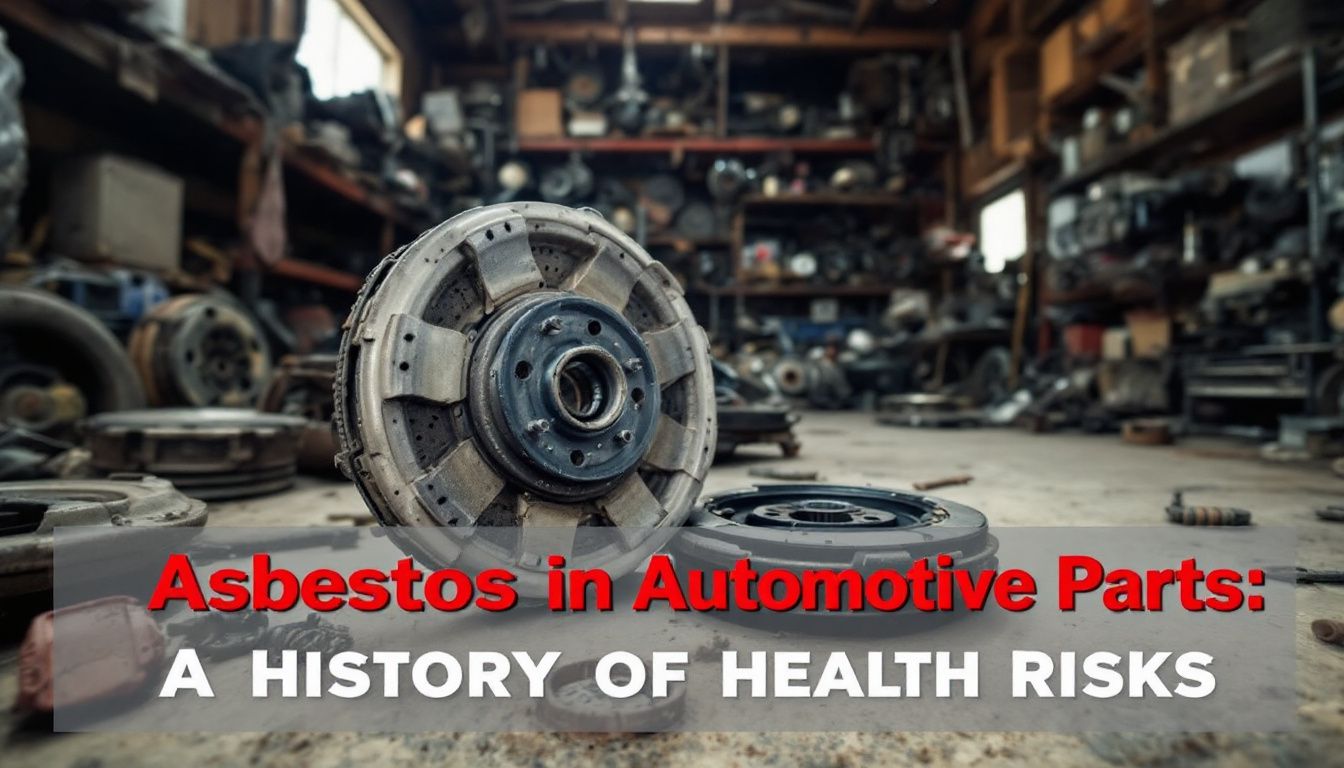
Asbestos was used extensively in vehicle manufacturing for decades. Brake pads, clutches, gaskets, and bonnet liners all contained asbestos — often in forms that became friable through heat cycling, wear, and mechanical abrasion.
Mechanics working on older vehicles faced significant friable asbestos exposure through routine tasks such as brake cleaning, gasket replacement, and general engine maintenance. The practice of blowing dust from brake drums with compressed air was particularly hazardous, dispersing friable material throughout workshop environments and creating airborne fibre concentrations that far exceeded safe working limits.
The UK prohibited the use of asbestos in automotive parts by 1999, but older and classic vehicles still on the road may retain original asbestos-containing components. Mechanics working on vintage vehicles should treat any brake or clutch work as a potential friable asbestos risk until confirmed otherwise through testing.
Health Risks Associated with Friable Asbestos Exposure
The health consequences of inhaling friable asbestos fibres are severe, well-documented, and irreversible. There is no safe level of asbestos exposure — but friable materials carry the highest risk because of the ease with which they release fibres and the concentrations those releases can reach.
Mesothelioma
Mesothelioma is a cancer of the mesothelial lining of the lungs, abdomen, or heart. It is almost exclusively caused by asbestos exposure and carries a very poor prognosis. The disease has an exceptionally long latency period — symptoms may not appear until 20 to 50 years after the original exposure event.
Asbestosis
Asbestosis is a chronic, progressive scarring of lung tissue caused by the accumulation of asbestos fibres. It causes increasing breathlessness, reduced lung function, and significantly diminished quality of life. There is no cure, and the condition worsens over time regardless of whether exposure continues.
Lung Cancer
Asbestos exposure significantly increases the risk of lung cancer, with the risk compounded substantially in those who also smoke. Workers with prolonged exposure to friable asbestos — such as laggers, insulation engineers, and vehicle mechanics — have historically shown elevated rates of asbestos-related lung cancer.
Pleural Disease
Pleural plaques — thickened areas on the lining of the lungs — are among the most common markers of past asbestos exposure. While not cancerous themselves, they indicate that significant fibre inhalation has occurred and that the individual carries an elevated risk of more serious disease.
Diffuse pleural thickening can cause significant breathing impairment in its own right. The latency periods involved mean that workers exposed to friable asbestos decades ago are still being diagnosed with these conditions today — this is an ongoing public health reality, not a historical footnote.
UK Regulations Governing Friable Asbestos
The management and handling of friable asbestos in the UK is governed primarily by the Control of Asbestos Regulations, which place clear legal duties on employers, building owners, and those responsible for non-domestic premises.
The Duty to Manage
The Control of Asbestos Regulations impose a duty to manage asbestos on those who have responsibility for non-domestic premises. This requires the dutyholder to identify whether asbestos is present, assess its condition and risk, and put in place a management plan to prevent exposure.
Friable asbestos materials in poor condition are typically assigned the highest priority within any asbestos management plan. The HSE’s guidance document HSG264 provides the technical framework for conducting asbestos surveys and underpins the professional standards that licensed surveyors are required to meet.
Licensable Work
Work involving friable asbestos — particularly sprayed coatings, insulation lagging, and asbestos insulating board — is classified as licensable work under the Control of Asbestos Regulations. This means it can only be carried out by contractors holding a licence issued by the HSE.
Attempting to remove or disturb friable asbestos without the appropriate licence is a serious criminal offence. Even brief, uncontrolled exposure to high concentrations of friable asbestos fibres can contribute to disease development.
Notifiable Non-Licensed Work
Some work with asbestos materials that falls below the threshold for full licensable work is still classified as notifiable non-licensed work (NNLW). This applies to short-duration tasks with lower-risk ACMs where sporadic and low-intensity exposure is anticipated. Even in these cases, specific training, supervision, and health surveillance requirements apply.
How Friable Asbestos Is Identified: The Survey Process
The only reliable way to confirm the presence of friable asbestos in a building is through a professional asbestos survey conducted in accordance with HSG264. Visual inspection alone is insufficient — laboratory analysis of samples is required to confirm the type and concentration of asbestos present.
Management Surveys
A management survey is the standard survey required for the ongoing management of asbestos in occupied premises. It identifies ACMs that could be disturbed during normal occupancy and routine maintenance, and surveyors will assess the condition of any identified materials to assign a risk score that guides the management plan.
Friable materials identified during a management survey will typically be flagged as high priority, with recommendations for either encapsulation, remediation, or removal depending on their condition and location. Acting on those recommendations promptly is not optional — it is a legal obligation.
Refurbishment and Demolition Surveys
Before any refurbishment or demolition work begins, a more intrusive demolition survey is required. This involves accessing all areas that will be disturbed, including voids, cavities, and structural elements where friable asbestos may be concealed.
This type of survey is particularly important given that friable asbestos was commonly used in locations that are not visible during routine inspections — inside ceiling voids, around structural steelwork, and within service ducts. Proceeding with demolition or major refurbishment without this survey in place exposes the dutyholder to significant legal and financial liability.
Where We Operate
Supernova Asbestos Surveys operates across the UK, providing professional survey services to commercial and residential clients. Our teams carry out asbestos survey London appointments across the capital, and we provide an asbestos survey Manchester service for properties across the North West. We also cover the Midlands, with our asbestos survey Birmingham team available for both commercial and residential instructions.
Safe Management of Friable Asbestos: What Property Managers Must Do
If friable asbestos has been identified in your building, the immediate priority is to prevent any disturbance of the material. This means ensuring that maintenance staff, contractors, and building users are all made aware of the location and risk status of identified ACMs before any work begins.
Asbestos Management Plans
Every non-domestic premises where asbestos has been identified must have a written asbestos management plan. This document records the location and condition of all known ACMs, the risk assessment for each, and the actions required to manage them safely.
For friable materials, the plan must specify whether the material is to be left in place and monitored, encapsulated, or removed. It must also include procedures for ensuring that no work is carried out near identified friable ACMs without prior assessment and appropriate controls.
Contractor Controls
One of the most common causes of uncontrolled friable asbestos exposure is contractors disturbing ACMs they were unaware of. Before any maintenance, refurbishment, or construction work begins, the responsible person must ensure that contractors have been briefed on the asbestos register and that appropriate controls are in place.
For licensable friable asbestos work, the appointed contractor must hold a current HSE licence, and the work must be notified to the relevant enforcing authority in advance. Work areas must be sealed, negative-pressure enclosures established, and appropriate respiratory protective equipment worn throughout.
Protective Equipment and Cleaning Methods
Where work near friable asbestos cannot be avoided, the correct respiratory protective equipment (RPE) must be selected and fitted properly. A dust mask is not sufficient — work with friable asbestos requires a minimum of a half-face respirator with a P3 filter, and in many cases a full-face unit will be required.
Cleaning methods matter enormously. Dry sweeping or using a standard vacuum cleaner will disturb and redistribute friable asbestos fibres rather than contain them. Only H-class (HEPA-filtered) vacuum equipment is suitable for use in areas where friable asbestos is present.
Periodic Re-inspection
Friable asbestos that is being managed in situ — rather than removed — must be subject to regular re-inspection. The frequency of inspection will depend on the material’s condition, its location, and the level of activity in the surrounding area.
Any deterioration in condition must be recorded and acted upon. A material that was considered manageable at the time of the original survey may reach a point where removal becomes the only safe option. Leaving this assessment too long is a common and avoidable mistake.
Friable Asbestos in Automotive Settings: A Continuing Concern
The automotive industry’s historical use of asbestos deserves specific attention, because the risks it created have not fully resolved. Asbestos was incorporated into brake linings, clutch facings, gaskets, and heat shields precisely because of its resistance to extreme temperatures — and those same thermal properties meant the fibres were subjected to conditions that progressively degraded the binding matrix, making the material increasingly friable over time.
Classic car restorers, motorsport mechanics, and anyone working on vehicles manufactured before the late 1990s should be aware that original asbestos-containing components may still be present. The risk is not confined to professional workshops — home mechanics working on older vehicles in domestic garages face the same exposure hazard, often without any awareness of it.
If you are carrying out work on a pre-2000 vehicle and are uncertain whether brake or clutch components contain asbestos, the safest course of action is to treat them as if they do. Use wet methods to suppress dust, wear appropriate RPE, and avoid using compressed air to clean brake assemblies under any circumstances.
Frequently Asked Questions
What makes friable asbestos more dangerous than other types of asbestos?
Friable asbestos can be crumbled or reduced to powder with minimal force, which means fibres can be released into the air without deliberate disturbance. Deterioration, vibration, or even air movement can be sufficient to cause fibre release. Non-friable materials, by contrast, only release fibres at dangerous concentrations when they are physically worked — cut, drilled, or sanded. The ease of fibre release from friable materials is what places them at the highest end of the risk spectrum.
Can I remove friable asbestos myself?
No. Work involving friable asbestos — including sprayed coatings, pipe lagging, and deteriorated asbestos insulating board — is classified as licensable work under the Control of Asbestos Regulations. It can only be carried out by contractors holding a current HSE licence. Attempting to remove friable asbestos without the appropriate licence is a criminal offence and creates serious health risks for you and anyone else in the vicinity.
How do I know if my building contains friable asbestos?
The only reliable way to confirm the presence of friable asbestos is through a professional asbestos survey, with laboratory analysis of any suspect materials. Visual inspection alone is not sufficient. If your property was built or significantly refurbished before 2000 and has not been surveyed, commissioning a management survey is the appropriate starting point. Contact Supernova Asbestos Surveys on 020 4586 0680 or visit asbestos-surveys.org.uk to arrange a survey.
What should I do if I accidentally disturb friable asbestos?
Stop work immediately and evacuate the area. Do not attempt to clean up the material yourself. Seal off the area to prevent fibres spreading to other parts of the building and contact a licensed asbestos contractor to assess the situation and carry out any necessary remediation. Inform your employer or, if you are the dutyholder, notify the relevant enforcing authority as required under the Control of Asbestos Regulations.
Does friable asbestos need to be removed immediately if it is found?
Not necessarily. The Control of Asbestos Regulations permit friable asbestos to be managed in situ where it is in a stable condition and the risk of disturbance is low. However, materials in poor condition or in locations where they are likely to be disturbed will typically require either encapsulation or removal. A professional surveyor will assess the condition of the material and provide recommendations based on the specific circumstances. Regular re-inspection is mandatory where materials are left in place.