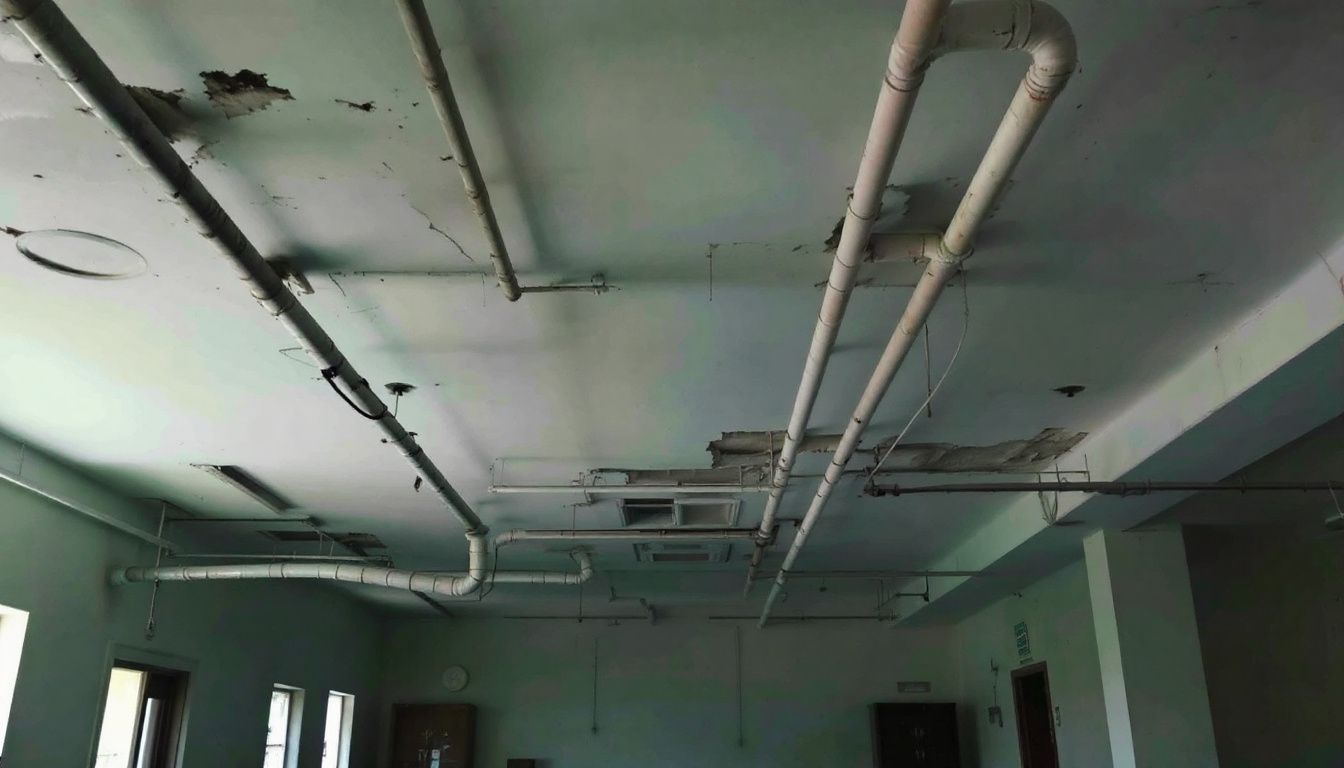
Asbestos Testing in Public Buildings: What the Law Requires and How to Stay Compliant
Public buildings carry a responsibility that private properties simply do not. Schools, libraries, council offices, leisure centres, hospitals — these are spaces where hundreds or thousands of people pass through every week. When asbestos is present and poorly managed, the consequences can be catastrophic. Asbestos testing in public buildings under government regulations and protocols isn’t optional — it’s a legal obligation, and one that duty holders cannot afford to get wrong.
The good news is that the regulatory framework in the UK is clear. If you understand what’s required of you and work with the right professionals, compliance is entirely achievable. Here’s what you need to know.
Why Asbestos Remains a Serious Concern in Public Buildings
Asbestos was used extensively in UK construction right up until its full ban in 1999. That means any building constructed before 2000 — and there are millions of them — could contain asbestos-containing materials (ACMs). Public buildings from the post-war boom years are particularly at risk, as asbestos was considered a wonder material at the time: cheap, fire-resistant, and easy to work with.
The danger isn’t simply that asbestos exists in a building. Intact, undisturbed ACMs can remain safely in place for years. The problem arises when those materials are disturbed — during maintenance, refurbishment, or demolition — releasing microscopic fibres into the air. Those fibres, once inhaled, can cause mesothelioma, asbestosis, and lung cancer, often decades after exposure.
For public buildings, the stakes are especially high. Maintenance workers, contractors, cleaners, and the general public can all be exposed if asbestos isn’t properly identified and managed.
The Legal Framework: Government Regulations That Apply to Public Buildings
The primary legislation governing asbestos testing in public buildings is the Control of Asbestos Regulations, supported by the Health and Safety at Work etc. Act. These regulations apply across Great Britain and set out clear duties for anyone who owns, occupies, or manages non-domestic premises — which includes all public buildings.
The Duty to Manage
Regulation 4 of the Control of Asbestos Regulations places a legal duty on those responsible for non-domestic premises to manage asbestos. This duty applies to building owners, managing agents, and anyone with maintenance responsibilities. It is not delegable — you cannot simply pass the obligation to a contractor and walk away.
Under the duty to manage, responsible persons must:
- Take reasonable steps to find out whether ACMs are present in the premises
- Presume materials contain asbestos unless there is strong evidence they do not
- Assess the condition and risk of any ACMs found
- Prepare and implement a written asbestos management plan
- Keep that plan up to date and review it regularly
- Provide information about the location and condition of ACMs to anyone who might disturb them
Failing to meet these obligations isn’t just a regulatory breach — it puts lives at risk. The Health and Safety Executive (HSE) takes enforcement seriously.
HSG264: The Survey Guide
HSG264 is the HSE’s definitive guidance on asbestos surveys. It sets out how surveys should be planned, conducted, and reported, and it’s the benchmark against which all professional asbestos surveyors are measured. Any survey carried out in a public building should comply fully with HSG264 — if it doesn’t, the results may not be legally defensible.
Exposure Limits and Air Monitoring
The Control of Asbestos Regulations sets control limits for airborne asbestos fibres. The control limit is 0.1 fibres per cubic centimetre of air, averaged over a four-hour period. There is also a short-term limit of 0.6 fibres per cubic centimetre averaged over ten minutes. These limits are not targets to work towards — they are absolute maxima that must never be exceeded.
Where licensed asbestos work is carried out, air monitoring must be conducted by a UKAS-accredited analyst. This is a non-negotiable requirement, not a best-practice recommendation.
Types of Asbestos Survey Required in Public Buildings
Not all surveys are the same. The type of survey required depends on the circumstances — whether the building is in normal use, undergoing refurbishment, or being demolished. Getting the right survey matters, because using the wrong type could leave you legally exposed.
Management Surveys
A management survey is the standard survey required for buildings in normal occupation. It’s designed to locate ACMs that could be disturbed during everyday activities and routine maintenance. The survey is minimally intrusive — the surveyor won’t be opening up walls or lifting floors — but it must be thorough enough to identify all reasonably accessible materials.
For public buildings, a management survey is the starting point. It informs the asbestos register and management plan that duty holders are legally required to maintain.
Refurbishment Surveys
Before any refurbishment or significant maintenance work begins, a refurbishment survey must be carried out in the areas affected by the works. This is a more intrusive survey — materials are opened up, sampled, and assessed. The purpose is to ensure that contractors know exactly what they’re dealing with before work begins.
In a public building context, this is critical. Contractors who disturb ACMs without prior knowledge are not only putting themselves at risk — they’re potentially exposing members of the public.
Demolition Surveys
Where a public building is being demolished or substantially stripped out, a demolition survey is required. This is the most intrusive type of survey and must cover the entire structure. It’s designed to locate all ACMs so they can be removed before demolition work begins.
Demolition surveys must be completed before any demolition work commences — this is a legal requirement, not a recommendation.
Re-Inspection Surveys
Once an asbestos management plan is in place, it cannot simply be filed away. ACMs that are left in situ must be monitored regularly to check their condition hasn’t deteriorated. A re-inspection survey does exactly that — it revisits known ACMs, assesses their current condition, and updates the risk register accordingly. For most public buildings, annual re-inspections are standard practice.
Asbestos Testing: Sampling and Laboratory Analysis
Identifying suspected ACMs visually is only part of the process. To confirm whether a material contains asbestos — and to determine the fibre type — samples must be taken and analysed in an accredited laboratory. This is where asbestos testing becomes essential.
Samples are collected by qualified surveyors using correct containment procedures to prevent fibre release. They are then sent to a UKAS-accredited laboratory, where they are analysed using polarised light microscopy (PLM). The results confirm the presence or absence of asbestos and identify the specific fibre type — whether chrysotile, amosite, crocidolite, or another variety.
Fibre type matters because different types of asbestos carry different risk profiles. Crocidolite (blue asbestos) and amosite (brown asbestos) are considered the most hazardous. Knowing what you’re dealing with informs the risk assessment and management decisions.
For those who need to test specific materials without a full survey, a testing kit allows samples to be collected and submitted for laboratory analysis. However, in a public building context, this should be seen as supplementary to — not a replacement for — a properly conducted professional survey.
For more detail on how the testing process works, our dedicated asbestos testing page covers the full procedure from sample collection through to results.
Government Protocols for Asbestos Management Plans
Finding asbestos is only the first step. What happens next is equally important — and equally regulated.
The Asbestos Register
Every public building with known or suspected ACMs must have an asbestos register. This is a document that records the location, type, and condition of every ACM identified in the building. It must be kept up to date and made available to anyone who might disturb those materials — contractors, maintenance workers, and emergency services.
An out-of-date or incomplete asbestos register is not a defence against enforcement action. The HSE expects registers to reflect the current state of the building.
Risk Assessment and Prioritisation
Not all ACMs pose the same risk. A sealed, undamaged section of asbestos ceiling tile in a locked plant room is a very different proposition from damaged pipe lagging in a busy corridor. Risk assessments must take into account the material’s condition, its accessibility, and the likelihood of disturbance.
The risk assessment informs the management plan — specifically, whether ACMs should be left in situ and monitored, repaired, encapsulated, or removed.
Contractor Management and Notification
Before any contractor begins work in a public building, they must be informed about the location and condition of any ACMs in their work area. This is a legal obligation under the Control of Asbestos Regulations. Duty holders who fail to share this information are placing contractors — and potentially the public — in danger.
For licensed asbestos work, the HSE must be notified at least 14 days before work begins. Notifiable non-licensed work (NNLW) carries its own notification and health surveillance requirements.
Health Records and Medical Surveillance
Workers who carry out licensed asbestos work must be under medical surveillance by an employment medical adviser or appointed doctor. Health records for these workers must be retained for 40 years — a reflection of how long asbestos-related diseases can take to develop after exposure.
Enforcement: What Happens When Regulations Are Breached
The HSE has broad enforcement powers when it comes to asbestos. Inspectors can visit public buildings unannounced, and they take non-compliance seriously. The consequences of getting it wrong are significant.
For minor breaches, the HSE can issue improvement notices or prohibition notices. More serious breaches can result in prosecution. Fines for asbestos-related offences can reach £20,000 in magistrates’ courts, with unlimited fines in the Crown Court. Individuals — not just organisations — can face custodial sentences of up to two years for the most serious offences.
Beyond the legal consequences, the reputational damage to a public body found to have mismanaged asbestos can be severe. And of course, the human cost — the workers and members of the public who may be harmed — is incalculable.
RIDDOR (the Reporting of Injuries, Diseases and Dangerous Occurrences Regulations) also applies. Cases of asbestos-related disease in workers must be reported to the HSE. Failure to report is itself a breach of regulations.
Additional Compliance Considerations for Public Buildings
Fire Risk Assessments
Asbestos management doesn’t exist in isolation. Public buildings are also subject to fire safety legislation, and the two areas of compliance often intersect. A fire risk assessment is a legal requirement for all non-domestic premises and should be considered alongside your asbestos management obligations. Surveyors working in public buildings need to be aware of both.
Surveyor Qualifications
Not just anyone can conduct an asbestos survey. The HSE expects surveys to be carried out by competent persons — in practice, this means surveyors holding BOHS P402 qualification as a minimum. Analysts conducting air monitoring must be from a UKAS-accredited body. Using unqualified surveyors doesn’t just produce unreliable results — it may render your survey legally worthless.
London-Specific Considerations
London’s built environment presents particular challenges. The capital has a vast stock of pre-2000 public buildings, from Victorian schools to 1970s civic centres. If you’re managing a public building in the capital, our asbestos survey London service provides fast, qualified coverage across all boroughs.
Practical Steps for Public Building Managers
If you’re responsible for a public building and aren’t sure where to start, here’s a straightforward sequence to follow:
- Establish whether a survey has been done. Check whether an asbestos register exists and when it was last updated.
- Commission a management survey if no valid survey exists for the building.
- Review and update your asbestos management plan based on the survey findings.
- Schedule annual re-inspections to monitor the condition of any ACMs left in situ.
- Ensure all contractors are briefed on asbestos locations before any work begins.
- Commission a refurbishment or demolition survey before any significant works commence.
- Keep records. The asbestos register, survey reports, risk assessments, and management plan must all be documented and accessible.
This isn’t bureaucracy for its own sake — it’s a framework that protects people. Follow it properly and you significantly reduce both the risk of harm and the risk of enforcement action.
How Supernova Asbestos Surveys Can Help
Supernova Asbestos Surveys has completed over 50,000 surveys across the UK. Our BOHS P402-qualified surveyors work to HSG264 standards on every job, and all samples are analysed in our UKAS-accredited laboratory. We cover public buildings of all types — schools, libraries, council offices, leisure facilities, and more.
Whether you need a first-time management survey, a pre-refurbishment survey before major works, or an annual re-inspection to keep your management plan current, we can help. We offer same-week availability, transparent fixed pricing, and reports delivered within 24 hours of site visits.
Get a free quote online in minutes, or call our team directly on 020 4586 0680. You can also find full details of our services at asbestos-surveys.org.uk.
Frequently Asked Questions
Do all public buildings need asbestos testing?
Any public building constructed before 2000 should be assessed for the presence of asbestos-containing materials. The duty to manage under the Control of Asbestos Regulations applies to all non-domestic premises, which includes public buildings such as schools, libraries, leisure centres, and council offices. If no valid asbestos survey exists, one should be commissioned without delay.
What type of asbestos survey does a public building need?
For a building in normal use, a management survey is the standard requirement. If refurbishment or significant maintenance work is planned, a refurbishment survey must be completed in the affected areas before work begins. If the building is being demolished, a full demolition survey covering the entire structure is required. Annual re-inspections are also needed to monitor any ACMs left in situ.
Who is responsible for asbestos management in a public building?
The duty to manage falls on the person or organisation with responsibility for maintaining the building — typically the owner, managing agent, or facilities manager. This duty cannot be passed to a contractor. If responsibility is shared, all parties should be clearly aware of their respective obligations and a single named duty holder should be identified in the management plan.
What happens if a public building fails to comply with asbestos regulations?
The HSE has powers to issue improvement notices, prohibition notices, and to prosecute. Fines can be unlimited in the Crown Court, and individuals can face custodial sentences of up to two years for serious breaches. Beyond legal penalties, non-compliance puts workers, contractors, and members of the public at genuine risk of asbestos-related disease.
How often should asbestos re-inspections be carried out in public buildings?
For most public buildings, annual re-inspections are standard practice and are strongly recommended by HSE guidance. However, if the condition of ACMs is deteriorating, or if the building use changes, more frequent inspections may be necessary. The asbestos management plan should specify the re-inspection frequency based on the risk assessment findings.