Suspect boarding above a ceiling, old floor tiles in a plant room, a cement sheet in a garage roof — any of these can derail maintenance or refurbishment in minutes. Asbestos testing is often the fastest way to replace uncertainty with evidence, so you can protect occupants, brief contractors properly and make the right next decision.
If a property was built or refurbished before 2000, asbestos must be considered before work starts. Guesswork is not a strategy. Proper asbestos testing means identifying suspect materials, taking samples safely where appropriate, sending them for laboratory analysis, and using the findings to decide whether the material should be managed, repaired or removed.
What asbestos testing actually means
People often use asbestos testing as a catch-all term, but there are a few different services involved. In practice, it may refer to bulk sampling of suspect materials, laboratory identification, or wider surveying that records where asbestos-containing materials are located and what condition they are in.
The main aim is simple: confirm whether a material contains asbestos. Once that is known, the next step is to assess the risk and decide what action is needed.
That could mean:
- leaving the material in place and managing it
- labelling and monitoring it
- repairing or encapsulating it
- arranging remedial work
- planning safe asbestos removal where necessary
You cannot confirm asbestos by sight alone. Many products look similar, especially textured coatings, insulation boards and cement-based materials. Reliable asbestos testing depends on proper sample collection and laboratory analysis.
Where asbestos is commonly found
Asbestos-containing materials are still present in many UK buildings. They often sit in everyday places that do not look suspicious until work begins.
Common examples include:
- textured coatings
- ceiling tiles and insulation board
- pipe lagging and thermal insulation
- boiler cupboards and service risers
- vinyl floor tiles and bitumen adhesive
- soffits, gutters and cement sheets
- garage and outbuilding roofs
- fire doors and panels behind heaters
- fuse board backing panels
- duct panels and partition walls
Homes, schools, offices, shops, warehouses and public buildings can all contain asbestos if they were built or altered before the ban was fully in place. That is why asbestos testing is often the first sensible step before drilling, cutting, stripping out or demolition.
When asbestos testing is needed
Not every property needs immediate sampling, but there are clear situations where asbestos testing is the right move. The key question is whether suspect materials may be disturbed, damaged or relied on in an outdated asbestos record.
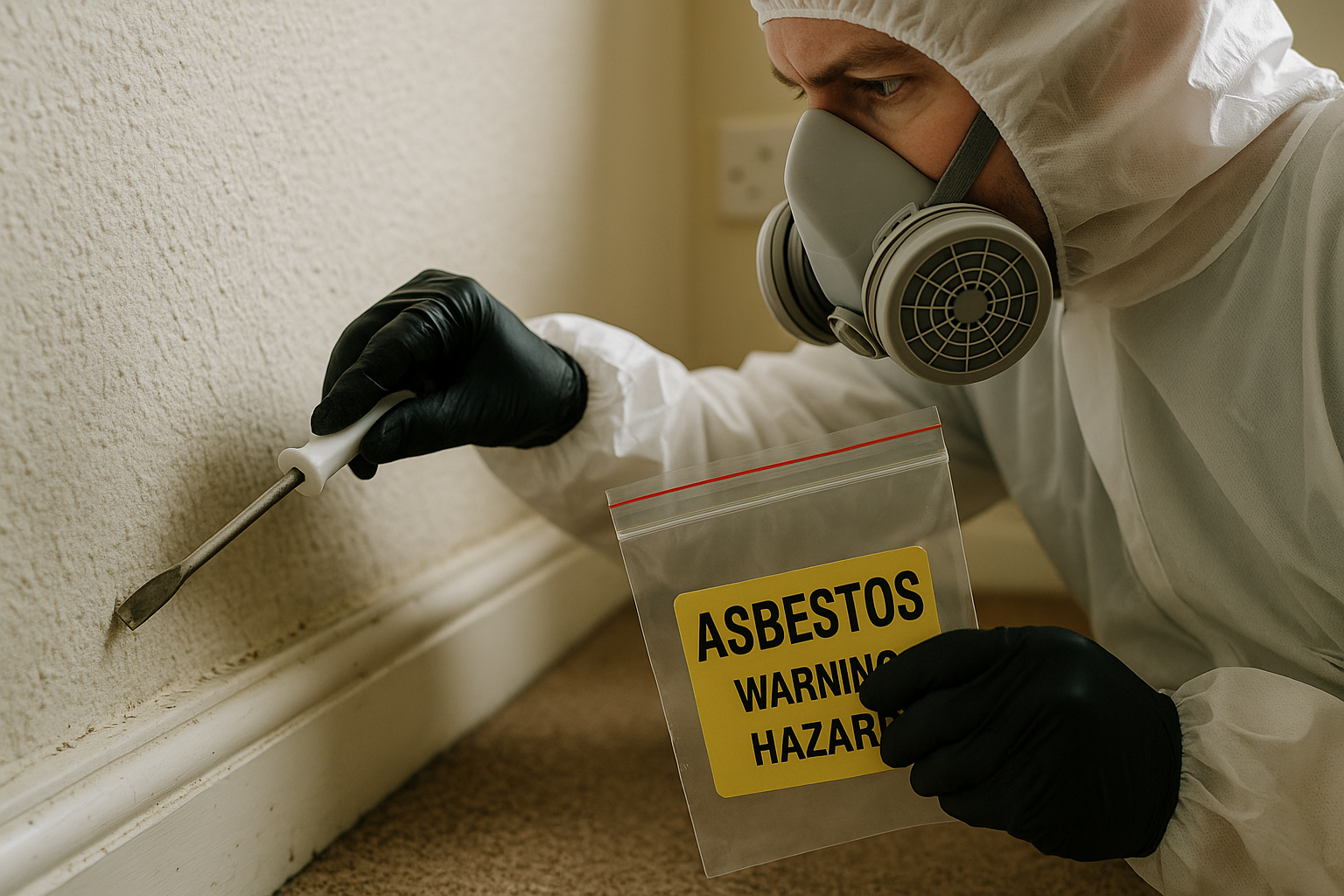
Typical triggers for asbestos testing
- before refurbishment, strip-out or demolition
- when a material is damaged or deteriorating
- before intrusive maintenance such as drilling or chasing
- when buying or taking over an older non-domestic property
- if the asbestos register is missing, unclear or out of date
- after accidental damage to a known or suspected asbestos-containing material
- when contractors need confirmation before starting work
For occupied buildings where the goal is to identify asbestos that could be disturbed during normal use, a management survey is usually the starting point. If planned works will disturb the building fabric, a refurbishment survey is normally required before work begins.
Where asbestos has already been identified and remains in place, a re-inspection survey helps confirm whether the condition has changed and whether your management plan still reflects the actual risk.
The asbestos testing process step by step
Good asbestos testing follows a controlled process. It is not a matter of snapping off a piece of material and hoping the result will be useful. The method has to reduce fibre release, protect anyone nearby and produce a clear record of exactly what was sampled.
1. Initial assessment
A competent surveyor starts by reviewing the age, layout and use of the property. They identify likely asbestos-containing materials, note access issues and decide whether isolated sampling is suitable or whether a wider survey is needed.
This first stage matters because asbestos testing is often only one part of the bigger picture. If the building has multiple suspect materials or planned works are extensive, stand-alone sampling may not be enough.
2. Planning the sampling work
Before any sample is taken, the area should be assessed for risk. That means looking at the type of material, its condition, how friable it is, who may be affected and what controls are needed.
Practical precautions often include:
- restricting access to the immediate area
- using suitable personal protective equipment
- preparing labelled sample bags and paperwork
- using the correct hand tools and controlled methods
- having cleaning materials and waste bags ready
If the material is highly damaged, hard to reach or likely to release dust, the sampling approach needs extra care. In some cases, the safest decision is to stop and review whether a different method or more controlled access is required.
3. Safe sample collection
Only a small representative sample is usually needed for asbestos testing. The exact method depends on the material. Sampling asbestos cement is very different from sampling insulation board, textured coating or lagging.
Where suitable, the surface may be dampened to help reduce dust. Once the sample is taken, the exposed area may be sealed, and the sample is placed in a secure labelled container.
Good records are essential. A lab result is only useful if it can be tied back to the exact room, surface and material from which the sample was taken.
4. Laboratory analysis
After collection, samples are sent for sample analysis by a UKAS-accredited laboratory. This is the stage that confirms whether asbestos is present and identifies the asbestos type found within the material.
Professional asbestos testing should always rely on laboratory analysis rather than visual assumptions. Materials that look harmless can contain asbestos, while some products that appear suspicious may not.
5. Reporting and recommendations
The final report should do more than say positive or negative. It should explain what was sampled, where it was found, what the result means and what action is recommended.
Recommendations may include:
- leave in place and manage
- label and monitor
- repair or encapsulate
- restrict access
- arrange licensed or non-licensed work depending on the material and task
If you need a dedicated service for this stage, Supernova offers professional asbestos testing for domestic and commercial properties.
How asbestos testing fits with UK regulations
In the UK, asbestos work is controlled by the Control of Asbestos Regulations. For non-domestic premises, the duty to manage requires the responsible person to take reasonable steps to find out whether asbestos is present, assess the risk and keep that information up to date.
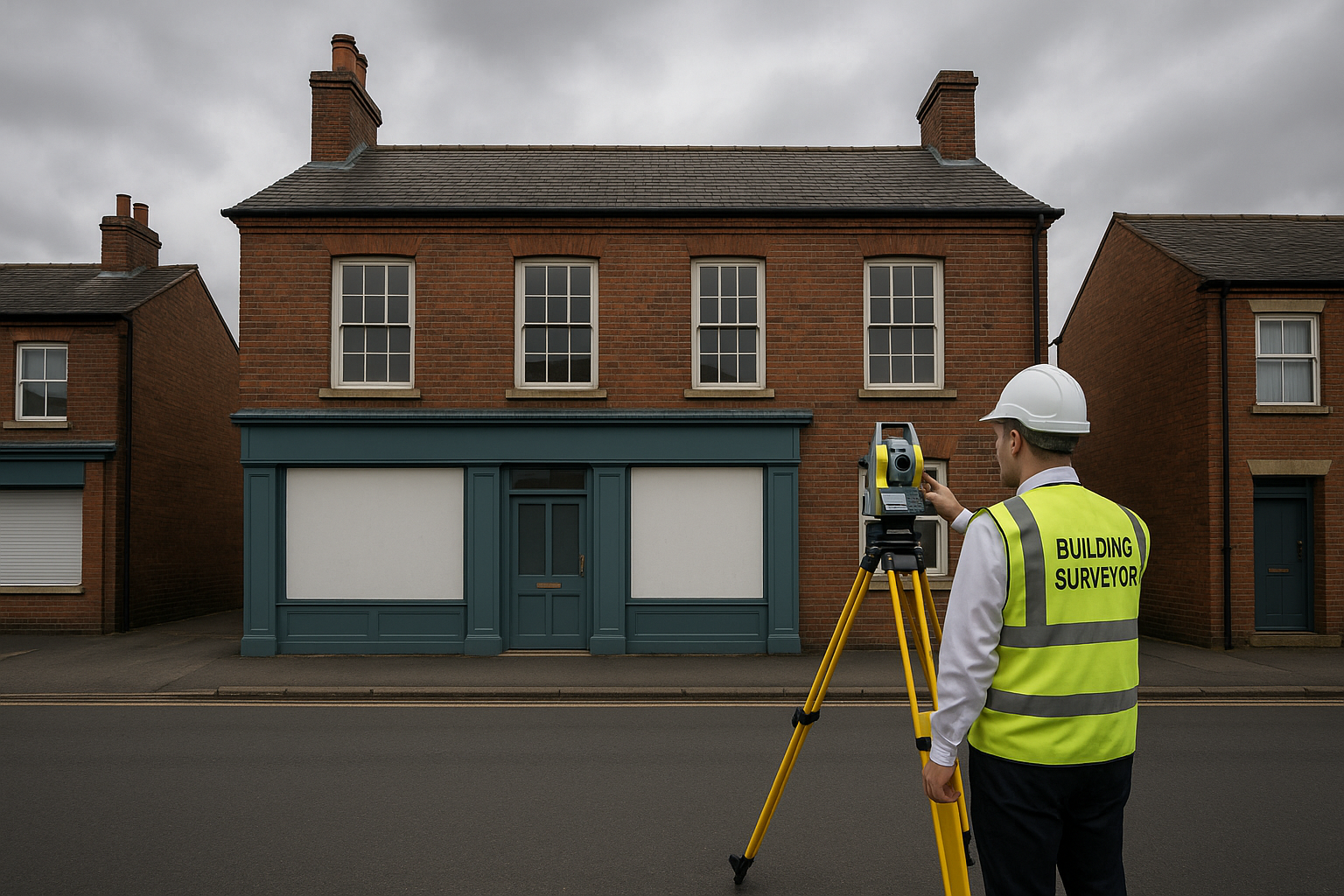
Surveying work should follow HSG264, which sets out how asbestos surveys should be planned, carried out and reported. HSE guidance also makes clear that asbestos must be identified before refurbishment or demolition starts.
For property managers, compliance is not about collecting paperwork for a file. The information has to be current, site-specific and useful to anyone who may disturb the building fabric, including maintenance teams, electricians, plumbers and principal contractors.
What dutyholders should do in practice
- Check whether an asbestos register already exists.
- Confirm whether existing information is suitable for the planned work.
- Arrange asbestos testing or surveying before intrusive activity starts.
- Share asbestos information with contractors before they arrive on site.
- Review known asbestos-containing materials regularly.
- Update records after removal, repair or re-inspection.
If you manage multiple sites, consistency helps. Use the same reporting structure, keep plans easy to access and make sure building users know how to report damage to suspect materials quickly.
What happens if asbestos testing confirms asbestos
A positive result does not automatically mean the material must be removed at once. The next step depends on the product type, its condition, where it is located and the likelihood of disturbance.
When asbestos can stay in place
If the material is in good condition, sealed and unlikely to be disturbed, it can often remain in place under a management plan. This is common with some lower-risk materials, including certain cement products that are intact and stable.
Management usually involves recording the material on the asbestos register, assessing the risk, labelling where appropriate and arranging periodic checks. This approach only works if anyone who may disturb the material knows it is there.
When remedial work is needed
If the material is damaged, deteriorating or in the way of planned works, further action is usually required. That may mean repair, encapsulation or removal, depending on the material and the task involved.
Removal should not be treated as the automatic answer. Unnecessary disturbance can create more risk than leaving a stable material alone. Good asbestos testing supports better decisions by showing exactly what the material is and where it sits within the wider risk picture.
Air testing and clearance
Bulk sampling and air monitoring are not the same thing. Bulk asbestos testing identifies asbestos in a solid material, while air testing measures airborne fibre levels.
Air monitoring may be needed after accidental disturbance, during certain work activities or following licensed remedial work. If an incident has occurred, ask whether reassurance air testing or formal clearance procedures are appropriate before the area is brought back into use.
Professional asbestos testing vs DIY sampling
Some property owners look for a quick low-cost answer and consider taking samples themselves. While there are situations where a posted sample can be appropriate, DIY sampling is not suitable for every material or every building.
The main issue is control. Without the right method, you can damage the material, spread debris and still end up with a poor record of where the sample came from.
When a testing kit may be suitable
A testing kit can be useful for straightforward, low-risk sampling where the material is accessible and in a condition that allows safe collection. This is generally more suitable for limited domestic sampling than for complex commercial environments.
Even then, you should read the instructions carefully, avoid friable materials and stop immediately if the sample cannot be taken without creating dust or damage. If there is any doubt, professional asbestos testing is the safer option.
Why professional sampling is often the better route
- better control of fibre release during sampling
- clear location records and sample identification
- advice on whether a survey is needed instead of isolated testing
- recommendations aligned with HSE guidance
- reduced risk of accidental contamination
For landlords, managing agents, schools and commercial premises, professional asbestos testing is usually the most defensible approach. It shows that reasonable steps were taken and that decisions were based on competent inspection and analysis.
If you are looking for local support in the capital, Supernova also provides an asbestos survey London service to help keep projects moving.
What to expect when you book asbestos testing
The process should be straightforward. You should know what is being inspected, what will be sampled, how quickly results are likely to come back and what the report will contain.
- Booking: you provide the property details, suspected materials and reason for testing.
- Site visit: a qualified surveyor attends and inspects the relevant areas.
- Sampling: representative samples are taken using controlled methods.
- Laboratory analysis: samples are analysed by a UKAS-accredited laboratory.
- Report: you receive the results with location details and practical recommendations.
If your needs are more urgent or focused on a single concern, you can also use Supernova’s dedicated asbestos testing service page to arrange the right support quickly.
For managed residential blocks, offices and mixed-use buildings, it can also make sense to review wider compliance at the same time. Pairing asbestos work with a fire risk assessment can help reduce disruption and tighten overall property risk management.
Practical advice for property managers and owners
Good asbestos management starts before the contractor arrives. The more organised you are, the less likely you are to face delays, emergency call-outs or exposure incidents.
Before maintenance or refurbishment starts
- check the age of the building and any refurbishment history
- review the asbestos register and compare it with the planned work area
- do not rely on an old survey if the scope of works has changed
- make sure contractors receive asbestos information before starting
- stop work immediately if hidden suspect materials are uncovered
If a suspect material is damaged
- keep people out of the area
- avoid sweeping, vacuuming or dry brushing debris
- switch off ventilation if it could spread fibres
- prevent further disturbance
- arrange professional advice and asbestos testing as soon as possible
For ongoing compliance
- keep the asbestos register accessible and current
- schedule re-inspections where asbestos remains in place
- brief maintenance staff and visiting contractors
- update records after any repair, sampling or removal work
- treat every change to the building fabric as a trigger to review asbestos information
One of the most common failures in asbestos management is assuming an old report still answers a new question. It often does not. If the work changes, the asbestos information may need to change too.
Common mistakes to avoid with asbestos testing
Most asbestos problems on site are caused by poor planning rather than bad luck. A few avoidable mistakes account for a lot of disruption.
- Relying on appearance alone: asbestos cannot be confirmed visually.
- Using the wrong survey type: a management survey is not a substitute for a refurbishment survey before intrusive work.
- Sampling without control measures: careless collection can contaminate the area.
- Failing to label sample locations properly: a result without a clear location record has limited value.
- Not sharing results: contractors need the information before they start, not after.
- Ignoring damaged materials: deterioration changes the risk profile and may require urgent action.
Good asbestos testing is as much about decision-making as it is about the lab result. The best outcome is not simply identifying asbestos, but using that information to prevent exposure and keep work moving safely.
Choosing the right asbestos testing service
Not every situation needs the same response. A domestic owner with one suspect garage panel may need a different service from a facilities manager overseeing a multi-site portfolio.
When choosing a provider, look for:
- clear advice on whether testing or surveying is the right option
- sampling carried out by competent professionals
- UKAS-accredited laboratory analysis
- reports that are easy to understand and act on
- practical recommendations, not just raw results
The best asbestos testing service should leave you knowing exactly what was found, where it is, what risk it presents and what you need to do next.
Frequently Asked Questions
How long does asbestos testing take?
The site visit itself is often quick, especially for a limited number of samples. The full timeframe depends on access, the number of materials sampled and laboratory turnaround, but you should be told what to expect when booking.
Can I do asbestos testing myself?
In some limited domestic situations, a posted sample may be possible, especially using a kit for low-risk accessible materials. It is not suitable for every material, and friable or damaged products should not be sampled without professional advice.
Does a positive asbestos result always mean removal?
No. If the material is in good condition and unlikely to be disturbed, it can often be managed safely in place. Removal is usually considered where the material is damaged, deteriorating or affected by planned works.
What is the difference between asbestos testing and an asbestos survey?
Asbestos testing usually refers to sampling and laboratory analysis of a material. An asbestos survey is broader and records the location, extent, condition and risk of asbestos-containing materials within a property.
When should asbestos testing be arranged before building work?
It should be arranged before any intrusive maintenance, refurbishment or demolition begins. If work may disturb the building fabric, asbestos must be identified first so contractors can plan safely and legally.
If you need clear answers fast, Supernova Asbestos Surveys can help with asbestos testing, surveys, re-inspections and removal support across the UK. Call 020 4586 0680 or visit asbestos-surveys.org.uk to book the right service for your property.