What Every Commercial Building Owner Must Know About Asbestos Surveys
If your commercial property was built before 2000, there is a reasonable chance asbestos-containing materials (ACMs) are present somewhere in the fabric of the building. That is not speculation — it is the reality of how extensively asbestos was used in UK construction throughout the twentieth century. A commercial building asbestos survey is not just best practice; for most non-domestic premises, it is a legal obligation.
Understanding what the law requires, what different survey types cover, and what happens during the process will help you manage your duty of care with confidence — and avoid the serious consequences of getting it wrong.
Why Commercial Buildings Require an Asbestos Survey
The UK banned the use of all forms of asbestos in 1999. Any building constructed or refurbished before that point may contain asbestos in materials such as ceiling tiles, pipe lagging, floor tiles, textured coatings, insulation boards, and roofing felt. The list is long, and many ACMs are not immediately obvious to the untrained eye.
When asbestos-containing materials are disturbed — during routine maintenance, refurbishment, or demolition — they can release microscopic fibres into the air. Inhaling those fibres can cause mesothelioma, asbestosis, and lung cancer, all of which are irreversible and often fatal. The Health and Safety Executive recognises asbestos-related diseases as the single largest cause of work-related deaths in Great Britain.
A commercial building asbestos survey identifies where ACMs are located, assesses their condition, and provides the information you need to manage or remove them safely. Without one, you are effectively managing risk blind.
The Legal Framework: What the Regulations Actually Require
The Control of Asbestos Regulations place a clear legal duty on owners and managers of non-domestic premises. Regulation 4 — commonly referred to as the Duty to Manage — requires those responsible for commercial properties to take reasonable steps to find out whether asbestos is present, assess its condition, and put a management plan in place.
This duty applies to anyone who has responsibility for maintenance and repair of non-domestic premises. That includes landlords, facilities managers, managing agents, and employers who control a building. If you are in any doubt about whether the duty applies to you, the answer is almost certainly yes.
HSG264, the HSE’s definitive survey guide, sets out exactly how asbestos surveys should be conducted to meet the regulatory standard. Supernova Asbestos Surveys follows HSG264 on every job, ensuring your documentation is legally defensible and fit for purpose.
Penalties for Non-Compliance
Failing to meet your legal obligations under the Control of Asbestos Regulations is taken seriously by enforcement authorities. Minor breaches can result in a fine of up to £20,000 or up to 12 months’ imprisonment in a magistrates’ court. More serious breaches — particularly those that result in exposure — can attract unlimited fines and up to two years in prison.
Beyond the legal penalties, the reputational and human cost of a preventable asbestos exposure incident is significant. A properly conducted survey is a relatively small investment against that risk.
Types of Commercial Building Asbestos Survey
Not all asbestos surveys are the same. The type you need depends on what you plan to do with the building. Getting this right from the outset saves time, money, and potential legal complications.
Management Survey
A management survey is the standard survey required to manage asbestos in a building that is in normal occupation and use. It locates ACMs in accessible areas, assesses their condition, and produces an asbestos register that forms the basis of your ongoing management plan. This is the survey most commercial building owners need as their baseline.
It is not intrusive — the surveyor will not break into sealed voids or dismantle equipment — but it covers all areas that are reasonably accessible and likely to be disturbed during normal occupancy. A management survey produces a living document. You are legally required to keep it up to date, which is where periodic re-inspection comes in.
Refurbishment Survey
If you are planning building work — anything from a minor office refit to a significant structural alteration — you need a refurbishment survey before work begins. This is a more intrusive survey that accesses all areas that will be disturbed, including sealed voids, above suspended ceilings, and within structural elements.
No responsible contractor should start refurbishment without sight of the relevant survey report. If they do, both they and you could be liable for any resulting asbestos exposure.
Demolition Survey
Where the entire structure is being taken down, a demolition survey is required instead. This is the most thorough survey type and must be completed before any demolition contractor begins work on site.
The demolition survey covers every part of the structure — there are no exclusions. It ensures that all ACMs are identified and safely removed before demolition begins, protecting workers and the surrounding environment from fibre release.
Re-Inspection Survey
Once your asbestos register is in place, the materials identified within it need to be monitored over time. ACMs in good condition and left undisturbed are generally low risk, but their condition can change through deterioration, accidental damage, or building alterations.
A re-inspection survey checks the condition of known ACMs at regular intervals — typically annually — and updates your register accordingly. Skipping re-inspections is one of the most common compliance gaps in commercial buildings. If an ACM deteriorates and you have no record of having checked it, demonstrating that you have fulfilled your duty of care becomes very difficult.
What Happens During a Commercial Building Asbestos Survey
Knowing what to expect makes the process straightforward to arrange and helps you prepare the site appropriately. Here is how Supernova Asbestos Surveys approaches every commercial survey.
- Booking: Contact us by phone or online. We confirm availability — often within the same week — and send a booking confirmation with all relevant details.
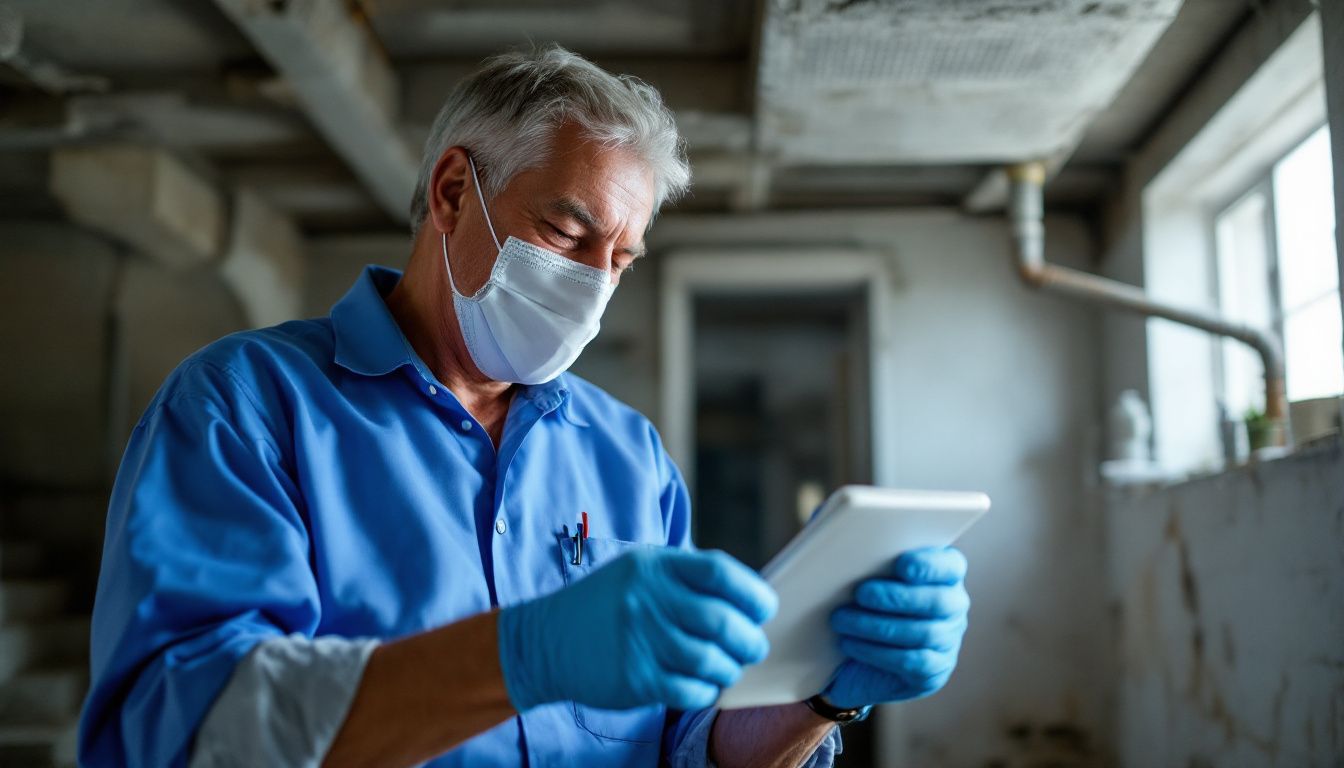
- Site Visit: A BOHS P402-qualified surveyor attends at the agreed time and carries out a thorough visual inspection of the property, working systematically through all accessible areas.
- Sampling: Representative samples are collected from materials suspected to contain asbestos. All sampling follows correct containment procedures to prevent fibre release.
- Laboratory Analysis: Samples are sent to our UKAS-accredited laboratory for analysis under polarised light microscopy (PLM) — the recognised method for identifying asbestos fibre types.
- Report Delivery: You receive a detailed asbestos register, risk assessment, and management plan in digital format within 3–5 working days. The report is fully compliant with HSG264 and satisfies all requirements under the Control of Asbestos Regulations.
The report is not just a tick-box document. It gives you practical, actionable information: what is present, where it is, what condition it is in, and what you need to do about it.
Asbestos Testing: Sampling Options for Commercial Properties
In some situations, targeted asbestos testing is appropriate before committing to a full survey — for example, when a specific material has been identified during maintenance and you need to know quickly whether it contains asbestos.
Supernova offers a postal testing kit from £30 per sample, which allows you to collect a sample yourself (where it is safe and appropriate to do so) and send it to our UKAS-accredited laboratory for analysis. Results are returned promptly with a clear identification report.
A testing kit is not a substitute for a full survey. If you have a duty to manage asbestos under the regulations, you need a properly conducted survey by a qualified professional. However, for isolated queries or preliminary checks, asbestos testing can provide fast answers at low cost.
Responsibilities of Building Owners and Facilities Managers
The Duty to Manage is ongoing, not a one-off exercise. Once your initial commercial building asbestos survey is complete, your responsibilities include:
- Maintaining an up-to-date asbestos register that records the location, type, condition, and risk rating of all identified ACMs
- Developing and implementing an asbestos management plan that sets out how ACMs will be managed, monitored, or removed
- Informing anyone who may disturb ACMs — contractors, maintenance staff, emergency services — of their location and condition before work begins
- Arranging regular re-inspections to monitor the condition of ACMs over time
- Commissioning a refurbishment or demolition survey before any building work that will disturb the fabric of the building
- Keeping records of all asbestos-related work, inspections, and decisions
A practical approach is to treat your asbestos register as a live document that sits alongside your other building compliance records. It should be reviewed whenever the building’s use changes, when maintenance work is planned, or when the condition of the building changes in any way.
Survey Costs and What to Expect
Supernova Asbestos Surveys offers transparent, fixed-price surveys across the UK. There are no hidden fees — you receive a clear quote before we begin, and the price does not change. Here is a guide to our standard pricing:
- Management Survey: From £195 for a standard small commercial property
- Refurbishment and Demolition Survey: From £295, covering all areas to be disturbed prior to works
- Bulk Sample Testing Kit: From £30 per sample
- Re-Inspection Survey: From £150, plus £20 per ACM re-inspected
- Fire Risk Assessment: From £195 for a standard commercial premises
Pricing varies depending on property size and location. Request a free quote tailored to your specific requirements.
Combining Your Asbestos Survey With a Fire Risk Assessment
Many commercial building managers find it efficient to combine their asbestos survey with a fire risk assessment, as both are legal requirements for non-domestic premises and both involve a detailed inspection of the building. Scheduling both at the same time reduces disruption to your operations and ensures your compliance records are updated together.
Supernova offers fire risk assessments from £195 for standard commercial premises, carried out by qualified assessors to the same standard as our asbestos surveys. If you manage a portfolio of properties, bundling services across multiple sites can also simplify your compliance calendar considerably.
Nationwide Coverage: Wherever Your Property Is Located
Supernova Asbestos Surveys operates across England, Scotland, and Wales. Whether you manage a single city-centre office or oversee a portfolio of properties across multiple regions, we have qualified surveyors available nationwide with same-week scheduling in most areas.
Our network means there is no need to deal with a different provider for each region. One point of contact, consistent standards, and the same HSG264-compliant reports wherever your buildings are located.
Why Property Managers Choose Supernova Asbestos Surveys
With over 50,000 surveys completed and more than 900 five-star reviews, Supernova Asbestos Surveys is one of the UK’s most trusted asbestos consultancies. Here is what sets us apart:
- BOHS P402/P403/P404 Qualified Surveyors: All our surveyors hold British Occupational Hygiene Society qualifications — the recognised gold standard in asbestos surveying
- UKAS-Accredited Laboratory: All samples are analysed in our accredited laboratory, ensuring accurate and legally defensible results
- HSG264-Compliant Reports: Every report meets the HSE’s definitive survey guidance and satisfies the requirements of the Control of Asbestos Regulations
- Same-Week Availability: We understand that compliance deadlines do not wait — our scheduling reflects that
- Transparent Pricing: Fixed prices, no hidden fees, and a clear quote before we begin
- Portfolio Management: Dedicated support for clients managing multiple commercial properties across different regions
If your commercial building requires a survey — whether it is your first or a scheduled re-inspection — call us on 020 4586 0680 or visit asbestos-surveys.org.uk to book online. Same-week appointments are available across the UK.
Frequently Asked Questions
Is a commercial building asbestos survey a legal requirement?
Yes, for most non-domestic premises. The Control of Asbestos Regulations impose a Duty to Manage on anyone responsible for the maintenance and repair of non-domestic buildings. This requires you to identify whether asbestos is present, assess its condition, and put a management plan in place. Failing to comply can result in significant fines and, in serious cases, imprisonment.
How long does a commercial building asbestos survey take?
The duration depends on the size and complexity of the property. A small commercial premises may take two to three hours, while a large multi-floor building could take a full day or more. Your surveyor will advise on timing at the point of booking. Reports are typically delivered within 3–5 working days of the site visit.
What is the difference between a management survey and a refurbishment survey?
A management survey is designed for buildings in normal occupation and use. It covers accessible areas and produces an asbestos register to support ongoing management. A refurbishment survey is required before any building work that will disturb the fabric of the structure. It is more intrusive, accessing areas such as sealed voids and structural elements that would not be examined in a standard management survey.
How often should a commercial building asbestos survey be updated?
Your asbestos register should be reviewed and updated regularly. The HSE recommends that known ACMs are re-inspected at least annually through a formal re-inspection survey. You should also update your register whenever building work is carried out, when the condition of the building changes, or when new materials are identified during maintenance activities.
Can I test a specific material for asbestos without commissioning a full survey?
Yes, in some circumstances. If a specific material has been identified during maintenance and you need a quick answer, targeted asbestos testing using a postal testing kit can provide results at low cost. However, this does not replace the legal requirement for a full survey if you have a Duty to Manage. A testing kit is best used for isolated queries or preliminary checks, not as a substitute for professional surveying.