Why Your Residential Asbestos Survey Might Not Be Telling You the Full Story
Most homeowners assume that booking an asbestos survey ticks a box and that’s the end of it. The reality is considerably more complicated. The factors that can affect accuracy in residential asbestos surveys are numerous — and if you’re not aware of them, you could be sitting on a risk that’s gone completely undetected.
Any property built before 2000 could contain asbestos-containing materials (ACMs) in dozens of locations. A survey that misses even one of them isn’t just incomplete — it’s potentially dangerous. Understanding what influences survey quality helps you ask the right questions and choose the right surveyor.
Building Age and Construction History
Building age is one of the most significant factors that can affect accuracy in residential asbestos surveys. Properties constructed before the mid-1980s are particularly high-risk, as asbestos was used extensively in insulation, floor tiles, textured coatings, roofing materials, and pipe lagging during this period.
Even properties built between the mid-1980s and 1999 may contain ACMs, as asbestos use was gradually phased out rather than stopped overnight. The complete ban on new use of asbestos products in the UK didn’t come into effect until 1999.
Why Construction Records Matter
A surveyor working without access to original building plans or construction records is effectively working blind in certain areas. Without knowing what materials were specified during the original build, they must rely entirely on visual inspection and sampling — which increases the chance of something being missed.
Where records do exist, they can flag specific materials used in original construction, extensions, or refurbishments. Always share whatever documentation you have with your surveyor before the inspection begins.
Previous Renovations and Extensions
Residential properties are rarely left untouched over decades. Extensions, loft conversions, kitchen refits, and bathroom upgrades all introduce new variables. Each renovation may have disturbed existing ACMs, introduced new materials, or concealed asbestos behind modern finishes.
A surveyor needs to understand the full history of work carried out on the property. If previous owners made alterations without keeping records, this creates gaps that can directly affect how thorough and accurate the survey can be.
If you’re planning upcoming building work, commissioning the correct type of survey before work begins is essential — more on that below.
Property Condition and Accessibility
Even the most experienced surveyor cannot assess what they cannot access. Inaccessible areas are among the most common factors that can affect accuracy in residential asbestos surveys, and they’re often unavoidable in certain property types.
Roof voids, underfloor cavities, sealed service ducts, and areas behind fixed cabinetry all present challenges. Where access is genuinely impossible, a good surveyor will document this clearly in their report rather than assume the area is clear.
Material Deterioration and Physical Condition
The physical condition of suspect materials also affects what a surveyor can determine on the day. Heavily deteriorated materials may be difficult to identify visually, while materials in good condition may not show obvious signs of containing asbestos at all.
Moisture damage, fire damage, and general wear can all alter the appearance of ACMs. A surveyor needs to take this into account and err on the side of caution when materials are ambiguous — collecting samples for laboratory analysis rather than making assumptions based on visual inspection alone.
Occupied vs. Vacant Properties
Occupied homes present practical access challenges that vacant properties don’t. Furniture, stored belongings, and fitted units can all obstruct access to suspect materials. In some cases, homeowners may not realise that a particular area needs to be cleared before the surveyor arrives.
Discussing access requirements with your surveyor before the visit — and making sure all areas are as accessible as possible — can meaningfully improve the quality of the results. A few minutes of preparation before the appointment can prevent significant gaps in the final report.
Survey Type and Scope: Choosing the Right Survey
Not all asbestos surveys are the same, and choosing the wrong type is one of the most avoidable factors that can affect accuracy in residential asbestos surveys. The two main types serve different purposes, and using one when the other is required will produce an incomplete picture.
A management survey is designed for properties in normal occupation. It identifies ACMs that could be damaged or disturbed during everyday use and helps property owners manage asbestos safely in place. It is not designed to locate every ACM in every part of the building.
A refurbishment survey goes much further. It is required before any renovation, refurbishment, or demolition work and involves a more intrusive inspection — including breaking into walls, lifting floors, and accessing areas that would not be disturbed under normal circumstances.
If you’re planning building work and only commission a management survey, you will almost certainly miss ACMs that could be disturbed during the works. This is a serious safety and compliance risk.
Re-Inspection Surveys and Ongoing Monitoring
Asbestos management is not a one-off exercise. Known ACMs need to be monitored over time to check whether their condition has changed. A re-inspection survey revisits previously identified materials and updates their risk rating based on current condition.
Skipping re-inspections means you may be working from outdated information. A material that was in good condition during the last survey may have deteriorated significantly since — and without a re-inspection, you won’t know until someone disturbs it.
Surveyor Competence and Qualifications
The single most influential factor affecting the accuracy of any asbestos survey is the competence of the person carrying it out. This is not an area where qualifications are merely a formality — they reflect genuine technical knowledge and practical training that directly determines what gets found and what gets missed.
Qualified asbestos surveyors should hold the BOHS P402 certificate as a minimum. This qualification, awarded by the British Occupational Hygiene Society, covers the identification of ACMs, sampling procedures, risk assessment, and report writing in line with HSE guidance.
At Supernova Asbestos Surveys, all our surveyors hold BOHS P402/P403/P404 qualifications and bring extensive practical experience across residential and commercial properties throughout the UK.
Following HSG264 Guidance
HSG264 — the HSE’s definitive guidance on asbestos surveying — sets out exactly how surveys should be planned, conducted, and reported. A surveyor who doesn’t follow HSG264 is not conducting a survey to the accepted professional standard, regardless of what their report says.
This guidance covers everything from how to approach a building systematically to how samples should be collected and labelled. Adherence to HSG264 is what separates a survey that will stand up to scrutiny from one that won’t.
Sampling Quality and Laboratory Analysis
Visual inspection alone cannot confirm whether a material contains asbestos. Sampling and laboratory analysis are essential components of any accurate residential asbestos survey — and the quality of both matters enormously.
Samples must be collected from representative locations using correct containment procedures to prevent fibre release. Poorly collected samples — taken from the wrong location, contaminated, or inadequately sealed — can produce misleading results that give a false sense of security.
All samples should be analysed at a UKAS-accredited laboratory using polarised light microscopy (PLM). This is the recognised analytical method under HSG264 and the Control of Asbestos Regulations. At Supernova, every sample we collect goes to our UKAS-accredited laboratory, ensuring results are accurate and legally defensible.
Professional Asbestos Testing vs. DIY Testing Kits
For homeowners who want to check a specific suspect material before commissioning a full survey, a testing kit allows you to collect a sample yourself and send it for professional laboratory analysis. This can be a useful first step for a single targeted check.
However, this does not replace a full survey and should only be used where it is genuinely safe to do so. For anything more than a targeted single-material check, asbestos testing conducted by a qualified surveyor is the appropriate route.
A professional will know where to sample, how to sample safely, and how to interpret results in the context of the whole property. You can find out more about our full asbestos testing service, which covers both sampling and laboratory analysis as part of a thorough inspection process.
Report Quality and Documentation
A survey is only as useful as the report it produces. Poor-quality documentation is one of the most underappreciated factors that can affect accuracy in residential asbestos surveys — not because the survey itself was inaccurate, but because the findings aren’t communicated clearly enough to be acted upon.
Common report quality issues include:
- Unclear or vague descriptions of material locations
- Poor-quality photographs that don’t clearly show the material or its condition
- Missing diagrams or floor plans showing where ACMs were found
- Excessive caveats that effectively disclaim responsibility for large portions of the property
- Risk ratings that aren’t explained or aren’t proportionate to the material’s condition and location
A high-quality asbestos report should include a full asbestos register, a risk assessment for each identified ACM, photographic evidence, a site plan, and a clear management plan. It should comply with HSG264 and satisfy the requirements of the Control of Asbestos Regulations.
Environmental and Weather Conditions
Surveyors don’t always get to choose when they work, and environmental conditions can influence both access and material condition. Moisture ingress, temperature extremes, and previous flooding can all affect the state of ACMs and how they present during inspection.
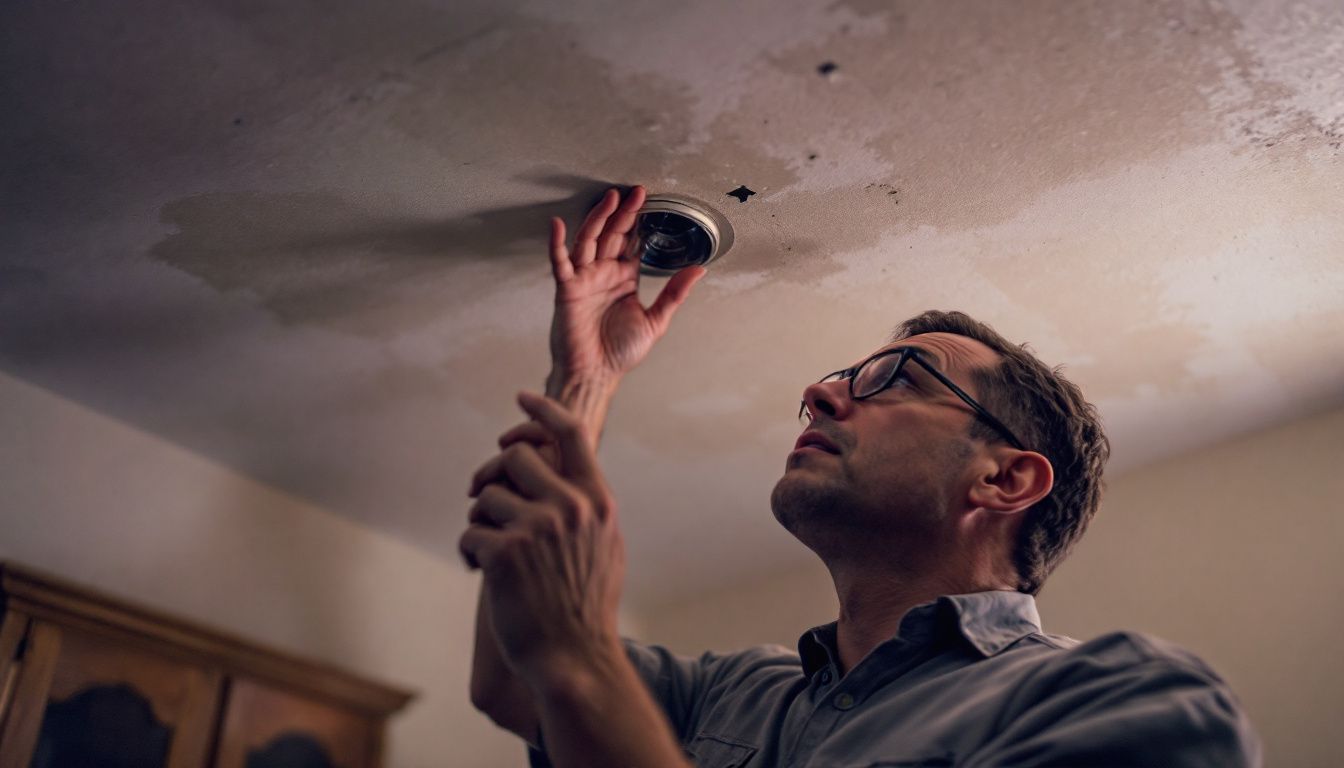
Wet conditions can cause certain materials to swell, crack, or delaminate — changing their appearance and making identification more difficult. A surveyor working in a property that has recently suffered water damage needs to account for this and may need to revisit areas once conditions have stabilised.
Knowing how environmental factors affect material presentation — and adjusting the inspection approach accordingly — is a skill that only comes with genuine expertise and field experience.
The Legal Framework Governing Residential Asbestos Surveys
Understanding the regulatory context helps homeowners appreciate why accuracy matters so much. Asbestos management in the UK is governed by the Control of Asbestos Regulations, which set out clear obligations for those responsible for buildings.
While the formal duty to manage asbestos under Regulation 4 applies specifically to non-domestic premises, homeowners still have responsibilities — particularly if they employ contractors to carry out work. Any contractor disturbing materials that contain asbestos without prior identification is in breach of the regulations.
HSG264 provides the technical framework for how surveys must be conducted, and any survey that doesn’t follow this guidance may not be legally defensible. This matters if asbestos is later discovered in an area the survey was supposed to cover.
How Location Affects Your Survey Options
Wherever your property is located in the UK, you need a surveyor with genuine local knowledge and the ability to respond quickly. Supernova Asbestos Surveys operates nationwide, with experienced teams covering all major cities and regions.
If you’re based in the capital, our asbestos survey London service covers all London boroughs, with surveyors familiar with the wide variety of residential property types found across the city — from Victorian terraces to post-war estates.
In the North West, our asbestos survey Manchester team works across Greater Manchester and the surrounding area, covering everything from older mill conversions to modern residential developments.
For properties in the Midlands, our asbestos survey Birmingham service provides the same thorough, HSG264-compliant approach across the city and wider region.
What You Can Do to Improve Survey Accuracy
While surveyor competence is the most critical factor, there are practical steps you can take as a homeowner to help ensure the most accurate result possible:
- Gather all available documentation — building plans, previous surveys, planning applications, and records of any building work carried out.
- Clear access routes — move furniture, empty cupboards under stairs, and ensure loft hatches are accessible before the surveyor arrives.
- Be honest about the property’s history — tell your surveyor about any known renovations, water damage, or previous asbestos finds, even if you’re unsure of the details.
- Choose the right survey type — if you’re planning building work, always commission a refurbishment survey rather than a management survey.
- Ask about qualifications — confirm that your surveyor holds BOHS P402 as a minimum and that samples will be analysed at a UKAS-accredited laboratory.
- Read the report carefully — check that all areas are covered, that any inaccessible areas are clearly noted, and that risk ratings are explained.
These steps won’t compensate for an underqualified surveyor, but they can meaningfully improve the quality of the outcome when you’re working with a competent professional.
Get an Accurate Residential Asbestos Survey from Supernova
Supernova Asbestos Surveys has completed over 50,000 surveys across the UK. Our BOHS-qualified surveyors follow HSG264 to the letter, use UKAS-accredited laboratories for all sample analysis, and produce clear, actionable reports that give you a complete picture of your property.
Whether you need a management survey, a refurbishment survey ahead of building work, or an ongoing re-inspection programme, we have the expertise and national coverage to deliver results you can rely on.
Call us on 020 4586 0680 or visit asbestos-surveys.org.uk to book your survey or speak to one of our team.
Frequently Asked Questions
What is the most common reason a residential asbestos survey produces inaccurate results?
The most common cause is surveyor competence. An underqualified or inexperienced surveyor may miss suspect materials, fail to collect adequate samples, or produce a report that doesn’t accurately reflect what was found. Always check that your surveyor holds BOHS P402 as a minimum qualification and that their work follows HSG264 guidance.
Does a management survey cover everything in my home?
No. A management survey is designed to identify ACMs that could be disturbed during normal occupation. It is not intended to locate every ACM in every part of the building. If you are planning any renovation, refurbishment, or demolition work, you need a refurbishment survey, which involves a more intrusive inspection of areas that would be affected by the works.
Can inaccessible areas be left out of an asbestos survey report?
A surveyor cannot assess what they cannot physically access. However, any inaccessible areas must be clearly documented in the report — they should never simply be omitted or assumed to be clear. A good report will note every area that could not be inspected and explain why, so you understand exactly where the limitations of the survey lie.
How do environmental conditions affect the accuracy of an asbestos survey?
Moisture, flooding, and temperature extremes can alter the physical appearance of ACMs, making them harder to identify visually. A surveyor working in a property that has suffered recent water damage may find that certain materials look different from how they would under normal conditions. In such cases, a follow-up inspection may be necessary once conditions have stabilised.
Is a DIY asbestos testing kit a reliable alternative to a professional survey?
A DIY testing kit can be useful for checking a single suspect material, but it is not a substitute for a full professional survey. A qualified surveyor knows where to look across the whole property, how to sample safely, and how to interpret results in context. For any property where asbestos management or pre-refurbishment checks are required, a professional survey is the only appropriate option.