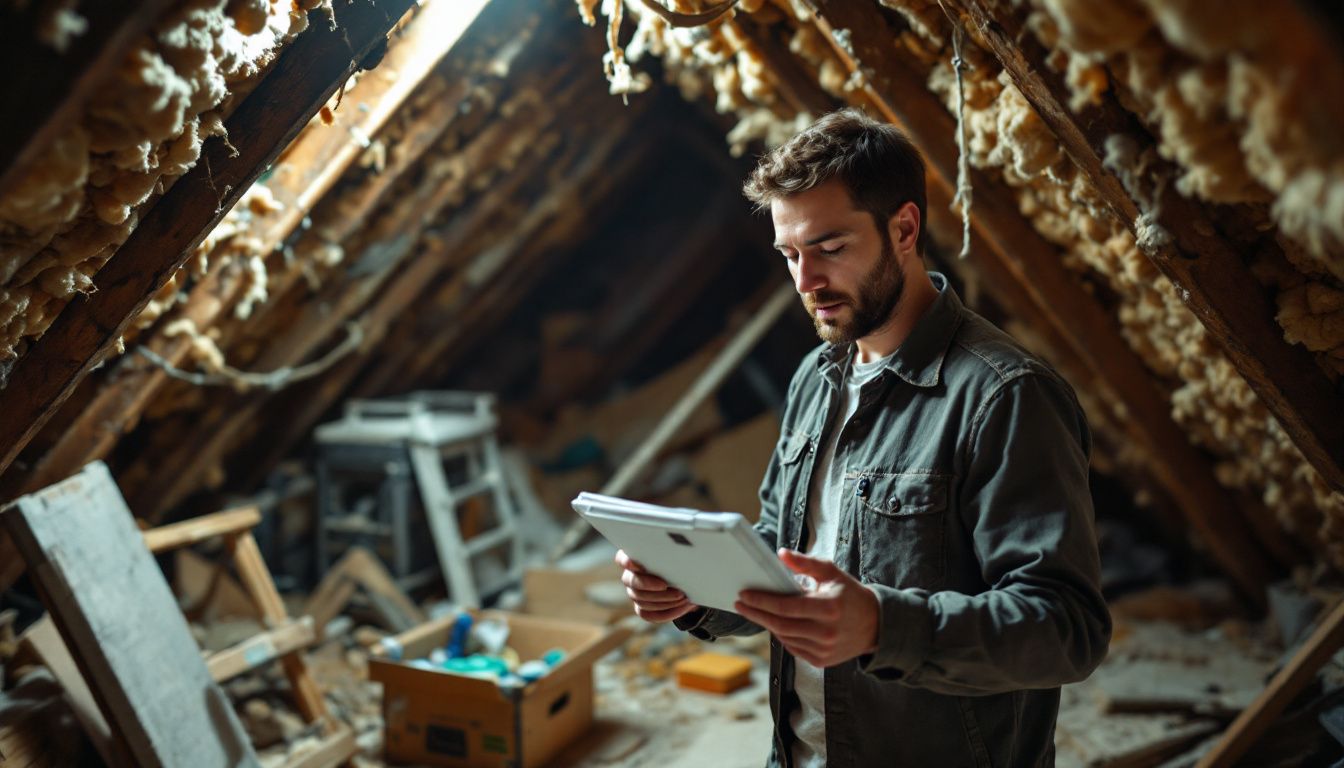
DIY Asbestos Testing vs a Professional Asbestos Survey: What You Need to Know
Asbestos doesn’t announce itself. It hides in artex ceilings, pipe lagging, floor tiles, and insulation boards — often in buildings that look perfectly ordinary. If you suspect asbestos-containing materials (ACMs) in your property, the question isn’t just whether to test, but how. A professional asbestos survey and a DIY testing kit are not the same thing, and the difference matters far more than the price gap suggests.
This post breaks down both options honestly — what each involves, where each falls short, and when one is clearly the better choice.
What Is a DIY Asbestos Testing Kit?
DIY asbestos testing kits allow property owners to collect a small sample from a suspect material and send it to a laboratory for analysis. Kits typically include disposable overalls, nitrile gloves, safety glasses, an FFP3 face mask, sample bags, and cleaning wipes.
The cost of the kit itself is modest — usually between £20 and £100 — though laboratory analysis fees are charged separately. Some kits include chemical spot tests for an immediate on-site indication, but these are widely considered unreliable and are not accepted as evidence of compliance.
How DIY Testing Works
- Identify a suspect material you want to test.
- Put on the PPE provided and dampen the area to suppress fibre release.
- Carefully collect a small sample using the tools provided.
- Seal the sample in the bag, package it securely, and post it to the laboratory.
- Await results — typically within a few working days to a week.
If you want to test a single, clearly accessible material and already have a reasonable idea of where the asbestos might be, an asbestos testing kit can provide a cost-effective first step. However, it has significant limitations that are worth understanding before you rely on the results.
The Limitations of DIY Asbestos Testing
The fundamental problem with DIY testing is that it only tells you about the specific material you sampled. Asbestos can be present in dozens of different materials throughout a building, and without a trained eye, it’s easy to miss the most dangerous ones.
Risk of Exposure During Sampling
Disturbing ACMs — even briefly — releases fibres into the air. Without proper training, it’s easy to inadvertently break the material, spread contamination, or fail to contain the area adequately. The PPE in a standard kit offers basic protection, but correct sampling technique matters just as much as the equipment.
False Negatives and Missed Materials
A negative result only applies to the sample taken. If you test one ceiling tile and it comes back clear, that tells you nothing about the artex on the wall, the insulation behind the boiler, or the floor tiles beneath the carpet. DIY testing creates a significant risk of a false sense of security.
No Legal Standing for Compliance Purposes
If you manage a commercial or non-domestic property, a DIY test does not satisfy your legal duty to manage asbestos under the Control of Asbestos Regulations. You need a formal survey conducted by a qualified professional, documented in an asbestos register and management plan.
No Risk Assessment or Management Plan
A lab result tells you whether asbestos is present. It does not tell you the condition of the material, the risk it poses, or what action to take. A professional survey provides all of this — a DIY kit does not.
What a Professional Asbestos Survey Involves
A professional asbestos survey is conducted by a qualified surveyor — typically holding the BOHS P402 qualification, which is the recognised standard in the UK. The surveyor carries out a systematic inspection of the property, collects samples from all suspect materials using correct containment procedures, and submits them to a UKAS-accredited laboratory for analysis under polarised light microscopy (PLM).
You then receive a written report including an asbestos register, a condition assessment for each identified ACM, a risk rating, and a management plan. This report is produced in line with HSG264 — the HSE’s definitive guidance on asbestos surveying — and satisfies the requirements of the Control of Asbestos Regulations.
Types of Professional Asbestos Survey
Not all surveys are the same. The type you need depends on what you’re doing with the property.
A management survey is the standard survey for properties in normal occupation. It identifies ACMs that could be disturbed during everyday use or routine maintenance, assesses their condition, and provides the information needed to manage them safely over time. This is the survey required to fulfil the duty to manage under the Control of Asbestos Regulations.
A refurbishment survey is required before any refurbishment, renovation, or demolition work begins. It is more intrusive than a management survey — the surveyor will access areas that would normally remain undisturbed, including wall cavities, ceiling voids, and floor spaces. This ensures that contractors aren’t exposed to hidden ACMs during the works.
A re-inspection survey is carried out periodically to monitor the condition of known ACMs. Under the duty to manage, asbestos that is being managed in situ must be re-inspected at regular intervals — typically annually — to check whether its condition has changed and whether the management plan needs updating.
DIY vs Professional: A Direct Comparison
Here’s how the two approaches compare across the factors that matter most to property owners and managers.
Cost
DIY kits start from around £20 to £100, with additional lab fees on top. Professional surveys start from £195 for a management survey on a standard residential or small commercial property, with refurbishment surveys from £295. Re-inspection surveys start from £150 plus a per-ACM fee.
The cost difference is real, but it needs to be weighed against what you’re actually getting. A professional survey covers the entire property, not a single sample.
Accuracy and Coverage
A DIY kit tests one material. A professional survey inspects the whole building systematically, drawing on the surveyor’s knowledge of where ACMs are typically found in properties of that age and construction type. The accuracy gap is significant.
Safety
Professional surveyors are trained to minimise fibre release during sampling and to work safely in potentially contaminated environments. They carry appropriate PPE and follow established protocols. An untrained person sampling suspect material is at greater risk of exposure, however carefully they follow the kit instructions.
Legal Compliance
For non-domestic properties, only a professional survey satisfies the duty to manage. DIY testing is not an acceptable substitute. Even for domestic properties, if you’re selling or letting, a professional survey provides the documented assurance that buyers, tenants, and mortgage lenders increasingly expect.
Report Quality
A professional survey produces a detailed, legally defensible report. A DIY kit produces a lab certificate confirming the presence or absence of asbestos in one sample. These are not equivalent documents.
What Happens After a Professional Survey?
Finding asbestos in a survey report is not automatically a crisis. Many ACMs can be safely managed in situ, particularly if they are in good condition and unlikely to be disturbed. The management plan in your survey report will tell you what action — if any — is required.
Where ACMs are in poor condition or are due to be disturbed by planned works, asbestos removal may be recommended. Licensed removal contractors must notify the relevant enforcing authority using the ASB5 form at least 14 days before work begins. This is a legal requirement, not a formality.
For commercial property managers, it’s also worth noting that asbestos management often sits alongside other compliance obligations. A fire risk assessment is another statutory requirement for most non-domestic premises, and both are often most efficiently handled together.
The Professional Survey Process at Supernova
When you book a professional asbestos survey with Supernova Asbestos Surveys, here’s what happens:
- Booking: Contact us by phone or online. We confirm availability — often with same-week appointments — and send a booking confirmation with a fixed-price quote.
- Site Visit: A BOHS P402-qualified surveyor attends at the agreed time and carries out a thorough visual inspection of the property.
- Sampling: Representative samples are collected from all suspect materials using correct containment procedures to minimise fibre release.
- Lab Analysis: Samples are analysed under polarised light microscopy at our UKAS-accredited laboratory.
- Report Delivery: You receive a detailed asbestos register and risk-rated management plan in digital format within 3–5 working days. The report is fully compliant with HSG264 and satisfies the requirements of the Control of Asbestos Regulations.
For properties where you simply want to confirm whether a single accessible material contains asbestos, our asbestos testing service offers a straightforward, professionally handled option without the full survey process.
UK Asbestos Regulations: What You Need to Know
Asbestos management in the UK is governed by a clear legal framework. Understanding your obligations is essential, particularly if you own or manage a non-domestic property.
Control of Asbestos Regulations
This is the primary legislation governing work with asbestos in Great Britain. It sets out licensing requirements, notification duties, and the obligation to protect workers and others from asbestos exposure. Regulation 4 — the duty to manage — applies specifically to owners and managers of non-domestic premises and requires them to identify ACMs, assess the risk they pose, and maintain an up-to-date asbestos register and management plan.
HSG264 — Asbestos: The Survey Guide
HSG264 is the HSE’s definitive guidance on conducting asbestos surveys. It sets out the methodology, qualifications, and reporting standards that professional surveyors must follow. Any survey that doesn’t comply with HSG264 is not fit for purpose.
Consequences of Non-Compliance
Failure to manage asbestos in accordance with the regulations can result in substantial fines, enforcement notices, and — most seriously — harm to the people who live or work in your building. The legal and financial risks of cutting corners far outweigh the cost of a professional survey.
Why Choose Supernova Asbestos Surveys?
Supernova Asbestos Surveys has completed over 50,000 surveys across the UK, with more than 900 five-star reviews. Our surveyors hold BOHS P402, P403, and P404 qualifications — the gold standard in the industry. All samples are analysed in our UKAS-accredited laboratory, and every report is produced in line with HSG264.
We operate nationwide, with same-week availability and transparent fixed pricing. There are no hidden fees — you receive a fixed-price quote before we begin.
Whether you need a management survey, a refurbishment survey before planned works, periodic re-inspection of known ACMs, or a standalone sample test, we have the expertise to handle it. Get a free quote online or call us on 020 4586 0680 to speak with a specialist. You can also visit asbestos-surveys.org.uk to learn more about our services and book online.
Frequently Asked Questions
Is a DIY asbestos testing kit legal in the UK?
DIY asbestos testing kits are legal for domestic use in the UK. However, they do not satisfy the legal duty to manage asbestos under the Control of Asbestos Regulations for non-domestic properties. For compliance purposes, a professional asbestos survey conducted by a qualified surveyor is required.
When do I legally need a professional asbestos survey?
If you own or manage a non-domestic property — including commercial premises, schools, hospitals, and rental properties — you have a legal duty to manage asbestos under the Control of Asbestos Regulations. This requires a professional management survey. A refurbishment or demolition survey is also legally required before any intrusive works begin on a property that may contain asbestos.
How long does a professional asbestos survey take?
The duration depends on the size and complexity of the property. A standard residential survey typically takes one to two hours. Larger commercial properties may take a full day or more. Laboratory analysis usually takes a few working days, and the completed report is typically delivered within 3–5 working days of the site visit.
Can I use a DIY kit to satisfy my duty to manage asbestos?
No. The duty to manage under the Control of Asbestos Regulations requires a systematic survey of the property conducted by a competent, qualified professional, resulting in an asbestos register and management plan. A DIY testing kit does not fulfil this requirement, regardless of the lab results it produces.
What’s the difference between a management survey and a refurbishment survey?
A management survey is designed for properties in normal occupation. It identifies ACMs that could be disturbed during routine use or maintenance and provides the information needed to manage them safely. A refurbishment survey is more intrusive and is required before any renovation, refurbishment, or demolition work. It accesses areas that a management survey would not disturb, to ensure no hidden ACMs are encountered during the works.