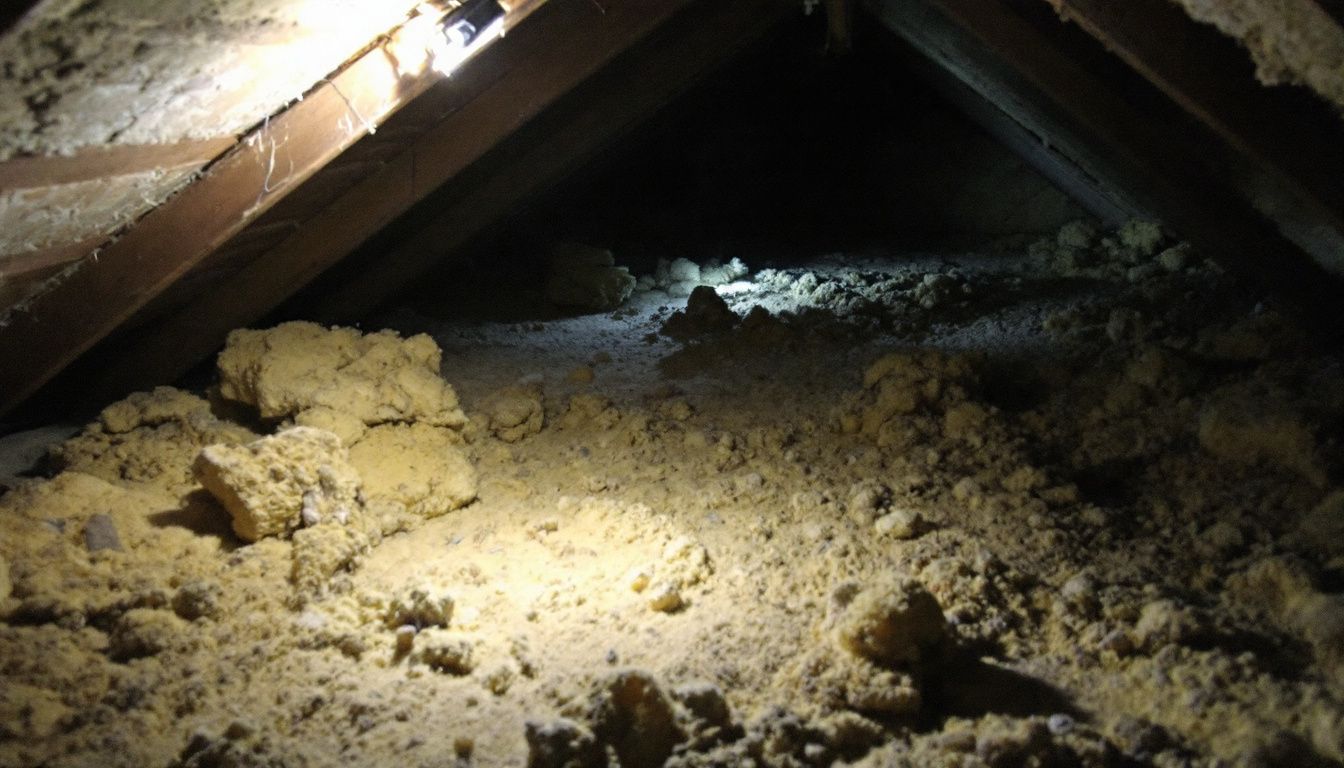
What Every Homeowner Should Know Before Booking a Domestic Asbestos Survey
If your home was built before 2000, there is a realistic chance it contains asbestos-containing materials (ACMs). A domestic asbestos survey is the only reliable way to find out exactly what you are dealing with — and how to manage it safely. Whether you are planning a renovation, selling your property, or simply want peace of mind, knowing how to prepare makes the whole process faster, smoother, and more accurate.
Why a Domestic Asbestos Survey Matters
Asbestos was widely used in UK residential construction until it was fully banned in 1999. It was mixed into floor tiles, artex ceilings, pipe lagging, roof felt, insulation boards, and dozens of other common building materials.
In good condition, ACMs are not immediately dangerous. But once disturbed — during a DIY project, a loft conversion, or even a simple kitchen refit — fibres can become airborne and pose a serious long-term health risk.
A domestic asbestos survey identifies exactly where ACMs are located, assesses their condition, and tells you what action (if any) is required. Without that information, you are essentially working blind — and so is any contractor you bring onto site.
Whilst the legal duty to manage asbestos under the Control of Asbestos Regulations applies primarily to non-domestic premises, homeowners still carry a moral and practical responsibility to protect themselves, their families, and any tradespeople working in their property. Many mortgage lenders and conveyancing solicitors now request asbestos survey reports as part of the buying and selling process.
Types of Domestic Asbestos Survey — Which One Do You Need?
Not all asbestos surveys are the same. The type you need depends entirely on what you plan to do with the property.
Management Survey
A management survey is the standard option for an occupied home where no major building work is planned. It locates ACMs in areas that are normally accessible, assesses their condition, and produces a risk-rated register.
This is the right choice if you want to understand what is in your home and monitor it over time. It is also the survey most commonly requested during property sales and remortgages. If you simply want to know what you are living with, this is where to start.
Refurbishment Survey
If you are planning any building work — a loft conversion, extension, kitchen or bathroom refit, or structural alterations — you need a refurbishment survey before work begins. This is a more intrusive inspection that targets the specific areas to be disturbed.
Surveyors may need to lift floorboards, open wall cavities, or access hidden voids to ensure nothing is missed. No reputable contractor should begin significant renovation work on a pre-2000 property without an asbestos refurbishment survey in place. If yours is asking you to skip this step, that is a serious red flag.
Re-Inspection Survey
If ACMs have already been identified and are being managed in situ, they need to be checked periodically to ensure their condition has not deteriorated. A re-inspection survey revisits known ACMs, updates their condition rating, and flags any that may now require remediation or removal.
How to Prepare Your Home for a Domestic Asbestos Survey
A little preparation on your part makes a significant difference to the quality and completeness of the survey. Here is exactly what to do before the surveyor arrives.
1. Gather Any Existing Building Records
If you have original building plans, planning permission documents, previous asbestos reports, or any records from prior renovation work, have these ready. They help the surveyor understand the construction history of the property and identify materials that may not be immediately visible.
2. Make Every Area Accessible
Your surveyor needs to inspect all parts of the property — not just the main rooms. This includes:
- Loft spaces and roof voids
- Basements and cellars
- Understairs cupboards
- Garages and outbuildings
- External areas including roofing, soffits, and fascias
- Boiler rooms and utility areas
Clear access to these spaces before the appointment. Move stored items away from walls and ceiling hatches. If a loft hatch is difficult to open or a cupboard is packed full, let the surveyor know in advance.
3. Note Any Areas of Concern
If you have noticed any crumbling ceiling tiles, damaged pipe lagging, or suspicious-looking insulation material, make a note and flag it to the surveyor. You do not need to touch or disturb anything — just point it out. The surveyor will assess it properly.
4. Notify All Occupants
Everyone in the property should know the survey is happening. During sampling, small amounts of dust may be generated. Whilst surveyors use correct containment procedures to minimise this, it is sensible to keep children and pets out of rooms being actively sampled.
5. Do Not Disturb Suspect Materials Beforehand
This is critical. If you suspect a material might contain asbestos, do not sand it, drill it, cut it, or attempt to remove it before the survey. Leave everything exactly as it is. Disturbing ACMs without proper controls in place is how people get exposed.
What Happens During the Survey
Understanding the process helps you know what to expect on the day and ensures you can ask the right questions.
Visual Inspection
The surveyor carries out a thorough room-by-room visual inspection of the property. They are looking for materials that, based on their age, location, and appearance, may contain asbestos. This includes textured coatings, floor tiles, ceiling tiles, pipe lagging, insulation boards, roofing sheets, and more.
Sampling
Where a material is suspected to contain asbestos, the surveyor takes a small representative sample. This is done carefully, using correct containment procedures to prevent fibre release. Samples are labelled, sealed, and sent to a UKAS-accredited laboratory for analysis.
If you would prefer to collect samples yourself from accessible, non-friable materials, our testing kit allows you to do so safely and send them directly to the lab. However, for a full domestic asbestos survey, a qualified surveyor attending in person is always the more thorough option.
Laboratory Analysis
Samples are analysed under polarised light microscopy (PLM) at a UKAS-accredited laboratory. This is the only method that reliably identifies asbestos type and confirms its presence. Results are typically returned within a few working days.
For standalone asbestos testing of specific materials, results can often be turned around even faster.
The Survey Report
Once analysis is complete, you receive a written report containing:
- An asbestos register listing all identified and suspected ACMs
- The location and condition of each material
- A risk rating for each ACM
- Photographs and floor plan references
- Recommended management actions
A good report should be clear, unambiguous, and free from unagreed caveats. It should follow the standards set out in HSG264 — the HSE’s definitive guidance on asbestos surveying. If a report you receive is vague or lacks a risk-rated register, question it.
Understanding Your Survey Report
Receiving a report full of technical language can feel overwhelming. Here is a plain-English breakdown of the key elements.
Risk Ratings
Each ACM in the report will carry a risk rating — typically scored on a numerical scale. A high-risk rating does not necessarily mean the material needs to be removed immediately. It means it requires prompt attention, whether that is professional encapsulation, increased monitoring, or managed removal.
Management Recommendations
The report will recommend one of the following actions for each ACM:
- Leave in situ and monitor — material is in good condition and poses minimal risk if left undisturbed
- Encapsulate or seal — material is slightly damaged but can be made safe without removal
- Label and manage — material should be clearly identified and included in an ongoing management plan
- Remove — material is in poor condition or in a location where disturbance is likely; removal by a licensed contractor is required
Ongoing Management
For ACMs that are being left in place, the report will specify how often they should be re-inspected. This is where a periodic re-inspection survey becomes part of your long-term property management routine, ensuring that materials in good condition today are not quietly deteriorating over time.
Choosing the Right Surveyor for a Domestic Asbestos Survey
The quality of your survey is only as good as the person carrying it out. Here is what to look for.
BOHS P402 Qualification
Surveyors should hold the British Occupational Hygiene Society (BOHS) P402 qualification as a minimum. This is the industry-recognised standard for asbestos surveying and sampling. Do not accept a survey from someone who cannot demonstrate this qualification.
UKAS-Accredited Laboratory
Samples must be analysed by a UKAS-accredited laboratory. Accreditation means the lab has been independently assessed against internationally recognised standards. Results from non-accredited labs are not legally defensible and may not be accepted by contractors, solicitors, or local authorities.
Compliance with HSG264
The surveyor should work in accordance with HSG264 — the HSE’s survey guide. This sets out the methodology, sampling requirements, and reporting standards that all competent surveyors must follow.
Clear, Fixed Pricing
Reputable surveyors provide transparent, fixed-price quotes before work begins. Be cautious of unusually low quotes — a thorough domestic asbestos survey takes time, and cutting corners on sampling or reporting puts you at risk.
Asbestos Survey Costs: What to Expect
Survey costs vary depending on property size, location, and the type of survey required. As a general guide:
- Management Survey: From £195 for a standard residential property
- Refurbishment Survey: From £295, covering all areas to be disturbed prior to works
- Re-Inspection Survey: From £150, plus a per-ACM fee for each material re-inspected
- Bulk Sample Testing Kit: From £30 per sample for DIY collection of specific materials
All prices should be confirmed before booking. You can request a free quote from Supernova Asbestos Surveys with no obligation.
It is also worth noting that some survey providers offer combined services. If your property also requires a fire risk assessment, booking this alongside your asbestos survey can save time and reduce disruption to occupants.
The Legal Framework: What Homeowners Need to Know
Whilst the formal legal duty to manage asbestos under the Control of Asbestos Regulations applies to non-domestic premises, the regulations still have relevance for homeowners — particularly if any part of the property is used commercially, let to tenants, or if you employ contractors to carry out work.
Under the Control of Asbestos Regulations, anyone carrying out work that may disturb asbestos must take appropriate precautions. This means that before any contractor works on a pre-2000 home, they should be made aware of any known or suspected ACMs. If you do not have a survey, you cannot provide that information — and that puts both you and them at risk.
HSG264 sets out the standards for how surveys should be conducted and reported. Any surveyor working on your property should be able to demonstrate that their methodology aligns with this guidance.
If you are based in the capital and need a trusted local team, our asbestos survey London service covers the full Greater London area with rapid turnaround times.
For more detail on the full range of options available to homeowners, our dedicated asbestos testing page provides clear guidance on what is available and when each approach is appropriate.
Book Your Domestic Asbestos Survey with Supernova
Supernova Asbestos Surveys has completed over 50,000 surveys nationwide. Our surveyors hold the BOHS P402 qualification, all samples are analysed by UKAS-accredited laboratories, and every report is produced in line with HSG264.
Whether you need a management survey for peace of mind, a refurbishment survey ahead of building works, or a re-inspection of previously identified ACMs, we can help. We offer fixed, transparent pricing and fast turnaround times across the UK.
Call us on 020 4586 0680, visit asbestos-surveys.org.uk, or request your free quote online today.
Frequently Asked Questions
What is a domestic asbestos survey?
A domestic asbestos survey is a professional inspection of a residential property carried out by a qualified surveyor to identify the location, type, and condition of any asbestos-containing materials (ACMs). The surveyor takes samples of suspected materials, which are sent to a UKAS-accredited laboratory for analysis. The findings are compiled into a written report with a risk-rated register and recommended management actions.
Does my home legally need an asbestos survey?
There is no legal requirement for homeowners to commission a domestic asbestos survey on their own private residence. However, the Control of Asbestos Regulations require that anyone carrying out work likely to disturb asbestos takes appropriate precautions. In practice, this means any contractor working on a pre-2000 property should be informed of known or suspected ACMs — and a survey is the only reliable way to provide that information. Surveys are also increasingly requested by mortgage lenders and solicitors during property transactions.
How long does a domestic asbestos survey take?
For a typical residential property, a management survey usually takes between one and three hours on site. A refurbishment survey may take longer depending on the scope of the planned works and the areas to be inspected. Laboratory analysis of samples typically takes two to three working days, after which the written report is issued.
Can I stay in my home during the survey?
Yes, in most cases you can remain in the property during the survey. However, it is advisable to keep children and pets out of rooms where sampling is actively taking place. Surveyors use containment procedures to minimise dust during sampling, but keeping the immediate area clear is a sensible precaution.
What should I do if asbestos is found in my home?
Finding asbestos in your home does not automatically mean it needs to be removed. Many ACMs in good condition are best left undisturbed and monitored over time. Your survey report will include specific management recommendations for each material identified — ranging from leaving it in situ and monitoring it, to encapsulation, or removal by a licensed contractor where necessary. Follow the recommendations in the report and arrange a periodic re-inspection survey to track the condition of any materials being managed in place.