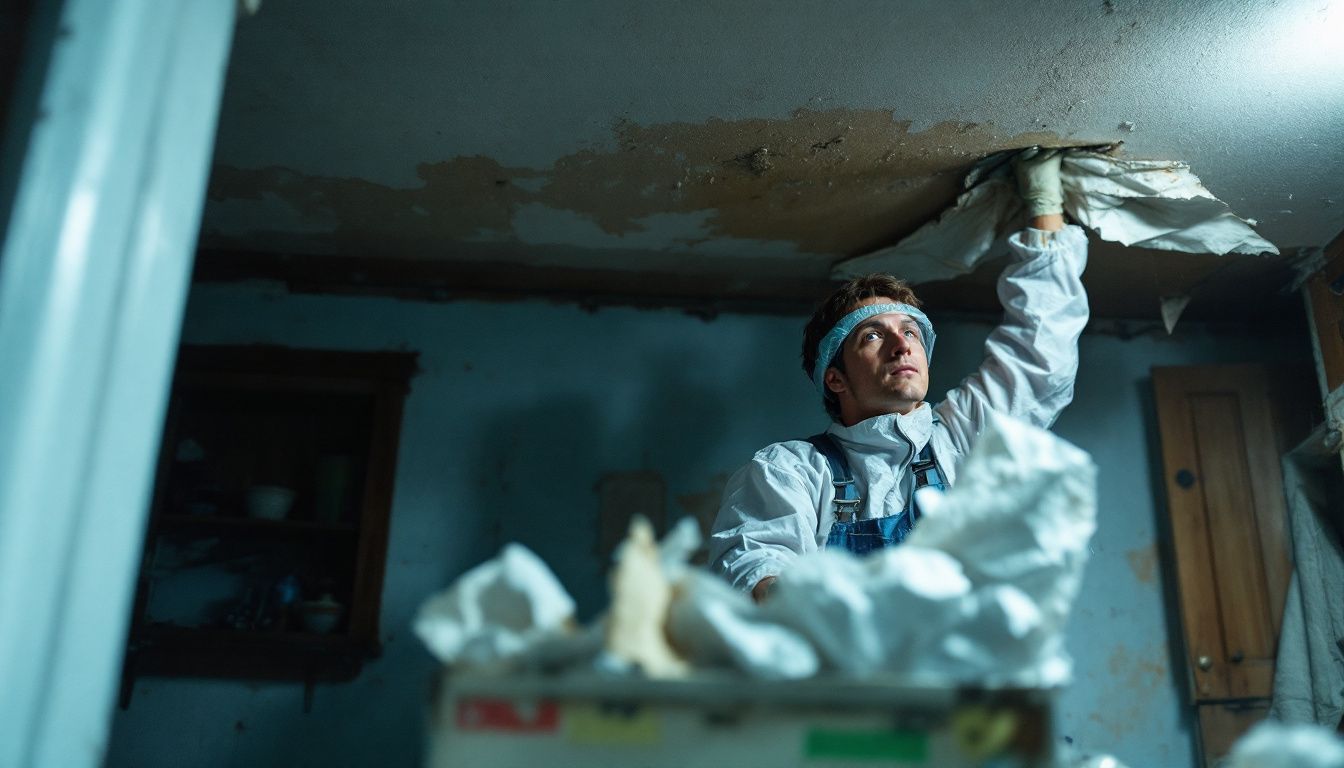
Which Buildings Contain Asbestos — and What You Need to Do About It
Asbestos doesn’t announce itself. It sits quietly inside walls, ceiling tiles, pipe lagging, and floor coverings — and in the UK, buildings with asbestos are far more common than most people realise. If your property was built or refurbished before 2000, there’s a realistic chance asbestos-containing materials (ACMs) are present somewhere inside it.
Understanding where asbestos hides, how to identify it safely, and what your legal obligations are isn’t just useful knowledge — for many property owners and managers, it’s a legal requirement.
Why So Many UK Buildings Contain Asbestos
Asbestos was widely used in UK construction from the 1950s right through to the late 1990s. It was cheap, durable, fire-resistant, and excellent at insulating — everything a builder could want. As a result, it was incorporated into hundreds of different building products and used across virtually every property type.
The UK didn’t ban all forms of asbestos until 1999, which means an enormous proportion of the existing building stock may still contain it. Surveys carried out under HSG264 guidance consistently find ACMs in properties that owners assumed were asbestos-free. The material doesn’t degrade quickly, so what was installed fifty years ago may still be sitting undisturbed in your building today.
Types of Buildings Most Likely to Contain Asbestos
No single property type has a monopoly on asbestos risk, but some categories carry a higher likelihood based on construction era and building methods.
Commercial and Industrial Properties
Offices, warehouses, factories, and industrial units built before 2000 are among the highest-risk categories. Asbestos insulating board (AIB) was commonly used in partition walls, ceiling tiles, and fire doors. Sprayed asbestos coatings were applied to structural steelwork for fire protection, particularly in larger commercial buildings.
Under the Control of Asbestos Regulations, owners and managers of non-domestic premises have a legal duty to manage asbestos. This isn’t optional — failure to comply can result in substantial fines and, more seriously, real harm to building occupants and workers.
Schools and Public Buildings
Many UK schools built during the post-war construction boom contain significant quantities of asbestos. Ceiling tiles, floor tiles, pipe lagging, and roofing materials were all common applications. The same applies to hospitals, libraries, leisure centres, and other public buildings from the same era.
Given the number of people who use these buildings daily — including children and vulnerable individuals — robust asbestos management is particularly critical here.
Residential Properties
Private homes, flats, and social housing built before 2000 frequently contain asbestos in locations that homeowners wouldn’t immediately suspect. Artex textured coatings on ceilings, floor tiles, soffit boards, roof slates, and garage roofs made from corrugated cement sheeting are all common sources.
While the legal duty to manage applies specifically to non-domestic premises, homeowners still face serious risks if they disturb ACMs without understanding what they’re dealing with. An asbestos testing kit can be a useful first step if you suspect a material in your home may contain asbestos, allowing you to send a sample for professional laboratory analysis before any work begins.
Agricultural Buildings
Farm buildings, barns, and outbuildings are frequently overlooked when it comes to asbestos risk. Corrugated asbestos cement sheeting was extensively used for roofing and cladding on agricultural structures throughout the mid-twentieth century. Weathering and physical damage can cause these sheets to become friable over time, releasing fibres into the air.
If you manage or own agricultural property, don’t assume age or rural location means asbestos isn’t present.
Where Asbestos Hides Inside Buildings
One of the most important things to understand about buildings with asbestos is that the material can be present in dozens of different locations — not all of them obvious. Knowing where to look helps you make informed decisions about any planned work.
- Roof materials: Corrugated asbestos cement sheets, roof tiles, and felt underlays
- Wall and ceiling boards: Asbestos insulating board used in partition walls, soffits, and ceiling tiles
- Floor coverings: Vinyl floor tiles and the adhesive used to fix them
- Pipe and boiler lagging: Thermal insulation wrapped around pipes and heating equipment
- Textured coatings: Artex and similar spray-applied coatings on ceilings and walls
- Fire doors: AIB panels used as fire-resistant infill in older door sets
- Gutters and downpipes: Asbestos cement used in rainwater systems
- Electrical equipment: Fuse boxes, storage heaters, and switchgear containing asbestos components
- Structural coatings: Sprayed asbestos applied to steel beams for fire protection
You cannot identify asbestos by looking at it. The only reliable way to confirm whether a material contains asbestos is laboratory analysis of a sample taken under controlled conditions. If you need confirmation on a specific material, professional asbestos testing provides a definitive answer backed by accredited analysis.
The Health Risks Linked to Asbestos in Buildings
Asbestos poses no immediate risk when it’s in good condition and left undisturbed. The danger arises when ACMs are damaged, deteriorating, or disturbed during maintenance or renovation work — releasing microscopic fibres into the air that can be inhaled deep into the lungs.
The diseases caused by asbestos exposure are serious and, in most cases, fatal. They include:
- Mesothelioma: A cancer of the lining of the lungs or abdomen, almost exclusively caused by asbestos exposure
- Asbestos-related lung cancer: Particularly associated with higher levels of exposure
- Asbestosis: Scarring of the lung tissue causing progressive breathing difficulty
- Pleural thickening: Thickening of the membrane surrounding the lungs, leading to breathlessness
What makes these diseases particularly devastating is the latency period. Symptoms often don’t appear until twenty to forty years after exposure, by which point the conditions are typically advanced and difficult to treat. There is no safe level of asbestos exposure.
Your Legal Duties as a Property Owner or Manager
If you own or manage a non-domestic building in the UK, the Control of Asbestos Regulations place a clear legal duty on you to manage any asbestos present. This is known as the Duty to Manage, set out in Regulation 4 of the legislation.
In practical terms, this means you must:
- Identify whether ACMs are present in your building, or assume they are and manage accordingly
- Assess the condition and risk level of any ACMs found
- Produce and maintain an up-to-date asbestos register
- Create and implement an asbestos management plan
- Share information about ACMs with anyone who might disturb them
- Arrange periodic re-inspections to monitor the condition of known ACMs
For most non-domestic buildings, a management survey carried out by a qualified surveyor is the standard starting point. This type of survey is designed to locate ACMs that could be disturbed during normal occupation and routine maintenance, and will form the basis of your asbestos register and management plan.
If you’re planning any refurbishment or demolition work, the requirements go further. A refurbishment survey must be carried out before any work begins in the affected areas. This is a more intrusive survey that involves accessing areas which may be disturbed during the works — it’s a legal requirement, not a recommendation.
What Happens When Asbestos Is Found in a Building
Finding asbestos in a building doesn’t automatically mean it needs to be removed. In many cases, ACMs that are in good condition and are unlikely to be disturbed are best managed in situ — left in place and monitored regularly.
The decision about whether to remove, encapsulate, or manage asbestos in place depends on several factors: the type of asbestos, its condition, its location, and the likelihood of it being disturbed. A qualified surveyor will assess all of these factors and provide a risk-rated recommendation.
Where removal is necessary — for example, ahead of major refurbishment works or where materials are deteriorating — this must be carried out by a licensed contractor. Asbestos removal is tightly regulated under the Control of Asbestos Regulations, and attempting to remove certain categories of asbestos without a licence is a criminal offence carrying significant penalties.
Once removal or remediation work is complete, a clearance inspection and air test should be carried out before the area is reoccupied. This confirms that fibre levels have returned to safe levels and the work has been completed properly.
Why Regular Re-Inspections Matter
Having an asbestos survey carried out is not a one-time task. ACMs that are left in place need to be monitored over time, as their condition can change due to physical damage, water ingress, or general deterioration.
HSE guidance recommends that known ACMs are re-inspected at least annually, though higher-risk materials may require more frequent checks. A re-inspection survey updates your asbestos register with the current condition of each ACM, ensuring your management plan remains accurate and your legal duty is being met on an ongoing basis.
Neglecting re-inspections doesn’t just create legal exposure — it means you may be unaware that a previously stable material has started to deteriorate and is now presenting a real risk to occupants and workers.
Don’t Overlook Fire Risk Alongside Asbestos
Buildings with asbestos often have other legacy compliance issues that need addressing at the same time. Fire safety is one of the most significant. Older buildings may have fire doors, cavity barriers, and compartmentation that no longer meet current standards — and in some cases, asbestos-containing fire doors that need specialist assessment before any work is carried out.
Combining your asbestos management with a fire risk assessment gives you a complete picture of your building’s compliance position and helps you prioritise remediation work efficiently.
How to Confirm Whether a Material Contains Asbestos
If you’re a homeowner or a manager dealing with a material you’re uncertain about, there are two practical routes to getting a definitive answer.
The first is to purchase an asbestos testing kit, which allows you to safely collect a small sample and send it to an accredited laboratory for analysis. This is a cost-effective option for individual materials where a full survey may not yet be warranted.
The second — and more thorough — option is to arrange professional asbestos testing through a qualified surveyor, who can assess multiple materials in context and provide a full risk-rated report. For any non-domestic building or where multiple suspect materials are present, this is the more appropriate route.
Either way, do not attempt to collect samples from materials you suspect may be heavily damaged or friable. In those cases, contact a professional immediately.
Practical Steps to Take Right Now
If you manage or own a building constructed before 2000 and haven’t had an asbestos survey carried out, here’s what to do:
- Don’t disturb anything suspected of containing asbestos until it has been assessed. This includes drilling, cutting, sanding, or demolishing any materials you’re unsure about.
- Book a management survey with a BOHS P402-qualified surveyor. This will identify ACMs, assess their condition, and give you the documentation you need to meet your legal duty.
- If renovation work is planned, arrange a refurbishment survey before any work begins in the affected areas — this is a legal requirement, not optional guidance.
- Communicate findings to contractors, maintenance staff, and anyone else who works in or on the building. They have a right to know what’s there.
- Set up a monitoring programme and schedule annual re-inspections to keep your asbestos register current and accurate.
Asbestos Surveys Across the UK
Supernova Asbestos Surveys operates nationwide, covering every region of England, Scotland, and Wales. Whether you need an asbestos survey London or a survey anywhere else in the country, our qualified surveyors can typically be with you within the same week.
All our surveys are carried out by BOHS P402-qualified surveyors and comply fully with HSG264 guidance. Samples are analysed at our UKAS-accredited laboratory, and you’ll receive a detailed, risk-rated asbestos register and management plan within a few working days of the survey.
With over 50,000 surveys completed and more than 900 five-star reviews, we’re one of the UK’s most trusted names in asbestos consultancy. Our pricing is transparent, our turnaround times are fast, and we never use subcontractors — so you always know who’s carrying out your survey.
To book a survey or discuss your requirements, call us on 020 4586 0680 or visit asbestos-surveys.org.uk.
Frequently Asked Questions
How do I know if my building contains asbestos?
You cannot tell by looking. If your property was built or significantly refurbished before 2000, there is a realistic chance asbestos-containing materials are present. The only way to confirm whether a specific material contains asbestos is through laboratory analysis. A management survey carried out by a BOHS P402-qualified surveyor is the most thorough and legally recognised way to identify ACMs across an entire building.
Do I have a legal duty to manage asbestos in my building?
If you own or manage a non-domestic building in the UK, yes. The Control of Asbestos Regulations place a Duty to Manage on those responsible for non-domestic premises. This requires you to identify ACMs, assess their condition, produce an asbestos register and management plan, and arrange regular re-inspections. Failure to comply is a criminal offence and can result in significant fines.
Does asbestos always need to be removed?
No. ACMs that are in good condition and are not at risk of being disturbed are often best left in place and managed. Removal is not always the safest option — disturbing asbestos unnecessarily can create a greater risk than leaving it undisturbed. Removal is typically required when materials are deteriorating, when refurbishment or demolition work is planned, or when a risk assessment concludes that in-situ management is no longer appropriate.
What types of buildings are most at risk from asbestos?
Any building constructed or refurbished before 2000 may contain asbestos. Commercial and industrial properties, schools, hospitals, and other public buildings from the post-war era carry a particularly high likelihood due to the construction methods and materials used at the time. Residential properties, including private homes and social housing, are also commonly affected — particularly through textured coatings, floor tiles, and cement-based products.
How often should asbestos in a building be re-inspected?
HSE guidance recommends that known ACMs are re-inspected at least once a year. Higher-risk materials, or those in areas subject to regular disturbance or physical damage, may require more frequent monitoring. Each re-inspection should update your asbestos register with the current condition of every ACM, ensuring your management plan remains accurate and your legal obligations continue to be met.