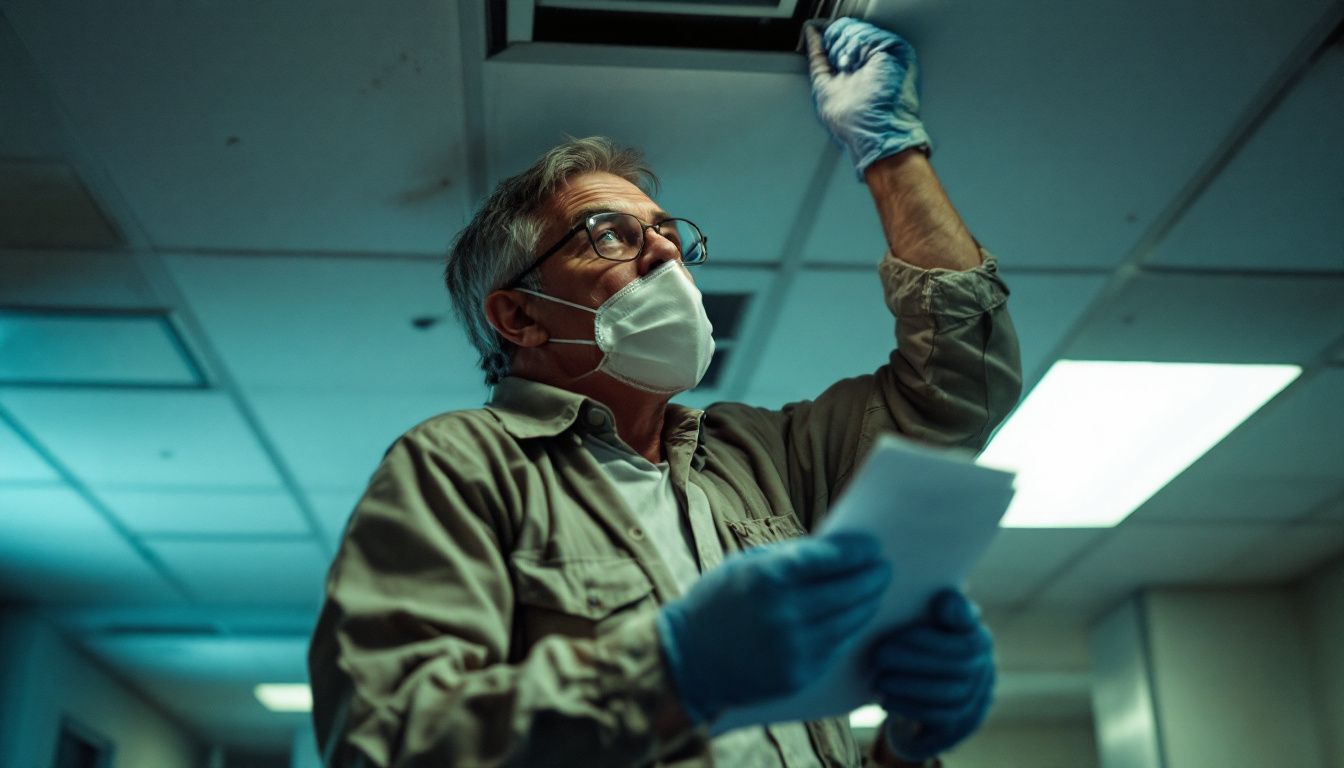
Commercial Asbestos Removal Management: What Every Building Owner Must Know
If you own or manage a commercial property built before 2000, asbestos is not a hypothetical concern — it is almost certainly present somewhere in your building. Commercial asbestos removal management is one of the most legally and operationally complex responsibilities a duty holder faces, and getting it wrong carries serious consequences for health, compliance, and long-term liability.
This post walks you through everything you need to manage asbestos safely and lawfully in a commercial setting — from your initial legal duties through to removal, monitoring, and ongoing management.
Understanding Your Legal Duties Under the Control of Asbestos Regulations
The Control of Asbestos Regulations place a clear legal duty on owners and managers of non-domestic premises to manage asbestos. This is known as the Duty to Manage, and it applies whether you own the freehold, manage the building on behalf of a landlord, or occupy premises under a lease that gives you control over maintenance.
Under these regulations, your core obligations are:
- To take reasonable steps to identify asbestos-containing materials (ACMs) within your premises
- To assess the condition and risk presented by any ACMs found
- To maintain an up-to-date asbestos register
- To create and implement a written asbestos management plan
- To share relevant information with anyone who may disturb ACMs, including contractors and maintenance staff
- To arrange regular re-inspections to monitor the condition of known ACMs
Failure to comply is not a technicality — it is a criminal offence. HSE inspectors have the authority to issue improvement notices, prohibition notices, and prosecute duty holders. Beyond the legal risk, failing to manage asbestos properly puts lives at genuine risk.
The Starting Point: Getting the Right Asbestos Survey
You cannot manage what you have not identified. Before any decisions about commercial asbestos removal management can be made, you need a professional survey carried out in accordance with HSG264 — the HSE’s definitive guidance on asbestos surveying.
Management Survey
A management survey is the standard first step for occupied commercial premises. It identifies the location, extent, and condition of ACMs that could be disturbed during normal occupation and routine maintenance.
The result is an asbestos register and a risk-rated management plan that tells you exactly what is present and what action, if any, is required. This is the foundation of all subsequent management decisions.
Refurbishment Survey
If you are planning any renovation, fit-out, or structural work, a refurbishment survey is legally required before work begins. This is a more intrusive survey that accesses areas a management survey does not — including voids, ceiling spaces, and areas that will be disturbed during the works.
No licensed contractor should begin refurbishment work without sight of this survey. Skipping it is not just bad practice — it exposes workers and building occupants to unacceptable risk.
Re-Inspection Survey
Once ACMs have been identified and a management plan is in place, those materials need to be monitored over time. A re-inspection survey checks the condition of known ACMs at regular intervals — typically annually — and updates the risk assessment accordingly.
If the condition of an ACM deteriorates, the management plan must be updated to reflect the increased risk. Monitoring is not optional; it is part of your ongoing legal duty.
What a Commercial Asbestos Management Plan Must Include
A written asbestos management plan is not optional — it is a legal requirement for any non-domestic premises where ACMs have been identified or where their presence cannot be ruled out.
A compliant plan must cover the following:
- Designated responsibility: Name a specific person (and a deputy) who is accountable for asbestos management within the building. This person must understand their duties and have access to the relevant documentation.
- The asbestos register: A full record of all ACMs identified, their location, type, condition, and risk rating. This must be accessible to anyone who may disturb those materials.
- Risk assessment data: Each ACM must be assessed for the risk it presents based on its condition, accessibility, and the likelihood of disturbance.
- Control measures: Steps taken to prevent accidental disturbance — this might include physical barriers, warning labels, or contractor permit-to-work systems.
- Emergency procedures: Clear instructions for what to do if ACMs are disturbed unexpectedly, including who to notify and how to make the area safe.
- Monitoring schedule: A programme of regular re-inspections with defined intervals and assigned responsibility.
- Communication procedures: A record of how and when the asbestos register has been shared with workers, tenants, and contractors.
The plan should be a living document — reviewed and updated whenever work affects ACMs, when personnel responsible for management change, or when an incident occurs. A plan that sits in a filing cabinet untouched is not a management plan; it is a liability.
When Asbestos Removal Is the Right Decision
Not all asbestos needs to be removed. In many cases, ACMs in good condition that are unlikely to be disturbed are best left in place and managed. Removal itself creates risk — disturbing asbestos fibres during the process is where the greatest exposure danger lies.
However, there are circumstances where asbestos removal is the correct course of action:
- The ACM is in poor condition and deteriorating
- The material is in a location where it will inevitably be disturbed
- Refurbishment or demolition work requires access to areas containing ACMs
- The risk assessment indicates that management in situ is no longer adequate
- The property is being sold or transferred and removal is required as a condition
The decision to remove should always be based on a current, professional risk assessment — not assumptions or convenience. Acting without proper assessment puts everyone at risk and creates significant legal exposure.
Licensed vs Non-Licensed Removal: Understanding the Distinction
Not all asbestos removal work requires a licensed contractor, but a significant proportion of commercial work does. The Control of Asbestos Regulations distinguish between three categories of work.
Licensed Work
Work with high-risk asbestos materials — including sprayed coatings, lagging, and asbestos insulating board (AIB) — must be carried out by a contractor holding an HSE licence. Licensed contractors are required to notify the HSE at least 14 days before work begins, maintain health records for their workers, and follow strict procedures for enclosure, air monitoring, and waste disposal.
Notifiable Non-Licensed Work (NNLW)
Some lower-risk work does not require a licence but must still be notified to the relevant enforcing authority. Workers carrying out NNLW must be trained, and health records must be kept. This category is often misunderstood, and assumptions about what qualifies can lead to serious compliance failures.
Non-Licensed Work
Certain short-duration, low-exposure tasks may be carried out without a licence or notification. However, all workers must still be trained, and appropriate controls must be in place. If you are unsure which category applies to work in your building, always seek advice from a qualified asbestos consultant before proceeding.
The Asbestos Removal Process: Step by Step
For licensed asbestos removal in a commercial setting, the process follows a structured sequence designed to protect workers, building occupants, and the environment.
- Pre-removal survey: A refurbishment survey confirms the precise location and extent of ACMs to be removed.
- Method statement and risk assessment: The licensed contractor prepares a detailed plan of how the work will be carried out safely.
- HSE notification: The contractor notifies the HSE at least 14 days before licensed work begins.
- Site preparation: The work area is enclosed and sealed. Negative pressure units (NPUs) are used to prevent fibre migration. Access is restricted.
- Removal: ACMs are removed using wet methods to suppress fibres. Workers wear appropriate respiratory protective equipment (RPE) and disposable coveralls.
- Decontamination: Workers pass through a three-stage decontamination unit before leaving the enclosure.
- Air monitoring: Independent air monitoring is carried out during and after the work to confirm fibre levels are within acceptable limits.
- Clearance inspection: A four-stage clearance process — including a visual inspection and air test — must be passed before the area is handed back.
- Waste disposal: Asbestos waste is double-bagged, labelled, and transported to a licensed hazardous waste facility. A waste transfer note must be retained.
Each stage exists for a reason. Cutting corners at any point in this sequence creates exposure risks that can have devastating long-term consequences for health.
Sampling and Testing: Confirming What You Are Dealing With
Before any management or removal decisions are made, you need to know whether materials actually contain asbestos and, if so, what type. Assumptions are not good enough — legally or practically.
If you suspect a material may contain asbestos but are not certain, a testing kit allows you to collect a sample safely for laboratory analysis. Samples are analysed using polarised light microscopy (PLM) at a UKAS-accredited laboratory, providing a legally defensible result.
Never attempt to sample a material you suspect may be high-risk asbestos — such as sprayed coatings or pipe lagging — without professional guidance. For most commercial properties, a professional survey with laboratory analysis is the appropriate route, as it provides the full risk-rated register your management plan requires.
Integrating Asbestos Management with Wider Building Safety
Asbestos management does not exist in isolation. For commercial property managers, it sits alongside a range of other statutory safety obligations that must be coordinated, not siloed.
A fire risk assessment is another legal requirement for most commercial premises, and the two processes are often coordinated as part of a broader building safety review. Both involve identifying hazards, assessing risk, implementing controls, and maintaining records — the disciplines complement each other naturally.
When contractors are appointed to carry out maintenance or improvement works, your asbestos register must be shared with them before they begin. A permit-to-work system that references the asbestos register is good practice in any commercial building with known ACMs.
Failing to share this information with contractors is a breach of your legal duties and can have catastrophic consequences if ACMs are disturbed unknowingly.
Monitoring and Keeping Your Management Plan Current
An asbestos management plan that is filed away and forgotten is not a management plan — it is a liability. Effective commercial asbestos removal management requires ongoing attention, not a one-off exercise.
Key monitoring activities include:
- Annual re-inspections of all known ACMs by a qualified surveyor
- Immediate re-assessment if any ACM is damaged or disturbed
- Updating the register and management plan after any removal work
- Reviewing the plan whenever the building use changes or new contractors are appointed
- Keeping records of all contractor communications regarding the asbestos register
The condition of ACMs can change over time due to physical damage, water ingress, or general wear. Regular monitoring ensures that your risk assessment remains accurate and that any deterioration is caught early — before it becomes a serious health risk or a compliance failure.
Asbestos Surveys Across the UK: Local Expertise, National Coverage
Commercial asbestos removal management requirements are the same regardless of where your property is located, but having a surveying partner with genuine local knowledge makes a practical difference — particularly when coordinating access, liaising with local enforcing authorities, or responding quickly to an incident.
Supernova Asbestos Surveys operates nationwide. If your property is in the capital, our asbestos survey London service covers the full range of commercial survey types across all London boroughs. For properties in the North West, our asbestos survey Manchester team provides the same accredited, HSG264-compliant service. And in the Midlands, our asbestos survey Birmingham specialists are on hand for everything from management surveys through to pre-demolition investigations.
Wherever your commercial property is located, you will receive the same rigorous standards, the same UKAS-accredited laboratory analysis, and the same clear, actionable reporting that has made Supernova the trusted choice for over 50,000 surveys completed across the UK.
Common Mistakes That Create Serious Risk
Even duty holders who take their responsibilities seriously can fall into avoidable traps. The following mistakes are among the most frequently encountered in commercial asbestos removal management — and the most consequential.
- Assuming no asbestos is present because a building looks modern or has been recently refurbished. Many refurbishments leave ACMs in place in areas that were not disturbed.
- Failing to update the asbestos register after removal or remediation work. An outdated register is worse than useless — it creates a false sense of security.
- Not sharing the register with contractors before maintenance or improvement works begin. This is one of the most common compliance failures and one of the most dangerous.
- Commissioning removal without a current refurbishment survey. Removal contractors need accurate, up-to-date information about what they are dealing with before work begins.
- Treating the management plan as a one-time document. It must evolve with the building and its use — a static plan does not fulfil your legal duty.
- Using non-licensed contractors for licensed work. The distinction between licensed and non-licensed work is clearly defined in law. Misclassifying the work category is not a defence.
Each of these mistakes is avoidable with the right professional support and a clear understanding of your obligations.
How to Choose the Right Asbestos Surveying and Removal Partner
Not all asbestos consultancies are equal. When selecting a surveying and removal management partner for your commercial property, there are several non-negotiable criteria to apply.
Your surveying partner should be able to demonstrate:
- Membership of a recognised professional body such as BOHS (British Occupational Hygiene Society) or ARCA (Asbestos Removal Contractors Association)
- Use of a UKAS-accredited laboratory for all sample analysis
- Surveyors holding the P402 qualification as a minimum for asbestos surveying
- Clear, HSG264-compliant survey reports that are usable as the basis for a management plan
- Demonstrated experience in commercial properties of a similar type and scale to yours
- Transparent pricing and clear communication about what is and is not included in the survey scope
For removal work specifically, your contractor must hold a current HSE licence for any licensed work. Ask to see the licence before appointing anyone, and verify it directly with the HSE if you have any doubt.
Frequently Asked Questions
Do I need an asbestos survey if my building was built after 2000?
Buildings constructed entirely after 1999 are very unlikely to contain asbestos, as the full ban on asbestos use in the UK came into effect in 1999. However, if there is any uncertainty about the construction date, or if the building incorporates older materials or structural elements, a survey is still advisable. For buildings constructed before 2000, a survey is not just advisable — it is effectively a legal requirement if you are to fulfil your Duty to Manage.
Can asbestos be left in place rather than removed?
Yes — and in many cases, leaving ACMs in place and managing them is the correct approach. Asbestos that is in good condition, is unlikely to be disturbed, and is not in a deteriorating state can safely remain in situ provided it is properly recorded, monitored, and included in your asbestos management plan. Removal is only the right decision when the risk assessment indicates that management in place is no longer adequate, or when planned works will disturb the material.
How often does an asbestos management plan need to be reviewed?
Your management plan should be reviewed at least annually as part of your scheduled re-inspection programme. It must also be reviewed and updated following any work that affects ACMs, any change in the condition of known ACMs, any change in building use, or any change in the personnel responsible for asbestos management. Treating the annual review as a minimum — not a maximum — is sound practice.
What happens if asbestos is accidentally disturbed?
If ACMs are accidentally disturbed, the area should be evacuated immediately and access prevented. The incident must be reported to the relevant enforcing authority, and a licensed contractor should be engaged to assess the situation and carry out any necessary remediation. Air monitoring will typically be required to confirm that fibre levels have returned to acceptable levels before the area is reoccupied. Your asbestos management plan should include clear emergency procedures for exactly this scenario.
Is commercial asbestos removal management different from residential?
The fundamental principles are the same, but commercial asbestos removal management involves additional legal obligations — particularly the Duty to Manage under the Control of Asbestos Regulations, which applies specifically to non-domestic premises. Commercial properties also tend to be larger, more complex, and occupied by a greater number of people, which increases both the scale of the management task and the potential consequences of getting it wrong. The regulatory framework, survey requirements, and removal procedures are all more formally structured in a commercial context.
Work With Supernova Asbestos Surveys
Supernova Asbestos Surveys has completed over 50,000 surveys across the UK, working with commercial property owners, facilities managers, housing associations, local authorities, and contractors of every scale. We provide the full range of services required for effective commercial asbestos removal management — from initial management and refurbishment surveys through to re-inspections, sampling, and removal project management.
Our surveyors are qualified, our reports are HSG264-compliant, and our laboratory analysis is UKAS-accredited. We give you clear, accurate information — and we tell you exactly what it means for your building and your obligations.
To speak with a member of our team, call us on 020 4586 0680 or visit asbestos-surveys.org.uk to request a survey or find out more about our services.