Mesothelioma Support: What Patients, Families and Carers Need to Know
A mesothelioma diagnosis changes everything — for the patient and for everyone who loves them. It is a rare but aggressive cancer caused almost exclusively by asbestos exposure, and the path from diagnosis through treatment can feel overwhelming without the right mesothelioma support in place.
This post is for anyone who has been diagnosed, anyone supporting a loved one through it, and anyone responsible for buildings that may still contain asbestos. Understanding what help is available — and how to access it — can make a profound difference to outcomes and quality of life.
Understanding Mesothelioma and Its Link to Asbestos
Mesothelioma is a cancer of the mesothelium — the thin tissue lining that surrounds the lungs, abdomen, and other organs. The pleural form, which affects the lung lining, is by far the most common type seen in the UK.
The overwhelming cause is asbestos exposure. Once asbestos fibres are inhaled or ingested, they can embed in tissue and remain there for decades before triggering malignant changes.
This long latency period — often 20 to 50 years — means many people diagnosed today were exposed during their working lives in industries like construction, shipbuilding, manufacturing, and insulation installation. New cases continue to emerge as the legacy of historical asbestos use works its way through the population.
Why Mesothelioma Awareness Drives Real Change
Awareness is not just about statistics — it drives real-world outcomes. When more people understand the link between asbestos and mesothelioma, it creates pressure for better regulation, faster diagnosis, and more research funding.
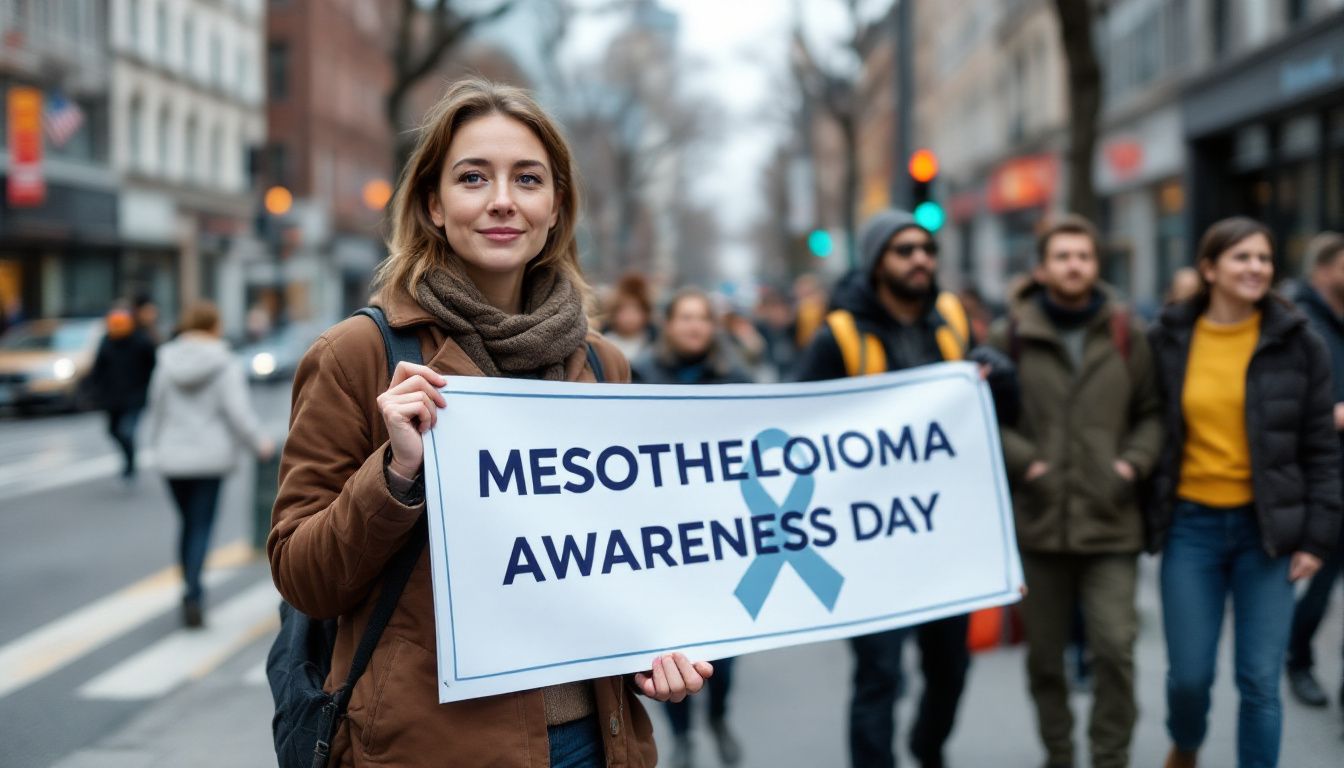
Mesothelioma Awareness Day falls on 26 September each year, with the entire month of September recognised as Mesothelioma Awareness Month. These campaigns bring together patients, families, medical professionals, and advocacy organisations to shine a light on a disease that is still too often diagnosed late.
Early diagnosis is critical. The sooner mesothelioma is identified, the more treatment options become available and the better the potential outcomes. Campaigns that encourage people with known asbestos exposure histories to seek medical advice genuinely save lives.
How You Can Help Raise Awareness
- Wear blue clothing, wristbands, or ribbons during September to show solidarity
- Share information on social media using hashtags such as #MesotheliomaAwarenessDay
- Participate in fundraising events like Miles for Meso or iWalk4Meso
- Attend educational webinars and research conferences hosted by patient advocacy groups
- Support organisations working on research funding and policy change
These actions may seem small individually, but collectively they shift public understanding and political will in ways that directly benefit patients and families seeking mesothelioma support.
Key Mesothelioma Support Organisations in the UK
If you or someone you care about has received a mesothelioma diagnosis, knowing where to turn is the first step. Several dedicated organisations provide specialist mesothelioma support across the UK.
Mesothelioma UK
Mesothelioma UK is the leading specialist resource centre for the disease in the United Kingdom. They provide free, specialist nursing support to patients and families, fund research, and offer information on legal rights, benefits, and treatment options.
Their clinical nurse specialists can be accessed through NHS mesothelioma centres across the country. For anyone newly diagnosed, this should be one of the first calls you make.
Asbestos Victims Support Groups Forum UK
This umbrella organisation connects regional support groups across the UK, giving patients and families access to local networks of people who truly understand what they are going through. Peer support from others who have lived the same experience is invaluable and often complements clinical care in ways that medical teams alone cannot provide.
Asthma + Lung UK
Formerly known as the British Lung Foundation, Asthma + Lung UK provides helplines, information resources, and community support for people affected by lung conditions including mesothelioma. Their helpline connects callers with trained advisers who can signpost appropriate services.
Asbestos Disease Awareness Organisation (ADAO)
Although US-based, the ADAO has had significant global influence on asbestos policy and patient advocacy. Their resources and campaigns are widely used by UK advocacy groups, and their work has helped drive international awareness of asbestos-related diseases including mesothelioma.
Treatment Options and Medical Advances
Mesothelioma treatment has advanced considerably in recent years. Patients today have access to a broader range of options than were available even a decade ago, and ongoing research continues to open new avenues.
Standard Treatment Approaches
- Surgery: In eligible patients, surgical procedures can remove tumour tissue and, in some cases, improve survival outcomes significantly
- Chemotherapy: Combination chemotherapy remains a core treatment for many mesothelioma patients, particularly those not suitable for surgery
- Radiotherapy: Used to manage symptoms and, in some protocols, as part of a multimodal treatment approach
Emerging Treatments
- Immunotherapy: Checkpoint inhibitor drugs have shown promising results in mesothelioma, with some combinations now approved for use in the UK
- Gene therapy: Research into gene-based approaches is ongoing, with clinical trials exploring ways to target mesothelioma cells at a molecular level
- Robotic surgery: Minimally invasive surgical techniques are improving recovery times and expanding the pool of patients who can benefit from surgery
Clinical trial participation is one of the most important ways patients can access cutting-edge treatments while contributing to research that will help future patients. Mesothelioma UK and NHS specialist centres can advise on current trial availability.
Legal Rights and Financial Support for Mesothelioma Patients
Mesothelioma is almost always an occupational disease — which means there are legal avenues available to patients and their families. This is an area where specialist mesothelioma support is essential, and the financial help available can be life-changing.
Industrial Injuries Disablement Benefit
Mesothelioma is a prescribed industrial disease in the UK. Those diagnosed as a result of workplace asbestos exposure may be entitled to Industrial Injuries Disablement Benefit (IIDB). This is a non-means-tested benefit, so it does not affect other income or savings.
The Diffuse Mesothelioma Payment Scheme
Where an employer or their insurer cannot be traced, the Diffuse Mesothelioma Payment Scheme provides a lump sum payment to eligible patients. This scheme exists specifically to ensure that those who cannot pursue a conventional compensation claim are not left without financial support.
Civil Compensation Claims
Many mesothelioma patients are entitled to bring a civil claim against former employers responsible for their asbestos exposure. Specialist asbestos disease solicitors handle these cases, many on a no-win, no-fee basis. Mesothelioma UK and local support groups can provide referrals to trusted legal specialists.
Financial support matters because it allows patients to focus on their health rather than worrying about income. It also enables families to access care and support without additional hardship during an already difficult time.
Emotional and Psychological Support for Patients and Families
The emotional impact of a mesothelioma diagnosis is enormous. Patients face not only the physical challenges of the disease and its treatment, but also grief, fear, and the practical burden of managing a serious illness.
Families and carers carry their own weight — often balancing caring responsibilities with work and their own emotional needs. Good mesothelioma support must address the psychological dimension as well as the medical one.
What Emotional Support Looks Like
- One-to-one counselling through NHS psychological support services or charity-funded counsellors
- Peer support groups — both in person and online — where patients and families can connect with others in similar situations
- Palliative care teams who address not just physical symptoms but emotional and spiritual wellbeing
- Carer support services that give family members their own space to process and receive help
Asking for emotional support is not a sign of weakness — it is a practical step that improves resilience and quality of life throughout treatment and beyond.
The Role of Asbestos Prevention in Reducing Future Cases
Every future case of mesothelioma is preventable. The disease does not arise spontaneously — it is caused by asbestos exposure. Preventing that exposure, particularly in buildings where asbestos-containing materials still exist, is the most powerful form of mesothelioma support available at a population level.
Asbestos was widely used in UK construction until its full ban in 1999. A significant proportion of buildings constructed before 2000 may therefore contain asbestos-containing materials (ACMs). Under the Control of Asbestos Regulations, duty holders — those responsible for non-domestic premises — have a legal obligation to identify, assess, and manage asbestos in their buildings.
Starting With a Management Survey
A professional management survey is the starting point for any duty holder seeking to fulfil their legal obligations. It identifies where ACMs are present, assesses their condition and risk, and forms the basis of an asbestos management plan.
Protecting Workers During Renovation
Where buildings are being renovated or demolished, a refurbishment survey is required before any intrusive work begins. This more thorough survey ensures that workers are not unknowingly disturbing asbestos during construction activities — a scenario that has caused countless occupational mesothelioma cases.
Keeping Your Asbestos Register Current
Once an asbestos register is in place, it must be kept current. A re-inspection survey ensures that the condition of known ACMs is monitored over time, so that deteriorating materials can be managed or removed before they pose a risk.
Quick Testing Where You Suspect Asbestos
For properties where asbestos is suspected but a full survey is not immediately feasible, a testing kit allows samples to be collected and sent for laboratory analysis — providing a quick and affordable first step towards understanding what is present in a building.
Combining Asbestos and Fire Safety
Buildings also need to be assessed for other safety risks. A fire risk assessment is a legal requirement for most non-domestic premises and should be carried out alongside asbestos management to ensure a complete picture of building safety.
Asbestos Surveys Across the UK
Supernova Asbestos Surveys operates nationwide, providing professional asbestos surveys to property owners, managers, landlords, and contractors across England, Scotland, and Wales.
If you are based in the capital, our team provides expert asbestos survey London services, with same-week availability across all London boroughs. In the North West, our asbestos survey Manchester team covers the city and surrounding areas. And in the Midlands, our asbestos survey Birmingham service ensures that property managers across the region can access qualified surveyors quickly.
Every survey we carry out is conducted by BOHS P402-qualified surveyors and follows HSG264 guidance. Samples are analysed at our UKAS-accredited laboratory, and you receive a fully compliant asbestos register and risk-rated management plan within 3–5 working days.
How Supernova Asbestos Surveys Supports Mesothelioma Prevention
We have completed over 50,000 surveys across the UK. Our work is directly connected to mesothelioma prevention — every survey we carry out is a step towards ensuring that workers, residents, and visitors are not exposed to asbestos fibres in the buildings they use every day.
The connection between asbestos surveying and mesothelioma support may not be immediately obvious, but it is direct. Identifying and managing ACMs before they are disturbed is the single most effective way to stop new cases of this devastating disease from occurring.
If you are a duty holder, property manager, landlord, or contractor and you need asbestos surveying services, call us today on 020 4586 0680 or visit asbestos-surveys.org.uk to book your survey. If you or someone you know has been diagnosed with mesothelioma, please reach out to Mesothelioma UK and the organisations listed above — specialist mesothelioma support is available, and you do not have to face this alone.
Frequently Asked Questions
What is mesothelioma and what causes it?
Mesothelioma is a cancer of the mesothelium, the thin tissue lining surrounding the lungs, abdomen, and other organs. It is caused almost exclusively by exposure to asbestos fibres, which can be inhaled or ingested and remain embedded in tissue for decades before triggering malignant changes. The latency period between exposure and diagnosis is typically 20 to 50 years.
Where can I find mesothelioma support in the UK?
Several specialist organisations provide mesothelioma support in the UK. Mesothelioma UK offers free specialist nursing support and information on legal rights and treatment options. The Asbestos Victims Support Groups Forum UK connects patients with regional peer support networks. Asthma + Lung UK also provides helpline support and information for those affected by mesothelioma and other lung conditions.
Am I entitled to financial compensation if I have been diagnosed with mesothelioma?
In most cases, yes. Mesothelioma is a prescribed industrial disease in the UK, and those diagnosed as a result of workplace asbestos exposure may be entitled to Industrial Injuries Disablement Benefit. Where employers or insurers cannot be traced, the Diffuse Mesothelioma Payment Scheme provides a lump sum. Many patients are also entitled to bring civil compensation claims against former employers, often handled on a no-win, no-fee basis by specialist solicitors.
What are the legal obligations for managing asbestos in buildings?
Under the Control of Asbestos Regulations, duty holders responsible for non-domestic premises must identify, assess, and manage any asbestos-containing materials in their buildings. This typically begins with a professional management survey, followed by an asbestos management plan and regular re-inspection surveys to monitor the condition of known materials. Failure to comply can result in enforcement action by the HSE.
How does asbestos surveying help prevent mesothelioma?
Professional asbestos surveying identifies where asbestos-containing materials are present in a building and assesses the risk they pose. By knowing exactly where ACMs are located and in what condition, duty holders can ensure that workers and occupants are not accidentally exposed to asbestos fibres during maintenance, renovation, or everyday use. This prevention work directly reduces the number of future mesothelioma cases caused by occupational and environmental asbestos exposure.