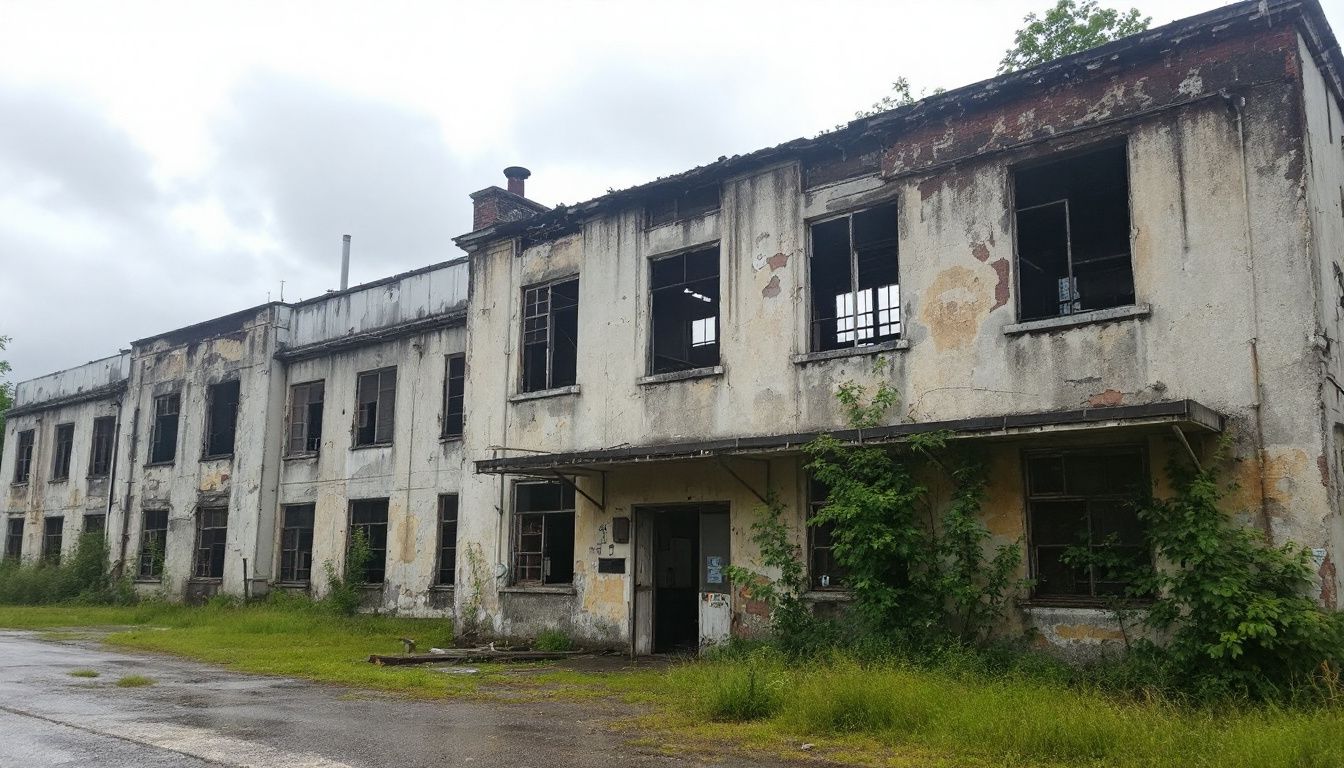
What the Asbestos at Work Regulations Actually Require of UK Employers
Asbestos kills more people in the UK each year than any other single work-related cause. If you manage or own a workplace, the asbestos at work regulations place specific, enforceable duties on you — and ignorance of those duties is not a defence.
This post breaks down exactly what the law requires, what good practice looks like, and what happens if you get it wrong.
The Legal Framework: Understanding the Asbestos at Work Regulations
The primary legislation governing asbestos in UK workplaces is the Control of Asbestos Regulations, supported by HSE guidance document HSG264. Together, these set out a clear framework for identifying, managing, and — where necessary — removing asbestos-containing materials (ACMs) from non-domestic premises.
The regulations apply to anyone who has maintenance or repair responsibilities for non-domestic premises. That includes employers, building owners, facilities managers, and managing agents. If people work in or visit a building you control, the duty falls on you.
The Three Categories of Asbestos Work
Not all asbestos work carries the same level of risk, and the regulations reflect that by splitting work into three distinct categories. Getting the categorisation right is not optional — treating licensed work as non-licensed is a serious breach of the asbestos at work regulations and puts workers at significant risk.
- Licensed asbestos work — High-risk work involving materials such as sprayed coatings or lagging. This requires an HSE-issued licence, which lasts either one or three years. You must notify the HSE at least 14 days before this work begins.
- Notifiable non-licensed work (NNLW) — Lower-risk than licensed work but still notifiable to the HSE. Workers must undergo medical surveillance every three years, and records must be kept.
- Non-licensed asbestos work — The lowest-risk category. Notification is not required, but safe working procedures and appropriate training still apply.
The Duty to Manage: Regulation 4 Explained
Regulation 4 of the Control of Asbestos Regulations is where most employers need to focus their attention. It places a legal duty on those responsible for non-domestic premises to manage asbestos proactively — not just reactively.
The duty to manage requires you to:
- Find out whether asbestos is present in your premises and, if so, where it is and what condition it is in.
- Assess the risk from any ACMs identified.
- Prepare a written management plan detailing how those risks will be managed.
- Put that plan into action and keep it under review.
- Provide information about the location and condition of ACMs to anyone who might disturb them.
The duty to manage is not a one-off exercise. It is an ongoing responsibility that requires regular review, particularly after building works, changes in use, or deterioration of materials.
What Counts as Non-Domestic Premises?
The duty to manage applies to all non-domestic premises. That includes offices, warehouses, schools, hospitals, retail units, factories, and common areas of residential blocks such as stairwells and plant rooms.
It does not apply to private domestic homes, though landlords of houses in multiple occupation (HMOs) have separate obligations that are worth understanding before assuming you are exempt.
Carrying Out an Asbestos Survey: Where It All Starts
Before you can manage asbestos, you need to know where it is. That means commissioning a professional asbestos survey carried out by a BOHS P402-qualified surveyor in line with HSG264 guidance. There are three main survey types, and choosing the right one depends on what you intend to do with the building.
Management Survey
A management survey is the standard survey for occupied premises. It identifies ACMs that could be disturbed during normal occupation, maintenance, or minor works. The surveyor inspects accessible areas, takes samples from suspect materials, and produces a risk-rated asbestos register.
This is the survey most employers need to fulfil their duty to manage under the asbestos at work regulations. If you have not commissioned one yet, this is where you start.
Refurbishment Survey
If you are planning any refurbishment, renovation, or demolition work, you need a refurbishment survey before work begins. This is a more intrusive inspection that covers all areas to be disturbed.
It is a legal requirement before any work that could disturb ACMs. No responsible contractor should begin refurbishment without one, and if they do, the liability sits with the person who commissioned the work.
Re-Inspection Survey
Once your management plan is in place, ACMs that are being managed in situ must be monitored regularly. A re-inspection survey checks the condition of known ACMs at agreed intervals — typically annually — and updates the risk assessment accordingly.
This is a critical part of keeping your management plan current and compliant. Skipping re-inspections is one of the most common compliance failures the HSE encounters.
Building an Effective Asbestos Management Plan
The asbestos management plan is the operational heart of your compliance. It is a live document that records what ACMs are present, where they are, what risk they pose, and how that risk is being controlled.
A compliant management plan should include:
- The location, type, and condition of all identified ACMs
- A risk rating for each material based on its condition, accessibility, and likelihood of disturbance
- The control measures in place — monitoring, encapsulation, or removal
- Details of who is responsible for managing each element
- Procedures for informing contractors and maintenance workers about ACM locations
- A schedule for re-inspection and plan review
- Records of all asbestos-related work carried out on the premises
The plan must be accessible. Anyone who might disturb asbestos — from a plumber to an electrician to a maintenance team — must be told where ACMs are before they start work. Failure to do this puts workers at risk and exposes you to serious legal liability.
Training Requirements Under the Asbestos at Work Regulations
The regulations set out clear training requirements depending on the level of work employees carry out with or near asbestos. Training is not a tick-box exercise — it is a legal obligation with defined minimum standards.
Asbestos Awareness Training
This is the baseline level of training required for anyone whose work could inadvertently disturb asbestos — tradespeople, maintenance staff, surveyors, and similar roles. It covers what asbestos is, where it might be found, the health risks it poses, and what to do if you suspect you have disturbed it. Annual refresher training is required.
Work-Specific Training
Workers carrying out non-licensed or notifiable non-licensed asbestos work need more detailed, task-specific training. This covers the correct methods, controls, and decontamination procedures for the specific work they are doing.
Licensed Work Training
Those involved in licensed asbestos work require the highest level of training, covering all aspects of safe working — including respiratory protective equipment (RPE), enclosure construction, air monitoring, and emergency procedures. This training must be kept current and documented.
Personal Protective Equipment: Getting It Right
The correct PPE is non-negotiable when working with asbestos. The asbestos at work regulations require employers to provide appropriate equipment and ensure it is used correctly. Providing PPE is not enough — you must also verify it is being worn and that it fits.
For most asbestos work, the minimum PPE requirement includes:
- Respiratory protective equipment (RPE) with P3 filters — the highest filtration rating
- Type 5, Category 3 disposable coveralls
- Disposable gloves
- Disposable boot covers or dedicated footwear
- Eye protection where there is a risk of fibre release
RPE must be face-fit tested for each individual worker. A mask that does not seal properly offers no meaningful protection, regardless of its filter rating. Face-fit testing is not optional — it is a specific requirement under the regulations.
Asbestos Waste Disposal and Incident Reporting
Asbestos waste is classified as hazardous waste and must be handled accordingly. All asbestos waste must be double-wrapped in heavy-duty polythene bags, clearly labelled with the appropriate UN 2590 hazard markings, and disposed of at a licensed waste disposal facility.
Using a general skip or standard waste contractor is not acceptable — it is itself a criminal offence. This applies even to small quantities of waste from non-licensed work.
Any incident involving uncontrolled asbestos exposure — for example, if ACMs are disturbed unexpectedly during maintenance work — must be reported under RIDDOR. Occupational health records for workers involved in licensed or notifiable non-licensed work must be retained for 40 years. This reflects the long latency period of asbestos-related diseases, which can take decades to develop after initial exposure.
What Happens If You Do Not Comply?
Non-compliance with the asbestos at work regulations is taken seriously by the HSE. Enforcement action can range from improvement notices and prohibition notices through to prosecution. Fines can be substantial, and in cases involving serious breaches or fatalities, custodial sentences are possible.
Beyond the legal consequences, the human cost is significant. Asbestos-related diseases — including mesothelioma, asbestosis, and asbestos-related lung cancer — are invariably fatal. No fine or legal penalty changes the outcome for a worker who has been negligently exposed.
When to Consider Asbestos Removal
Not all ACMs need to be removed. Materials in good condition that are unlikely to be disturbed can often be managed safely in situ. However, asbestos removal becomes necessary when materials are deteriorating, when they are in areas subject to frequent disturbance, or when building works require access to areas containing ACMs.
Removal must always be carried out by a licensed contractor for high-risk materials. For lower-risk materials, the work must still be properly planned and controlled, even if a licence is not required. Your asbestos management plan should clearly set out the trigger points at which removal becomes the preferred option.
Complementary Legal Duties: Fire Risk Assessments
Asbestos management sits alongside other statutory duties for premises managers. A fire risk assessment is a separate legal requirement for all non-domestic premises under the Regulatory Reform (Fire Safety) Order.
Both the asbestos management plan and the fire risk assessments should be reviewed together, particularly when building works or changes in occupancy occur. Each can affect the other — for example, fire stopping works can disturb ACMs, and the presence of asbestos can affect evacuation routes and firefighter access.
Testing Suspect Materials Before Work Begins
If you are unsure whether a material contains asbestos, do not assume it is safe. A bulk sample testing kit allows you to collect a sample safely and have it analysed by a UKAS-accredited laboratory. This is particularly useful for smaller jobs where a full survey may not be warranted, but you need confirmation before allowing work to proceed.
Samples are analysed under polarised light microscopy (PLM), which can identify the type and concentration of asbestos fibres present. Results give you the information you need to make a compliant, risk-based decision about how to proceed — rather than guessing.
How Supernova Asbestos Surveys Can Help
At Supernova Asbestos Surveys, we have completed over 50,000 surveys across the UK. All our surveyors hold BOHS P402 qualifications, and all samples are analysed in our UKAS-accredited laboratory. We produce reports that are fully compliant with HSG264 and satisfy the requirements of the Control of Asbestos Regulations.
We offer fast turnaround — often same-week appointments — with reports delivered within 3–5 working days. Our pricing is transparent and fixed, with no hidden costs.
Whether you need a management survey for an occupied building, a refurbishment survey ahead of planned works, or ongoing re-inspection services, we cover the whole of the UK. If you are based in the capital, find out more about our asbestos survey London service. For clients in the north-west, we offer a dedicated asbestos survey Manchester service.
To discuss your requirements or get a fixed-price quote, request a free quote online or call us directly on 020 4586 0680. Our team is ready to help you meet your legal obligations and keep your workplace safe.
Frequently Asked Questions
Who does the duty to manage asbestos apply to?
The duty to manage applies to anyone who has maintenance or repair responsibilities for non-domestic premises. This includes employers, building owners, managing agents, and facilities managers. If you are responsible for a building where people work or visit, the duty applies to you — even if you do not own the building outright.
Do the asbestos at work regulations apply to older buildings only?
The regulations apply to all non-domestic premises where asbestos-containing materials may be present. In practice, buildings constructed or refurbished before the year 2000 are most likely to contain ACMs, as asbestos was widely used in UK construction up until that point. However, if you are unsure about any building, a survey is the only way to confirm whether ACMs are present.
How often does an asbestos management plan need to be reviewed?
There is no single fixed interval prescribed by the regulations, but best practice — and HSE guidance — requires regular review. Most management plans are reviewed annually, and a re-inspection survey is typically carried out at the same time. The plan must also be reviewed following any building works, change in use, or if the condition of known ACMs changes.
What is the difference between licensed and non-licensed asbestos work?
Licensed asbestos work involves high-risk materials such as sprayed coatings, lagging, and asbestos insulating board in poor condition. It requires an HSE-issued licence and advance notification. Non-licensed work involves lower-risk materials and does not require a licence, but safe working procedures, appropriate training, and correct PPE are still legally required. Notifiable non-licensed work (NNLW) sits between the two — it does not require a licence but must still be notified to the HSE.
What should I do if asbestos is disturbed unexpectedly?
Stop work immediately and clear the area. Do not attempt to clean up the debris without specialist advice. The incident may need to be reported under RIDDOR if workers have been exposed. Contact a licensed asbestos contractor to assess the situation and carry out any necessary remediation. You should also review your asbestos management plan to understand how the disturbance occurred and prevent a recurrence.