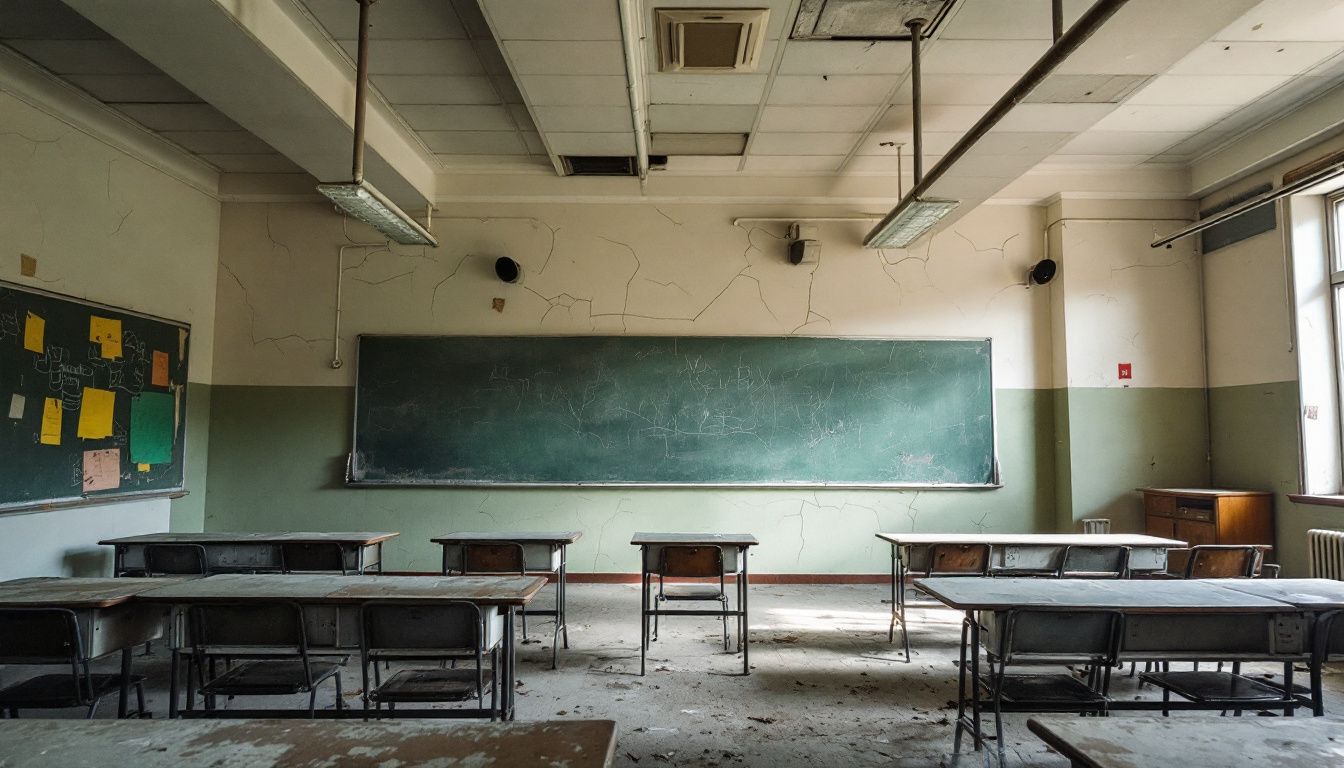
Asbestos in School Buildings: What Every Duty Holder Needs to Know
Asbestos in school buildings remains one of the most serious and persistent hazards facing the UK education sector. Hundreds of thousands of children, teachers, and support staff spend their days in buildings that may contain asbestos-containing materials (ACMs) — many constructed during the peak era of asbestos use. When those materials deteriorate or are disturbed, the consequences can be life-changing.
This is not a historic problem that has been resolved. It is an active, ongoing responsibility that falls squarely on headteachers, governors, local authorities, and academy trusts. Understanding the risks, the legal obligations, and the practical steps to manage asbestos safely is not optional — it is a legal duty.
Why Are So Many Schools at Risk?
The vast majority of UK school buildings were constructed between the 1950s and 1980s — precisely the period when asbestos was used most extensively in construction. It was cheap, durable, fire-resistant, and widely available. Builders used it in everything from ceiling tiles and floor coverings to pipe lagging, boiler rooms, and roof panels.
Blue (crocidolite) and brown (amosite) asbestos were banned in 1985. White asbestos (chrysotile) followed in 1999. But banning new use did not make existing materials disappear.
Asbestos installed decades ago remains in place across thousands of school sites throughout England, Scotland, and Wales. The Health and Safety Executive has consistently acknowledged that asbestos in school buildings represents a significant ongoing risk. Poor maintenance, ageing building fabric, and works carried out without proper surveys all increase the chance of fibre release.
Where Is Asbestos Commonly Found in Schools?
Asbestos does not always look dangerous. In many cases, it is hidden within materials that appear perfectly ordinary. Knowing where to look — and what not to disturb — is essential for anyone responsible for a school building.
Common locations for ACMs in school buildings include:
- Ceiling tiles and suspended ceiling systems
- Floor tiles and the adhesive used to fix them
- Pipe and boiler lagging in plant rooms and service ducts
- Textured coatings (such as Artex) on walls and ceilings
- Roof panels and guttering, particularly in prefabricated buildings
- Partition walls and door panels in older blocks
- Sprayed coatings used for fire protection on structural steelwork
- Electrical equipment and switchgear
Prefabricated school buildings — particularly CLASP (Consortium of Local Authorities Special Programme) structures — are especially likely to contain asbestos. Many of these buildings remain in daily use today.
The Health Risks: Why Children Face Particular Dangers
Asbestos fibres are microscopic. When ACMs are disturbed — by drilling, cutting, sanding, or even physical damage — those fibres become airborne and can be inhaled without any visible sign or immediate symptom.
The diseases caused by asbestos exposure include:
- Mesothelioma — a fatal cancer of the lining of the lungs or abdomen, almost exclusively caused by asbestos exposure
- Lung cancer — with risk significantly increased by asbestos inhalation, particularly in smokers
- Asbestosis — a chronic scarring of lung tissue that causes progressive breathlessness
- Pleural thickening — scarring of the membrane surrounding the lungs, which can restrict breathing
Children are particularly vulnerable. Their lungs are still developing, and they have a longer life expectancy ahead of them — which matters because asbestos-related diseases typically have a latency period of 20 to 40 years. A child exposed at school today may not develop symptoms until well into adulthood, making the link to the original exposure difficult to trace.
Teachers are also at elevated risk. Research has shown that teachers have historically had higher rates of mesothelioma than the general population — a pattern consistent with decades of occupational exposure in asbestos-containing school buildings.
Legal Duties for Schools and Duty Holders
The legal framework governing asbestos in school buildings is clear and enforceable. The Control of Asbestos Regulations place a duty to manage asbestos on anyone responsible for the maintenance or repair of non-domestic premises — and schools fall squarely within that definition.
Under Regulation 4, duty holders must:
- Take reasonable steps to find out whether ACMs are present and assess their condition
- Presume materials contain asbestos unless there is strong evidence to the contrary
- Produce and maintain a written asbestos management plan
- Keep an up-to-date asbestos register for the building
- Ensure the information is shared with anyone likely to disturb the materials — including contractors, maintenance staff, and cleaning teams
- Monitor the condition of ACMs and review the management plan regularly
Failure to comply is a criminal offence. The HSE can issue improvement notices, prohibition notices, and prosecute duty holders. More importantly, failure to manage asbestos properly puts lives at risk.
HSG264 — the HSE’s definitive guidance on asbestos surveys — sets out exactly how surveys should be planned and conducted. Every survey carried out by Supernova Asbestos Surveys follows HSG264 standards.
Types of Asbestos Survey for Schools
Not all surveys are the same. The type of survey a school requires depends on how the building is being used and what work is planned.
Management Survey
A management survey is the standard survey required for any school building in normal use. It identifies the location, extent, and condition of ACMs that could be disturbed during everyday activities — cleaning, maintenance, minor repairs — and provides the information needed to produce an asbestos register and management plan.
This survey does not require the building to be empty or stripped out. It is designed to be carried out with minimal disruption to the school day.
Refurbishment Survey
Before any building work, renovation, or demolition takes place — including relatively minor works such as installing new IT infrastructure, replacing windows, or refitting a classroom — a refurbishment survey is legally required. This is a more intrusive survey that accesses all areas likely to be affected by the works, including voids, ducts, and structural elements.
Carrying out building works without a refurbishment survey is one of the most common — and most dangerous — compliance failures in school buildings.
Re-Inspection Survey
Once an asbestos register is in place, it must be kept current. A re-inspection survey revisits known ACMs at regular intervals — typically annually — to assess whether their condition has changed and whether the risk rating needs to be updated. This is an essential part of any active asbestos management plan.
Managing Asbestos in Schools: A Practical Approach
Managing asbestos in school buildings is not just about commissioning a survey and filing the report. It requires an ongoing, structured approach that involves the whole school community.
Produce and Maintain an Asbestos Register
Every school should have an asbestos register that identifies the location, type, and condition of all known or presumed ACMs. This document must be readily accessible and shared with all relevant staff and contractors before any work begins.
Develop a Written Management Plan
The management plan sets out how identified ACMs will be monitored, who is responsible for oversight, what action triggers further intervention, and how the school will respond if ACMs are accidentally disturbed. It is a living document that must be reviewed and updated regularly.
Train Staff and Brief Contractors
Caretakers, site managers, and maintenance staff must be aware of where ACMs are located and what they must not disturb. Contractors working on the site — even for short-term jobs — must be briefed on the asbestos register before they begin. This is a legal requirement, not a courtesy.
Plan Phased Removal Where Appropriate
Not all ACMs need to be removed immediately. Materials in good condition and unlikely to be disturbed can often be safely managed in place. However, where materials are deteriorating, in high-traffic areas, or in locations where maintenance work regularly takes place, planned asbestos removal by a licensed contractor is often the most appropriate long-term solution.
Respond Promptly to Accidental Disturbance
If ACMs are accidentally damaged — a contractor drilling into a ceiling tile, for example, or a door panel being kicked in — the area must be vacated immediately, sealed off, and assessed by a specialist before re-occupation. Do not wait to see whether the material was actually asbestos-containing. Act first.
Fire Safety and Asbestos: A Dual Responsibility
School buildings carry a dual compliance burden. Alongside asbestos management, responsible persons must also ensure that fire safety obligations are met. A fire risk assessment is a legal requirement for all non-domestic premises under the Regulatory Reform (Fire Safety) Order, and schools are no exception.
In older buildings, fire-resistant materials were often asbestos-based — meaning that fire safety upgrades and asbestos management can intersect directly. Any work on fire protection systems in a pre-2000 building should be preceded by an appropriate asbestos survey.
What If You Are Unsure Whether a Material Contains Asbestos?
If you are uncertain whether a specific material contains asbestos — perhaps in a recently acquired building or following damage to a previously unidentified material — sampling and laboratory analysis is the only reliable way to find out. Visual identification alone is not sufficient.
For situations where a full survey is not immediately available, a testing kit allows samples to be collected and sent to a UKAS-accredited laboratory for analysis. You can also arrange standalone sample analysis if you have already collected material and need a confirmed result.
That said, for school buildings, a full professional survey is always the recommended approach. It ensures complete coverage and gives duty holders the documented evidence they need to demonstrate legal compliance.
Asbestos Surveys for Schools Across the UK
Supernova Asbestos Surveys has completed over 50,000 surveys across the UK, including schools, academies, further education colleges, and local authority-managed buildings. Our surveyors are BOHS P402-qualified, and all sample analysis is carried out in a UKAS-accredited laboratory.
We understand the operational constraints that schools face — term-time pressures, safeguarding requirements, and the need to minimise disruption. We work around your timetable and deliver clear, actionable reports that give duty holders exactly what they need to demonstrate compliance.
Whether you need a first-time management survey, a pre-refurbishment survey before building works begin, or an annual re-inspection to keep your register current, our teams are ready to help.
For schools in the capital, our dedicated asbestos survey London team provides rapid deployment across all London boroughs. For schools in the North West, our asbestos survey Manchester team covers the wider Greater Manchester area and beyond.
We cover the whole of England, Scotland, and Wales, with local teams available for rapid deployment wherever your school estate is located.
Request a free quote online or call us on 020 4586 0680 to speak with a specialist today. Visit asbestos-surveys.org.uk to learn more about our full range of services.
Frequently Asked Questions
Is asbestos still present in UK school buildings?
Yes. The majority of school buildings constructed before 2000 are likely to contain some form of asbestos-containing material. Asbestos use in construction was not fully banned until 1999, and materials installed before that date remain in place across thousands of schools throughout England, Scotland, and Wales. The presence of asbestos does not automatically mean a building is unsafe, but it does mean a duty to manage exists in law.
Who is legally responsible for managing asbestos in a school?
Under the Control of Asbestos Regulations, the duty to manage asbestos falls on the person or organisation responsible for the maintenance and repair of the building. In practice, this means the headteacher, governing body, local authority, or academy trust — depending on how the school is structured. Responsibility cannot be delegated away, though the practical work of surveying and managing ACMs can be carried out by qualified specialists.
How often should a school’s asbestos register be updated?
An asbestos register should be treated as a live document. It must be updated whenever new ACMs are identified, whenever known materials change condition, and following any incident involving potential disturbance. In addition, a formal re-inspection survey — typically carried out annually — should be used to systematically review the condition of all recorded ACMs and update risk ratings accordingly.
What should a school do if asbestos is accidentally disturbed?
The area should be evacuated immediately and sealed off to prevent further disturbance or the spread of fibres. Do not attempt to clean up the material yourself. Contact a licensed asbestos contractor to assess the situation, carry out any necessary air monitoring, and confirm when the area is safe for re-occupation. The incident should also be documented and reported in accordance with your asbestos management plan.
Does a school need a survey before carrying out building works?
Yes. Before any refurbishment, renovation, or demolition work — including relatively minor jobs such as installing cabling, replacing ceiling tiles, or knocking through walls — a refurbishment survey is legally required. This applies even if the school already has a management survey in place. The management survey is not designed to support intrusive works; a separate, more detailed survey is required before any contractor begins work that could disturb the building fabric.