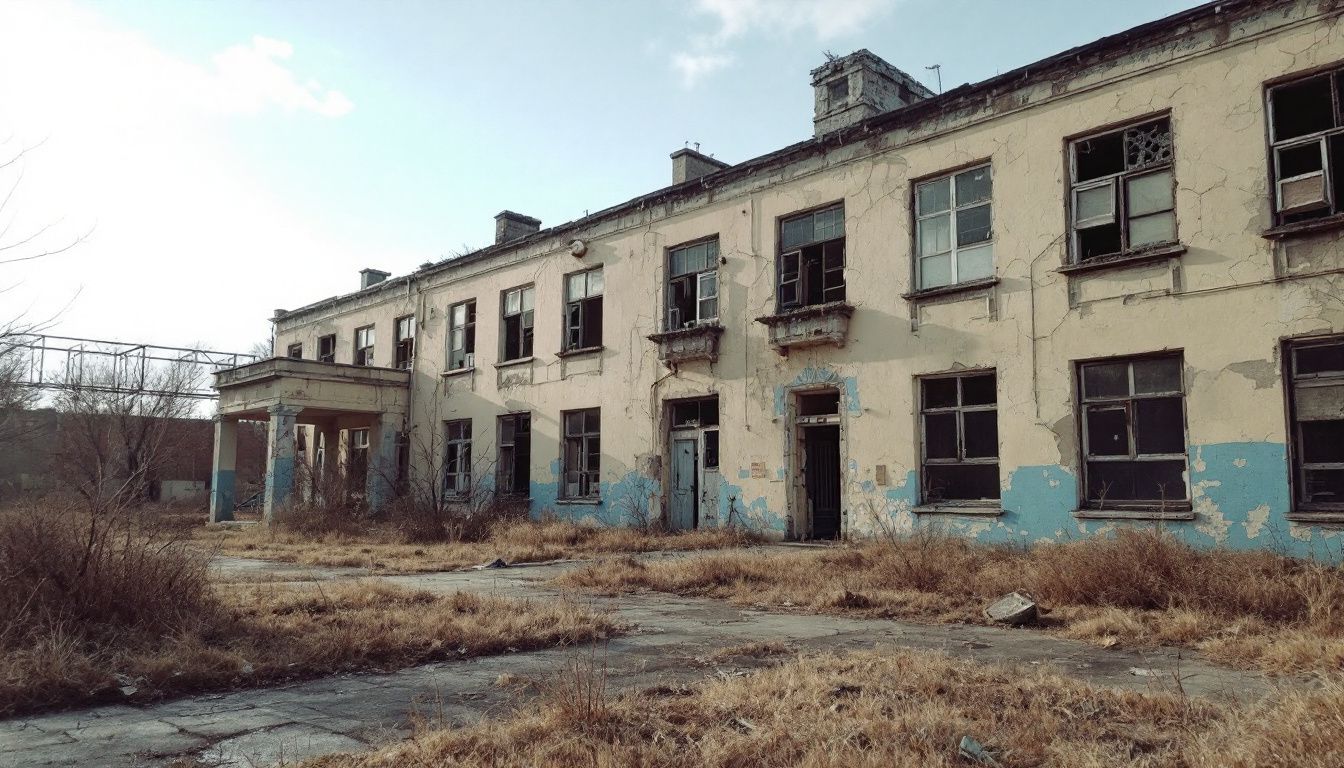
Asbestos in UK Schools: What the 2024 Percentage Really Tells Us
Walk into almost any school built before the year 2000 and there is a reasonable chance asbestos is present somewhere in the fabric of that building. The asbestos in UK schools percentage 2024 figures make for uncomfortable reading — and if you are a headteacher, facilities manager, or local authority responsible for educational premises, this is not something you can afford to ignore.
Asbestos remains the single largest cause of work-related deaths in the UK. Schools are among the most affected building types in the country, and the legal duty to manage that risk sits firmly with the people responsible for those buildings.
Here is what the current data shows, what the law requires, and what practical steps you should be taking right now.
The Asbestos in UK Schools Percentage: What 2024 Data Shows
The scale of the problem is significant. Estimates suggest that around 81% of schools in England contain asbestos-containing materials (ACMs). That figure alone should command serious attention from anyone responsible for school buildings.
HSE inspection activity covering more than 400 schools across England produced findings that were stark:
- 71% of identified asbestos items were found to be in a damaged or deteriorating condition
- One-third of inspected schools were found to be in breach of the Control of Asbestos Regulations
- 7% of schools received formal enforcement notices for serious deficiencies in asbestos management
If those inspection findings were applied proportionally across all schools in England, it would suggest that well over 1,000 schools could require formal intervention. That is not a theoretical risk — it is a live, ongoing issue affecting real pupils and staff every single day.
The UK government responded by allocating £50 million to support asbestos surveying and removal projects in schools. That funding acknowledges the scale of the challenge, but it does not remove the duty of care that sits with individual duty holders at each school.
Why Asbestos in Schools Is a Serious Health Concern
Asbestos fibres, when disturbed, become airborne. Once inhaled, they lodge permanently in lung tissue and can trigger diseases that may not become apparent for decades. The latency period between exposure and diagnosis is typically 20 to 50 years — which is precisely why exposure during school years is so dangerous.
The diseases caused by asbestos exposure include:
- Mesothelioma — a cancer of the lining of the lungs or abdomen, almost exclusively caused by asbestos exposure and almost always fatal
- Asbestos-related lung cancer — directly linked to fibre inhalation
- Asbestosis — a chronic scarring of lung tissue that progressively reduces breathing capacity
- Pleural thickening — diffuse scarring of the pleural membrane that can cause breathlessness and significant disability
More than 5,000 people die each year in the UK from asbestos-related diseases. Mesothelioma alone accounts for more than 2,250 of those deaths annually.
Data compiled over recent decades indicates that around 200 teachers have died from mesothelioma since the turn of the millennium. Some estimates suggest that for every teacher who dies from the disease, up to seven former pupils may also be affected. These are not abstract numbers — they represent real people whose exposure began in classrooms.
What Types of Asbestos Are Found in School Buildings?
Three main types of asbestos were commonly used in UK building construction, and all three can be found in school premises.
Chrysotile (White Asbestos)
The most widely used type, chrysotile was incorporated into ceiling tiles, floor tiles, roofing sheets, and pipe lagging. It remains the most commonly encountered form in school buildings. Despite being classified as less hazardous than other types, it is still a Group 1 carcinogen — there is no safe level of exposure.
Amosite (Brown Asbestos)
Amosite was widely used in thermal insulation boards and ceiling tiles, particularly in buildings constructed between the 1950s and 1980s. It is considered more hazardous than chrysotile and was frequently used in the prefabricated school buildings erected during post-war expansion programmes.
Crocidolite (Blue Asbestos)
The most hazardous of all commercially used asbestos types, crocidolite was used in spray coatings and pipe insulation. Its use was phased out earlier than other types, but it can still be present in older school buildings — particularly in boiler rooms and plant areas.
All three types are classified as Group 1 carcinogens by the International Agency for Research on Cancer. There is no safe level of exposure to any of them.
Where Is Asbestos Typically Found in School Buildings?
Knowing where to look is half the battle. ACMs can appear in a wide range of locations across school premises, many of which are accessed regularly during maintenance or minor building works.
Common locations include:
- Ceiling tiles and suspended ceiling systems
- Floor tiles and the adhesive used beneath them
- Pipe lagging and boiler insulation in plant rooms
- Textured decorative coatings (such as Artex) on ceilings and walls
- Roof panels and corrugated asbestos cement sheeting
- Insulation boards around radiators and heating systems
- Fire doors and fire-resistant panels
- Soffits, fascias, and external cladding on prefabricated buildings
Prefabricated CLASP (Consortium of Local Authorities Special Programme) buildings, which were widely used in school construction from the 1950s through to the 1970s, are particularly likely to contain multiple ACMs in structural and insulation components. Many of these buildings are still in use today.
The Legal Framework: What Schools Must Do Under the Control of Asbestos Regulations
Schools are non-domestic premises, which means they fall squarely within the scope of Regulation 4 of the Control of Asbestos Regulations — the Duty to Manage. This places a clear legal obligation on those who own or are responsible for the maintenance of school buildings.
Under the Duty to Manage, responsible persons must:
- Take reasonable steps to identify the location and condition of all ACMs on the premises
- Assess the risk of anyone being exposed to fibres from those materials
- Prepare and implement a written asbestos management plan
- Provide information about the location and condition of ACMs to anyone who may disturb them
- Review and monitor the management plan regularly
The HSE’s guidance document HSG264 sets out in detail how surveys should be conducted and what they must cover. A management survey is the standard starting point for any school that does not already have an up-to-date asbestos register. It identifies ACMs in accessible areas that could be disturbed during normal occupation and routine maintenance.
Where any refurbishment or demolition work is planned — even something as routine as replacing a suspended ceiling or installing new cabling — a refurbishment survey is legally required before work begins. This is a more intrusive survey that accesses areas which would not normally be disturbed, and it must be carried out before any contractor sets foot on site.
The Health and Safety at Work Act and the Management of Health and Safety at Work Regulations also impose broader duties on employers — including school governing bodies and local authorities — to assess and manage risks to employees and others. Asbestos management sits firmly within those obligations.
Why Regular Re-Inspection Is Not Optional
Having an asbestos register in place is not a one-time exercise. ACMs deteriorate over time. Routine maintenance activities, minor building works, and even accidental damage can change the condition of materials and alter the risk they present.
The Control of Asbestos Regulations require that the condition of known ACMs is monitored and that the management plan is kept up to date. In practice, this means conducting a periodic re-inspection survey — typically annually, though the frequency should reflect the risk profile of the materials present.
Schools that have not reviewed their asbestos register within the past 12 months, or that have carried out any building work since the last inspection, should treat a re-inspection as a matter of priority. The HSE’s enforcement activity in schools has demonstrated that out-of-date management plans are one of the most common compliance failures found during inspection.
When Asbestos Removal Is the Right Answer
Not all asbestos needs to be removed immediately. Where materials are in good condition and are unlikely to be disturbed, managing them in place — with regular monitoring — is often the appropriate approach.
However, there are circumstances where asbestos removal is the correct course of action:
- Where ACMs are damaged, deteriorating, or in poor condition
- Where materials are in areas of high traffic or frequent disturbance
- Where refurbishment or demolition work is planned
- Where the management plan identifies that the risk cannot adequately be controlled in situ
Any asbestos removal work in a school must be carried out by a licensed contractor holding a current licence issued by the HSE. Unlicensed removal of notifiable ACMs is a criminal offence, and the consequences of getting this wrong — both for health and for legal liability — are severe.
The Work and Pensions Select Committee has recommended a phased programme for the removal of asbestos from all public buildings, including schools. Whatever the national policy timeline, individual duty holders cannot wait for a government programme — they must manage the risks present in their buildings today.
Funding and Support Available for Schools
The financial burden of asbestos management in schools is real, and it falls on already stretched budgets. The Department for Education has allocated substantial annual funding for school maintenance and repairs, and the specific £50 million allocation for asbestos surveying and removal represents a recognition that this issue requires dedicated resource.
Schools should be aware that funding may be available through their local authority or through DfE capital programmes to support asbestos surveys and, where necessary, removal works. Engaging with your local authority’s estates team and keeping your asbestos management documentation current will put you in the strongest position to access any available funding.
If you are unsure whether your current asbestos register meets the required standard, or if it has not been reviewed recently, commissioning a fresh survey is the most straightforward way to establish a compliant baseline. You can get a free quote from Supernova with no obligation, so there is no barrier to getting started.
Practical Steps for School Duty Holders Right Now
If you are responsible for a school building, work through this checklist without delay:
- Check your asbestos register. Does one exist? When was it last updated? Is it accessible to contractors and maintenance staff?
- Review the management plan. Does it reflect the current condition of all identified ACMs? Has any work been carried out that could have disturbed materials?
- Commission a survey if needed. If your register is more than 12 months old, or if you have no register at all, book a management survey immediately.
- Communicate with staff and contractors. Everyone who could disturb ACMs must be told where they are. This is a legal requirement, not a courtesy.
- Plan for refurbishment carefully. Before any building works, ensure a refurbishment survey has been completed for the areas to be disturbed.
- Consider a fire risk assessment. Asbestos management and fire safety are often linked in older school buildings. A fire risk assessment should form part of your overall safety management approach.
- Use a testing kit for suspected materials. If a specific material is suspected to contain asbestos but has not been formally identified, a testing kit allows you to take a sample for laboratory analysis before any work proceeds.
Asbestos Surveys for Schools Across the UK
Supernova Asbestos Surveys works with schools, local authorities, and academy trusts across the country. Whether you need an initial management survey, a pre-refurbishment inspection, or a periodic re-inspection to keep your register current, our UKAS-accredited surveyors can help.
We cover the full length and breadth of the UK. If you are looking for an asbestos survey in London, an asbestos survey in Manchester, or an asbestos survey in Birmingham, our local teams are ready to mobilise quickly.
With over 50,000 surveys completed nationwide, we understand the pressures that school duty holders face — and we make the process as straightforward as possible. Call us on 020 4586 0680 or visit asbestos-surveys.org.uk to request a no-obligation quote today.
Frequently Asked Questions
What percentage of UK schools contain asbestos?
Estimates indicate that around 81% of schools in England contain asbestos-containing materials. The majority of these are buildings constructed before the year 2000, when asbestos use in construction was widespread. The figure underlines why asbestos management in educational premises is one of the most pressing building safety issues in the country.
Is asbestos in schools dangerous if it is left undisturbed?
Asbestos-containing materials that are in good condition and are not being disturbed present a low risk. The danger arises when fibres become airborne — typically as a result of damage, deterioration, or building works. The legal approach is to manage materials in place where they are stable, while monitoring their condition regularly through periodic re-inspection surveys.
Who is legally responsible for managing asbestos in a school?
The duty to manage asbestos under the Control of Asbestos Regulations falls on the person or organisation responsible for maintaining the building. In schools, this is typically the governing body, the academy trust, or the local authority, depending on the type of school. The duty holder must ensure an up-to-date asbestos register and management plan are in place and that relevant staff and contractors are informed.
How often should a school’s asbestos register be reviewed?
The condition of asbestos-containing materials should be reviewed at least annually through a formal re-inspection survey. The frequency may need to increase if materials are in poor condition, if the building is subject to regular maintenance works, or if any incident has potentially disturbed ACMs. An out-of-date register is one of the most common compliance failures identified during HSE inspections of schools.
What should a school do if asbestos is accidentally disturbed?
If asbestos is accidentally disturbed, the immediate priority is to stop work, evacuate the area, and prevent anyone from re-entering until the situation has been assessed by a competent person. The area should be sealed off and an air monitoring assessment carried out. Depending on the extent of the disturbance, a licensed asbestos contractor may need to be engaged to carry out a controlled clean-up. The incident should also be reported and documented as part of the school’s asbestos management records.