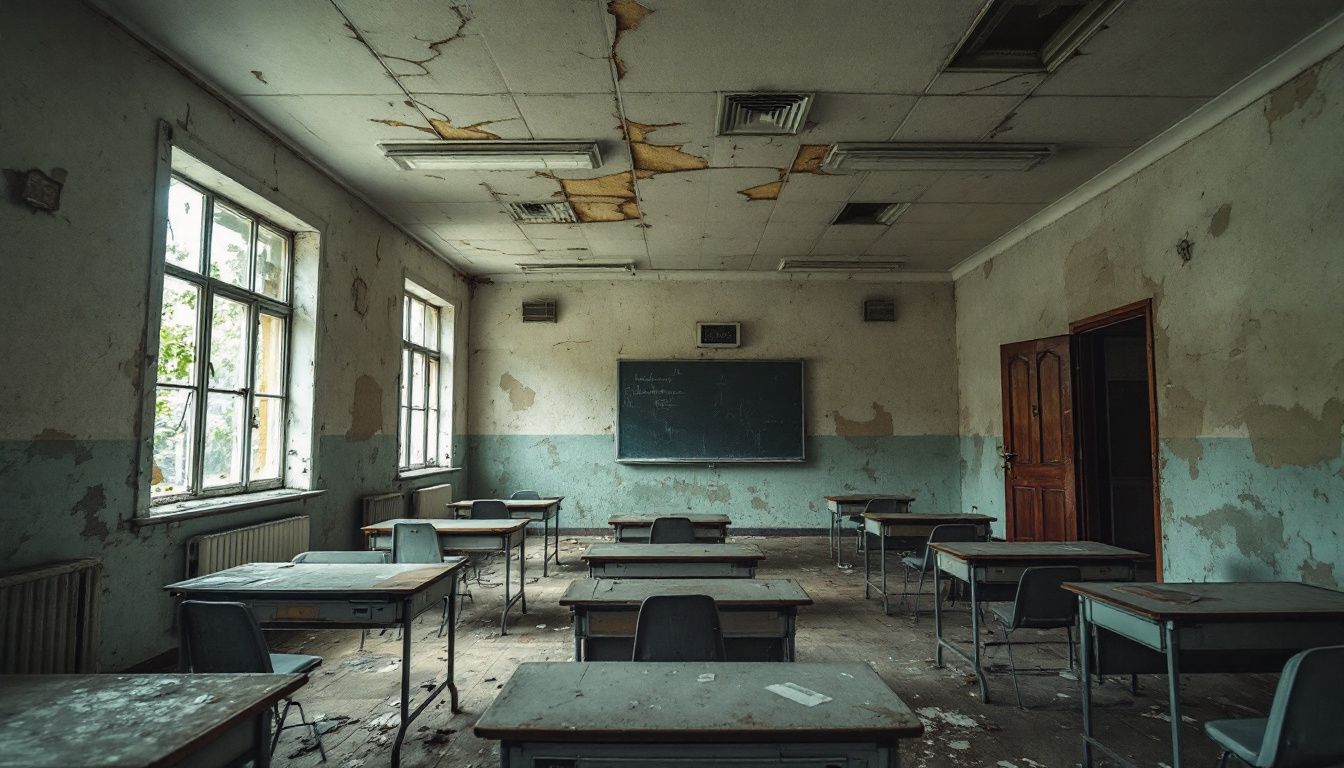
DfE Asbestos Management in Schools: What Every Dutyholder Needs to Know
Thousands of schools across England and Wales are sitting on a hidden legacy — asbestos-containing materials (ACMs) woven into the very fabric of buildings constructed before 2000. For headteachers, governors, academy trust leaders, and local authorities, DfE asbestos management in schools is not a box-ticking exercise. It is a legal duty, and getting it wrong puts children, staff, and contractors at serious risk.
Asbestos was used extensively in British construction from the 1950s through to the 1990s. Ceiling tiles, floor tiles, pipe lagging, sprayed coatings, and asbestos insulating board (AIB) all found their way into school buildings during that era. Many of those materials are still there today.
Why Asbestos in Schools Is a Serious and Ongoing Concern
Asbestos-related diseases — mesothelioma, lung cancer, and asbestosis — have a latency period of several decades. That means someone exposed to asbestos fibres as a child in a school building may not develop symptoms until well into adulthood. The danger is not always visible, and that is precisely what makes it so difficult to manage without a structured approach.
When ACMs are in good condition and left undisturbed, they pose a lower immediate risk. The danger escalates when materials are damaged, deteriorating, or disturbed — for example, during maintenance work, renovation, or even through everyday wear and tear in a busy school corridor.
Teachers, caretakers, and maintenance workers are among the groups most regularly exposed to asbestos in educational settings. Without clear information about where ACMs are located and what condition they are in, even routine tasks like drilling into a wall or replacing a ceiling tile can become a serious hazard.
The Legal Framework Behind DfE Asbestos Management in Schools
The legal backbone of asbestos management in schools is the Control of Asbestos Regulations, which place a duty on those who own, occupy, or manage non-domestic premises — including schools — to manage any asbestos present. Regulation 4, often referred to as the “duty to manage”, is the key provision every school dutyholder must understand.
The Department for Education has published specific guidance on asbestos management in schools, which sits alongside the Health and Safety Executive’s own technical guidance document, HSG264. Together, these documents set out what good asbestos management looks like in an educational setting.
The core legal obligations under the duty to manage include:
- Identifying whether ACMs are present in the school building
- Assessing the condition and risk of any ACMs found
- Producing and maintaining an asbestos register
- Developing and implementing an asbestos management plan
- Providing information about ACM locations to anyone who may disturb them
- Reviewing and updating the management plan regularly
Failure to comply can result in substantial fines and, far more seriously, preventable harm to the people who use the building every day.
The Role of HSG264
HSG264 is the HSE’s definitive guide to asbestos surveying. It sets out the methodology surveyors must follow when identifying and assessing ACMs, and it defines the survey types used in schools.
Any surveyor working in a school should be operating in full compliance with HSG264. If they are not, the resulting report may not be legally defensible — and it certainly will not give you the reliable information you need to protect the building’s occupants.
Who Is the Dutyholder in a School?
One of the most common sources of confusion around DfE asbestos management in schools is the question of who actually holds the legal duty. The answer depends on the type of school.
- Community and voluntary-controlled schools: The local authority is typically the dutyholder, though responsibilities may be delegated to the school where budgets are devolved.
- Academies and free schools: The academy trust holds the duty. This includes multi-academy trusts (MATs) managing several sites.
- Voluntary-aided and foundation schools: The governing body is responsible.
- Independent schools: Responsibility falls to the proprietors, governors, or trustees.
In practice, many schools operate with shared responsibilities between the local authority and the school itself. What matters is that someone with appropriate authority and competence is clearly assigned the role — and that they are actually discharging their duties, not just nominally holding the title.
Whoever holds the duty must ensure that asbestos information is readily accessible to anyone who might disturb ACMs. That includes caretakers, maintenance contractors, and construction workers. Providing that information is not optional — it is a legal requirement.
The Types of Asbestos Survey Schools Need
Not all asbestos surveys are the same, and choosing the right type for the right situation is essential. Using the wrong survey type — or relying on an outdated one — can leave your school exposed to serious risk and potential enforcement action.
Management Survey
A management survey is the standard survey required to locate and assess ACMs in a school building under normal use. It is designed to identify materials that could be damaged or disturbed during everyday activities, and it forms the basis of the asbestos register and management plan.
Every school that may contain asbestos should have a current, up-to-date management survey on file. This is the starting point for all asbestos management activity.
Refurbishment and Demolition Survey
Before any refurbishment, renovation, or demolition work takes place in a school, a refurbishment survey must be carried out in the areas affected. This is a more intrusive survey, designed to locate all ACMs before work begins — including those hidden behind walls, above ceilings, or beneath floors.
Many asbestos incidents in schools occur during building works when contractors disturb materials that were not identified in advance. Where full demolition is planned, a demolition survey is required to cover the entire structure before any work commences.
Re-inspection Survey
Once ACMs have been identified and a management plan is in place, those materials need to be monitored over time. A re-inspection survey assesses the current condition of known ACMs and updates the risk rating accordingly.
The DfE guidance recommends re-inspections at least every 12 months, though higher-risk materials may need more frequent checks. Regular re-inspections are not just good practice — they are a core part of the duty to manage asbestos in schools.
What Should an Asbestos Management Plan Include?
The asbestos management plan is the living document at the heart of DfE asbestos management in schools. It is not a report that gets filed away and forgotten — it needs to be actively used, regularly reviewed, and updated whenever circumstances change.
A robust asbestos management plan for a school should include:
- A full asbestos register listing all identified ACMs, their location, type, condition, and risk rating
- A clear plan of action for each ACM — whether that is monitoring, encapsulation, or removal
- Details of who holds dutyholder responsibility and their contact information
- Records of all inspections, re-inspections, and any work carried out on or near ACMs
- Procedures for informing staff, contractors, and others about ACM locations before any work begins
- Emergency procedures in the event of accidental disturbance or damage to ACMs
- A schedule for future re-inspections and plan reviews
The plan should be stored somewhere accessible — not locked in a filing cabinet that nobody can find. Anyone responsible for maintenance or building work needs to be able to consult it before they start.
Asbestos Testing in Schools
Sometimes a dutyholder needs to confirm whether a specific material actually contains asbestos before deciding how to manage it. In these situations, asbestos testing provides a definitive answer through laboratory analysis of a material sample.
For school buildings, professional sampling by a qualified surveyor is always the recommended approach. A surveyor can collect samples safely, without releasing fibres into the environment, and send them to an accredited laboratory for analysis.
If you need a quick preliminary check on a suspect material, an asbestos testing kit can provide a useful starting point — though for any school building where children and staff are present, a full professional survey should always follow. The stakes are simply too high to rely on a single sample alone.
Removal vs. Management in Place: What Does the Guidance Say?
A common question from school dutyholders is whether asbestos should be removed or managed in place. The honest answer is: it depends on the specific circumstances.
Where ACMs are in good condition, are not likely to be disturbed, and pose a low risk, managing them in place is often the appropriate course of action. Removal itself carries risks — disturbing materials during the removal process can release fibres if not carried out correctly by a licensed contractor.
However, where materials are deteriorating, are in high-traffic areas, or are at risk of damage during planned works, asbestos removal by a licensed contractor is often the safer long-term solution. The decision must always be based on a proper risk assessment — not cost alone, and not the assumption that leaving it alone is always the safest option.
Practical Steps for School Dutyholders Right Now
If you are a dutyholder responsible for asbestos management in a school, here is where to focus your attention immediately:
- Check whether a current management survey exists. If it is more than a few years old or does not cover the whole building, it needs updating.
- Review the asbestos register. Is it accurate? Does it reflect any changes to the building since the last survey?
- Confirm re-inspections are scheduled. Known ACMs need to be checked regularly — at least annually.
- Ensure contractors are informed before any work begins. This is a legal requirement, not a courtesy.
- Train relevant staff. Caretakers and site managers should understand what ACMs are present, where they are, and what to do if they suspect disturbance.
- Book a refurbishment survey before any building work. Even small-scale works can disturb hidden ACMs.
Taking these steps proactively is far less costly — financially and in terms of risk — than responding to an enforcement notice or, worse, an exposure incident.
HSE Inspections and Enforcement in Schools
The Health and Safety Executive takes asbestos management in schools seriously. HSE inspectors regularly visit educational premises to check that dutyholders are meeting their obligations under the Control of Asbestos Regulations.
Where failings are found, the HSE has the power to issue improvement notices, prohibition notices, and prosecute dutyholders. The most common failings identified during inspections include out-of-date asbestos registers, management plans that are not being actively implemented, and failure to provide asbestos information to contractors before work begins.
None of these failings are difficult to address with the right support — but they all require a dutyholder who is engaged and proactive, not reactive.
Other Safety Obligations in School Buildings
Asbestos management does not exist in isolation. Schools have a range of building safety obligations, and it is worth ensuring these are addressed alongside your asbestos duties.
A fire risk assessment is another legal requirement for all non-domestic premises, including schools, and should be reviewed regularly alongside your asbestos management plan. Taking a joined-up approach to building safety — rather than treating each obligation as a separate task — makes compliance more manageable and helps ensure nothing falls through the gaps.
When building work is planned, the interaction between asbestos management and contractor safety becomes particularly important. Ensure that any principal contractor or CDM coordinator is provided with full asbestos information before work commences on site.
How Supernova Asbestos Surveys Can Help
At Supernova Asbestos Surveys, we have completed over 50,000 surveys across the UK, including a significant number in educational settings. We understand the specific pressures school dutyholders face — tight budgets, complex building histories, and the responsibility of keeping children and staff safe.
Our qualified surveyors operate in full compliance with HSG264 and the DfE’s own guidance on asbestos management in schools. Whether you need a management survey to establish your baseline, a refurbishment survey ahead of building works, or annual re-inspections to keep your management plan current, we can help.
We also offer professional asbestos testing services where laboratory confirmation is needed, and we work alongside licensed removal contractors where materials need to come out safely.
To discuss your school’s asbestos management requirements, call us on 020 4586 0680 or visit asbestos-surveys.org.uk. We will give you straightforward advice and a clear plan of action — no jargon, no unnecessary upselling.
Frequently Asked Questions
What is the DfE guidance on asbestos management in schools?
The Department for Education has published specific guidance for schools in England on how to manage asbestos-containing materials. It sits alongside the HSE’s HSG264 document and the Control of Asbestos Regulations. Together, these set out the legal obligations for dutyholders, the types of surveys required, and how asbestos management plans should be maintained and reviewed. All school dutyholders should be familiar with this guidance and ensure their asbestos management arrangements comply with it.
How often should a school’s asbestos be re-inspected?
The DfE guidance recommends that known asbestos-containing materials are re-inspected at least every 12 months. Higher-risk materials — those in poorer condition or in areas subject to greater disturbance — may need more frequent monitoring. The results of each re-inspection should be recorded and used to update the asbestos management plan accordingly.
Who is responsible for asbestos management in an academy school?
In an academy or free school, the academy trust holds the legal duty to manage asbestos under the Control of Asbestos Regulations. For multi-academy trusts (MATs), this responsibility extends across all sites within the trust. It is essential that the trust has a clearly identified dutyholder for each site and that asbestos management plans are in place and actively maintained for every building.
Does a school need a survey before refurbishment work?
Yes. Before any refurbishment, renovation, or intrusive maintenance work takes place, a refurbishment survey must be carried out in the affected areas. This is a legal requirement under the Control of Asbestos Regulations. A standard management survey is not sufficient for this purpose — a refurbishment survey is more intrusive and specifically designed to locate ACMs that may be hidden within the structure of the building.
What should a school do if asbestos is accidentally disturbed?
If asbestos-containing material is accidentally disturbed or damaged, the area should be vacated immediately and access restricted. The incident should be reported to the dutyholder and, depending on the severity, may need to be reported to the HSE. A licensed asbestos contractor should be called to assess the situation and carry out any necessary remediation. The school’s asbestos management plan should include emergency procedures for exactly this scenario — if it does not, that gap needs to be addressed urgently.