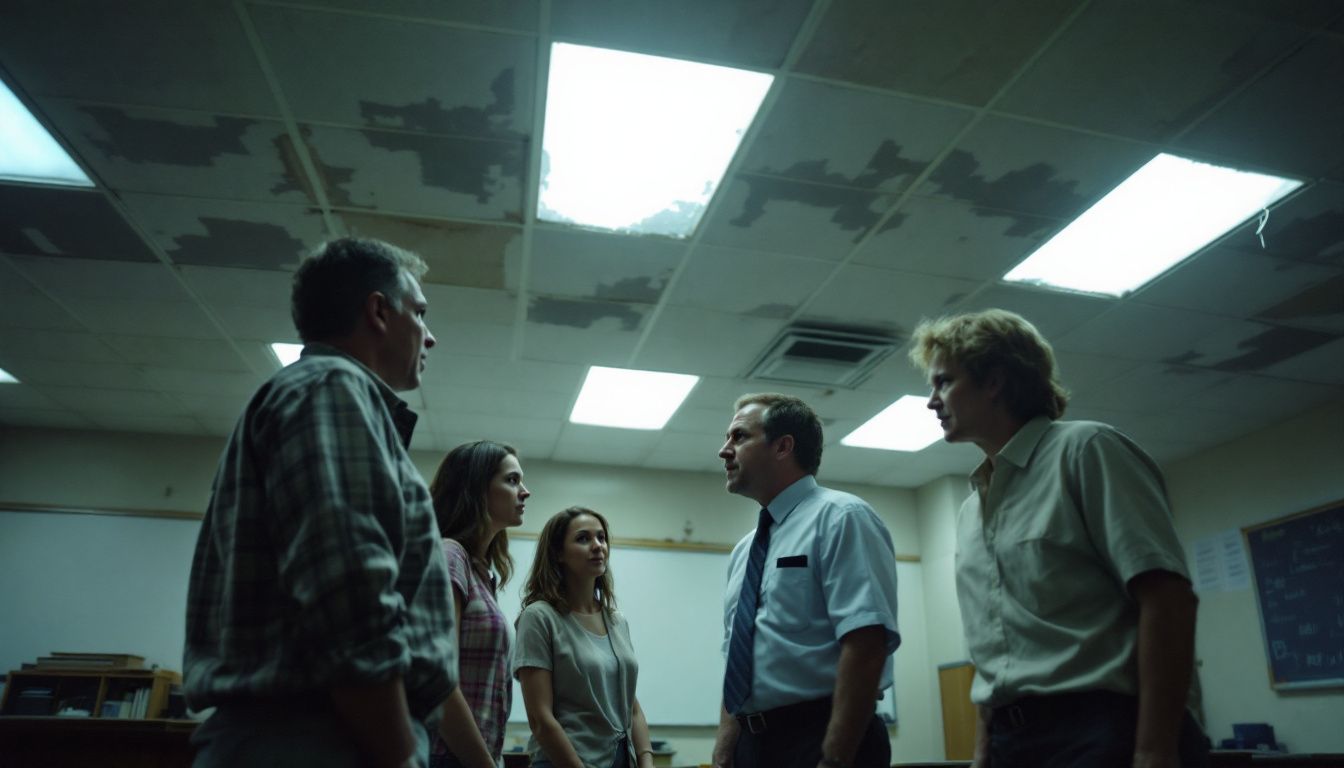
Asbestos in Schools: What Every Duty Holder, School Leader and Parent Needs to Know
Thousands of UK school buildings were constructed before the 1999 ban on asbestos use — and a significant proportion still contain asbestos-containing materials (ACMs) today. Asbestos in schools is not a resolved historical footnote. It is an active duty of care issue that sits squarely on the shoulders of headteachers, governors, academy trusts, local authorities, and anyone responsible for maintaining an educational building.
If your school was built before 2000 — and especially if it dates from the 1950s, 60s or 70s — there is a genuine possibility that ACMs are present somewhere in the structure. The question is not whether to take it seriously. The question is whether you are managing it correctly.
Why Asbestos in Schools Remains an Active Risk
Asbestos use in UK construction peaked during the post-war decades. Schools built during this period — and there are tens of thousands of them still in use — were routinely constructed with materials containing asbestos fibres. Ceiling tiles, floor tiles, pipe lagging, roof panels, wall partitions, spray coatings and boiler insulation all commonly incorporated asbestos.
The UK banned the import and use of all asbestos types in 1999. But banning new use did not remove what was already embedded in buildings. Millions of square metres of ACMs remain across the UK’s building stock, and schools represent a substantial portion of that estate.
Asbestos that is in good condition and left completely undisturbed does not automatically present an immediate risk. The danger arises when ACMs are damaged, deteriorating, or disturbed — during maintenance, refurbishment, or even routine activities like fixing a noticeboard to a wall. In a busy school environment, the potential for accidental disturbance is real and constant.
The Health Risks: Why Children and Staff Face Elevated Danger
When ACMs are disturbed, microscopic fibres are released into the air. These fibres are invisible to the naked eye, can remain airborne for hours, and once inhaled, lodge permanently in lung tissue. The body cannot expel them.
The diseases caused by asbestos exposure carry a latency period of between 20 and 50 years. Someone exposed to asbestos fibres during their school years may not develop symptoms until well into adulthood — making the harm difficult to trace and easy to underestimate.
Why Children Face a Heightened Risk
Children’s lungs are still developing. Their respiratory systems are more susceptible to damage from inhaled particles, and because they have more years ahead of them, there is a longer window for a latent disease to develop. A child exposed at age ten may not receive a diagnosis until their fifties or sixties.
School staff face elevated risk too. Teachers, caretakers and maintenance workers who have spent careers in older buildings with deteriorating ACMs carry a genuine long-term occupational health concern that should not be dismissed.
The Diseases Linked to Asbestos Exposure
- Mesothelioma — a cancer of the lining of the lungs, heart or abdomen, almost exclusively caused by asbestos exposure. It is aggressive and currently has no cure.
- Asbestos-related lung cancer — directly attributable to asbestos fibre inhalation, with significantly higher risk in smokers.
- Asbestosis — chronic scarring of the lung tissue causing progressive breathlessness and reduced lung function.
- Pleural plaques and pleural thickening — changes to the lining of the lungs that can cause discomfort and reduced respiratory capacity.
None of these conditions develop overnight. That is precisely what makes asbestos in schools such a serious long-term public health concern — the harm done today may not become visible for decades.
Where Asbestos Is Most Commonly Found in School Buildings
Asbestos was used across school buildings for both structural and fire-protection purposes. Knowing where it most commonly appears helps duty holders prioritise inspection and management activities.
- Ceiling tiles — particularly in corridors, classrooms and sports halls built in the 1960s and 70s
- Floor tiles and adhesive — vinyl floor tiles and the black bitumen adhesive beneath them frequently contain chrysotile asbestos
- Pipe lagging and boiler insulation — found in plant rooms, boiler houses and service ducts
- Roof panels and soffits — asbestos cement was widely used in flat-roofed school buildings
- Wall partitions and linings — particularly in prefabricated CLASP-style buildings common in the post-war period
- Spray coatings — applied to structural steelwork for fire protection; among the most hazardous ACM types
- Textured coatings — some decorative finishes applied to ceilings and walls contain asbestos
- Gutters, downpipes and fascias — asbestos cement was used extensively in external drainage and roofline products
If your school building dates from before 2000 and has not had a professional asbestos survey, you cannot be certain which of these materials are present or what condition they are in.
The Legal Duty to Manage Asbestos in Schools
Managing asbestos in schools is not optional. The Control of Asbestos Regulations place a clear legal duty on the person or organisation responsible for maintaining non-domestic premises — which includes schools — to manage any asbestos present.
Regulation 4 of the Control of Asbestos Regulations requires duty holders to:
- Take reasonable steps to find out whether ACMs are present in the building
- Assess the condition of any ACMs found and the risk they pose
- Prepare and implement a written asbestos management plan
- Maintain an up-to-date asbestos register
- Ensure that anyone who may disturb ACMs — including contractors and maintenance staff — is informed of their location and condition
- Arrange regular monitoring of the condition of ACMs
For schools, the duty holder is typically the employer — which may be the local authority, the academy trust, or the governing body, depending on the school’s status. Regardless of who holds the duty, the obligation is identical: manage asbestos properly or face legal consequences.
Failure to comply can result in prosecution by the Health and Safety Executive (HSE), significant fines, and — more critically — real harm to the children and staff in your care. The HSE’s guidance document HSG264 provides detailed direction on how asbestos surveys should be conducted, and any survey carried out in a school must comply with those standards.
What Type of Asbestos Survey Does a School Need?
Not all asbestos surveys are the same. The type required depends on what the building is being used for and what work is planned. Getting this right is not a technicality — it determines whether you are genuinely protected, legally and practically.
Management Survey
A management survey is the standard survey required to manage asbestos in an occupied building. It identifies the location, extent and condition of ACMs that could be disturbed during normal occupation and routine maintenance.
For most schools, this is the essential starting point — and it is a legal requirement if no survey has previously been carried out. The management survey produces an asbestos register and a risk assessment for each ACM identified. This document must be kept up to date and made available to anyone carrying out work in the building.
Refurbishment Survey
If your school is planning any building work — from a minor classroom refurbishment to a full extension — a refurbishment survey is required before work begins. This is a more intrusive survey that accesses areas normally sealed off, including voids, cavities and structural elements.
Skipping this step is one of the most common ways asbestos fibres are inadvertently released in school buildings. A contractor drilling into a wall or ceiling without knowing what lies behind it can create a serious exposure event. The survey must be completed before contractors start work — not during.
Demolition Survey
Where a school building or part of it is being demolished, a demolition survey is required. This is the most intrusive survey type and must locate all ACMs before any demolition work proceeds. It is a legal requirement, not a recommendation.
Re-inspection Survey
Once an asbestos register is in place, the condition of ACMs must be monitored on a regular basis. A re-inspection survey checks whether previously identified ACMs have deteriorated, been damaged, or had their risk rating changed.
For most schools, annual re-inspections are recommended — though the frequency should reflect the condition and risk rating of the materials present. Skipping re-inspections is a common compliance failure that leaves duty holders exposed.
What Happens During an Asbestos Survey in a School?
When Supernova Asbestos Surveys carries out a survey in a school, we work around the needs of the building and its occupants. Our BOHS P402-qualified surveyors carry out a thorough visual inspection of all accessible areas, taking samples from any materials suspected to contain asbestos using correct containment procedures to prevent fibre release.
Samples are sent to our UKAS-accredited laboratory for analysis under polarised light microscopy (PLM). You receive a detailed written report — including an asbestos register, risk assessment and management plan — typically within three to five working days.
The report is fully compliant with HSG264 guidance and satisfies all legal requirements under the Control of Asbestos Regulations. We understand that schools are busy environments. We schedule surveys to minimise disruption and communicate clearly with site managers and facilities teams throughout the process.
Asbestos Testing: When You Need Answers Quickly
Sometimes a specific material raises concern before a full survey has been commissioned. Our asbestos testing service allows samples to be analysed by our UKAS-accredited laboratory, providing a clear answer on whether asbestos is present in a particular material.
If you need to test a specific material yourself as a first step, our testing kit allows you to collect a sample safely and send it for professional laboratory analysis. This can be a useful preliminary step — though it does not replace a full management survey for legal compliance purposes.
Schools must have a compliant survey in place. Testing a single material does not satisfy the duty under the Control of Asbestos Regulations, and duty holders should not treat it as a substitute for a full survey.
When Is Asbestos Removal the Right Option?
Not every ACM needs to be removed. Asbestos that is in good condition and not at risk of disturbance is often best left in place and managed. Disturbing asbestos unnecessarily can create more risk than leaving it undisturbed.
However, there are clear circumstances where asbestos removal is the appropriate course of action:
- When ACMs are in poor condition and actively deteriorating
- When refurbishment or demolition work will disturb the material
- When the risk rating is high and the material cannot be adequately managed in place
- When the school is being rebuilt or significantly altered
Removal of most ACMs must be carried out by a licensed asbestos removal contractor. This is a legal requirement under the Control of Asbestos Regulations. Attempting to remove asbestos without the correct licence, training and equipment is illegal and extremely dangerous — particularly in an occupied school building.
Fire Risk Assessments and Asbestos: The Connection Schools Often Miss
Schools are required to carry out regular fire risk assessments under the Regulatory Reform (Fire Safety) Order. There is an important connection between fire safety and asbestos management that is frequently overlooked.
Many ACMs in older school buildings were installed specifically for fire protection — pipe lagging, spray coatings on structural steelwork, and fire-resistant ceiling tiles. If these materials are removed or disturbed as part of fire safety improvements without proper asbestos management procedures in place, the result can be a significant fibre release event.
Equally, the findings of a fire risk assessment may identify works that will disturb ACMs. In that situation, a refurbishment survey must be commissioned before any works proceed. The two disciplines — fire safety and asbestos management — must be coordinated, not treated as separate workstreams.
If your school needs both a fire risk assessment and asbestos management support, Supernova can assist with both. Coordinating these assessments under one provider reduces the risk of critical information falling through the gaps.
Practical Steps for School Duty Holders Right Now
If you are responsible for a school building and are unsure about your current asbestos position, here is a clear sequence of actions to take:
- Check whether a current, compliant asbestos register exists. If the building was surveyed more than a few years ago, or the survey was not conducted to HSG264 standards, it may need to be repeated.
- Ensure the register is accessible to all relevant parties. Contractors, caretakers, maintenance staff and site managers must all be able to access it before carrying out any work.
- Schedule a re-inspection if one is overdue. Annual re-inspections are standard practice for most school buildings with known ACMs.
- Brief all contractors before they start work. Any contractor working in your building must be made aware of the asbestos register and the location of any ACMs in their work area.
- Commission a refurbishment survey before any planned works begin. No exceptions — this is a legal requirement and a practical necessity.
- Review your asbestos management plan. It should be a live document, updated whenever conditions change or new information comes to light.
These steps are not bureaucratic box-ticking. They are the practical actions that keep children, staff and contractors safe — and that protect duty holders from serious legal and reputational consequences.
Asbestos in Schools: Common Mistakes That Put Buildings at Risk
Even well-intentioned duty holders can fall into avoidable errors. These are the mistakes Supernova’s surveyors encounter most frequently in school buildings:
- Relying on an outdated survey. An asbestos register produced before HSG264 guidance was established may not meet current standards and should be reviewed.
- Failing to share the register with contractors. A register that exists but is not communicated to workers provides no practical protection.
- Assuming a new-looking building is asbestos-free. Refurbished buildings can contain original ACMs beneath modern finishes. The construction date of the original structure is what matters.
- Treating asbestos management as a one-off task. It is an ongoing duty. Conditions change, materials deteriorate, and the register must reflect the current state of the building.
- Commissioning works without a refurbishment survey. This is one of the most common — and most dangerous — compliance failures in school buildings.
- Underestimating the risk of low-level disturbance. Fixing shelving, replacing light fittings, or running cables through ceiling voids can all disturb ACMs if their location is not known.
Frequently Asked Questions
Does my school legally need an asbestos survey?
Yes. If your school is in a building constructed before 2000, the Control of Asbestos Regulations place a legal duty on the responsible person to take reasonable steps to identify whether ACMs are present. A management survey is the standard mechanism for discharging this duty. The absence of a compliant survey is a breach of the regulations, regardless of whether asbestos is ultimately found.
What should I do if asbestos is discovered during building work?
Stop work immediately. All personnel should leave the affected area, and the area should be sealed off to prevent the spread of fibres. Contact a licensed asbestos surveyor or removal contractor before any work resumes. Do not attempt to clean up or remove the material yourself. The incident may also need to be reported to the HSE depending on the nature and extent of the disturbance.
How often does a school asbestos register need to be updated?
The asbestos register must be reviewed and updated whenever conditions change — for example, if ACMs are disturbed, removed, or found to have deteriorated. In addition, a formal re-inspection survey should be carried out at regular intervals, typically annually for most school buildings with known ACMs. The frequency should be guided by the condition and risk rating of the materials identified in the original survey.
Can asbestos be left in place in a school building?
Yes, in many cases. Asbestos that is in good condition, not at risk of disturbance, and properly managed in accordance with a written management plan can legally and safely remain in place. Removal is not always the right answer — disturbing intact ACMs to remove them can create greater risk than leaving them undisturbed. The decision should be based on a professional risk assessment, not on a general preference for removal.
Who is the duty holder for asbestos in a school?
The duty holder is the person or organisation responsible for maintaining the building. In practice, this varies by school type. For local authority-maintained schools, the duty typically sits with the local authority. For academy trusts, it sits with the trust itself. For independent schools, it is usually the governing body or proprietor. Regardless of structure, the legal obligations under the Control of Asbestos Regulations are the same — and they cannot be delegated away.
Get Expert Asbestos Support for Your School
Supernova Asbestos Surveys has completed over 50,000 surveys across the UK, including a significant number of educational buildings. Our BOHS P402-qualified surveyors understand the specific challenges of working in occupied school environments — from scheduling around term times to communicating clearly with site managers and facilities teams.
Whether you need a management survey to establish your legal baseline, a re-inspection to keep your register current, or a refurbishment survey ahead of planned works, we can help. We also provide asbestos testing and removal support, as well as coordinated fire risk assessments for schools that need both services addressed together.
Call us on 020 4586 0680 or visit asbestos-surveys.org.uk to speak with a qualified surveyor and get the right advice for your school building.