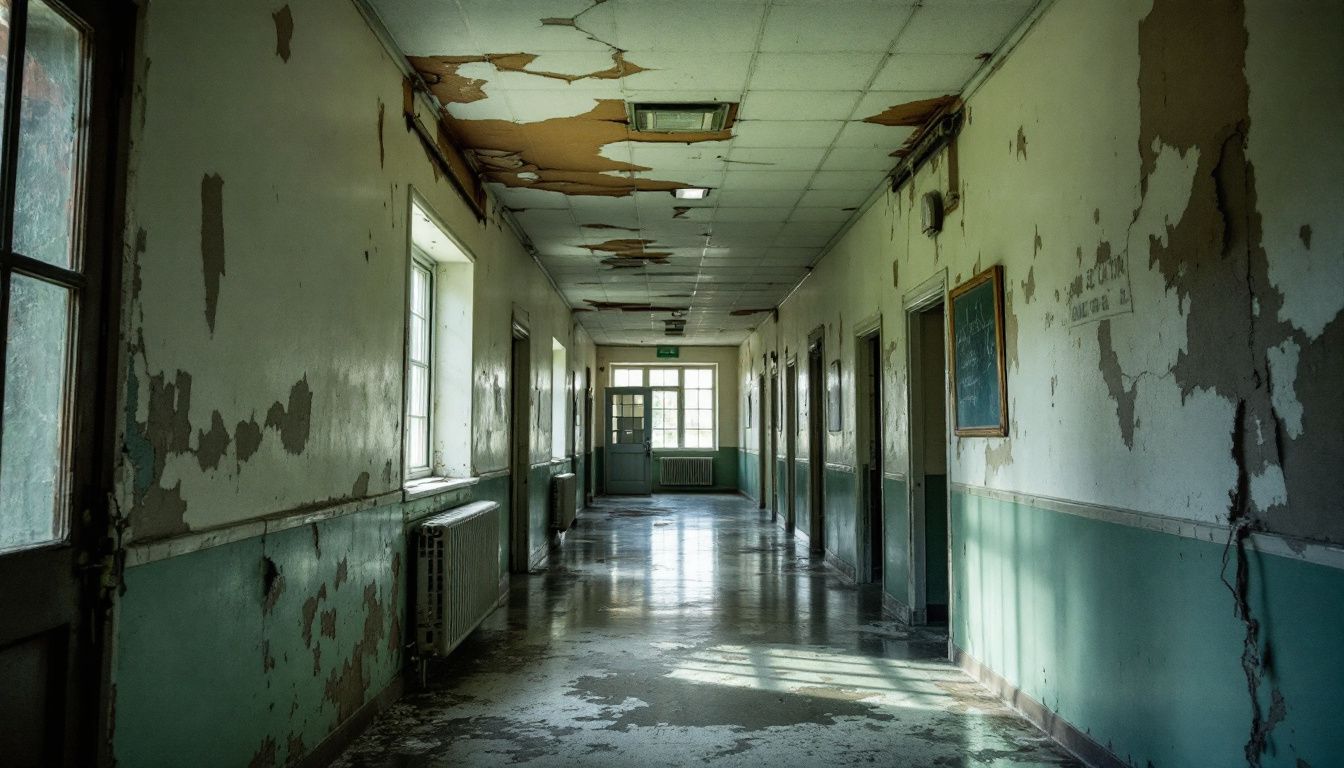
Why Asbestos Surveys for Education Settings Are a Legal and Moral Necessity
Millions of children and staff walk into school buildings every day without giving a second thought to what might be lurking inside the walls, ceiling tiles, or floor coverings around them. For schools built between the 1950s and 1990s, asbestos-containing materials (ACMs) are a very real possibility — and in many cases, a confirmed reality.
Asbestos surveys for education settings are not optional extras. They are a legal requirement and a fundamental part of keeping everyone on site safe. School governors, academy trust officers, facilities managers, and local authority property teams all carry a stake in getting this right.
The Scale of Asbestos in UK Schools
The UK has one of the largest stocks of asbestos-containing buildings in the world, and schools are no exception. Asbestos was widely used in construction throughout the post-war period for its fire-resistant and insulating properties — cheap, durable, and considered highly effective until its devastating health consequences became undeniable.
In school buildings, ACMs can be found in a wide range of locations, including:
- Ceiling tiles and suspended ceiling systems
- Pipe and boiler lagging
- Floor tiles and the adhesive beneath them
- Roof panels and soffit boards
- Textured coatings on walls and ceilings (such as Artex)
- Partition boards and fire doors
- Insulating boards around structural steelwork
When these materials are in good condition and left undisturbed, the risk of fibre release is low. The danger arises when materials deteriorate with age, are damaged during routine maintenance, or are disturbed during refurbishment work — which is precisely why proactive asbestos management is so critical in education settings.
The Health Risks: Why Schools Cannot Afford to Be Complacent
Asbestos fibres, when inhaled, can cause serious and potentially fatal diseases. These include mesothelioma (a cancer of the lining of the lungs), asbestosis (scarring of lung tissue), and lung cancer.
What makes asbestos particularly insidious is the latency period. Diseases may not develop until 20 to 40 years after exposure, meaning a child exposed in school today may not show symptoms until well into adulthood.
Teachers and support staff who spend years inside older school buildings face an elevated occupational risk if ACMs are not properly managed. Maintenance workers who drill into walls, disturb ceiling tiles, or work in roof spaces without knowing where asbestos is located are at particular risk of direct fibre exposure.
Regular, professionally conducted asbestos surveys for education premises are the most reliable way to identify ACMs, assess their condition, and ensure they are managed before they become a hazard.
Legal Duties: Who Is Responsible in a School Setting?
The legal framework governing asbestos in non-domestic premises is set out in the Control of Asbestos Regulations, supported by the HSE’s definitive guidance document, HSG264. Under these regulations, the duty to manage asbestos falls on the dutyholder — the person or organisation responsible for maintaining the building.
In schools, this responsibility is shared across several parties depending on the type of school.
Local Authority Maintained Schools
For community schools and maintained nurseries, the local authority typically holds the duty to manage asbestos as the building owner. However, the headteacher and governing body have day-to-day management responsibilities and must ensure that any asbestos management plan is understood and followed on site.
Academy Trusts
Academy trusts are responsible for their own premises, including all asbestos management obligations. The trust must ensure that an up-to-date asbestos register is maintained for every school within its portfolio, and that surveys are carried out on the required schedule.
Governors and Senior Leadership
School governors have a governance responsibility to ensure that asbestos management is properly resourced and that the school’s management plan is reviewed regularly. Senior leaders must ensure that all staff — particularly those involved in maintenance — are aware of the asbestos register and do not disturb suspected ACMs without proper assessment.
Facilities Managers and Site Staff
On the ground, it is often the facilities manager or site manager who is the first point of contact for asbestos management. They must know where the asbestos register is kept, understand what it contains, and ensure that any contractor working on the building is shown the register before work begins.
Buildings constructed after the year 2000 are unlikely to contain asbestos, as its use in construction was banned in the UK in 1999. However, complete documentation should still be maintained for these buildings to confirm their asbestos-free status.
Types of Asbestos Surveys for Education Buildings
Not all asbestos surveys are the same. The type of survey required depends on the purpose — whether you are managing an existing building, planning refurbishment works, or carrying out a periodic re-inspection of known ACMs.
Management Survey
A management survey is the standard survey required for all non-domestic premises, including schools. It identifies the location, extent, and condition of ACMs that could be disturbed during normal occupation and maintenance.
The results form the basis of the school’s asbestos register and management plan. This is the survey type that dutyholders must commission as part of their ongoing legal duty to manage.
Refurbishment Survey
Before any refurbishment, renovation, or demolition work takes place in a school, a refurbishment survey must be carried out in the areas to be disturbed. This is a more intrusive survey that involves accessing hidden voids, lifting floor coverings, and sampling all suspect materials.
It is essential that this survey is completed before contractors begin any work — not during or after. Starting work without one puts both workers and pupils at serious risk.
Re-inspection Survey
Once ACMs have been identified, their condition must be monitored over time. A re-inspection survey assesses whether known ACMs have deteriorated, been damaged, or changed in risk rating since the last inspection.
The Control of Asbestos Regulations and HSE guidance recommend that re-inspections are carried out at least annually, though higher-risk materials may require more frequent checks.
Asbestos Testing
Where there is uncertainty about whether a specific material contains asbestos, asbestos testing can be carried out on bulk samples taken from the suspect material. Samples are analysed at a UKAS-accredited laboratory using polarised light microscopy (PLM) to confirm the presence or absence of asbestos fibres and identify the fibre type.
For smaller-scale queries, a testing kit is available, allowing you to collect samples yourself and send them for professional laboratory analysis — a cost-effective option when you need answers quickly.
What a Professional Asbestos Survey Involves
Understanding what happens during a survey helps schools prepare properly and get the most from the process. Here is what to expect when you book a professional asbestos survey for your education setting:
- Booking: Contact the survey company by phone or online. Confirm the size and type of building, the intended use of the survey, and any known areas of concern. A booking confirmation is issued with a scheduled date.
- Site Visit: A BOHS P402-qualified surveyor attends at the agreed time. They carry out a thorough visual inspection of all accessible areas, noting the location and condition of all suspect materials.
- Sampling: Representative samples are taken from materials suspected to contain asbestos using correct containment procedures to prevent fibre release. Sample locations are recorded precisely.
- Laboratory Analysis: Samples are sent to a UKAS-accredited laboratory for analysis under polarised light microscopy. Results confirm the presence, type, and concentration of asbestos fibres.
- Report Delivery: A detailed written report is produced, including a fully risk-rated asbestos register, a site plan showing ACM locations, and a management plan. This is delivered in digital format, typically within three to five working days.
The report must comply with HSG264 guidance and satisfy all requirements under the Control of Asbestos Regulations. Schools should ensure the report is stored securely and made accessible to all relevant staff and contractors.
Building an Effective Asbestos Management Plan for Schools
Commissioning a survey is just the first step. The real work lies in using the findings to build and maintain an effective asbestos management plan.
A robust plan should include:
- A complete asbestos register listing all identified ACMs, their location, type, condition, and risk rating
- A site plan or floor plan clearly marking ACM locations
- A schedule of re-inspection dates for each ACM
- Clear procedures for contractors and maintenance staff — including a requirement to consult the register before any work begins
- Training records confirming that relevant staff have received asbestos awareness training
- A record of any remedial works, encapsulation, or removal carried out
- A review schedule for the management plan itself
The management plan is a living document. It must be updated whenever new information comes to light — whether from a re-inspection, a reported incident, or a change in the building’s use or layout.
Asbestos Awareness Training for School Staff
The Control of Asbestos Regulations place a specific duty on employers to provide asbestos awareness training to any employee who could come into contact with asbestos during their work. In a school setting, this typically includes site managers, caretakers, maintenance staff, and any member of the facilities team.
Training should cover:
- The properties of asbestos and the health risks associated with exposure
- Where asbestos is likely to be found in the building
- What to do if they suspect they have disturbed ACMs
- How to access and use the asbestos register
Awareness training does not qualify staff to work with asbestos — it simply ensures they know how to avoid disturbing it unintentionally. That distinction matters enormously in a busy school environment where maintenance tasks are frequent and varied.
Practical Steps for Schools Starting from Scratch
If your school has no asbestos register in place, or you are unsure whether existing documentation is compliant, here is a straightforward sequence to follow:
- Establish the age and construction history of your buildings. Schools built or refurbished before 2000 should be treated as potentially containing ACMs until proven otherwise.
- Commission a management survey from a qualified, accredited surveyor. This will identify all accessible ACMs and form the foundation of your register.
- Where refurbishment or building works are planned, commission a separate refurbishment survey for the affected areas before any contractor begins work.
- Use the survey findings to produce a formal asbestos management plan and ensure it is communicated to all relevant staff.
- Schedule annual re-inspections for all identified ACMs and update the register following each inspection.
- Provide asbestos awareness training to all staff who may encounter ACMs in the course of their duties.
- Review and update the management plan regularly, and whenever there is a change to the building or its use.
If you already have a register but it has not been updated in several years, treat it as out of date. Conditions change, materials deteriorate, and buildings are modified — a stale register is of limited value and may create a false sense of security.
The Financial and Legal Consequences of Non-Compliance
Failing to manage asbestos properly in a school is not just a health risk — it carries serious legal and financial consequences. The HSE has the power to issue improvement notices, prohibition notices, and prosecute dutyholders who fail to meet their obligations under the Control of Asbestos Regulations.
Fines for non-compliance can be substantial, and in cases where negligence leads to exposure and illness, the consequences can include both criminal prosecution and civil liability claims. Beyond the legal penalties, the reputational damage to a school or academy trust from an asbestos-related incident can be severe and long-lasting.
The cost of a professional asbestos survey is a fraction of the potential liability. Getting it right from the outset is always the more cost-effective approach.
Asbestos Surveys Across the UK: Local Coverage for Education Settings
Whether your school is in a city centre or a rural area, access to a qualified local surveyor matters. Supernova Asbestos Surveys operates nationwide, with dedicated coverage in major urban centres and beyond.
If you manage education premises in the capital, our asbestos survey London service covers schools and colleges across all London boroughs. For education settings in the north-west, our asbestos survey Manchester team provides fast, professional coverage across Greater Manchester and surrounding areas. Schools and academy trusts in the Midlands can rely on our asbestos survey Birmingham service for fully accredited surveys delivered to HSG264 standards.
Wherever your school is located, Supernova can mobilise quickly to meet your survey needs — including urgent requests ahead of planned maintenance or building works.
If you have a specific material you need confirmed before a full survey, our asbestos testing service provides fast, laboratory-backed results from a UKAS-accredited facility.
Work With a Surveyor Who Understands Education Settings
Schools present unique operational challenges for asbestos surveyors. Term-time access must be carefully coordinated to minimise disruption to pupils and staff. Certain areas — such as science labs, sports halls, and older prefabricated classrooms — require particular attention and experience to survey correctly.
Supernova Asbestos Surveys has completed over 50,000 surveys nationwide, including extensive work across education settings of all types — from primary schools and nurseries to further education colleges and university campuses. Our surveyors hold BOHS P402 qualifications, and all laboratory analysis is carried out by UKAS-accredited facilities.
We provide clear, HSG264-compliant reports that give you everything you need to build a robust asbestos management plan — and we are on hand to answer questions after the report is delivered.
To book an asbestos survey for your school or education setting, call us on 020 4586 0680 or visit asbestos-surveys.org.uk. Our team will advise on the right survey type for your needs and arrange a date that works around your school calendar.
Frequently Asked Questions
Are asbestos surveys legally required for schools?
Yes. Under the Control of Asbestos Regulations, dutyholders — including local authorities, academy trusts, and governing bodies — have a legal duty to manage asbestos in non-domestic premises. This includes identifying ACMs through a management survey, maintaining an asbestos register, and monitoring known materials through regular re-inspections. Failure to comply can result in HSE enforcement action, significant fines, and potential criminal prosecution.
How often does a school need an asbestos re-inspection?
HSE guidance under HSG264 recommends that known ACMs are re-inspected at least annually. Higher-risk or deteriorating materials may require more frequent checks. The re-inspection findings must be recorded and used to update the asbestos register and management plan. Schools should not wait for visible deterioration before scheduling a re-inspection — regular monitoring is the whole point.
What happens if asbestos is found in a school?
Finding asbestos does not automatically mean a school must close or that removal is required. In many cases, ACMs that are in good condition and are unlikely to be disturbed can be safely managed in situ. The surveyor’s report will assign a risk rating to each identified material and recommend an appropriate management action — which may be monitoring, encapsulation, or removal depending on the condition and location of the material.
Can school staff collect asbestos samples themselves?
Untrained individuals should not attempt to collect asbestos samples, as improper sampling can release fibres and create a risk of exposure. However, a supervised testing kit is available for situations where a qualified surveyor is collecting samples from a specific suspect material for laboratory analysis. For any formal survey or management purposes, sampling must be carried out by a qualified surveyor following correct containment procedures.
What is the difference between a management survey and a refurbishment survey in a school?
A management survey is carried out to identify ACMs that could be disturbed during normal day-to-day occupation and maintenance. It forms the basis of the school’s asbestos register. A refurbishment survey is required before any building, renovation, or demolition work takes place, and is more intrusive — it involves accessing voids and sampling all suspect materials in the areas to be worked on. Both are required at different stages of a school building’s life, and both must be carried out by a qualified, accredited surveyor.