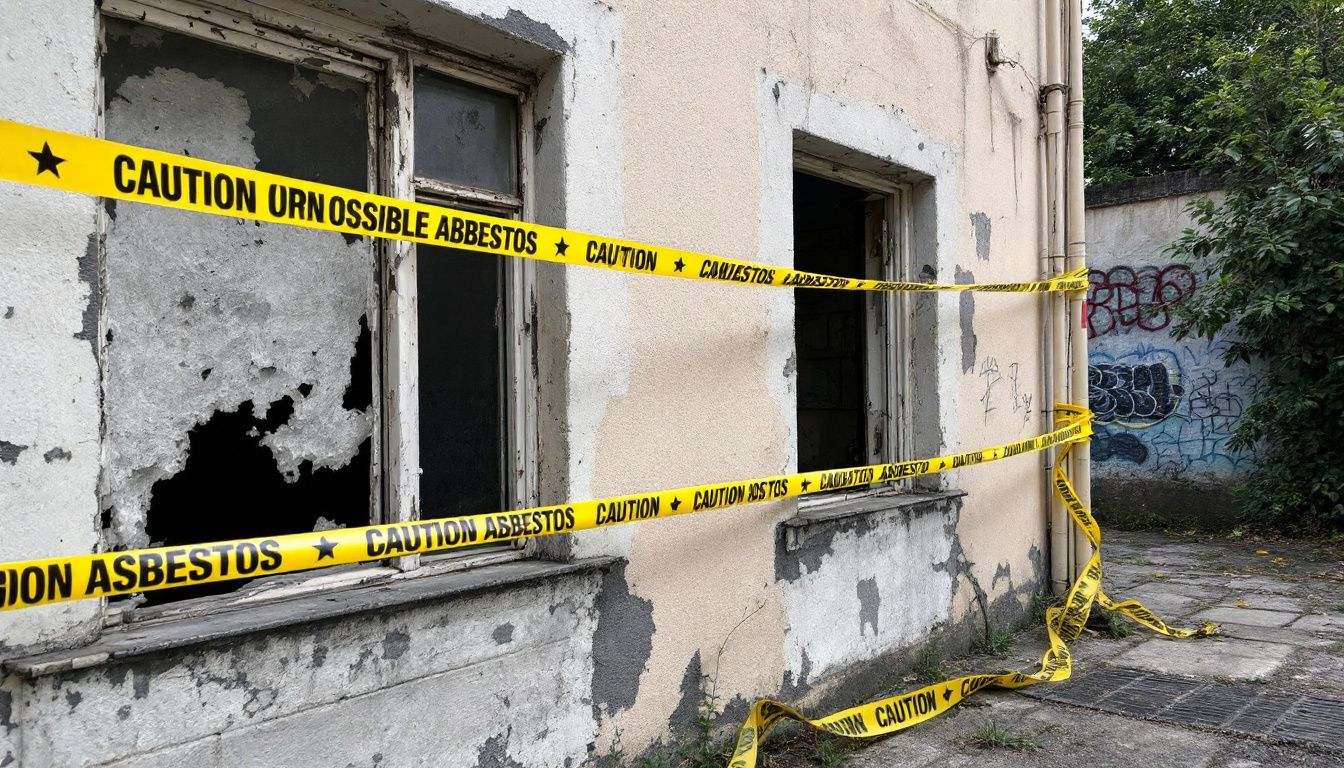
Why Asbestos Remains One of the Biggest Challenges in Property Management
Navigating the complexities of asbestos in property management is something thousands of UK landlords, building owners, and facilities managers face every single day. Older buildings are full of unknowns, and asbestos — hidden inside floor tiles, ceiling boards, pipe lagging, and roof sheets — sits quietly until someone disturbs it. That is when the danger begins.
Asbestos-related diseases remain the leading single cause of work-related deaths in the UK, and the tragedy is that most of those deaths are entirely preventable. The right survey, carried out at the right time, makes all the difference.
Understanding Asbestos and Why It Still Matters
Asbestos is not one single material. It is a collective name for six naturally occurring fibrous minerals, broadly split into two groups: serpentine (which includes Chrysotile, or white asbestos) and amphibole (which includes Amosite — brown asbestos — and Crocidolite, the blue variety).
Chrysotile has a curly, flexible fibre structure. Amphibole types produce sharper, more needle-like fibres that penetrate deep into lung tissue and remain there. All types are hazardous. None are safe to inhale.
The Health Consequences of Asbestos Exposure
What makes asbestos so insidious is the latency period. Diseases caused by exposure — asbestosis, lung cancer, mesothelioma, and pleural thickening — typically take between 10 and 40 years to manifest. By the time symptoms appear, the damage has long since been done.
Smoking dramatically compounds the risk. A person who smokes and has been exposed to asbestos faces a significantly higher chance of developing lung cancer than someone exposed to either risk factor alone. There is no safe level of exposure, which is why the law takes asbestos management so seriously.
The Legal Duty to Manage Asbestos in Non-Domestic Properties
If you own or manage a non-domestic property built before the year 2000, you have a legal duty to manage asbestos under the Control of Asbestos Regulations. This is not optional. Regulation 4 places a clear obligation on duty holders to identify asbestos-containing materials (ACMs), assess the risk they pose, and put a management plan in place.
The HSE’s guidance document HSG264 — Asbestos: The Survey Guide — sets out exactly how surveys should be conducted, what they should cover, and what the resulting report must contain. Any competent surveyor will follow HSG264 as standard.
Who Is the Duty Holder?
The duty holder is typically the building owner, the employer, or whoever has control of the premises through a lease or contract. In practice, this often means the property manager. If you are managing a portfolio of commercial properties, schools, or industrial units, the duty to manage asbestos sits with you.
Failure to comply carries serious consequences — enforcement notices, unlimited fines, and in the most serious cases, prosecution. More importantly, non-compliance puts lives at risk.
What About Domestic Properties?
The duty to manage applies specifically to non-domestic premises. However, common parts of residential buildings — hallways, stairwells, plant rooms, and roof spaces — are covered by the same requirements.
Private homeowners are not legally required to commission a survey, but any contractor working on a pre-2000 home must take reasonable steps to identify ACMs before starting work. Ignorance is not a defence.
Navigating the Complexities of Asbestos in Property Management: Choosing the Right Survey Type
There is no one-size-fits-all approach to asbestos surveying. The survey type depends on what the building is being used for, what work is planned, and what stage of its lifecycle the property is at. Getting this decision wrong can leave you legally exposed and put contractors at risk.
Here is a clear breakdown of the main survey types and when each one is appropriate.
Management Survey
A management survey is the standard survey for buildings in normal day-to-day use. Its purpose is to locate ACMs that could be disturbed during routine maintenance and occupancy — think replacing a light fitting, drilling through a partition wall, or repairing a boiler.
The surveyor carries out a visual inspection and takes samples from suspect materials. The resulting report forms the basis of your asbestos register and management plan. For most non-domestic duty holders, this is where asbestos management starts.
Refurbishment Survey
Before any refurbishment work begins — whether that is fitting out a new office, replacing windows, or stripping back a floor — a refurbishment survey is required. This is a more intrusive survey than a management survey, as the surveyor needs access to all areas that will be disturbed.
That may involve lifting floor coverings, opening up ceiling voids, or breaking into partition walls. The goal is to ensure that no ACMs are disturbed by contractors who are not equipped to handle them safely. A refurbishment survey must be completed before work starts — not during, and certainly not after.
Demolition Survey
If a building is being fully or partially demolished, a demolition survey is required. This is the most thorough and invasive type of survey — every part of the structure must be assessed, including areas that are difficult or dangerous to access.
All ACMs must be identified and removed before demolition work begins. This protects demolition workers, neighbouring properties, and the wider environment from asbestos fibre release.
Re-Inspection Survey
Once ACMs have been identified and a management plan is in place, the work does not stop there. Known asbestos materials must be monitored over time to check whether their condition is deteriorating. A re-inspection survey provides that ongoing monitoring — typically carried out annually, though the frequency depends on the condition and risk rating of the materials involved.
Re-inspections keep your asbestos register up to date and ensure your management plan reflects the current condition of ACMs in the building. Neglecting re-inspections is one of the most common compliance failures we encounter.
Pre-Purchase Asbestos Survey
Buying a commercial property without understanding its asbestos status is a significant financial risk. A pre-purchase survey gives buyers a clear picture of what ACMs are present, their condition, and what management or removal costs they might be inheriting.
This information is invaluable during negotiations and due diligence. It can influence the offer price, the conditions of sale, or the decision to proceed at all.
Project-Specific Survey
For construction sites or complex refurbishment projects, a project-specific survey may be commissioned to assess the asbestos risks associated with a particular scope of work. This is especially relevant where multiple contractors are involved and asbestos management needs to be integrated into the overall construction health and safety plan.
Asbestos Testing: When Sampling Alone Is Needed
Sometimes a full survey is not what is required. If you have a specific material you are concerned about — a textured ceiling coating, a section of floor tile, or a piece of pipe insulation — asbestos testing on that material alone may be all that is needed.
Samples are sent to a UKAS-accredited laboratory for analysis under polarised light microscopy. Results confirm whether asbestos is present and, if so, which type. This is also relevant for contractors who need to verify the status of a specific material before starting work.
For those who prefer a DIY approach in appropriate circumstances, a testing kit is available, allowing you to collect a sample yourself and send it to the laboratory for analysis. This option suits homeowners and landlords wanting to check a specific material without commissioning a full survey.
What Happens During an Asbestos Survey?
Understanding the process helps you prepare your building and your team. Here is what to expect when you book a survey with Supernova Asbestos Surveys.
- Booking: Contact us by phone or via our website. We confirm availability — often within the same week — and send a booking confirmation with all the details you need.
- Site Visit: A BOHS P402-qualified surveyor attends at the agreed time. They carry out a thorough visual inspection of the property, working systematically through all accessible areas.
- Sampling: Representative samples are collected from suspect materials using correct containment procedures to prevent fibre release. The number of samples depends on the property size and the survey type.
- Laboratory Analysis: All samples are sent to our UKAS-accredited laboratory for analysis under polarised light microscopy — the gold standard for asbestos identification.
- Report Delivery: Within 3–5 working days, you receive a detailed written report including an asbestos register, risk assessment, and management plan, fully compliant with HSG264 guidance.
The report is delivered in digital format, making it easy to share with contractors, insurers, or regulatory bodies. It contains everything you need to demonstrate compliance with the Control of Asbestos Regulations.
Managing Asbestos After the Survey
Not every ACM identified in a survey needs to be removed immediately. In many cases, asbestos materials that are in good condition and are unlikely to be disturbed can be safely managed in situ. The management plan sets out how this should be done — regular monitoring, restricting access, and ensuring contractors are informed before any work begins.
This approach is entirely legitimate under the Control of Asbestos Regulations. Managing in situ is often the most practical and cost-effective solution, provided the materials are stable and properly monitored.
When Asbestos Removal Is Necessary
Where removal is necessary — because materials are in poor condition, because refurbishment is planned, or because the risk is assessed as unacceptable — asbestos removal must be carried out by a licensed contractor. High-risk materials such as sprayed coatings and pipe lagging require a licensed contractor by law.
Other materials may be removed by a trained and competent non-licensed contractor, but the survey report will make clear what is required. After removal, a clearance certificate is issued confirming the area is safe to reoccupy, and the asbestos register must be updated to reflect the removal.
Fire Risk and Asbestos: An Overlooked Combination
Asbestos management and fire safety often go hand in hand in older buildings. Many of the same building materials that may contain asbestos — ceiling tiles, fire doors, and insulation boards — are also part of the passive fire protection system. Disturbing these materials without proper assessment creates a dual hazard.
If your building requires a fire risk assessment alongside asbestos management, Supernova can help with both. Combining these assessments where possible saves time and ensures a joined-up approach to building safety.
Common Mistakes Property Managers Make with Asbestos
Even experienced property managers make avoidable errors when it comes to asbestos compliance. Being aware of these pitfalls can protect you from enforcement action, costly remediation, and — most importantly — harm to the people in your buildings.
- Assuming a building is asbestos-free without evidence. Unless a full survey has been carried out and returned a clear result, you cannot assume. Age alone is not proof.
- Using an outdated survey. A management survey carried out years ago may no longer reflect the current condition of ACMs. Re-inspections exist for a reason.
- Commissioning the wrong survey type. Using a management survey to clear a refurbishment project is not compliant. The survey type must match the intended activity.
- Failing to share the asbestos register with contractors. Every contractor working on your building must be informed of known ACMs before they start. This is a legal requirement under the Control of Asbestos Regulations.
- Treating asbestos management as a one-off exercise. An asbestos register is a living document. It needs to be reviewed, updated, and acted upon — not filed away and forgotten.
- Delaying action on deteriorating materials. If a re-inspection flags that an ACM is in worsening condition, prompt action is required. Waiting creates greater risk and greater liability.
Building a Practical Asbestos Management Strategy
For property managers overseeing multiple sites, a consistent, documented approach to asbestos management is essential. Ad hoc decisions and site-by-site inconsistency are where compliance gaps appear.
A practical strategy should include the following elements:
- A current, HSG264-compliant asbestos register for every non-domestic property in your portfolio
- A written management plan for each site, reviewed at least annually
- Scheduled re-inspections built into your maintenance calendar
- A clear contractor induction process that includes asbestos awareness
- A defined escalation procedure for when ACMs are found in unexpected locations or deteriorating condition
- Records of all surveys, re-inspections, and any remedial work carried out
If you are unsure whether your current documentation meets regulatory requirements, the most straightforward step is to commission a fresh survey and use that as the foundation for a compliant management plan going forward.
For those who need to verify the status of a specific suspect material quickly, asbestos testing provides a fast, accurate answer without the need for a full site survey.
Why Choosing the Right Surveying Partner Matters
Not all asbestos surveys are equal. The quality of the survey report — and the competence of the surveyor who produces it — directly affects the quality of the decisions you make afterwards. A poorly conducted survey can leave ACMs unidentified, creating hidden risk and potential legal liability.
When selecting a surveying company, look for the following:
- Surveyors holding BOHS P402 qualification as a minimum
- UKAS-accredited laboratory analysis for all samples
- Reports that are fully compliant with HSG264
- Clear turnaround times and transparent pricing
- Experience across the property types in your portfolio — commercial, industrial, educational, residential
Supernova Asbestos Surveys has completed over 50,000 surveys nationwide. Our surveyors are qualified, our laboratory is UKAS-accredited, and our reports are built to stand up to regulatory scrutiny. We cover the full range of survey types and can advise on the most appropriate approach for your specific situation.
Frequently Asked Questions
Do I need an asbestos survey if my building was built after 2000?
Buildings constructed after 1999 are very unlikely to contain asbestos, as its use in construction was effectively banned in the UK by that point. However, if there is any doubt about the construction date or materials used — particularly in a building that has been extensively refurbished — a survey is still the safest course of action. If you are unsure, contact Supernova and we can advise you.
How often does an asbestos management survey need to be updated?
The initial management survey establishes your asbestos register, but it does not replace the need for ongoing monitoring. Known ACMs should be re-inspected at least annually — or more frequently if they are in a poor or deteriorating condition. The re-inspection survey updates the register and ensures your management plan remains current and compliant.
Can I remove asbestos myself?
In most cases, no. High-risk materials — including sprayed coatings, lagging, and insulating board — must be removed by a licensed contractor under the Control of Asbestos Regulations. Some lower-risk materials may be removed by a trained, competent non-licensed operative, but you must never attempt removal without first knowing exactly what you are dealing with. A survey or asbestos test will tell you what is present and what level of contractor is required.
What is the difference between a refurbishment survey and a management survey?
A management survey is designed for buildings in normal use — it identifies ACMs that could be disturbed during routine maintenance. A refurbishment survey is required before any intrusive work takes place, and it is more thorough because the surveyor needs to inspect areas that will actually be disturbed by the planned works. Using a management survey to sign off a refurbishment project is not compliant and can put contractors at serious risk.
How long does an asbestos survey take?
Survey duration depends on the size, type, and complexity of the building. A straightforward management survey of a small commercial premises might take two to three hours. A large industrial facility or a demolition survey could take considerably longer. Supernova will give you a clear indication of the expected duration when you book, and our reports are typically delivered within 3–5 working days of the site visit.
Get Your Asbestos Survey Booked Today
Whether you are managing a single commercial unit or a large property portfolio, Supernova Asbestos Surveys has the expertise, qualifications, and track record to support your asbestos compliance obligations. With over 50,000 surveys completed nationwide, we understand the practical realities of property management and deliver reports that are clear, compliant, and actionable.
Call us on 020 4586 0680, visit asbestos-surveys.org.uk, or book a survey online today. Our team is ready to help you manage asbestos safely, legally, and with minimum disruption to your operations.