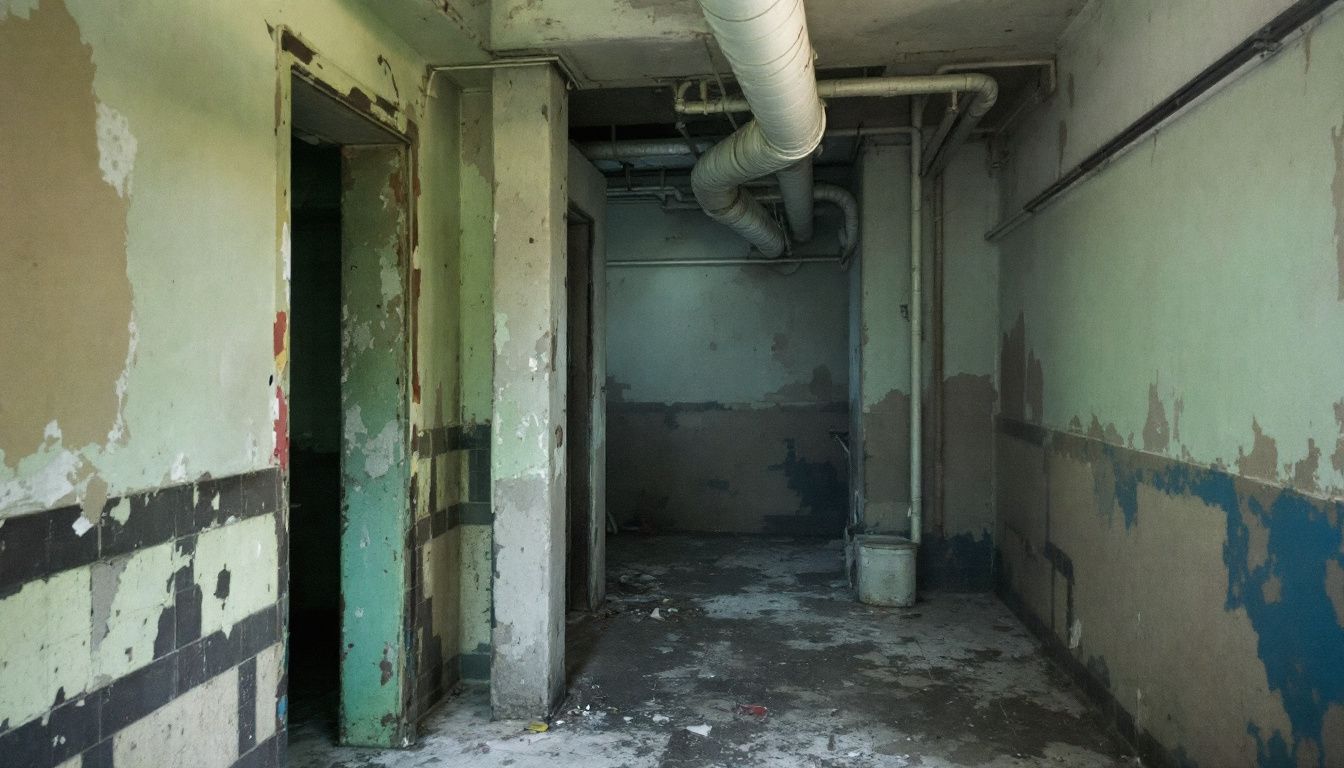
Why Asbestos Surveys Belong at the Heart of Every Property Management Plan
If you manage a building constructed before 2000, asbestos is not a theoretical concern — it is a legal responsibility. The essential steps including asbestos surveys in property management plans are not optional extras; they are the backbone of a compliant, safe building management strategy. Get them right and you protect occupants, protect yourself, and keep your property legally sound.
Asbestos-containing materials (ACMs) were used extensively in UK construction throughout the twentieth century. Ceiling tiles, pipe lagging, floor tiles, roof sheeting, textured coatings — the list is long. When those materials are disturbed or deteriorate, they release fibres that cause diseases including mesothelioma and lung cancer. Neither condition has a cure.
This is precisely why embedding asbestos surveys into your property management plan is not a box-ticking exercise. It is the foundation of everything else.
Your Legal Obligations as a Property Manager
The Control of Asbestos Regulations places a duty to manage asbestos on anyone responsible for non-domestic premises. That means owners, managing agents, and facilities managers all have skin in the game.
Regulation 4 — the duty to manage — requires you to:
- Identify whether ACMs are present in your premises
- Assess the condition and risk associated with any ACMs found
- Produce and maintain a written asbestos management plan
- Share that information with anyone who may disturb those materials
- Review and update the plan regularly
The HSE’s guidance document HSG264 sets out exactly how surveys should be conducted to satisfy these obligations. Supernova Asbestos Surveys follows HSG264 standards on every survey we carry out.
Failure to comply is not just a paperwork issue. Enforcement action, prosecution, and significant fines are all real consequences — and more importantly, so is harm to the people in your building.
The Essential Steps Including Asbestos Surveys in Property Management Plans
Breaking the process down into clear stages makes it manageable. Here is how a structured approach looks in practice.
Step 1: Define the Scope and Choose the Right Survey Type
Not all asbestos surveys are the same, and selecting the wrong type wastes time and money — or worse, leaves dangerous gaps in your knowledge. The two main survey types for property managers are:
- Management survey: The standard survey for properties in normal occupation. It identifies ACMs that could be disturbed during routine maintenance and provides the information needed to build your asbestos register.
- Refurbishment survey: Required before any intrusive work, renovation, or structural alteration. It is more invasive and covers areas that will be disturbed during the works.
If you are unsure which applies to your situation, speak to a qualified surveyor before committing. Getting this decision right from the outset shapes everything that follows.
Step 2: Appoint a Qualified Surveyor
Your surveyor must hold the appropriate qualifications — specifically BOHS P402 certification, which is the British Occupational Hygiene Society’s gold standard for asbestos surveying. Cutting corners here undermines the entire process.
Supernova’s surveyors hold P402, P403, and P404 qualifications. When your surveyor attends site, they will carry out a thorough visual inspection, identify suspect materials, and collect representative samples using correct containment procedures.
Step 3: Sample and Test Suspect Materials
Samples collected during the survey are sent for analysis at a UKAS-accredited laboratory. Polarised light microscopy (PLM) is the standard analytical method used to identify asbestos fibre types. Only UKAS-accredited labs can provide legally defensible results.
If you need rapid confirmation on a specific material before a surveyor attends, a postal testing kit is available for situations where DIY sampling is permitted — though this is not a substitute for a full survey. For a broader overview of the analytical process, our dedicated asbestos testing page covers the detail you need.
Step 4: Compile the Asbestos Register
Once sampling and analysis are complete, the surveyor produces a written report. This report forms the basis of your asbestos register — a document that must be accessible to anyone who may disturb ACMs in your building.
A well-constructed register includes:
- The location of every ACM identified
- The type of asbestos present
- The condition and risk rating of each material
- Photographic evidence
- Recommended control measures
This register is a live document. It is not something you file away and forget.
Step 5: Incorporate Findings into Your Management Plan
The asbestos register feeds directly into your broader property management plan. At this stage, you translate survey findings into practical action:
- Prioritise any ACMs in poor condition for remediation or encapsulation
- Implement access restrictions around high-risk areas
- Ensure all maintenance contractors are briefed on ACM locations before they start work
- Display warning labels where appropriate
- Establish a training programme so building staff understand the risks and procedures
Risk assessments should identify likely exposure scenarios and recommend proportionate control measures. Restricted access, protective equipment, and clear hazard communication are all standard tools in the property manager’s kit.
Step 6: Schedule Regular Re-Inspections
An asbestos register is only as useful as its most recent update. ACMs that are managed in place — rather than removed — must be re-inspected regularly to check their condition has not deteriorated.
The standard recommendation is a re-inspection survey every 6 to 12 months, depending on the condition and risk rating of the materials involved. This allows your surveyor to assess whether conditions have changed and whether your management plan needs updating.
Skipping re-inspections is one of the most common compliance failures in property management. Do not let a previously stable ACM deteriorate unnoticed.
Step 7: Plan Ahead for Demolition
If your building is ever earmarked for significant structural alteration or full demolition, a standard management survey will not suffice. A demolition survey is required before any such works begin.
This is a legal requirement under the Control of Asbestos Regulations and must be completed before demolition contractors are permitted on site. Planning this survey well in advance avoids costly delays and ensures that any ACMs are properly dealt with before the structure is touched.
What the Survey Process Looks Like in Practice
Understanding what actually happens when you book a survey removes uncertainty and helps you plan around it. Here is how Supernova Asbestos Surveys handles the process from start to finish.
- Booking: Contact us by phone or online. We confirm availability — often within the same week — and send a booking confirmation.
- Site visit: A BOHS P402-qualified surveyor attends at the agreed time and carries out a thorough inspection of all accessible areas.
- Sampling: Representative samples are collected from suspect materials using correct containment procedures to prevent fibre release.
- Laboratory analysis: Samples are analysed under PLM at our UKAS-accredited laboratory.
- Report delivery: You receive a detailed asbestos register and risk-rated management plan in digital format within 3 to 5 working days.
The report is fully compliant with HSG264 guidance and satisfies all legal requirements under the Control of Asbestos Regulations.
Integrating Asbestos Management with Wider Building Safety
Asbestos management does not sit in isolation. It forms part of a broader building safety framework that property managers are responsible for maintaining.
A fire risk assessment is a separate but equally important legal requirement for non-domestic premises. Both documents should be treated as live, regularly reviewed components of your overall building safety plan.
Where asbestos and fire safety intersect — for instance, where fire-stopping materials or ceiling voids containing ACMs are involved — your surveyor and fire risk assessor need to be aware of each other’s findings. Integrated building safety management is simply better building safety management.
Common Mistakes Property Managers Make with Asbestos Surveys
Knowing what to avoid is just as useful as knowing what to do. These are the errors that come up repeatedly in property management contexts.
- Assuming a previous survey is still valid: Surveys age. If significant time has passed or works have been carried out, a new or updated survey is needed.
- Using the wrong survey type: Commissioning a management survey when a refurbishment survey is required leaves workers at risk and the duty holder exposed.
- Failing to communicate findings to contractors: Every contractor working on your building must be informed of ACM locations before they start. This is a legal requirement, not a courtesy.
- Not scheduling re-inspections: Managed ACMs must be monitored. A one-off survey is not enough if materials are left in place. An annual reinspection survey is the minimum most property managers should be working to.
- Choosing an unqualified surveyor: Reports from unqualified surveyors are not legally compliant and will not hold up under scrutiny.
Survey Costs and What to Expect
Transparent pricing matters when you are managing budgets across a property portfolio. Supernova Asbestos Surveys offers fixed-price surveys with no hidden fees. Here is a guide to standard pricing:
- Management Survey: From £195 for a standard residential or small commercial property
- Refurbishment and Demolition Survey: From £295, covering all areas to be disturbed prior to works
- Bulk Sample Testing Kit: From £30 per sample, posted to you for DIY collection where permitted
- Re-inspection Survey: From £150, plus £20 per ACM re-inspected
- Fire Risk Assessment: From £195 for a standard commercial premises
All prices are subject to property size and location. You can request a free quote online, tailored to your specific requirements.
Why Choose Supernova Asbestos Surveys?
With over 50,000 surveys completed and more than 900 five-star reviews, Supernova Asbestos Surveys is one of the UK’s most trusted asbestos consultancies. Here is what sets us apart:
- BOHS P402/P403/P404 Qualified Surveyors: Every surveyor holds the industry’s gold-standard qualifications.
- UKAS-Accredited Laboratory: All samples are analysed in our accredited lab, ensuring accurate and legally defensible results.
- Same-Week Availability: We understand that surveys are often time-critical and prioritise fast scheduling.
- UK-Wide Coverage: We operate across England, Scotland, and Wales.
- Transparent Pricing: Fixed-price quotes before we begin — no surprises.
- 900+ Five-Star Reviews: Our reputation is built on consistent quality, clear communication, and accurate reports.
Ready to get started? Book a survey online or call us on 020 4586 0680. Our team is ready to help you build a compliant, robust asbestos management plan that genuinely protects your building and everyone in it. Visit us at asbestos-surveys.org.uk.
Frequently Asked Questions
What is the duty to manage asbestos and who does it apply to?
The duty to manage asbestos is set out in Regulation 4 of the Control of Asbestos Regulations. It applies to anyone who has responsibility for non-domestic premises — including owners, managing agents, and facilities managers. It requires you to identify ACMs, assess the risk they pose, create and maintain an asbestos management plan, and share information with those who may disturb the materials.
How often should asbestos surveys be updated?
ACMs that are managed in place should be re-inspected every 6 to 12 months, depending on their condition and risk rating. If significant works are planned or the condition of materials changes, a new survey or updated re-inspection should be commissioned promptly. Your asbestos management plan should specify the re-inspection intervals for each identified ACM.
What is the difference between a management survey and a refurbishment survey?
A management survey is designed for buildings in normal use and identifies ACMs that could be disturbed during routine maintenance activities. A refurbishment survey is required before any intrusive works, renovation, or structural alteration, and involves a more invasive inspection of areas that will be affected by the planned works. Using the wrong survey type can leave workers at risk and the duty holder legally exposed.
Do I need a demolition survey even for partial structural works?
Yes. A demolition survey is required before any significant structural alteration, not just full demolition. If any part of the building fabric is to be removed or substantially altered, a demolition survey must be completed beforehand. This is a legal requirement under the Control of Asbestos Regulations and must be in place before demolition or alteration contractors begin work on site.
Can I collect asbestos samples myself?
In certain limited circumstances, a trained individual may collect samples using a postal testing kit for analysis at a UKAS-accredited laboratory. However, this is not a substitute for a full asbestos survey carried out by a BOHS-qualified surveyor. DIY sampling carries risks if not carried out correctly, and the results will not satisfy your duty to manage obligations on their own. Always seek professional advice if you are unsure.