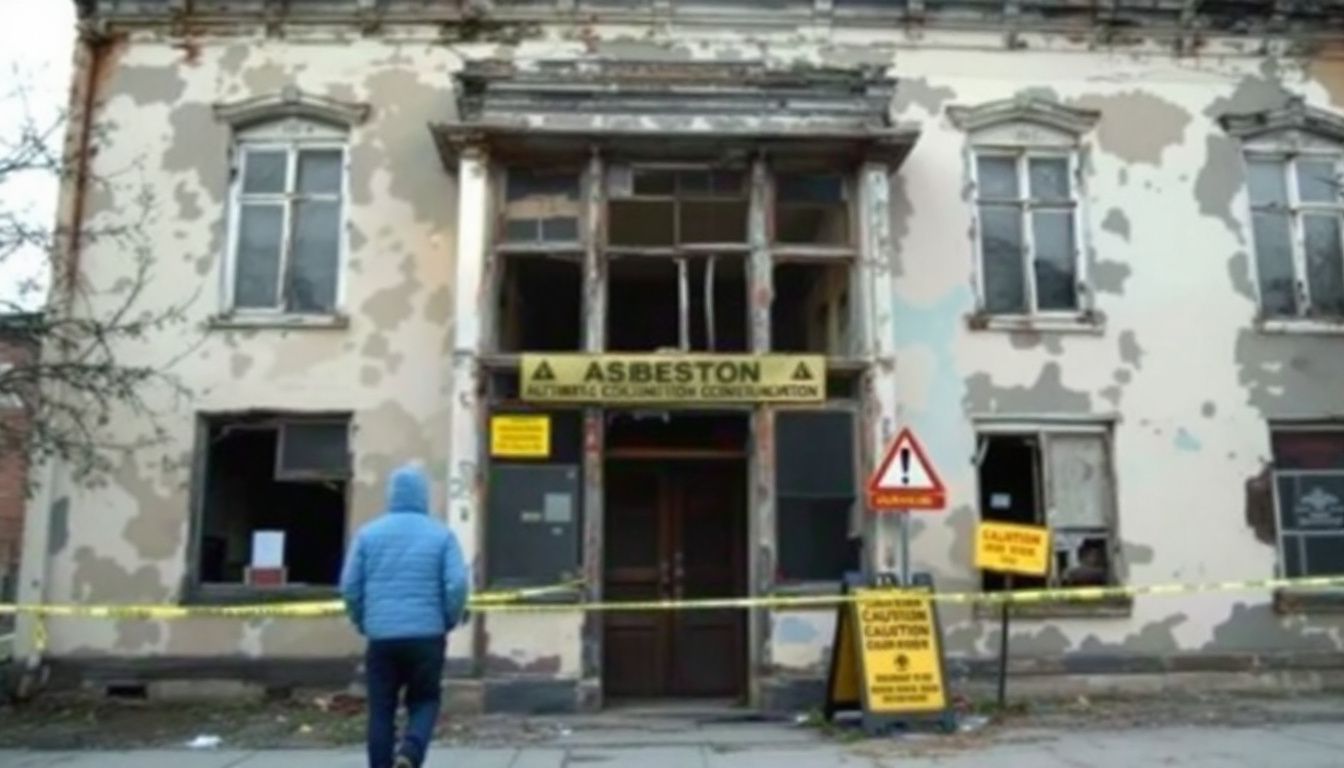
Why a Pre-Refurb Hazardous Assessment Could Save Lives Before You Lift a Tool
The moment a contractor picks up a drill in a pre-2000 building, the risk clock starts ticking. A pre-refurb hazardous assessment is not a bureaucratic formality — it is the single most important step you can take before any renovation work begins in an older property. Get it wrong, and you risk releasing asbestos fibres that cause mesothelioma, asbestosis, and lung cancer. Get it right, and everyone on site goes home safely.
Asbestos was used extensively across UK construction throughout most of the twentieth century. It was cheap, fire-resistant, and incredibly versatile. The problem is that it is now embedded in millions of buildings — in floor tiles, ceiling panels, pipe lagging, roof sheets, and textured coatings — often invisible to the untrained eye.
Before any refurbishment work disturbs those materials, you need to know exactly what you are dealing with.
The Scale of the Problem: Asbestos in UK Buildings
Despite a full ban on asbestos use in the UK coming into force in 1999, the legacy of decades of widespread use remains. A significant proportion of UK buildings constructed before that date contain asbestos-containing materials (ACMs). That includes residential homes, commercial offices, schools, hospitals, and industrial premises.
Asbestos-related diseases kill thousands of people in the UK every year, making this one of the leading causes of work-related death in the country. The tragedy is that these deaths are almost entirely preventable.
The fibres that cause disease are released when ACMs are disturbed — drilled, sanded, cut, or demolished without proper precautions in place. Renovation work is one of the highest-risk activities for accidental asbestos exposure. Tradespeople — plumbers, electricians, carpenters, and decorators — are particularly vulnerable because they regularly work in older buildings without knowing what lies beneath the surface.
A thorough pre-refurb hazardous assessment eliminates that uncertainty before work starts.
What a Pre-Refurb Hazardous Assessment Actually Involves
A pre-refurb hazardous assessment is a structured process carried out by a qualified surveyor before any renovation, refurbishment, or demolition work takes place. It is not a desktop exercise — it requires a physical inspection of the property, sampling of suspect materials, and laboratory analysis.
Under the HSE guidance document HSG264, surveyors must take a presumptive approach: any material that could contain asbestos should be treated as if it does until proven otherwise. This protects workers from the assumption that a building is safe when it has not been properly tested.
The Refurbishment Survey
For most renovation projects, the appropriate survey type is a refurbishment survey. This is a more intrusive inspection than a standard management survey. The surveyor accesses areas that will be disturbed during the works — inside wall cavities, above ceiling tiles, beneath floor coverings — to locate and identify any ACMs in those specific zones.
The refurbishment survey produces a report detailing the location, condition, and risk rating of every ACM found. That report then informs the contractor’s method statement and determines whether asbestos removal is required before work can proceed.
The Demolition Survey
If the building — or a significant part of it — is being torn down rather than renovated, a demolition survey is required. This is the most thorough type of asbestos survey and involves a comprehensive inspection of the entire structure, including areas that are normally inaccessible.
The aim is to locate every ACM in the building so that all asbestos can be removed before demolition begins. Both the refurbishment and demolition survey are legal requirements under the Control of Asbestos Regulations before any significant works are carried out on a building that may contain asbestos.
When a Management Survey Is Already in Place
Some commercial premises will already have an asbestos management survey in place as part of their ongoing duty to manage asbestos. However, a management survey is not sufficient on its own before refurbishment work.
It is designed to manage in-situ ACMs during normal building occupation — not to clear the way for intrusive works. A separate refurbishment or demolition survey is still required, even where a management survey and asbestos register already exist on the premises.
Your Legal Obligations Before Refurbishment
The legal framework around asbestos in the UK is clear and robust. The Control of Asbestos Regulations places duties on employers, building owners, and those responsible for non-domestic premises to manage asbestos risk. Failure to comply can result in prosecution, significant fines, and — far more importantly — serious harm to workers and building users.
Regulation 4 of the Control of Asbestos Regulations establishes the duty to manage asbestos in non-domestic premises. This includes maintaining an up-to-date asbestos register, assessing the risk posed by any ACMs, and ensuring that anyone likely to disturb those materials is made aware of their presence and condition.
Before any refurbishment or demolition work begins, Regulation 5 requires that a suitable survey is carried out to identify the presence of asbestos. This is not optional. Commissioning a pre-refurb hazardous assessment is a legal obligation, not a best-practice recommendation.
The HSE’s guidance document HSG264 sets out in detail how surveys should be planned, conducted, and reported. Supernova Asbestos Surveys follows HSG264 standards on every survey we undertake, ensuring that our reports are legally defensible and fully compliant.
What Happens If Asbestos Is Found?
Finding asbestos during a pre-refurb hazardous assessment does not automatically mean that work must stop or that the building is unusable. What it does mean is that a plan must be put in place before any work proceeds in the affected areas.
Risk Assessment and Decision Making
Not all asbestos is equally dangerous. The risk posed by an ACM depends on its type, its condition, and whether it is likely to be disturbed during the planned works. A qualified surveyor will provide a risk rating for each material identified, which guides the decision on whether removal is necessary or whether the material can be managed in place.
Friable materials — those that can be crumbled or damaged easily — pose a higher risk than firmly bonded materials such as asbestos cement sheets. Damaged or deteriorating ACMs in areas that will be disturbed during refurbishment will almost always need to be removed before works begin.
Asbestos Removal Before Works
Where removal is required, it must be carried out by a licensed contractor in accordance with the Control of Asbestos Regulations. Workers must be appropriately trained and, for licensable work, hold a licence issued by the HSE. They must use appropriate respiratory protective equipment — P3 grade respirators as a minimum — along with disposable coveralls, gloves, and boot covers.
Contaminated waste must be double-bagged in clearly labelled plastic bags and disposed of at a licensed hazardous waste facility. Improper disposal of asbestos waste is a criminal offence.
Supernova Asbestos Surveys can arrange professional asbestos removal as part of a complete pre-refurbishment package, ensuring that your project can proceed safely and on schedule.
Clearance and Ongoing Management
Once asbestos has been removed, a clearance certificate must be issued before the area is reoccupied or works continue. For any ACMs that remain in the building and are being managed in place, an ongoing re-inspection survey programme should be established to monitor their condition over time.
Regular re-inspection ensures that any deterioration is caught early and that your asbestos register remains accurate and up to date.
Asbestos Testing: When You Need Fast Answers
Sometimes a specific material needs to be tested without commissioning a full survey. Perhaps a contractor has encountered a suspect material on site and work has been halted. In these situations, targeted asbestos testing can provide fast, accurate answers.
Samples are analysed under polarised light microscopy (PLM) at a UKAS-accredited laboratory. Results confirm whether asbestos is present and, if so, which fibre type. This information is essential for making informed decisions about how to proceed safely.
If you need to collect samples yourself from a domestic property, our testing kit allows you to take samples safely and send them to our laboratory for analysis. This is a cost-effective option for homeowners who want to understand what materials are present before planning renovation work.
Other Hazards to Consider Before Refurbishment
Asbestos is the most significant hazardous material found in older buildings, but it is not the only one. A thorough pre-refurb hazardous assessment should also consider lead paint, which was commonly used in residential and commercial properties before the 1970s, and other hazardous substances that may be present in industrial or commercial buildings.
For commercial properties, a fire risk assessment is also a legal requirement under the Regulatory Reform (Fire Safety) Order. Refurbishment work can alter a building’s fire compartmentation and escape routes, making it essential to review fire safety arrangements before, during, and after any significant works.
Supernova Asbestos Surveys offers both asbestos surveys and fire risk assessments, allowing you to address multiple compliance requirements through a single provider.
What to Expect From a Supernova Pre-Refurb Survey
When you book a pre-refurb hazardous assessment with Supernova Asbestos Surveys, the process is straightforward and efficient. Our BOHS P402-qualified surveyors are available across the UK, often with same-week appointments available.
- Booking: Contact us by phone or online. We confirm availability and send a booking confirmation promptly.
- Site Visit: A qualified P402 surveyor attends at the agreed time and carries out a thorough inspection of all areas to be affected by the planned works.
- Sampling: Representative samples are collected from suspect materials using correct containment procedures to prevent fibre release during sampling.
- Laboratory Analysis: Samples are analysed under polarised light microscopy at our UKAS-accredited laboratory for accurate, legally defensible results.
- Report Delivery: You receive a detailed asbestos register and risk-rated management plan in digital format, typically within three to five working days.
Every report is fully compliant with HSG264 guidance and satisfies all legal requirements under the Control of Asbestos Regulations. It provides the documentation you need to demonstrate compliance to your principal contractor, local authority, or building control officer.
Survey Costs and Pricing
Supernova Asbestos Surveys offers transparent, fixed-price surveys across the UK. There are no hidden fees — you receive a confirmed price before we begin.
- Asbestos Management Survey: From £195 for a standard residential or small commercial property.
- Refurbishment and Demolition Survey: From £295, covering all areas to be disturbed prior to works commencing.
- Bulk Sample Testing Kit: From £30 per sample, posted to you for collection at a domestic property.
- Re-inspection Survey: From £150, plus £20 per ACM re-inspected.
- Fire Risk Assessment: From £195 for a standard commercial premises.
All prices are subject to property size and location. Request a free quote tailored to your specific project — there is no obligation and no pressure.
Why Property Owners and Contractors Trust Supernova
Supernova Asbestos Surveys has completed over 50,000 surveys nationwide and holds more than 900 five-star reviews. Our surveyors hold BOHS P402, P403, and P404 qualifications — the gold standard in asbestos surveying — and every report we produce is legally defensible and HSG264 compliant.
We cover the whole of the UK, with surveyors based locally across England, Scotland, Wales, and Northern Ireland. Whether you are managing a single domestic property or overseeing a large commercial refurbishment programme, we have the expertise and capacity to support your project.
Do not let an avoidable oversight put your workers, your tenants, or your project at risk. Call us on 020 4586 0680 or visit asbestos-surveys.org.uk to book your pre-refurb hazardous assessment today.
Frequently Asked Questions
What is a pre-refurb hazardous assessment and when do I need one?
A pre-refurb hazardous assessment is a formal inspection of a building carried out before any renovation, refurbishment, or demolition work begins. It identifies hazardous materials — most commonly asbestos — that could be disturbed during the works. You are legally required to commission one under the Control of Asbestos Regulations before any intrusive work in a building that may contain asbestos-containing materials.
Is a pre-refurb hazardous assessment the same as a refurbishment survey?
The terms are closely related. A refurbishment survey is the specific asbestos survey type required as part of a pre-refurb hazardous assessment. The broader assessment may also include consideration of other hazardous materials such as lead paint, as well as fire safety implications. The refurbishment survey is the core component and is a legal requirement before intrusive works begin.
Can I rely on an existing asbestos management survey before refurbishment work?
No. A management survey is designed to manage asbestos in place during normal building occupation — it is not intrusive enough to clear the way for refurbishment work. Even if your premises already has an up-to-date asbestos register, a separate refurbishment or demolition survey is still legally required before any renovation or demolition activity takes place.
What happens if asbestos is found during a pre-refurb hazardous assessment?
Finding asbestos does not necessarily halt your project. The surveyor will risk-rate every material identified. Where ACMs are in good condition and will not be disturbed, they may be managed in place. Where they are damaged or lie in the path of planned works, removal by a licensed contractor will be required before work proceeds. Supernova can coordinate the removal process as part of a complete refurbishment package.
How quickly can Supernova Asbestos Surveys carry out a pre-refurb hazardous assessment?
In most cases we can arrange a site visit within the same week of booking. Reports are typically delivered within three to five working days of the survey being completed. If you have an urgent project deadline, contact us on 020 4586 0680 and we will do our best to accommodate an accelerated turnaround.