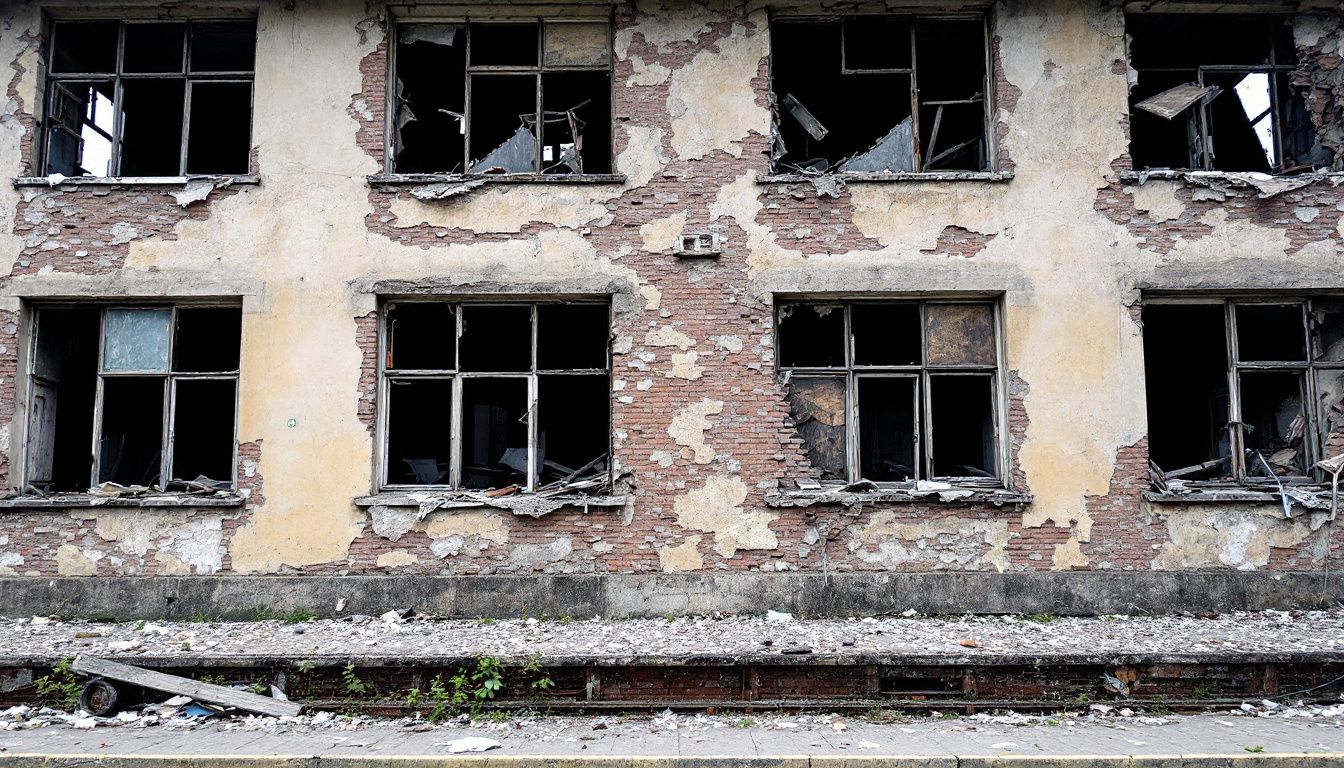
Why Asbestos in Building Construction Still Demands Your Attention
Asbestos in building construction was once celebrated as a wonder material — fire-resistant, durable, cheap, and remarkably easy to work with. For most of the 20th century, it was incorporated into millions of UK properties without hesitation or concern.
The consequences of that widespread use are still being felt today. Asbestos-related diseases claim thousands of lives every year, and countless buildings still harbour hazardous materials that require careful, ongoing management.
If you own, manage, or work on older buildings, understanding where asbestos was used, what risks it presents, and what the law requires of you is not optional. It is a legal and moral obligation that carries real consequences when ignored.
How Asbestos Was Used in Building Construction
Asbestos was incorporated into building construction in a remarkable number of ways. Its physical properties made it attractive to architects, engineers, and builders across residential, commercial, and industrial sectors alike.
The most common applications included:
- Sprayed coatings on structural steelwork and ceilings for fire protection
- Pipe and boiler lagging for thermal insulation
- Asbestos insulating board (AIB) used in ceiling tiles, partition walls, and fire doors
- Asbestos cement in roofing sheets, gutters, downpipes, and cladding panels
- Floor tiles and vinyl flooring with asbestos-containing adhesives
- Textured decorative coatings such as Artex applied to ceilings and walls
- Rope seals and gaskets in heating systems and industrial equipment
- Bitumen-based roofing felts and waterproofing membranes
Buildings constructed before 1985 carry the highest risk, as this was the period of peak asbestos use in the UK. Properties built between 1985 and 1999 may still contain asbestos-containing materials (ACMs), particularly in lower-risk forms such as asbestos cement.
The UK banned the import and use of all forms of asbestos in new construction in 1999. Any building erected before that date must be treated as a potential source of ACMs until proven otherwise.
The Three Types of Asbestos Found in Buildings
Not all asbestos presents the same level of risk. Three main types were used in UK building construction, each with different hazard profiles and typical applications.
Crocidolite (Blue Asbestos)
Considered the most dangerous type, crocidolite fibres are extremely fine and penetrate deep into lung tissue. It was used primarily in sprayed insulation and thermal lagging. Its use declined earlier than other types as health concerns became more widely recognised.
Amosite (Brown Asbestos)
Widely used in asbestos insulating board, ceiling tiles, and thermal insulation products, amosite is highly hazardous. It was one of the most commonly used forms in commercial and public sector buildings throughout the mid-20th century.
Chrysotile (White Asbestos)
The most extensively used form globally, chrysotile appeared in asbestos cement products, floor tiles, and textured coatings. While sometimes described as less dangerous than the amphibole types, chrysotile still causes serious disease and is classified as a Group 1 carcinogen by the International Agency for Research on Cancer.
Health Risks: Why Asbestos in Building Construction Remains a Serious Concern
When asbestos-containing materials are disturbed — during renovation, demolition, or even routine maintenance — microscopic fibres are released into the air. These fibres are invisible to the naked eye and can remain airborne for hours, settling on surfaces and being re-disturbed repeatedly.
Once inhaled, fibres become permanently lodged in lung tissue. The diseases caused by asbestos exposure include:
- Mesothelioma — a terminal cancer of the lining of the lungs or abdomen, almost exclusively caused by asbestos exposure
- Asbestos-related lung cancer — particularly prevalent in those who also smoked
- Asbestosis — a chronic scarring of lung tissue leading to severe breathing difficulties
- Pleural thickening — a non-malignant but debilitating condition affecting the lung lining
These diseases typically take 20 to 50 years to develop after initial exposure, meaning workers who handled asbestos in the 1970s and 1980s are still being diagnosed today. The latency period also means that current workers disturbing legacy asbestos in building construction face risks that may not manifest for decades.
The HSE recognises asbestos as the single greatest cause of work-related deaths in Great Britain. That is not a historical footnote — it is the present reality for anyone working with older building stock.
UK Regulations Governing Asbestos in Building Construction
The legal framework around asbestos in building construction is robust and enforceable. Ignorance of the regulations is not a defence, and non-compliance can result in substantial fines, prohibition notices, and criminal prosecution.
The Control of Asbestos Regulations
These regulations represent the primary legislation governing all work with asbestos in Great Britain. They establish licensing requirements for the most hazardous work, set out notification duties, define permissible exposure limits, and impose a duty to protect workers and building occupants from exposure.
Any work involving licensable asbestos materials must be carried out by a contractor holding a licence issued by the HSE.
The Duty to Manage (Regulation 4)
One of the most significant provisions for property owners and managers is the duty to manage asbestos in non-domestic premises. This duty requires those responsible for buildings to:
- Identify the presence of ACMs through a suitable survey
- Assess their condition and the risk they present
- Produce a written asbestos register
- Implement a management plan to ensure materials are maintained safely or removed where necessary
The duty to manage applies to all non-domestic premises, including the common parts of residential blocks. Failing to comply is a criminal offence.
HSG264 — The Survey Standard
The HSE’s HSG264 guidance document sets out the standards for conducting asbestos surveys. It defines the different survey types, sampling requirements, reporting standards, and the qualifications expected of surveyors. Any credible asbestos survey must be conducted in full accordance with HSG264.
Types of Asbestos Survey Explained
Selecting the right survey for your situation is critical. The wrong survey type will not satisfy your legal obligations or give you the information you need to manage risk effectively.
Management Survey
A management survey is the standard survey required for the ongoing management of asbestos in occupied, non-domestic buildings. It identifies ACMs that could be disturbed during normal use or routine maintenance, assesses their condition, and provides the information needed to maintain an asbestos register and management plan.
This is the baseline requirement for most building owners and managers.
Refurbishment Survey
Before any building work, renovation, or significant alteration takes place, a refurbishment survey is legally required. This is a more intrusive survey that locates all ACMs in the areas to be disturbed — it may involve breaking through walls, lifting floors, and accessing concealed voids.
This survey must be completed before contractors begin work. Not during, and certainly not after.
Demolition Survey
If a building or part of a building is to be demolished, a demolition survey is required. This is the most intrusive survey type, designed to locate all ACMs throughout the entire structure so they can be removed prior to demolition. It is a legal prerequisite before any demolition work commences.
Re-inspection Survey
Once an asbestos register is in place, the condition of known ACMs must be monitored regularly. A re-inspection survey checks whether the condition of materials has deteriorated since the last assessment, updates risk scores, and ensures the management plan remains current and effective. Annual re-inspections are standard practice for most commercial premises.
Challenges Facing the Construction Industry
Asbestos in building construction presents a unique set of practical challenges for contractors, developers, and site managers working on older stock. These are not abstract regulatory concerns — they are day-to-day hazards that require active, informed management.
Hidden and Inaccessible Materials
Asbestos was frequently applied in locations that are not immediately visible — inside service ducts, above suspended ceilings, beneath floor coverings, and within cavity walls. Contractors can unknowingly disturb these materials during seemingly minor works such as drilling, cutting, or installing new services.
This is precisely why a thorough refurbishment or demolition survey before any intrusive work is non-negotiable.
Inconsistent Awareness Amongst Workers
Despite decades of regulation, asbestos awareness remains inconsistent across the construction trades. Regulation 10 of the Control of Asbestos Regulations requires that anyone liable to disturb asbestos during their work receives appropriate information, instruction, and training.
Yet many workers — particularly in smaller subcontracting firms — still lack the knowledge to recognise suspect materials or respond correctly when ACMs are encountered unexpectedly.
The Risks of DIY Removal
In residential settings, homeowners sometimes attempt to remove asbestos-containing materials themselves. This is dangerous and, in many circumstances, illegal. Disturbing ACMs without proper controls releases fibres that put not only the individual but also their family and neighbours at risk.
Professional asbestos removal by a licensed contractor is the only safe and legally compliant approach for most ACM types.
Cost Pressures and Project Timelines
Asbestos management adds cost and time to construction and refurbishment projects. Surveys, remediation work, and waste disposal all require budget and forward planning. The temptation to cut corners is understandable, but the consequences of non-compliance — enforcement action, project delays, and most critically, worker illness — far outweigh any short-term savings.
Asbestos Testing: When Sampling Is Needed
Visual identification of asbestos-containing materials is not reliable. Many ACMs are visually indistinguishable from non-asbestos alternatives, and assumptions based on appearance have led to serious exposure incidents.
Where the presence of asbestos is suspected but unconfirmed, asbestos testing through laboratory analysis of bulk samples is the only way to confirm or rule out its presence. Samples must be collected by a competent person following correct procedures to avoid unnecessary fibre release during sampling.
Testing is particularly valuable when:
- Survey records are absent or incomplete for a building constructed before 2000
- Materials have been presumed to contain asbestos but confirmation is needed before work proceeds
- A change of use or sale requires a definitive assessment of ACM presence
- Air monitoring is needed following disturbance or removal works
Accredited laboratory analysis provides a legally defensible result. If you need asbestos testing arranged quickly, Supernova can organise sampling and analysis with fast turnaround times.
Practical Strategies for Safe Asbestos Management on Construction Sites
Managing asbestos in building construction safely requires a systematic, disciplined approach. The following strategies reflect current best practice and regulatory expectations.
- Commission surveys before work begins. Never assume a building is asbestos-free. A refurbishment or demolition survey must be completed before any intrusive works on buildings constructed before 2000.
- Appoint licensed contractors for high-risk work. Licensable work — including removal of sprayed coatings, AIB, and pipe lagging — must only be carried out by HSE-licensed contractors. Always verify licence status before appointing anyone.
- Provide asbestos awareness training. All workers who may encounter asbestos must receive Category A awareness training as a minimum. Supervisors and those carrying out non-licensable notifiable work require additional Category B training.
- Use appropriate personal protective equipment. Where asbestos work is being carried out, suitable respiratory protective equipment (RPE) and disposable coveralls must be worn. The grade of RPE required depends on the risk level of the specific task.
- Implement air monitoring. During and after asbestos removal, air monitoring should be conducted to confirm that fibre concentrations are within safe limits and that the area is safe for re-occupancy.
- Dispose of asbestos waste correctly. Asbestos is classified as hazardous waste. It must be double-bagged in clearly labelled, UN-approved sacks and disposed of at a licensed waste facility. Fly-tipping asbestos waste is a serious criminal offence.
- Maintain an up-to-date asbestos register. Following any survey or remediation work, update the register immediately and ensure it is accessible to all contractors before they begin any work on site.
Asbestos Surveys Across the UK
Asbestos in building construction is a national issue, and the need for professional surveying services extends across every region. Whether you are managing a portfolio of commercial properties or a single older building, access to qualified surveyors close to your site matters.
Supernova Asbestos Surveys operates nationwide. If you are based in the capital, our asbestos survey London service covers all boroughs and property types. For clients in the North West, our asbestos survey Manchester team is available for both urgent and planned surveys. In the Midlands, our asbestos survey Birmingham service provides the same rigorous standards that have made Supernova the UK’s most trusted name in asbestos surveying.
With over 50,000 surveys completed, our UKAS-accredited surveyors work to HSG264 standards on every instruction, regardless of location or building type.
What to Do If You Discover Asbestos on Site
Unexpected discoveries of suspected ACMs during construction or maintenance work are not uncommon. How you respond in the first few minutes matters enormously.
If you suspect you have encountered asbestos-containing materials:
- Stop work immediately in the affected area
- Prevent others from entering the zone
- Do not attempt to clean up any debris or dust
- Secure the area and restrict access
- Contact a qualified asbestos surveyor to assess the material
- Do not resume work until the material has been sampled, identified, and an appropriate course of action agreed
Continuing to work in the presence of suspected ACMs without assessment is a breach of the Control of Asbestos Regulations and places everyone on site at risk. The short-term disruption of stopping work is always preferable to the consequences of uncontrolled fibre release.
Frequently Asked Questions
What buildings are most likely to contain asbestos?
Any building constructed before 2000 may contain asbestos-containing materials. Buildings erected between the 1950s and mid-1980s carry the highest risk, as this was the period of peak asbestos use in UK construction. Schools, hospitals, offices, factories, and older residential blocks are among the most commonly affected property types.
Is asbestos dangerous if it is left undisturbed?
Asbestos that is in good condition and is not being disturbed presents a low risk. The danger arises when ACMs are damaged, deteriorating, or disturbed during maintenance or construction work, releasing microscopic fibres into the air. A management survey and a current asbestos management plan are the appropriate tools for monitoring undisturbed materials.
Do I need an asbestos survey before renovation work?
Yes. A refurbishment survey is a legal requirement before any intrusive building work on a property that may contain asbestos. This applies to commercial premises and should be treated as best practice for any pre-2000 residential property where contractors will be working. Starting work without this survey exposes workers to unacceptable risk and puts you in breach of the Control of Asbestos Regulations.
How often does an asbestos register need to be updated?
An asbestos register must be reviewed and updated whenever the condition of known ACMs changes, following any disturbance or removal, and at regular intervals through periodic re-inspection surveys. For most commercial premises, annual re-inspections are standard practice. The register must be made available to any contractor working on the premises before they begin work.
Can I remove asbestos myself?
In most cases, no. The removal of licensable asbestos materials — including sprayed coatings, asbestos insulating board, and pipe lagging — must be carried out by an HSE-licensed contractor. Some lower-risk, non-licensable work may be carried out by a competent person following strict controls, but professional removal remains the safest and most legally defensible approach for virtually all ACM types.
Get Expert Help with Asbestos in Your Building
Supernova Asbestos Surveys has completed over 50,000 surveys across the UK, working with property managers, developers, local authorities, and contractors to identify, assess, and manage asbestos in building construction safely and in full compliance with the law.
Whether you need a management survey for an occupied building, a refurbishment or demolition survey ahead of construction work, or urgent asbestos testing and removal, our UKAS-accredited team is ready to help.
Call us on 020 4586 0680 or visit asbestos-surveys.org.uk to book a survey or speak to one of our specialists today.