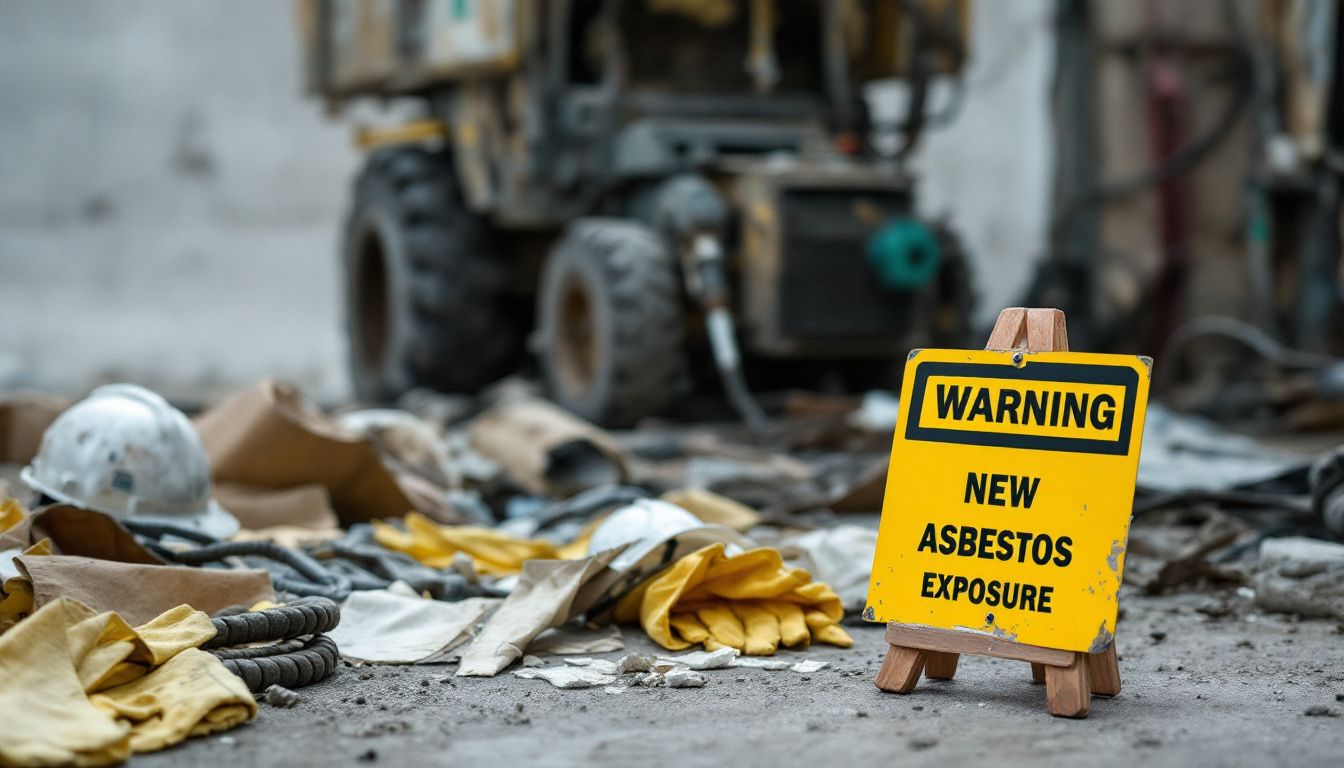
Asbestos in Construction Sites: What Every Worker and Site Manager Needs to Know
Asbestos in construction sites remains one of the most serious occupational health hazards in the UK. Despite the total ban on its use in 1999, millions of tonnes of asbestos-containing materials (ACMs) are still embedded in buildings constructed before that date — and construction workers disturb them every single day. Whether you’re managing a demolition project, overseeing a refurbishment, or maintaining an older commercial building, understanding the risks and your legal obligations isn’t optional. It could be the difference between a safe site and a fatal exposure.
Why Asbestos Remains a Live Threat on UK Construction Sites
The UK banned the import, supply, and use of all asbestos in 1999, but the legacy of its widespread use throughout the 20th century is still very much present. Asbestos was incorporated into a vast range of building materials — insulation boards, ceiling tiles, pipe lagging, roofing felt, floor tiles, and textured coatings like Artex — because it was cheap, fire-resistant, and durable.
Any building constructed or refurbished before 2000 may contain ACMs. That covers a staggering proportion of the UK’s existing building stock, including schools, hospitals, offices, factories, and residential properties.
When these materials are disturbed — by drilling, cutting, sanding, or demolition — microscopic fibres are released into the air. Those fibres, once inhaled, can lodge permanently in lung tissue and cause diseases that don’t manifest for 20 to 50 years after exposure.
The Health Consequences of Asbestos Exposure
The diseases caused by asbestos exposure are serious, progressive, and frequently fatal. Construction workers face the highest occupational risk of any sector in the UK. The four principal conditions are:
- Mesothelioma: A cancer of the lining of the lungs or abdomen, almost exclusively caused by asbestos exposure. It is incurable and carries a very poor prognosis.
- Asbestosis: Scarring of the lung tissue caused by prolonged fibre inhalation, leading to severe and progressive breathing difficulties.
- Lung cancer: Asbestos exposure significantly increases the risk of lung cancer, particularly in those who also smoke.
- Pleural thickening: Thickening of the membrane surrounding the lungs, causing breathlessness and persistent chest pain.
The long latency period is what makes asbestos so insidious. A worker exposed today may not receive a diagnosis for decades, making it dangerously easy to underestimate the urgency of proper controls on site.
The Legal Framework Governing Asbestos in Construction Sites
Asbestos in construction sites is tightly regulated in the UK. The primary legislation is the Control of Asbestos Regulations, which sets out licensing requirements, notification duties, and the obligations of employers, contractors, and dutyholders. The Health and Safety Executive (HSE) enforces these regulations actively, and non-compliance can result in substantial fines, prohibition notices, and prosecution.
The Duty to Manage
Under the Control of Asbestos Regulations, those responsible for non-domestic premises have a legal duty to manage asbestos. This means identifying whether ACMs are present, assessing the condition and risk they pose, and producing and maintaining an up-to-date asbestos register.
The dutyholder must also ensure that anyone who might disturb ACMs — including contractors working on the site — is made aware of their location and condition before work begins. Handing a contractor a current asbestos register isn’t just good practice; it’s a legal requirement.
Licensed vs Non-Licensed Work
Not all asbestos work requires a licence, but the highest-risk activities do. The Control of Asbestos Regulations distinguishes between three categories:
- Licensed work: Required for high-risk activities involving asbestos insulation, asbestos insulation board, and asbestos coatings. Licensed contractors must notify the relevant enforcing authority before work begins.
- Notifiable non-licensed work (NNLW): Lower-risk work that still requires notification to the enforcing authority and medical surveillance for workers.
- Non-licensed work: The lowest-risk category, but still subject to strict controls including risk assessment, appropriate PPE, and safe working procedures.
Using an unlicensed contractor for licensed asbestos work is a criminal offence. There are no grey areas here.
HSG264: The Survey Standard
HSG264 is the HSE’s definitive guidance document for asbestos surveys. It sets out the standards for how surveys should be planned, conducted, and reported. Any survey that doesn’t follow HSG264 methodology is not legally compliant, regardless of who carries it out.
Identifying Asbestos Before Work Begins
The single most effective way to protect workers from asbestos in construction sites is to identify ACMs before any work starts. This is not a box-ticking exercise — it is a fundamental safety requirement that protects both workers and site managers from serious legal and health consequences.
Management Surveys
A management survey is the standard survey for managing asbestos in a building that is in normal occupation and use. It identifies the location, extent, and condition of ACMs that could be disturbed during routine maintenance or in the event of an accident. Every non-domestic premises should have one in place.
Refurbishment and Demolition Surveys
Before any construction, refurbishment, or demolition work begins, a refurbishment survey is required for the areas to be disturbed. This is a more intrusive survey than a management survey — it involves accessing hidden voids, above ceiling tiles, and within structural elements to locate all ACMs that could be encountered during the works.
Skipping a refurbishment survey before starting construction work is one of the most common — and most dangerous — mistakes made on UK sites. Workers who unexpectedly disturb ACMs without warning are at serious risk of significant fibre exposure.
For full demolition projects, a demolition survey is required. This is the most thorough and intrusive survey type, designed to locate every ACM in a structure before it is brought down. No demolition should proceed without one.
Re-Inspection Surveys
Asbestos registers are not static documents. ACMs deteriorate over time, and their condition must be monitored regularly. A re-inspection survey assesses any changes in the condition of known ACMs and updates the risk rating accordingly. These surveys are typically carried out annually for commercial premises.
Bulk Sample Testing
If you suspect a material contains asbestos but aren’t certain, don’t guess. A testing kit allows samples to be collected and sent to a UKAS-accredited laboratory for analysis under polarised light microscopy. This gives you a definitive answer before any work proceeds — and it’s far cheaper than dealing with the consequences of uncontrolled exposure.
Practical Steps for Safe Asbestos Management on Construction Sites
Knowing the regulations is one thing. Putting them into practice on a busy construction site is another. Here are the steps that every site manager and principal contractor should be taking without exception.
1. Obtain an Asbestos Survey Before Works Begin
- Commission a refurbishment or demolition survey before any intrusive work starts.
- Ensure the survey covers all areas that will be disturbed, including hidden voids and structural cavities.
- Share the findings with all contractors working on site — this is a legal requirement, not a courtesy.
2. Use Licensed Contractors for High-Risk Removal
For licensed asbestos work, only engage contractors who hold a current HSE asbestos licence. Verify their licence before they start. Engaging an asbestos removal specialist who is properly licensed protects workers, neighbouring properties, and the public — and shields the principal contractor from serious criminal liability.
3. Provide Adequate Worker Training
All workers on sites where asbestos may be present must receive appropriate asbestos awareness training. This is a legal requirement under the Control of Asbestos Regulations. Training should be refreshed regularly — generally no longer than every three years.
Workers who carry out non-licensed or licensed asbestos work require a higher level of training specific to the type of work they are undertaking. Awareness training alone is not sufficient for those directly working with ACMs.
4. Provide and Enforce the Use of PPE
Personal protective equipment is a last line of defence, not a substitute for proper controls. However, where exposure to asbestos fibres cannot be fully eliminated, appropriate PPE is essential:
- Respiratory protective equipment (RPE) — minimum FFP3 disposable masks for non-licensed work; powered air-purifying respirators (PAPRs) or air-fed equipment for licensed work
- Disposable Type 5 coveralls to prevent fibre contamination of clothing
- Gloves and boot covers
- Decontamination facilities on site for workers who have been in contact with ACMs
5. Control Dust and Fibre Release During Work
Wet removal methods significantly reduce the release of airborne fibres during asbestos work. Dampening ACMs before and during removal keeps fibres bound to the material rather than becoming airborne.
HEPA-filtered vacuum equipment should be used to clean up asbestos debris — standard vacuum cleaners will simply redistribute fibres back into the air. Enclosures and negative pressure units are required for licensed removal work.
6. Dispose of Asbestos Waste Correctly
Asbestos waste is classified as hazardous waste under UK environmental legislation. It must be double-bagged in UN-approved packaging, clearly labelled, and transported by a registered waste carrier to a licensed disposal site.
Fly-tipping asbestos waste is a serious criminal offence with severe penalties. The cost of proper disposal is negligible compared to the consequences of getting it wrong.
7. Conduct Regular Risk Assessments
Risk assessments for asbestos work must be carried out before work begins and reviewed whenever the scope of work changes. The assessment should identify the type and condition of ACMs present, the likely level of exposure, and the control measures required to reduce risk to as low as reasonably practicable.
Asbestos and Fire Safety: An Overlooked Connection
On construction sites and in the buildings they work on, asbestos management and fire safety are often treated as entirely separate concerns. In practice, they overlap significantly.
Many older buildings used asbestos-based materials specifically for their fire-resistant properties — in fire doors, fire breaks, and around structural steelwork. Removing or disturbing these materials during construction work can compromise the fire protection of the building without anyone realising it.
A fire risk assessment should be carried out alongside asbestos management planning to ensure that any removal or remediation work doesn’t inadvertently create a fire safety deficiency. This is particularly relevant in occupied buildings where construction work is being carried out in phases, and where temporary changes to the building’s structure may affect compartmentation.
Asbestos Surveys Across the UK
Construction projects happen everywhere, and asbestos surveys need to be accessible wherever you’re working. Supernova Asbestos Surveys operates nationwide, with specialist teams covering major cities and regions across England, Scotland, and Wales.
If you’re managing a project in the capital, our asbestos survey London service provides fast-turnaround surveys from BOHS-qualified surveyors who are thoroughly familiar with the city’s complex and varied building stock.
For projects in the North West, our asbestos survey Manchester team covers the greater Manchester area and surrounding regions, delivering the same standard of rigorous, HSG264-compliant surveying.
In the Midlands, our asbestos survey Birmingham service supports construction and refurbishment projects across the city and wider West Midlands, with surveyors who understand the region’s diverse commercial and industrial building stock.
What Happens When Things Go Wrong
The consequences of failing to manage asbestos in construction sites properly are severe — and they fall on multiple parties simultaneously.
The HSE has wide-ranging enforcement powers. Inspectors can issue improvement notices, prohibition notices that halt all site activity immediately, and unlimited fines following prosecution. Individual site managers and directors can face personal criminal liability, not just the company.
Beyond the legal consequences, the human cost is irreversible. A worker exposed to asbestos fibres today may develop mesothelioma 30 or 40 years from now. No fine or legal settlement can undo that. The only effective approach is prevention — and prevention starts with proper surveying, proper training, and proper controls before work begins.
Civil claims from workers who develop asbestos-related disease can also be substantial. Employers who cannot demonstrate that they took all reasonably practicable steps to protect their workforce face significant exposure to compensation claims, often decades after the original exposure occurred.
Frequently Asked Questions
Do I need an asbestos survey before starting construction work on an older building?
Yes. Before any intrusive construction, refurbishment, or demolition work begins on a building constructed before 2000, a refurbishment or demolition survey is legally required for the areas to be disturbed. Starting work without one puts workers at serious risk and exposes the principal contractor to criminal liability under the Control of Asbestos Regulations.
What is the difference between a refurbishment survey and a demolition survey?
A refurbishment survey is required before any intrusive work in a specific area of a building — it locates all ACMs that could be disturbed during the planned works. A demolition survey is required before a structure is brought down entirely and is the most thorough survey type, designed to locate every ACM throughout the whole building before demolition proceeds.
Can any contractor remove asbestos from a construction site?
No. The Control of Asbestos Regulations requires that high-risk asbestos removal work — involving materials such as asbestos insulation, insulation board, and coatings — is carried out only by contractors holding a current HSE asbestos licence. Using an unlicensed contractor for licensed work is a criminal offence. Always verify a contractor’s licence before engaging them.
How often does an asbestos register need to be updated?
An asbestos register is a live document and must be kept up to date. For commercial premises, a re-inspection survey is typically carried out annually to assess any changes in the condition of known ACMs and update risk ratings accordingly. The register must also be updated whenever ACMs are removed, encapsulated, or newly discovered.
What PPE is required for workers on construction sites where asbestos may be present?
At minimum, workers carrying out non-licensed asbestos work require FFP3 disposable respiratory protective equipment and disposable Type 5 coveralls. Licensed asbestos work requires a higher standard of RPE — typically powered air-purifying respirators or air-fed equipment — along with full decontamination facilities on site. PPE is always a last line of defence and must be used alongside proper engineering controls, not as a substitute for them.
Work With the UK’s Most Trusted Asbestos Surveyors
Supernova Asbestos Surveys has completed over 50,000 surveys nationwide, supporting construction companies, principal contractors, facilities managers, and property owners across the UK. Our BOHS-qualified surveyors deliver HSG264-compliant surveys with rapid turnaround, clear reporting, and practical guidance that actually helps you manage risk on site.
Whether you need a refurbishment survey before breaking ground, a demolition survey ahead of a clearance project, or ongoing re-inspection support for a managed estate, we have the expertise and the reach to help.
Call us on 020 4586 0680 or visit asbestos-surveys.org.uk to discuss your requirements and get a quote.