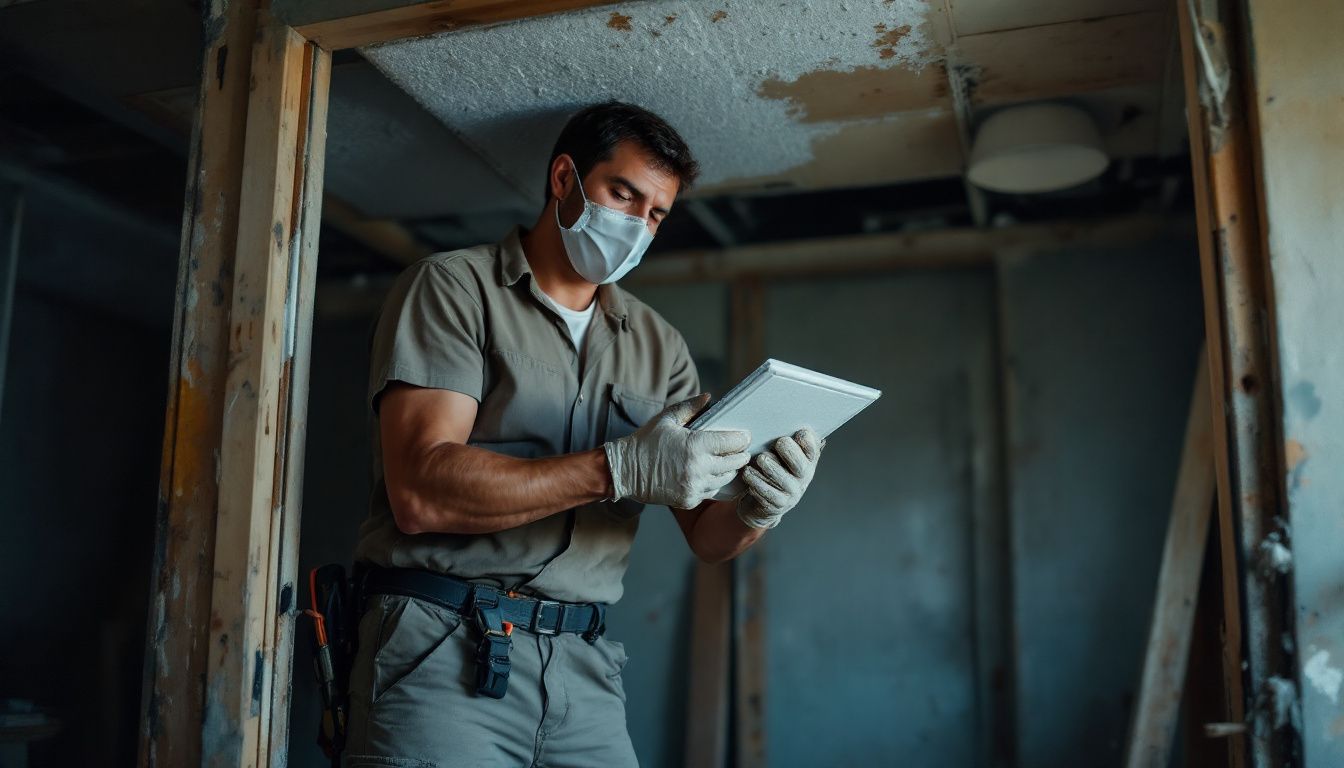
Why Construction Workers Still Face the Dangers of Asbestos Exposure
Asbestos doesn’t announce itself. It sits quietly inside walls, ceiling tiles, pipe lagging, and floor adhesives — waiting to be disturbed. For construction workers, that disturbance is part of the job.
The dangers of asbestos exposure for construction workers remain one of the most serious occupational health issues in the UK today, decades after the material was banned from new builds. Understanding where asbestos hides, what it does to the body, and how to work safely around it isn’t optional — it’s the difference between a long career and a life-limiting diagnosis.
How Construction Workers Encounter Asbestos on Site
The UK banned all asbestos-containing materials (ACMs) in construction in 1999. That sounds reassuring until you consider just how many buildings were constructed before that date. Offices, schools, hospitals, factories, and homes built between the 1950s and late 1990s are all potential sources of ACMs.
Construction workers disturb these materials constantly — often without realising it. The most common activities that release asbestos fibres include:
- Cutting, drilling, or sanding boards and ceiling tiles
- Removing or replacing pipe insulation
- Breaking out floor tiles or scraping adhesive
- Stripping out textured coatings such as Artex
- Demolishing internal partition walls
- Working on roof materials containing asbestos cement
Power tools are particularly hazardous. Angle grinders, saws, and drills generate fine dust that carries asbestos fibres directly into the breathing zone. In enclosed spaces with poor ventilation, those fibres linger in the air far longer than in open environments.
Renovation and refurbishment work carries the highest risk. Unlike new builds, these projects involve disturbing existing materials — many of which were installed at a time when asbestos was considered a wonder material for its fire resistance and durability.
Trades Most at Risk from the Dangers of Asbestos Exposure
While all construction workers can be exposed, certain trades face higher risk by the nature of their work:
- Plumbers and heating engineers — working with pipe lagging and boiler insulation
- Electricians — drilling through walls and ceiling voids
- Plasterers and drylining operatives — removing or cutting asbestos-containing boards
- Roofers — handling asbestos cement sheets
- Demolition workers — breaking out materials wholesale
- General labourers — often working across multiple trades without specialist training
The risk isn’t limited to those doing the cutting. Workers nearby — on the same floor or in adjacent rooms — can inhale fibres that have drifted through the air. Secondary exposure is a genuine concern on busy sites.
The Health Consequences of Asbestos Exposure
The dangers of asbestos exposure for construction workers are not immediate. Asbestos-related diseases have long latency periods — symptoms often don’t appear until 15 to 60 years after initial exposure. By the time a diagnosis is made, the disease may already be advanced.
There are four primary conditions linked to asbestos exposure.
Mesothelioma
Mesothelioma is a cancer of the lining of the lungs (pleural mesothelioma) or abdomen (peritoneal mesothelioma). It is caused almost exclusively by asbestos exposure and has no cure. Prognosis is poor — most patients survive less than two years after diagnosis.
The UK has one of the highest rates of mesothelioma in the world, a direct legacy of heavy asbestos use in industry and construction. This is not a historical footnote — it is an ongoing public health crisis with new cases diagnosed every year.
Asbestos-Related Lung Cancer
Asbestos exposure significantly increases the risk of lung cancer, particularly in workers who also smoke. The two risk factors combined create a multiplicative effect — not merely additive.
Workers who smoked and were exposed to asbestos face a substantially higher risk than non-smokers with the same exposure history. This is one of the most compelling reasons to treat any potential asbestos exposure as a serious matter, regardless of how brief it seemed at the time.
Asbestosis
Asbestosis is a chronic lung disease caused by the scarring of lung tissue from inhaled asbestos fibres. It causes progressive breathlessness, a persistent cough, and in severe cases, respiratory failure. It is not cancer, but it is debilitating and irreversible.
Workers with asbestosis often describe a significant reduction in quality of life — a reality that sets in gradually and worsens over time. There is no treatment that reverses the scarring once it has occurred.
Diffuse Pleural Thickening
This condition involves the widespread scarring of the pleura — the membrane surrounding the lungs. As the pleura thickens, it restricts lung expansion, causing breathlessness and chest tightness.
It is a recognised consequence of asbestos exposure and can be seriously disabling even without progressing to cancer. All four conditions are preventable. None are curable once established. That asymmetry is exactly why prevention must come first.
The Legal Framework Protecting Construction Workers
The Control of Asbestos Regulations set out clear legal duties for employers and those in control of premises. These regulations apply to all work that may disturb asbestos, including construction, maintenance, and refurbishment activities.
Under these regulations, employers must:
- Identify whether asbestos is present before any work begins
- Carry out a suitable and sufficient risk assessment
- Prepare a written plan of work before starting any notifiable work
- Ensure workers are adequately trained for the level of work they are undertaking
- Provide appropriate personal protective equipment (PPE) and respiratory protective equipment (RPE)
- Monitor air quality where required and maintain exposure below the control limit
- Arrange appropriate health surveillance for workers who may be exposed
The HSE’s guidance document HSG264 provides detailed technical guidance on asbestos surveys and is the benchmark for anyone commissioning or carrying out a survey on a non-domestic property. It defines the two main survey types and sets out what each must cover.
Notifiable non-licensable work (NNLW) and licensable work with asbestos each carry additional requirements. Licensable work must only be carried out by contractors holding an HSE licence — employers cannot simply assign this work to general operatives without proper authorisation.
The Duty to Manage
For those managing non-domestic premises, the duty to manage asbestos requires that an asbestos management survey is carried out, a register of ACMs is maintained, and that information is shared with anyone who may disturb those materials — including contractors.
Sending a construction team into a building without sharing the asbestos register is a serious legal failing and a direct risk to workers’ lives. It is not a paperwork issue — it is a life safety issue.
Practical Steps to Reduce the Dangers of Asbestos Exposure on Construction Sites
Regulation sets the minimum. Good practice goes further. Here are the practical steps that genuinely reduce exposure risk for construction workers.
Before Work Starts
- Commission a demolition survey before any intrusive work begins on a pre-2000 building. This is a legal requirement for notifiable work, not an optional extra.
- Review the asbestos register for the building and ensure all workers and supervisors are briefed on its contents.
- Identify the scope of work and confirm whether it falls under non-licensable, NNLW, or licensable categories.
- Never assume a building is asbestos-free because it looks modern — many older structures have been refurbished without ACMs being removed.
During Work
- Use wet methods where possible to suppress dust when cutting or removing ACMs.
- Avoid using power tools on materials suspected to contain asbestos until they have been tested or confirmed clear.
- Use Type H (HEPA-filtered) vacuum cleaners — standard vacuums spread asbestos dust rather than capturing it.
- Wear the correct class of RPE for the work being done — not just a dust mask.
- Establish a clean area for removing PPE and decontaminating before leaving the work zone.
Waste Disposal
- Double-bag all asbestos waste in clearly labelled, sealed bags.
- Dispose of asbestos waste only at a licensed waste facility — it is classified as hazardous waste.
- Maintain a waste transfer note as required by law.
Training and Awareness: A Legal Requirement, Not a Recommendation
All workers who may encounter asbestos in their work must receive asbestos awareness training. This is a legal requirement under the Control of Asbestos Regulations and covers what asbestos is, where it is found, the health risks, and what to do if suspected ACMs are encountered.
This training must be refreshed regularly — it is not a one-off exercise. Workers carrying out non-licensable or licensable work need additional, more detailed training appropriate to the category of work involved.
Supervisors and site managers also carry responsibility. If a supervisor sends workers into an area without confirming the asbestos status of the materials involved, they may be personally liable if exposure occurs.
The dangers of asbestos exposure for construction workers are not reduced by good intentions — they are reduced by proper training, robust site management, and verified survey data before work begins.
The Role of Asbestos Surveys in Protecting Workers
An asbestos survey is the foundation of worker protection on any construction project involving a pre-2000 building. Without one, contractors are working blind — and the consequences can be fatal.
A management survey identifies the location, condition, and extent of ACMs in a building under normal occupation. A refurbishment and demolition survey goes further — it is intrusive by design, intended to locate all ACMs in areas that will be disturbed during planned work.
Both types must be carried out by a competent surveyor following HSG264 guidance. The survey report should not simply list what was found — it should tell you the condition of each ACM, its risk priority, and what action is recommended. That information directly shapes how construction work is planned and sequenced.
If you are managing construction or refurbishment work in the capital, an asbestos survey London from a UKAS-accredited provider will ensure your team has the information they need before a single tool is picked up.
For projects in the North West, an asbestos survey Manchester will give you the site-specific data required to plan work safely. For projects in the Midlands, an asbestos survey Birmingham covers the same requirements for that region.
Health Surveillance and Early Detection
Workers who carry out licensable work with asbestos, or who are regularly exposed to asbestos fibres as part of their role, are entitled to health surveillance under the Control of Asbestos Regulations. This involves periodic medical examinations, including lung function tests, carried out by an employment medical adviser or appointed doctor.
Health surveillance does not prevent disease — but it can detect changes in lung function early, allowing for intervention and, where relevant, removal from further exposure. It also creates a medical record that may be important if a worker later develops an asbestos-related condition and pursues a compensation claim.
Workers should not wait for symptoms to appear before raising concerns. Breathlessness, a persistent dry cough, or chest tightness following years of construction work should always be investigated promptly.
The long latency period of asbestos-related diseases means that by the time symptoms are obvious, significant damage has already occurred. Early medical engagement matters — it can influence both outcomes and legal options.
What to Do If Asbestos Is Unexpectedly Disturbed on Site
If work is underway and asbestos is unexpectedly encountered — or if a material is disturbed that may contain asbestos — the correct response is clear and non-negotiable.
- Stop work immediately in the affected area.
- Prevent others from entering — cordon off the area and display warning notices.
- Do not attempt to clean up any debris or dust using standard equipment.
- Notify your supervisor or site manager immediately.
- Contact a licensed asbestos contractor to assess and, if necessary, make the area safe.
- Report the incident in accordance with your site’s accident and near-miss reporting procedures.
- Arrange air testing before anyone re-enters the affected area.
The instinct to carry on — to not hold up the job — is understandable. It is also potentially catastrophic. A brief delay to deal with a suspected ACM is infinitely preferable to the consequences of continued exposure.
Employers must also consider whether a RIDDOR report is required following a significant asbestos incident. HSE guidance sets out when this obligation applies, and failure to report when required is itself a legal breach.
Why the Problem Hasn’t Gone Away
The UK’s asbestos legacy is enormous. Millions of buildings constructed before the 1999 ban still contain ACMs in varying conditions. Many of those buildings are now reaching the age where major refurbishment or demolition is economically necessary.
That means the volume of construction work disturbing asbestos-containing materials is not declining — it may well be increasing as the UK’s ageing building stock is upgraded, repurposed, or demolished. The dangers of asbestos exposure for construction workers are not a fading historical concern. They are a present and growing occupational hazard.
Awareness alone is not enough. The construction industry needs robust systems: proper surveys before work begins, trained workers who know how to respond, supervisors who enforce safe systems of work, and employers who treat asbestos management as the serious legal and moral obligation it is.
The HSE continues to prosecute employers and contractors who fail in their asbestos duties. Fines, improvement notices, and prohibition notices are all live enforcement tools — and in cases of gross negligence, personal liability for directors and managers is a real possibility.
Frequently Asked Questions
What are the most common ways construction workers are exposed to asbestos?
Construction workers are most commonly exposed when they cut, drill, sand, or remove materials containing asbestos — such as ceiling tiles, floor adhesives, pipe lagging, textured coatings, and asbestos cement sheets. Using power tools on these materials without prior testing is particularly high-risk, as they generate fine dust that releases fibres into the breathing zone. Workers nearby can also be affected by fibres drifting through the air, even if they are not directly involved in the work.
How long does it take for asbestos-related diseases to develop?
Asbestos-related diseases typically have a latency period of between 15 and 60 years. This means a construction worker exposed in their twenties may not develop symptoms until their sixties, seventies, or later. By the time a diagnosis is made, the disease is often already advanced. This long delay is one of the reasons why prevention and early health surveillance are so critical — symptoms appearing decades later can easily be misattributed to other causes.
Is asbestos awareness training legally required for construction workers?
Yes. Under the Control of Asbestos Regulations, all workers who may encounter asbestos during their work must receive asbestos awareness training. This covers what asbestos is, where it is commonly found, the associated health risks, and the correct response if suspected ACMs are encountered. Workers carrying out non-licensable or licensable work require additional training beyond basic awareness. Training must be refreshed regularly — a single session is not sufficient to meet the legal requirement.
Do I need an asbestos survey before starting refurbishment work on an old building?
Yes. Before any intrusive refurbishment or demolition work begins on a building constructed before 2000, a refurbishment and demolition survey must be carried out. This is a legal requirement under the Control of Asbestos Regulations for notifiable work, and it is the only reliable way to identify all ACMs in areas that will be disturbed. A standard management survey is not sufficient for this purpose — the refurbishment survey is intrusive and specifically designed to locate hidden materials before work begins.
What should a construction worker do if they accidentally disturb a material that might contain asbestos?
Work must stop immediately in the affected area. The area should be cordoned off to prevent others from entering, and no attempt should be made to clean up using standard equipment. The site manager or supervisor must be notified straight away, and a licensed asbestos contractor should be called to assess the situation. Air testing should be completed before anyone re-enters the area. The incident should also be recorded through the site’s near-miss and accident reporting procedures, and the employer should consider whether a RIDDOR report is required.
Work Safely with Supernova Asbestos Surveys
Supernova Asbestos Surveys has completed over 50,000 surveys across the UK, providing construction teams, contractors, and property managers with the accurate, HSG264-compliant survey data they need to work safely. Whether you need a management survey for an occupied building or a full refurbishment and demolition survey before major works begin, our UKAS-accredited surveyors deliver clear, actionable reports that protect your workers and keep you legally compliant.
Don’t start work on a pre-2000 building without the right information. Call us on 020 4586 0680 or visit asbestos-surveys.org.uk to book your survey today.