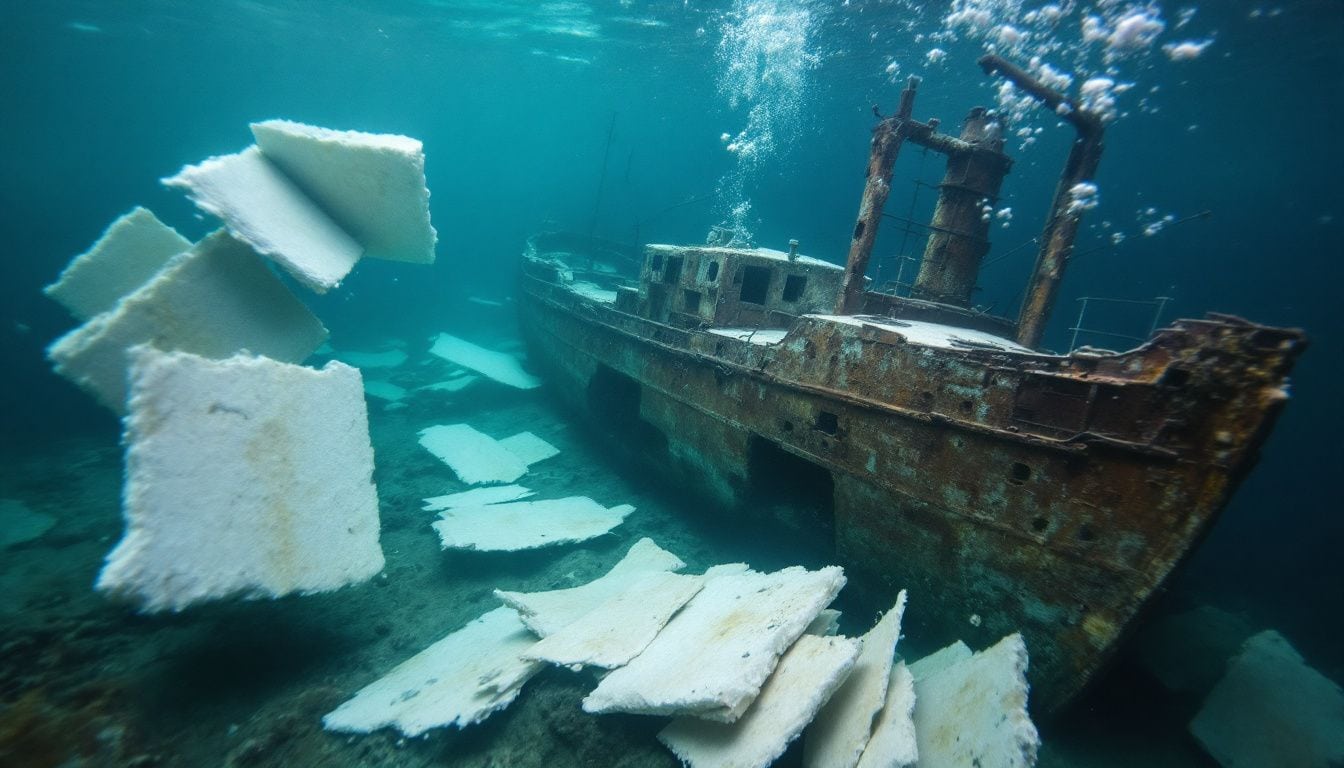
Marine Asbestos Removal: What You Need to Know About Vessels, Ports, and Waterways
Asbestos and the sea have a long, troubled history. Decades of shipbuilding, naval construction, and industrial port activity mean that marine asbestos removal is one of the most technically demanding and legally complex areas of asbestos management in the UK today. Whether you own a vessel, manage a marina, oversee a port facility, or are involved in ship decommissioning, understanding where asbestos hides in marine environments — and how it must be safely removed — is both a legal and moral obligation.
Why Marine Environments Carry a Significant Asbestos Risk
Asbestos was used extensively in shipbuilding throughout most of the twentieth century. Its heat resistance, durability, and insulating properties made it the material of choice for vessels that needed to withstand extreme temperatures, fire risk, and the corrosive marine environment.
Ships, ferries, fishing vessels, and naval craft built before the mid-1980s are almost certain to contain asbestos-containing materials (ACMs). The same applies to dockside buildings, port infrastructure, and harbour facilities constructed during the same period.
Common locations where asbestos appears in marine settings include:
- Engine room insulation and pipe lagging
- Boiler and turbine insulation
- Bulkhead and deck linings
- Ceiling tiles and floor tiles below decks
- Gaskets, seals, and packing materials
- Fire doors and fire blankets
- Electrical cable insulation
- Spray-applied coatings on structural steelwork
- Dockside buildings — roofing sheets, wall panels, and service ducts
The sheer variety of locations makes marine asbestos removal a specialist undertaking that demands thorough surveying before any work begins. Attempting to proceed without a complete picture of what ACMs are present is dangerous, expensive, and illegal.
The Legal Framework Governing Marine Asbestos Removal
The Control of Asbestos Regulations sets the legal baseline for all asbestos work in Great Britain, including marine environments. These regulations require that any work with asbestos is properly planned, carried out by competent and licensed contractors where necessary, and that workers and others are protected from exposure to asbestos fibres.
For vessels, there are additional considerations. The Maritime and Coastguard Agency (MCA) has its own guidance on managing asbestos aboard UK-flagged vessels. The International Maritime Organisation (IMO) has also introduced requirements prohibiting the installation of asbestos materials in ships and setting expectations for managing existing ACMs on older vessels.
Key legal obligations relevant to marine asbestos removal include:
- Identification before disturbance: All ACMs must be identified before any refurbishment, repair, or demolition work begins — whether on a vessel refit or a dockside building.
- Notifiable work requires a licensed contractor: Most marine asbestos removal — particularly from insulation, lagging, and sprayed coatings — will be notifiable work requiring a licensed asbestos removal contractor (LARC).
- Notification to the HSE: Licensed removal work must be notified to the Health and Safety Executive at least 14 days before work commences.
- Air monitoring and clearance certificates: Post-removal air testing is required to confirm the area is safe before reoccupation or further works.
- Waste disposal: Asbestos waste must be double-bagged, labelled, and disposed of at a licensed waste facility. It must never enter waterways.
HSE guidance document HSG264 provides the definitive framework for surveying, and its principles apply to marine structures as much as to land-based buildings. Duty holders who are uncertain about their obligations should seek specialist advice before any works begin.
Surveying Marine Structures: Where to Start
Before any marine asbestos removal project begins, a thorough survey is essential. Attempting removal without knowing the full extent of ACMs is dangerous, illegal, and almost certain to cause greater disruption and cost in the long run.
Management Surveys for Vessels and Port Buildings
If a vessel is still in service or a port building is occupied, a management survey is the starting point. This identifies the location, condition, and type of ACMs so that a management plan can be put in place without intrusive access.
For a working vessel, this means the crew and maintenance teams know exactly where asbestos is present, what condition it is in, and what precautions to take if it is disturbed during routine operations. A management survey is a living document — it should be updated whenever the condition of ACMs changes or new information comes to light.
Refurbishment Surveys Before Refit or Decommissioning
If a vessel is going in for a refit, dry dock work, or decommissioning, a refurbishment survey is required. This is a far more intrusive survey that involves accessing all areas that will be disturbed during the works.
Surveyors will take samples from suspect materials, and the results determine exactly what licensed removal work is needed before the refit can safely proceed. Contractors cannot safely begin stripping out a vessel’s interior without this information. This type of survey is non-negotiable before any significant marine works.
Re-Inspection Surveys for Ongoing Compliance
Where ACMs are being managed in situ rather than removed, a re-inspection survey should be carried out at regular intervals — typically annually — to check whether the condition of those materials has deteriorated.
In a marine environment, where vibration, moisture, and temperature fluctuations are constant, ACMs can degrade more quickly than in a static land-based building. Regular re-inspection is not a box-ticking exercise — it is an early warning system that can prevent a managed risk from becoming an emergency.
The Marine Asbestos Removal Process: Step by Step
Marine asbestos removal follows the same broad process as land-based removal, but the logistics are considerably more complex. Working in confined spaces below decks, managing air monitoring in enclosed areas, and controlling waste disposal near water all add layers of difficulty that demand specialist experience.
Here is what a typical marine asbestos removal project looks like:
- Pre-removal survey: A full refurbishment survey is completed to identify all ACMs in the areas to be worked on.
- Removal plan: A licensed asbestos removal contractor produces a detailed method statement and risk assessment, covering how each material will be removed, how the area will be enclosed, and how waste will be managed.
- HSE notification: For licensed work, the HSE is notified at least 14 days in advance.
- Enclosure and preparation: The work area is sealed using polythene sheeting and negative pressure units (NPUs) to prevent fibre release. In a marine context, this often means sealing off sections of the vessel or specific compartments.
- Removal: Qualified operatives in appropriate PPE remove the ACMs using wet methods to suppress fibre release. Materials are double-bagged immediately.
- Decontamination: All operatives pass through a decontamination unit. Tools and equipment are cleaned or disposed of appropriately.
- Air monitoring: A UKAS-accredited analyst carries out four-stage clearance testing, including a thorough visual inspection and air sampling.
- Clearance certificate: Once the area passes clearance, a certificate of reoccupation is issued and further works can continue.
- Waste disposal: All asbestos waste is transported to a licensed disposal facility, with strict controls to prevent contamination of surrounding waterways or port infrastructure.
If you need asbestos removal carried out on a marine or port structure, choosing a contractor with specific experience in these environments is essential. The confined spaces and environmental sensitivities involved demand more than a standard commercial removal team.
Health Risks Associated with Marine Asbestos Exposure
The health risks of asbestos exposure are well established. Inhaling asbestos fibres can cause mesothelioma, asbestosis, and lung cancer — diseases that may not manifest until decades after exposure.
Maritime workers have historically faced some of the highest occupational asbestos exposures of any workforce, given the intensive use of asbestos in shipbuilding throughout the mid-twentieth century. Shipyard workers, naval personnel, engineers, and maintenance crews who worked on vessels built before the 1980s are among those most at risk of asbestos-related disease.
The latency period for these diseases — often 15 to 40 years between exposure and diagnosis — means that cases linked to historical marine asbestos exposure are still being diagnosed today. Proper marine asbestos removal is not just a current compliance issue. It is a critical measure to protect today’s workers from repeating the mistakes of the past.
Environmental Considerations: Protecting Waterways During Removal
Marine asbestos removal carries environmental risks that land-based projects do not face to the same degree. Asbestos fibres released into waterways can persist in aquatic sediments for many years, creating long-term risks for ecosystems and for workers who come into contact with contaminated environments.
Industrial activities, including poorly managed ship breaking and dockside demolition, have historically contributed to asbestos contamination in coastal and estuarine environments. Responsible removal contractors working in marine settings must take specific precautions to prevent fibres from entering the water.
This includes robust enclosure systems, careful waste handling, and ensuring that all water used in wet suppression methods is captured and disposed of correctly. Environmental regulators, including the Environment Agency, take a serious view of any contamination of waterways. Duty holders should ensure their removal contractor has specific experience working in marine environments and understands these additional environmental obligations.
DIY Testing: When It Is and Is Not Appropriate
For smaller marine structures — a harbour building, a boathouse, or a small privately owned vessel — you may be wondering whether you can take a sample yourself before commissioning a full survey. A testing kit allows you to collect a sample from a suspect material and have it analysed at a UKAS-accredited laboratory.
However, this approach has clear limitations. A single sample from one location does not give you a complete picture of ACMs across a vessel or facility. For any significant marine works, a professional survey by a qualified surveyor is the only way to ensure you have identified all ACMs and can proceed safely and legally.
Never attempt to remove asbestos yourself from a vessel or marine structure. The confined spaces, poor ventilation, and multiple ACM types found in marine environments make self-removal extremely hazardous and almost certainly illegal under the Control of Asbestos Regulations.
Fire Risk in Marine Settings: An Additional Consideration
Asbestos management in marine environments often intersects with fire safety. Many of the same locations where asbestos was used — engine rooms, boiler rooms, fire doors — are also areas of significant fire risk.
If you are managing a port facility, a marina, or a dockside building, a fire risk assessment should sit alongside your asbestos management plan as part of a joined-up approach to safety compliance. Removing asbestos from fire-rated materials must be handled carefully to ensure that fire protection is reinstated after removal. Your removal contractor and fire safety adviser should coordinate on this from the outset.
Choosing the Right Surveying and Removal Team
Marine asbestos removal is not a job for a generalist. The combination of complex ACM locations, confined working spaces, environmental sensitivity, and strict regulatory requirements means you need a team with genuine marine and industrial experience.
When selecting a surveying and removal partner, look for:
- BOHS P402-qualified surveyors for all survey work
- A licensed asbestos removal contractor (LARC) for notifiable removal
- UKAS-accredited laboratory analysis for all samples
- Demonstrable experience in marine or industrial environments
- Clear method statements covering environmental protection
- Transparent communication and documentation throughout the project
If you are based in or near a major port city, local expertise matters. Supernova provides an asbestos survey London service covering the Thames-side ports and surrounding areas, an asbestos survey Manchester service for the North West’s industrial waterfront properties, and an asbestos survey Birmingham service for the Midlands’ extensive canal-side and industrial estate portfolio.
Wherever your marine or port property is located, working with a surveying team that understands local infrastructure and has experience with industrial ACM types is a significant advantage.
Frequently Asked Questions
Does the Control of Asbestos Regulations apply to ships and vessels?
Yes. The Control of Asbestos Regulations applies to all workplaces in Great Britain, which includes vessels operating in UK waters. Additionally, the Maritime and Coastguard Agency has its own guidance for UK-flagged vessels, and the International Maritime Organisation sets international standards for asbestos management aboard ships. Duty holders on vessels have the same fundamental obligations as those managing land-based buildings.
What type of survey do I need before a vessel refit or dry dock work?
You need a refurbishment survey before any refit, dry dock work, or decommissioning. This is a fully intrusive survey that accesses all areas likely to be disturbed during the works. It identifies exactly which materials contain asbestos so that a licensed removal contractor can plan and carry out the necessary removal before other trades begin work. Proceeding without this survey is both dangerous and illegal.
Can asbestos fibres contaminate waterways during removal?
Yes, and this is one of the key risks that distinguishes marine asbestos removal from standard land-based projects. Asbestos fibres can enter waterways if enclosures fail, waste is mishandled, or wet suppression water is not properly captured. Responsible contractors use robust enclosure systems, careful waste management procedures, and ensure all water used during removal is collected and disposed of through licensed channels. The Environment Agency treats waterway contamination as a serious environmental offence.
Do I need a licensed contractor for all marine asbestos removal?
Not necessarily for every task, but the majority of marine asbestos removal — particularly from pipe lagging, insulation, sprayed coatings, and similar high-risk materials — will be notifiable licensable work requiring a licensed asbestos removal contractor (LARC). Some lower-risk, non-notifiable work may be carried out by trained but unlicensed operatives, but in practice, most marine environments contain the types of ACMs that trigger the licensing requirement. Always seek professional advice before making this determination.
How often should ACMs on a vessel be re-inspected if they are being managed rather than removed?
Re-inspection surveys should typically be carried out annually, though the frequency may need to increase depending on the condition of the materials and the operational demands placed on the vessel. Marine environments — with their constant vibration, moisture, and temperature fluctuations — can cause ACMs to degrade more rapidly than in land-based buildings. A deteriorating material that was previously low-risk can quickly become a priority for removal if it is not regularly monitored.
Speak to Supernova About Marine Asbestos Surveys and Removal
Supernova Asbestos Surveys has completed over 50,000 surveys across the UK, including complex industrial and marine environments. Our BOHS P402-qualified surveyors understand the specific challenges of surveying vessels, port buildings, and dockside infrastructure — and we work with trusted licensed removal contractors to ensure the full process is handled correctly from survey through to clearance certificate.
Whether you need an initial management survey, a pre-refit refurbishment survey, or ongoing re-inspection support, we can help. Call us on 020 4586 0680 or visit asbestos-surveys.org.uk to discuss your requirements with our team.