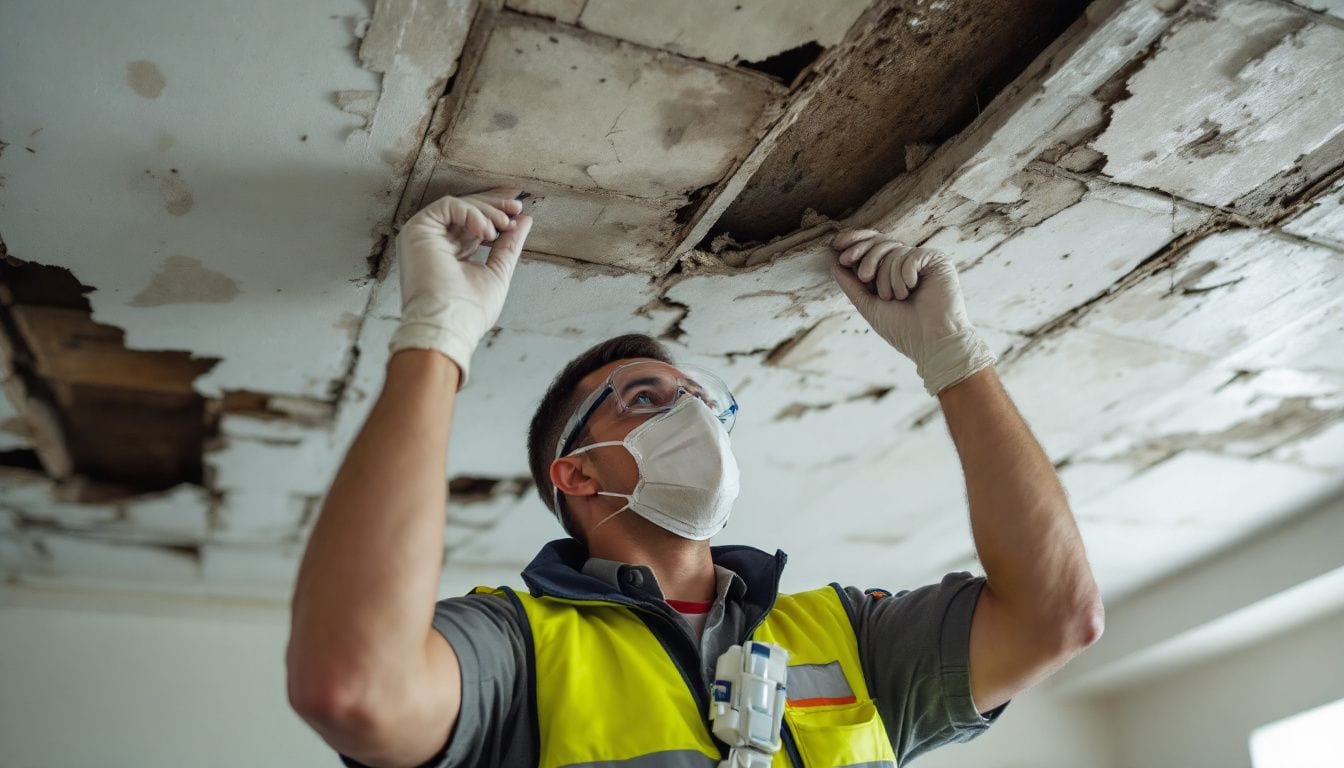
Asbestos Contamination Management: What Every UK Duty Holder Needs to Know
Asbestos is still killing around 5,000 people every year in the UK — more than any other single work-related cause. The materials responsible are sitting inside millions of buildings right now, and in most cases they pose no immediate danger. The danger comes when they are disturbed. Effective contamination management is what stands between a well-managed building and a serious, potentially fatal exposure incident.
Whether you own a commercial property, manage a school, or oversee a block of flats, the law places clear obligations on you. This post covers everything you need to know: the regulatory framework, your legal duties, the surveys that underpin a sound management programme, and the practical steps to keep your building and its occupants safe.
Why Asbestos Contamination Management Cannot Be Optional
Asbestos-containing materials (ACMs) were used extensively in UK construction right up until the late 1990s. Ceiling tiles, pipe lagging, floor tiles, insulation boards, roofing felt — the list of products that contained asbestos is long. An estimated half of all non-domestic buildings in the UK still contain some form of ACM.
The problem is not the presence of asbestos itself. ACMs in good condition and left undisturbed are generally not an immediate hazard. The danger arises when those materials are damaged, drilled into, cut, or removed without proper precautions — releasing microscopic fibres into the air that can be inhaled deep into the lungs.
The diseases caused by asbestos exposure — mesothelioma, asbestosis, and asbestos-related lung cancer — have latency periods of 20 to 40 years. By the time symptoms appear, it is too late. That long gap between exposure and diagnosis is precisely why structured contamination management matters so much. The hazard is invisible, the consequences are irreversible, and the only effective response is prevention.
The UK Regulatory Framework: Who Governs Asbestos?
Asbestos contamination management in the UK is underpinned by a clear legal framework. Understanding who enforces it — and what they expect of you — is the foundation of any compliance strategy.
The Health and Safety Executive (HSE)
The HSE is the primary regulatory body for asbestos in Great Britain. It sets exposure limits, publishes Approved Codes of Practice, and enforces the Control of Asbestos Regulations across workplaces and public buildings. The HSE’s definitive survey guidance document, HSG264, sets the standard that all professional asbestos surveys must meet.
The HSE has real enforcement teeth. It can issue improvement notices and prohibition notices, prosecute duty holders, and pursue unlimited fines in the Crown Court. In serious cases, custodial sentences are possible. Ignorance of the regulations is not a defence — and the HSE’s enforcement approach reflects that.
Local Authorities
Local authorities share enforcement responsibilities with the HSE, particularly for lower-risk workplaces such as retail premises, offices, and leisure facilities. They conduct inspections, respond to complaints from members of the public, and can take enforcement action in exactly the same way as the HSE.
The Environment Agency
Once asbestos is removed from a building, the Environment Agency takes over. Asbestos is classified as hazardous waste under UK law, and strict controls govern how it must be packaged, transported, and disposed of at a licensed facility. Fly-tipping asbestos waste is a serious criminal offence that can result in prosecution and substantial fines.
The Duty to Manage: Your Core Legal Obligation
At the heart of asbestos contamination management law in the UK is Regulation 4 of the Control of Asbestos Regulations — commonly known as the Duty to Manage. This regulation applies to the dutyholder of any non-domestic premises, which typically means the building owner, employer, or person in control of the building.
Under the Duty to Manage, you are legally required to:
- Take reasonable steps to identify whether ACMs are present in the building
- Presume that materials contain asbestos unless there is strong evidence they do not
- Assess the condition and risk level of any ACMs found
- Prepare and implement a written asbestos management plan
- Share information about ACM locations with anyone who might disturb them
- Review and monitor the management plan on a regular basis
In some buildings, multiple parties share the duty. A landlord and a commercial tenant may both have responsibilities under the regulations — and both can be held liable if things go wrong. Failure to comply is a criminal offence, not a civil one. More critically, it puts lives at risk.
Types of Asbestos Survey: The Starting Point for Any Contamination Management Programme
You cannot manage what you have not identified. A professional asbestos survey is the essential first step in any contamination management programme, and HSG264 sets out the standards that all surveys must meet. The type of survey you need depends on the circumstances of your building and what you intend to do with it.
Management Survey
A management survey is the standard survey required to manage asbestos in an occupied building during normal use. It identifies ACMs that could be disturbed by routine maintenance activities and provides the information needed to compile an asbestos register and a written management plan.
This is the survey most duty holders need as their baseline. If you do not have an up-to-date asbestos register, a management survey is your immediate next step.
Refurbishment Survey
Before any refurbishment, alteration, or fit-out work begins, a refurbishment survey is legally required. This is a more intrusive survey that examines all areas to be disturbed — inside walls, above ceilings, beneath floors — to ensure that contractors are not inadvertently exposing workers and building occupants to asbestos fibres during construction work.
Skipping this survey before building work is not just a regulatory breach. It is one of the most common causes of serious asbestos exposure incidents in the UK.
Demolition Survey
If a building is being partially or fully demolished, a demolition survey is required before work begins. This is the most thorough and intrusive type of survey, designed to locate all ACMs throughout the entire structure so they can be safely removed prior to demolition. It is a legal requirement — not an optional extra.
Re-inspection Survey
Contamination management is an ongoing process, not a one-time exercise. Once ACMs have been identified and a management plan is in place, their condition must be monitored over time. A periodic re-inspection survey assesses whether known ACMs have deteriorated, been damaged, or need to be reclassified. This is a regulatory expectation under the Duty to Manage and a practical necessity in any well-run building management programme.
A Practical Step-by-Step Approach to Contamination Management
Understanding the regulations is one thing. Implementing a workable contamination management strategy in a real building is another. Here is a practical approach that works for most non-domestic premises.
Step 1: Commission a Professional Survey
If you do not have an up-to-date asbestos register, this is where you start. Use only BOHS P402-qualified surveyors working to HSG264 standards. The survey will produce a register listing every ACM found, its location, its condition, and a risk rating for each material.
Step 2: Assess the Risk
Not all ACMs pose the same level of risk. A risk assessment considers the type of asbestos, the condition of the material, the likelihood of it being disturbed, and who might be exposed. High-risk materials in poor condition may need urgent remediation — encapsulation or removal. Low-risk materials in good condition can often be safely managed in place.
Step 3: Produce a Written Management Plan
Your management plan documents how each ACM will be controlled, who is responsible for monitoring it, what re-inspection intervals are set, and how information will be communicated to contractors. It must be kept current and made available to anyone who might disturb the materials — this is a legal requirement, not a courtesy.
Step 4: Brief Your Contractors
Before any maintenance or building work takes place, contractors must be told where ACMs are located and what condition they are in. A contractor who damages an ACM without knowing it is there can trigger a serious contamination incident — and both the contractor and the duty holder may face legal consequences. Do not assume contractors will ask. Make the briefing part of your standard process.
Step 5: Monitor, Review, and Update
Buildings change. ACMs deteriorate. Your management plan must keep pace. Schedule periodic re-inspections, update your asbestos register whenever alterations occur, and review the plan at least annually. Contamination management that was adequate five years ago may not be adequate today.
Home Testing: An Option for Residential Property Owners
The Duty to Manage applies specifically to non-domestic premises. However, homeowners planning renovation work have every reason to investigate whether ACMs are present before work begins — particularly in properties built before 2000.
A testing kit allows you to collect a sample from a suspect material safely and send it to an accredited laboratory for analysis. It is a cost-effective starting point if you have a specific concern about one or two materials. If you are planning significant renovation work or are uncertain about multiple materials, a professional survey will always provide greater certainty and legal protection.
The Overlap Between Asbestos and Fire Safety
Asbestos contamination management and fire safety are more closely linked than many building managers realise. Older buildings that contain ACMs often have fire safety concerns in the same locations — ceiling voids, service ducts, fire doors, and roof spaces where asbestos insulation board was commonly used.
A fire risk assessment carried out alongside an asbestos survey gives building managers a complete picture of the hazards present and helps prioritise remediation work effectively. Addressing both risks together is more efficient, and it is increasingly expected by insurers, local authorities, and building safety regulators under the current regulatory environment.
The HSE’s Role in Public Awareness and Education
The HSE’s role extends well beyond enforcement. It publishes detailed guidance for duty holders, runs awareness campaigns targeting tradespeople and building managers, and maintains an Approved Code of Practice for managing and working with asbestos.
Tradespeople — electricians, plumbers, joiners, and decorators — are among the groups most at risk of accidental asbestos exposure, because they regularly work in the parts of buildings where ACMs are most likely to be present. The HSE’s guidance specifically addresses this group, providing clear information on how to identify potentially hazardous materials before starting work and what steps to take if asbestos is suspected.
Public awareness is a genuine component of contamination management at a national level. When building occupants, maintenance staff, and contractors all understand the risks and their responsibilities, the likelihood of accidental exposure falls significantly.
Asbestos Surveys Across the UK
Supernova Asbestos Surveys provides professional asbestos surveys nationwide, with same-week appointments available in most areas. If you need an asbestos survey London for a commercial or residential property in the capital, our surveyors are ready to help. We also cover asbestos survey Manchester, asbestos survey Birmingham, and towns and cities across England, Scotland, and Wales.
Every survey is carried out by BOHS P402-qualified surveyors working to HSG264 standards. Samples are analysed at our UKAS-accredited laboratory, and you receive a full asbestos register and risk-rated management plan within 3–5 working days.
Survey Costs and Pricing
Supernova Asbestos Surveys offers transparent, fixed-price surveys with no hidden fees. Our standard pricing is as follows:
- Management Survey: From £195 for a standard residential or small commercial property
- Refurbishment and Demolition Survey: From £295, covering all areas to be disturbed prior to works
- Bulk Sample Testing Kit: From £30 per sample, posted to you for collection
- Re-inspection Survey: From £150, plus £20 per ACM re-inspected
- Fire Risk Assessment: From £195 for a standard commercial premises
All prices are subject to property size and location. Get a free quote online with no obligation — we will provide a fixed price before any work begins.
Why Choose Supernova Asbestos Surveys?
With over 50,000 surveys completed and more than 900 five-star reviews, Supernova Asbestos Surveys is one of the UK’s most trusted names in asbestos consultancy. Here is what sets us apart:
- BOHS P402/P403/P404 Qualified Surveyors: All our surveyors hold British Occupational Hygiene Society qualifications — the gold standard in asbestos surveying
- UKAS-Accredited Laboratory: All samples are analysed in our accredited lab, ensuring accurate and legally defensible results
- Same-Week Availability: We understand that asbestos issues are often time-sensitive — we do not keep you waiting
- Clear, Actionable Reports: Our reports are written for building managers, not scientists — practical, prioritised, and easy to act on
- Nationwide Coverage: From London to Edinburgh, we have surveyors positioned across the UK
Call us on 020 4586 0680 or visit asbestos-surveys.org.uk to book your survey or request a free quote today.
Frequently Asked Questions
What is asbestos contamination management?
Asbestos contamination management is the process of identifying where asbestos-containing materials (ACMs) are present in a building, assessing the risk they pose, and putting in place a structured plan to control, monitor, or safely remove them. It is an ongoing legal obligation for duty holders of non-domestic premises under the Control of Asbestos Regulations, not a one-time task.
Who is responsible for asbestos contamination management in a building?
The legal responsibility falls on the dutyholder — typically the building owner, employer, or person in control of the premises. In some cases, responsibility is shared between a landlord and a commercial tenant. Both parties can be held liable if the Duty to Manage is not properly fulfilled.
How often should an asbestos management plan be reviewed?
Your asbestos management plan should be reviewed at least annually, and updated whenever changes occur in the building — such as alterations, damage to known ACMs, or a change in occupancy. Periodic re-inspection surveys should also be carried out at intervals determined by the risk rating of the ACMs present, typically every 6 to 12 months for higher-risk materials.
Do I need an asbestos survey before renovation work?
Yes. A refurbishment survey is a legal requirement before any refurbishment, alteration, or fit-out work begins in a building that may contain asbestos. It must be carried out before work starts — not during or after. Commissioning this survey protects your contractors, your building occupants, and yourself from legal liability.
Can I test for asbestos myself at home?
Homeowners can use a professional testing kit to collect a sample from a suspect material and have it analysed by an accredited laboratory. This is a practical first step if you have a specific concern before renovation work. However, for larger projects or where multiple materials are in question, a professional survey carried out by a BOHS-qualified surveyor will provide greater certainty and legal protection.