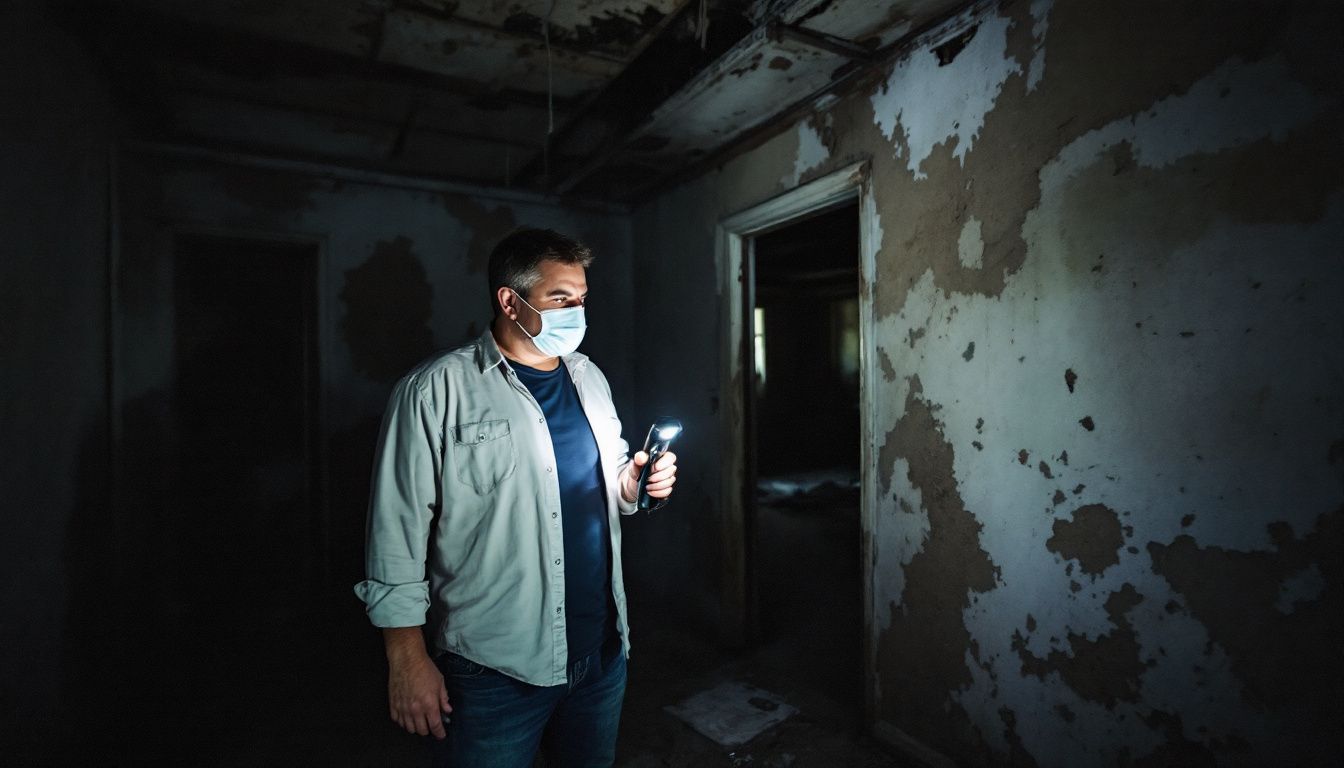
Asbestos in Residential Property: What Every Homeowner and Landlord Needs to Know
If your home was built before the year 2000, there is a realistic chance it contains asbestos. Asbestos residential property risks are not a relic of the past — they affect millions of UK homes today, and mishandling the material can have devastating consequences for health.
The good news is that with the right knowledge and the right professionals, asbestos can be managed safely and legally. This post covers everything you need to know: where asbestos hides in homes, what the law requires of you, how surveys work, and when removal becomes necessary.
Why Asbestos Was Used So Widely in Homes
Asbestos was not used carelessly — it was genuinely valued as a building material. It is fire-resistant, thermally insulating, durable, and cheap to produce. From the mid-twentieth century through to the late 1990s, it was incorporated into dozens of common building products.
The problem is that asbestos fibres, when disturbed and inhaled, embed themselves in lung tissue and can cause serious diseases including mesothelioma, asbestosis, and lung cancer. These conditions typically develop decades after exposure, which is why the full scale of the public health impact took so long to become apparent.
The UK government introduced phased bans on the most dangerous asbestos types. Crocidolite (blue asbestos) and amosite (brown asbestos) were banned progressively from the 1970s, with a complete ban on both by 1986. Chrysotile (white asbestos) — the most commonly used type — was banned in 1999. Any property built or refurbished before that date may contain asbestos-containing materials (ACMs).
Where Asbestos Hides in Residential Buildings
Asbestos does not announce itself. It can be present in materials that look perfectly ordinary, which is precisely why professional assessment matters.
Here are the most common locations where ACMs are found in homes:
- Artex and textured coatings — a very common source in properties built or decorated before the late 1980s
- Ceiling and floor tiles — vinyl floor tiles and ceiling tiles frequently contained chrysotile
- Pipe lagging and boiler insulation — particularly in older heating systems
- Roof and soffit boards — cement-based asbestos sheeting was widely used
- Garage roofs and outbuildings — corrugated asbestos cement sheeting is extremely common
- Insulating board — used in partition walls, fire doors, and around boilers
- Sprayed coatings — applied to structural steelwork or ceilings for fire protection
- Guttering and downpipes — older properties sometimes used asbestos cement
Asbestos in good condition and left undisturbed presents a relatively low risk. The danger arises when it is drilled, cut, sanded, or damaged — activities that are extremely common during home renovations.
The Legal Position for Homeowners and Landlords
The legal framework around asbestos in residential settings is sometimes misunderstood. Here is a clear breakdown of where the law stands.
Owner-Occupiers
If you own and live in your own home, the Control of Asbestos Regulations do not impose a formal legal duty on you to survey or manage asbestos. However, this does not mean you can ignore it.
If you are planning any renovation work, you have a responsibility to protect contractors working on your property — and they have a right to know what they might encounter. Before any building work begins, commissioning a refurbishment survey is strongly advisable. It identifies ACMs in the areas to be disturbed so that work can proceed safely.
Landlords and Property Managers
If you let a residential property, your obligations are considerably more formal. Landlords have duties under Section 11 of the Landlord and Tenant Act 1985 to maintain properties in a safe condition. The Defective Premises Act also applies, and failure to manage known hazards — including asbestos — can result in significant legal liability.
For common areas in blocks of flats or HMOs (houses in multiple occupation), the duty to manage asbestos under Regulation 4 of the Control of Asbestos Regulations applies directly. This means you must identify ACMs, assess their condition, and put a management plan in place.
Social housing landlords face additional scrutiny through the Housing Ombudsman Service. Non-compliance is not a minor administrative matter — it can result in unlimited fines and, in serious cases, imprisonment.
Sellers and Buyers
If you are selling a property that you know contains asbestos, transparency is essential. Buyers who commission a survey before purchase are protecting themselves from inheriting an unmanaged asbestos problem.
If you are buying an older property, factoring in the cost of an asbestos survey as part of your due diligence is simply good sense. Knowing what you are taking on before exchange of contracts can save significant expense — and stress — further down the line.
Types of Asbestos Survey for Residential Property
Not all asbestos surveys are the same. The type you need depends on what you intend to do with the property.
Management Survey
A management survey is designed for properties that are occupied and not undergoing major works. It identifies ACMs that could be disturbed during normal occupation and day-to-day maintenance, producing an asbestos register and risk-rated management plan.
This tells you what is present, where it is, and what condition it is in. It is the survey most landlords and property managers need as a baseline. It is conducted with minimal disruption and does not require the property to be vacant.
Refurbishment Survey
Before any renovation, extension, or significant alteration, a refurbishment survey is required. This is a more intrusive survey — the surveyor needs access to all areas that will be disturbed, including inside walls, above ceilings, and beneath floors. It must be completed before works begin, not during.
Demolition Survey
If a property or part of it is being demolished, a demolition survey is required. This is the most thorough type of survey, covering the entire structure to ensure all ACMs are identified and safely removed before demolition proceeds. No licensed demolition contractor should begin work without one.
Re-Inspection Survey
If you already have an asbestos register in place, it needs to be kept current. A re-inspection survey monitors the condition of known ACMs over time. This is particularly important for landlords managing multiple properties or larger residential blocks, where the condition of materials can change due to wear, accidental damage, or maintenance activity.
Asbestos Testing: Your Options
If you suspect a material contains asbestos but are not ready to commission a full survey, asbestos testing of individual samples is available. Supernova offers a postal testing kit from £30 per sample, which allows you to collect a sample yourself (where this is safe and appropriate) and send it to our UKAS-accredited laboratory for analysis.
Results confirm whether asbestos fibres are present and, if so, which type. However, sample testing alone does not constitute a survey. It tells you what is in a specific material — not where all ACMs in the property are located, nor their condition or risk rating.
For full peace of mind and legal compliance, a professional survey conducted by a BOHS P402-qualified surveyor remains the gold standard. Our surveyors collect samples using correct containment procedures, ensuring no fibres are released during the process. Samples are analysed under polarised light microscopy (PLM) at our accredited laboratory, and results are included in your written report.
What Happens During an Asbestos Survey
Understanding the process makes it easier to prepare and know what to expect.
- Booking: Contact Supernova by phone or online. We confirm availability — often within the same week — and send a booking confirmation.
- Site Visit: A BOHS P402-qualified surveyor attends at the agreed time and carries out a thorough visual inspection of the property.
- Sampling: Representative samples are collected from suspect materials using correct containment procedures to prevent fibre release.
- Lab Analysis: Samples are analysed at our UKAS-accredited laboratory using polarised light microscopy.
- Report Delivery: You receive a detailed asbestos register and risk-rated management plan in digital format within 3–5 working days. The report is fully compliant with HSG264 guidance.
When Asbestos Removal Is Necessary
Not all asbestos needs to be removed. In many cases, managing it in situ — monitoring its condition and ensuring it is not disturbed — is the safest and most practical approach. Unnecessary removal can actually increase risk by releasing fibres that would otherwise remain stable.
Asbestos removal becomes necessary when:
- The material is in poor condition and actively releasing fibres
- Renovation or demolition work will disturb it
- The material is in a location where it cannot be adequately protected from damage
- You are preparing a property for sale and want a clean bill of health
Licensed asbestos removal must be carried out by HSE-licensed contractors for the most hazardous materials, including asbestos insulation board, lagging, and sprayed coatings. These contractors follow strict procedures: sealing off the work area, using negative pressure enclosures, wearing full respiratory protective equipment, and disposing of waste at licensed facilities.
For lower-risk materials such as asbestos cement, a licensed contractor is not always legally required — but using a competent, experienced contractor is still strongly recommended.
Survey Costs and Pricing
Supernova offers transparent, fixed-price surveys across the UK. Here is a guide to standard pricing:
- Management Survey: From £195 for a standard residential or small commercial property
- Refurbishment & Demolition Survey: From £295, covering all areas to be disturbed prior to works
- Bulk Sample Testing Kit: From £30 per sample
- Re-Inspection Survey: From £150, plus £20 per ACM re-inspected
- Fire Risk Assessment: From £195 for a standard premises
All prices are subject to property size and location. Request a free quote for a price tailored to your specific property and requirements.
A fire risk assessment is a separate legal requirement for many residential landlords, particularly those managing HMOs or blocks of flats. Combining this with an asbestos survey can save time and reduce disruption to occupants.
The Regulations You Need to Understand
Asbestos management in the UK is governed by a clear legal framework. Here are the key instruments relevant to asbestos residential property owners and landlords:
- Control of Asbestos Regulations: The primary legislation governing work with asbestos in Great Britain. Sets out licensing requirements, notification duties, and obligations to protect workers and building occupants.
- HSG264 – Asbestos: The Survey Guide: The HSE’s definitive guidance on conducting management and refurbishment/demolition surveys. All Supernova surveys are conducted in accordance with HSG264.
- Regulation 4 – Duty to Manage: Applies to non-domestic premises and common areas of residential buildings. Requires duty holders to identify ACMs, assess risk, and maintain an up-to-date asbestos register.
- Landlord and Tenant Act 1985: Imposes repair and safety obligations on landlords, including the duty to address known hazards in let properties.
- Defective Premises Act: Imposes liability on landlords and property owners for defects — including unmanaged asbestos — that cause harm.
Practical Steps to Take Right Now
Knowing the risks is one thing — acting on them is what protects you, your tenants, and anyone working on your property. Here is a straightforward checklist:
- Establish whether your property was built before 2000. If so, assume ACMs may be present until proven otherwise.
- Do not disturb suspect materials. If you see damaged textured coatings, deteriorating floor tiles, or crumbling pipe lagging, leave them alone until they have been assessed.
- Commission the right survey before any works begin. A management survey for ongoing occupation; a refurbishment survey before any renovation.
- Keep your asbestos register up to date. If you have an existing register, schedule a re-inspection to check whether conditions have changed.
- Inform contractors. Any tradesperson working on your property has a right to know about known or suspected ACMs. Provide them with your asbestos register before work starts.
- Use licensed removal contractors where required. Do not attempt to remove high-risk materials yourself.
Why Choose Supernova Asbestos Surveys
Supernova has completed over 50,000 surveys across the UK and holds more than 900 five-star reviews. Our surveyors are BOHS P402/P403/P404 qualified — the recognised gold standard in asbestos surveying — and all laboratory analysis is carried out at our UKAS-accredited facility.
We offer same-week availability in most areas, transparent fixed pricing, and reports that are fully compliant with HSG264 and the Control of Asbestos Regulations. Whether you are a homeowner preparing for renovation, a landlord meeting your duty of care, or a buyer conducting pre-purchase due diligence, we have the right survey for your situation.
Call us on 020 4586 0680 or visit asbestos-surveys.org.uk to book your survey or request a free quote.
Frequently Asked Questions
Does every older home contain asbestos?
Not every property built before 2000 contains asbestos, but a significant proportion do. The likelihood increases the older the property and the more it has been extended or refurbished during the period when ACMs were in common use. The only way to know for certain is to commission a professional survey or have suspect materials tested.
Can I remove asbestos myself from my home?
Owner-occupiers are not legally prohibited from removing certain lower-risk asbestos materials themselves, but it is strongly inadvisable. Even materials that do not legally require a licensed contractor — such as some asbestos cement products — can release fibres if handled incorrectly. For any high-risk materials, including insulation board, lagging, or sprayed coatings, HSE-licensed removal contractors must be used.
Do landlords have a legal duty to survey for asbestos?
For common areas of residential buildings such as blocks of flats and HMOs, Regulation 4 of the Control of Asbestos Regulations imposes a formal duty to manage asbestos. This includes identifying ACMs, assessing their condition, and maintaining an asbestos register. For individual let properties, the duty is less prescriptive but landlords still carry legal liability under the Landlord and Tenant Act and the Defective Premises Act if known hazards are not managed.
How long does an asbestos survey take?
For a standard residential property, a management survey typically takes between one and three hours depending on the size and age of the building. A refurbishment survey may take longer if access to concealed areas is required. Reports are usually delivered within 3–5 working days of the site visit.
What should I do if I find damaged asbestos in my home?
Do not touch or disturb it. Keep the area clear and limit access. Contact a professional surveyor to assess the material and advise on the appropriate course of action — whether that is encapsulation, repair, or removal. In the meantime, do not attempt to clean up any debris with a vacuum cleaner, as standard vacuums will spread rather than contain fibres.