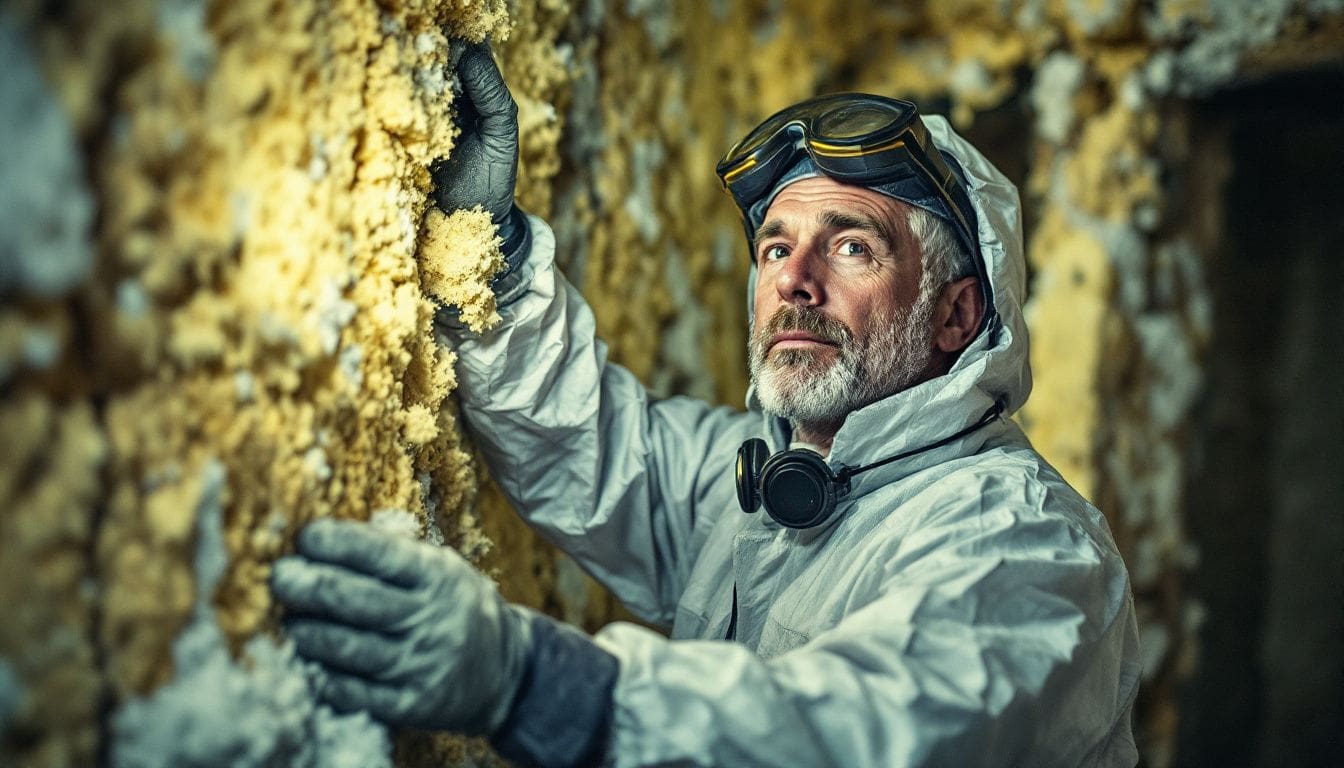
Why Professional Asbestos Removal Is Never a Job for Amateurs
Asbestos is still present in millions of UK properties built before 2000. When it’s disturbed — even briefly — microscopic fibres become airborne and can lodge permanently in lung tissue, causing diseases that may not surface for decades. Understanding the importance of professional asbestos removal isn’t just a regulatory box-ticking exercise; it’s the difference between a safe building and a silent, long-term health crisis.
Whether you’re a homeowner, landlord, or facilities manager, this post cuts through the noise and gives you a clear picture of the risks, the legal landscape, and what responsible asbestos removal actually involves.
The Health Risks Are Severe — and Irreversible
Asbestos-related diseases kill around 5,000 people in the UK every year. That figure hasn’t dropped significantly in decades, largely because the diseases — mesothelioma, lung cancer, and asbestosis — have a latency period of 20 to 50 years. People dying today were often exposed in the 1970s and 1980s.
There is no safe level of asbestos exposure. Even a single, brief encounter with disturbed asbestos-containing material (ACM) can cause harm, depending on the fibre type and concentration. Chrysotile, amosite, and crocidolite — the three main types found in UK buildings — all carry serious risks, with crocidolite (blue asbestos) considered the most dangerous.
When Does Asbestos Become Dangerous?
Asbestos that is undisturbed and in good condition is generally considered lower risk. The danger escalates when materials are damaged, deteriorating, or subject to disturbance through renovation, demolition, or even routine maintenance work.
Common ACMs found in UK properties include:
- Sprayed coatings on ceilings, beams, and columns
- Insulation boards used in partition walls and ceiling tiles
- Floor tiles and associated adhesives
- Roofing felt and corrugated roofing sheets
- Pipe lagging and boiler insulation
- Textured decorative coatings such as Artex
Any planned work on a property built before 2000 should be preceded by a professional asbestos survey. Attempting to remove or disturb these materials without proper training, equipment, and licensing puts everyone in the building — and beyond — at serious risk.
The Importance of Professional Asbestos Removal: What It Actually Involves
The importance of professional asbestos removal lies not just in taking material out of a building, but in doing so without releasing fibres into the environment. This requires specialist knowledge, controlled conditions, and strict adherence to procedures that untrained individuals simply cannot replicate.
A licensed asbestos removal contractor will typically follow this process:
- Site assessment: Reviewing the asbestos survey report and understanding the type, condition, and location of all ACMs.
- Enclosure and containment: Erecting a sealed enclosure around the work area, often with negative pressure units to prevent fibres escaping.
- Personal Protective Equipment (PPE): Operatives wear full-face respirators with appropriate filters, disposable coveralls, and gloves.
- Controlled removal: Materials are dampened to suppress fibre release and carefully removed using appropriate tools and techniques.
- Waste double-bagging: All asbestos waste is double-bagged in clearly labelled, UN-approved sacks.
- Air monitoring: Independent air testing is carried out during and after removal to confirm fibre levels are within safe limits.
- Clearance certificate: A four-stage clearance procedure is completed before the area is handed back for use.
None of this is achievable with a dust mask and a bin bag — which is precisely how some unlicensed removals are attempted, and precisely why they cause lasting harm.
Legal Requirements: What UK Law Demands
Asbestos removal in the UK is tightly governed by the Control of Asbestos Regulations, which set out clear duties for employers, building owners, and contractors. Failure to comply isn’t just a health risk — it’s a criminal offence.
Licensing Requirements
Under the Control of Asbestos Regulations, most asbestos removal work must be carried out by a contractor licensed by the Health and Safety Executive (HSE). There are limited exceptions — known as notifiable non-licensed work (NNLW) — but even these require notification to the relevant enforcing authority and strict controls.
Licensed work covers the removal of higher-risk materials such as sprayed coatings, insulation boards, and pipe lagging. Using an unlicensed contractor for this type of work is illegal, regardless of any perceived cost savings.
The Duty to Manage
Regulation 4 of the Control of Asbestos Regulations places a legal duty on those responsible for non-domestic premises to manage asbestos. This includes identifying ACMs, assessing their condition, and putting a written management plan in place.
Ignoring this duty can result in prosecution, unlimited fines, and in serious cases, imprisonment. This isn’t a theoretical risk — the HSE actively investigates and prosecutes duty holders who fail to meet their obligations.
Waste Disposal Regulations
Asbestos waste is classified as hazardous waste under UK law. It must be transported using a registered waste carrier, accompanied by the correct consignment documentation, and disposed of at a licensed hazardous waste facility.
Fly-tipping asbestos — or simply putting it in a skip — is illegal and carries substantial penalties. HSE guidance document HSG264 provides detailed technical guidance on asbestos surveying and complements the regulatory framework. Any reputable contractor will work in accordance with both the regulations and HSE guidance.
Environmental Consequences of Improper Disposal
The risks of mishandled asbestos don’t stop at the building boundary. When asbestos is improperly disposed of — dumped, broken up, or left exposed — fibres contaminate soil and can enter watercourses. Once in the environment, asbestos fibres are effectively permanent. They do not biodegrade.
Contaminated land can render a site unusable and carries significant remediation costs. Properties with a history of improper asbestos disposal can face serious problems during conveyancing, as solicitors and surveyors increasingly flag asbestos as a material concern.
Enforcement action from the Environment Agency and local authorities can result in significant financial penalties and reputational damage — particularly for commercial property owners and developers. The cost of doing things properly is always lower than the cost of putting things right after the fact.
Why DIY Asbestos Removal Is a False Economy
The internet is full of guidance suggesting that some asbestos removal is safe for homeowners to carry out themselves. While there are limited circumstances in which this is technically permissible — for instance, the removal of certain cement-bonded asbestos products in domestic settings — the practical risks are considerable.
Without the ability to test air quality, confirm fibre types, or carry out a proper clearance procedure, there is no reliable way for an untrained person to know whether they’ve created a contamination risk. This is precisely why the importance of professional asbestos removal cannot be overstated when it comes to protecting both health and legal liability.
Professional asbestos removal provides documented evidence that the work has been completed safely, which matters enormously if you’re selling a property, letting it, or handing it back to a client. The cost of professional removal varies depending on the quantity and type of material involved, but it is rarely as expensive as people fear. When weighed against potential health consequences, legal liability, and remediation costs, it represents genuine value.
Choosing the Right Asbestos Removal Contractor
Not all contractors are equal. When selecting a licensed asbestos removal specialist, look for the following:
- HSE licence: Verify their licence on the HSE’s publicly available register before engaging them.
- UKAS-accredited air monitoring: Independent air testing should be carried out by a UKAS-accredited laboratory, not the removal contractor themselves.
- Clear documentation: You should receive a full waste consignment note, clearance certificate, and air test results as standard.
- Insurance: Ensure they hold adequate public liability and employer’s liability insurance.
- Experience with your property type: Commercial, industrial, and residential removals each have different challenges.
A reputable contractor will always recommend a survey before quoting for removal. If someone is offering to remove asbestos without first understanding what’s there and in what condition, treat that as a red flag.
The Role of Asbestos Surveys Before Any Removal Work
Professional removal doesn’t begin with the removal itself — it begins with a thorough survey. A refurbishment and demolition survey is required before any intrusive work takes place. This type of survey is designed to locate all ACMs in areas that will be affected by the planned work, including those concealed behind walls, above suspended ceilings, and beneath floor coverings.
Without a proper survey, removal contractors are working blind. They may miss hidden ACMs or, worse, disturb material they didn’t know was there. The survey forms the foundation of a safe removal project.
For properties scheduled for significant structural work or full demolition, a demolition survey is a legal requirement and must be completed before any work commences. This ensures that all asbestos-containing materials are identified and managed before the structure is disturbed — protecting workers, neighbouring properties, and the wider environment.
What Happens If Asbestos Removal Goes Wrong
The consequences of poorly managed asbestos removal can be wide-reaching and long-lasting. Beyond the immediate health risks to anyone present during the work, there are serious downstream implications for property owners and contractors alike.
A building that has been contaminated through improper removal may require extensive decontamination — a process that is significantly more expensive than the original removal would have been. Depending on the severity, the property may be unusable until remediation is complete.
From a legal standpoint, property owners who commissioned or permitted unlicensed removal work can face prosecution under the Control of Asbestos Regulations, even if they were not directly involved in carrying out the work. Ignorance of the law is not a defence.
Reputationally, the fallout from mishandled asbestos can be significant for commercial landlords, developers, and facilities managers. Tenants, insurers, and prospective buyers all take asbestos seriously, and documented evidence of proper management is increasingly expected as standard.
Asbestos Surveys and Removal Across the UK
Supernova Asbestos Surveys provides professional asbestos surveys and removal support across the UK, with specialist teams covering all major regions and property types.
If you’re based in the capital, our asbestos survey London service covers all property types across every London borough, from period commercial premises to modern residential developments.
For clients in the North West, our asbestos survey Manchester team is on hand to support both commercial and residential projects with fast turnaround times and full documentation.
In the Midlands, our asbestos survey Birmingham service ensures that properties across the region are assessed to the highest standard before any work begins.
Wherever you are in the UK, the process is the same: survey first, removal second, documentation throughout. There are no shortcuts that don’t carry consequences.
Protecting Your Property, Your People, and Your Liability
The importance of professional asbestos removal comes down to three things: health, law, and financial exposure. Get any one of those wrong and the consequences can follow you — and your building — for years.
Proper removal isn’t a premium option reserved for large commercial projects. It’s the baseline standard for any property where asbestos-containing materials are present and need to be disturbed or removed. The documentation it produces — clearance certificates, air test results, waste consignment notes — becomes part of your property’s permanent record and protects you at every future transaction or inspection.
Cutting corners on asbestos removal is never a saving. It’s a deferred cost, with interest.
Frequently Asked Questions
Do I always need a licensed contractor to remove asbestos?
Most asbestos removal work in the UK must be carried out by an HSE-licensed contractor. There are limited exceptions for notifiable non-licensed work (NNLW), but even this category requires notification to the relevant enforcing authority and adherence to strict controls. Higher-risk materials — including sprayed coatings, insulation boards, and pipe lagging — always require a licensed contractor. If you’re unsure which category your material falls into, a professional survey will clarify this before any work begins.
What is a four-stage clearance and why does it matter?
A four-stage clearance is the procedure carried out after asbestos removal to confirm the area is safe for reoccupation. It includes a thorough visual inspection, air testing by an independent UKAS-accredited analyst, and the issuing of a clearance certificate. Without this process, there is no documented confirmation that the removal was successful and the area is safe. It’s an essential part of any professional removal project — not an optional add-on.
How is asbestos waste legally disposed of in the UK?
Asbestos waste is classified as hazardous waste under UK law. It must be double-bagged in UN-approved sacks, transported by a registered waste carrier with the correct consignment documentation, and taken to a licensed hazardous waste disposal facility. Disposing of asbestos in a standard skip or fly-tipping it is illegal and can result in significant fines and prosecution. A reputable contractor will handle all waste documentation as part of the removal process.
Can I sell or let a property that contains asbestos?
Yes — having asbestos present in a property does not automatically prevent a sale or letting, provided the material is in good condition and properly managed. However, you are legally required to disclose known asbestos to prospective buyers or tenants, and if a management survey has identified ACMs, a written management plan should be in place. Properties where asbestos has been improperly removed or disposed of can face significant complications during conveyancing. Professional management and documentation are essential.
How do I know if my property contains asbestos?
The only reliable way to confirm whether a property contains asbestos-containing materials is to commission a professional asbestos survey. Visual identification alone is not sufficient, as many ACMs are indistinguishable from non-asbestos materials without laboratory analysis. Any property built or refurbished before 2000 should be treated as potentially containing asbestos until a survey confirms otherwise. A management survey is appropriate for occupied buildings, while a refurbishment or demolition survey is required before any intrusive work takes place.
Get Expert Help from Supernova Asbestos Surveys
Supernova Asbestos Surveys has completed over 50,000 surveys nationwide, working with homeowners, landlords, facilities managers, and developers to manage asbestos safely and legally. Our teams combine thorough surveying with clear, actionable reporting — so you always know exactly what you’re dealing with and what needs to happen next.
To book a survey or discuss your removal requirements, call us on 020 4586 0680 or visit asbestos-surveys.org.uk. We cover all property types across the UK, with fast turnaround times and full documentation as standard.