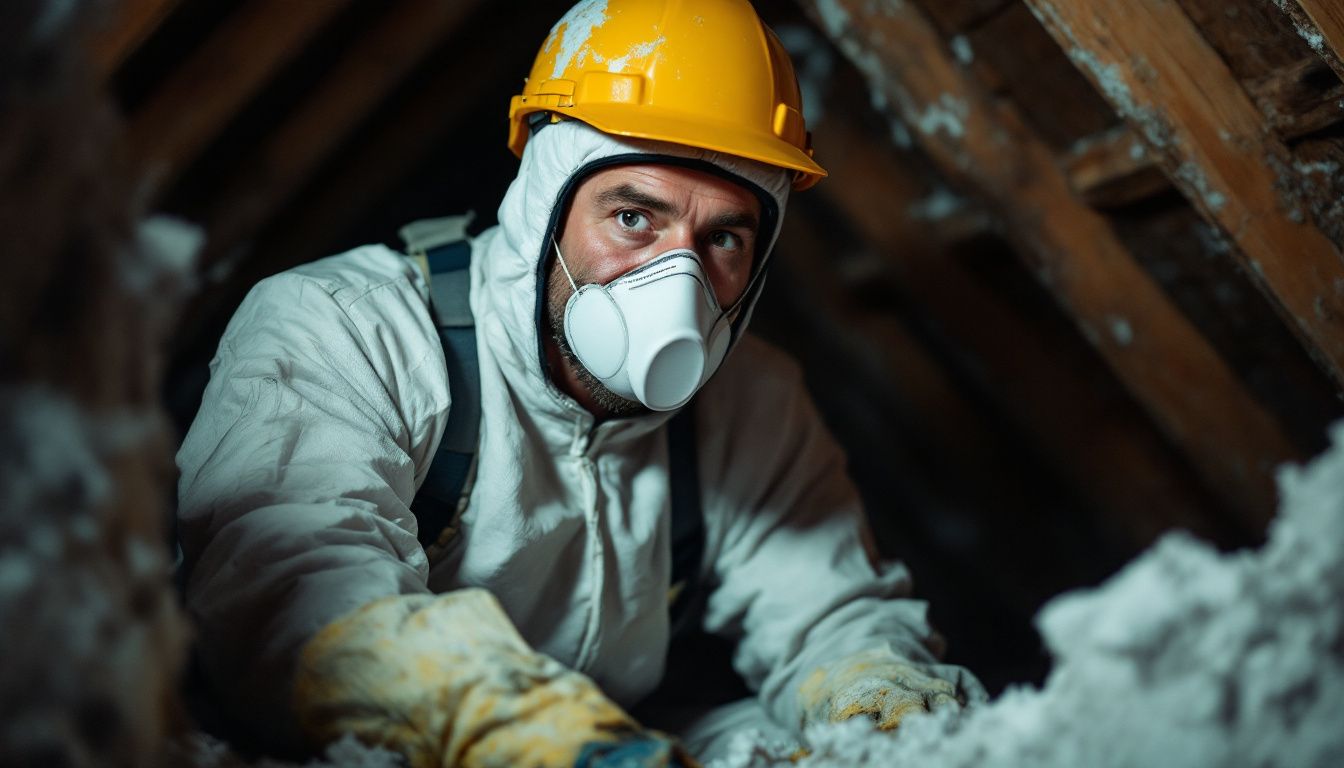
Asbestos Contamination: What Every UK Property Owner Needs to Know
Asbestos contamination is not a relic of the past — it is an active, ongoing hazard in tens of thousands of UK buildings right now. If your property was built or refurbished before 2000, there is a realistic chance asbestos-containing materials (ACMs) are present, and any disturbance could release fibres capable of causing fatal diseases decades later.
For property owners, managers, and employers, understanding how asbestos contamination occurs, how to identify it, and what to do about it is both a legal obligation and a basic duty of care to the people who use your building.
What Is Asbestos Contamination?
Asbestos contamination occurs when asbestos fibres are released from ACMs into the surrounding environment — whether that is the air, soil, water, or the wider building fabric. This can happen during demolition, refurbishment, accidental damage, or simply through the natural deterioration of materials over time.
The fibres themselves are microscopic. You cannot see them with the naked eye, you cannot smell them, and you will not feel them entering your lungs. That invisibility is precisely what makes asbestos contamination so dangerous — and why professional identification is essential rather than optional.
Asbestos was used extensively in UK construction throughout the twentieth century. It appeared in floor tiles, ceiling tiles, pipe lagging, spray coatings, insulating board, roofing felt, and dozens of other materials. Its use was not banned entirely in Great Britain until 1999, meaning any building constructed or refurbished before that date could contain it.
The Health Risks Linked to Asbestos Contamination
The health consequences of asbestos exposure are severe and irreversible. Once fibres are inhaled, they become lodged in lung tissue and cannot be expelled by the body. Over time — often decades — this leads to serious, life-limiting conditions.
Mesothelioma
Mesothelioma is a cancer of the lining of the lungs, abdomen, or heart. It is almost exclusively caused by asbestos exposure and carries a very poor prognosis. Thousands of people in the UK die from mesothelioma every year, and many of those individuals were exposed to asbestos contamination in workplaces or homes they believed were safe.
Lung Cancer
Asbestos exposure significantly increases the risk of lung cancer, particularly in those who also smoke. The risk compounds with the duration and intensity of exposure, but there is no known safe level of asbestos fibre inhalation.
Asbestosis
Asbestosis is a chronic scarring of lung tissue caused by prolonged asbestos exposure. It causes progressive breathlessness and significantly reduces quality of life. There is no cure — only management of symptoms.
These diseases have long latency periods, often 20 to 40 years between exposure and diagnosis. Someone exposed to asbestos contamination during a building renovation today may not develop symptoms until the 2040s or 2050s. That delay makes prevention the only realistic strategy.
How to Identify Asbestos Contamination in a Building
Identifying asbestos contamination begins with understanding where ACMs are likely to be found. Visual inspection alone is never sufficient to confirm or rule out their presence — only laboratory analysis can do that.
Where Asbestos Hides
Common locations for ACMs in UK buildings include:
- Textured coatings such as Artex on ceilings and walls
- Asbestos insulating board (AIB) used in ceiling tiles, partition walls, and fire doors
- Pipe lagging and boiler insulation in older heating systems
- Vinyl floor tiles and the adhesive beneath them
- Corrugated roofing sheets and guttering on industrial and agricultural buildings
- Soffit boards and external cladding
- Spray-applied coatings on structural steelwork
Materials in good condition and left undisturbed are generally lower risk. Damaged, friable, or deteriorating ACMs present a much more immediate threat because fibres can become airborne without any deliberate disturbance.
Professional Survey and Testing
The only reliable way to confirm whether a material contains asbestos is laboratory analysis. A qualified surveyor will collect representative samples, which are then analysed under polarised light microscopy at a UKAS-accredited laboratory.
For buildings in ongoing use, a management survey is the standard starting point. This involves a thorough inspection of accessible areas to locate and assess the condition of any ACMs, resulting in a risk-rated asbestos register and management plan.
Before any renovation or demolition work, a refurbishment survey is required. This is a more intrusive investigation of the specific areas to be disturbed, ensuring that contractors are not unknowingly cutting into ACMs during works.
If you already have an asbestos register but it has not been reviewed recently, a re-inspection survey is needed to reassess the condition of known ACMs and update your management plan accordingly.
For smaller-scale investigations or preliminary checks, asbestos testing of specific materials can be arranged without commissioning a full survey. Alternatively, if you want to collect and submit samples yourself where this is permitted and appropriate, a postal testing kit is available to order directly.
Your Legal Obligations Under UK Regulations
Asbestos contamination management in the UK is governed by a clear legal framework. Ignorance of these obligations is not a defence.
The Control of Asbestos Regulations
The Control of Asbestos Regulations set out the duties of employers, building owners, and those in control of non-domestic premises. The key obligations include identifying ACMs, assessing their condition, maintaining an asbestos register, and implementing a written management plan.
Regulation 4 — the Duty to Manage — applies to non-domestic premises and places legal responsibility on the dutyholder to take reasonable steps to find out whether ACMs are present, assess their condition, and manage them appropriately. Failure to comply can result in prosecution, significant fines, and — more critically — harm to building occupants and workers.
Notification Requirements
For licensable asbestos work — which covers most work with asbestos insulating board, lagging, and sprayed coatings — contractors must notify the relevant enforcing authority at least 14 days before work begins. This requirement exists to allow oversight of high-risk activities and ensure that proper controls are in place before any disturbance of ACMs occurs.
HSG264 — The Survey Guide
The HSE’s HSG264 guidance sets out the standards for conducting asbestos surveys in the UK. Any survey that does not follow HSG264 methodology is unlikely to be legally compliant or defensible in the event of an incident. Supernova’s surveyors follow HSG264 on every inspection, ensuring your documentation meets the required standard.
Safe Removal of Asbestos Contamination
When ACMs need to be removed — whether because they are deteriorating, being disturbed by works, or being managed out of a building — the process must be handled correctly. Improper removal is one of the most common causes of avoidable asbestos contamination spreading beyond its original location.
Licensed vs. Non-Licensed Work
Not all asbestos removal requires a licensed contractor, but the highest-risk materials — including asbestos insulating board, lagging, and sprayed coatings — must only be removed by contractors holding a licence from the HSE. Using an unlicensed contractor for licensable work is a criminal offence and puts everyone on site at serious risk.
Even for non-licensed work, strict controls apply. Workers must be appropriately trained, respiratory protective equipment must be worn, and the area must be properly contained to prevent fibre spread. Cutting corners on any of these requirements is not an option.
If you are unsure whether the materials in your building require licensed removal, speak to a specialist before any work begins. Supernova’s asbestos removal service covers the full range of ACM types and can advise you on the correct approach for your specific situation.
Site Preparation and Containment
Before any asbestos removal work begins, the affected area must be prepared to contain asbestos contamination. This typically involves:
- Isolating the work area with physical barriers and polythene sheeting
- Sealing ventilation systems to prevent fibre migration
- Establishing a decontamination unit for workers entering and leaving the area
- Wetting materials prior to removal to suppress fibre release
- Using negative pressure enclosures for high-risk removal work
Air monitoring during and after removal work is essential. Clearance air testing must confirm that fibre concentrations have returned to background levels before the area is handed back for normal use. A site clearance certificate should always be issued following licensed removal work — if a contractor cannot provide one, that is a serious red flag.
Proper Disposal of Asbestos Waste
Asbestos waste is classified as hazardous waste under UK legislation and must be disposed of through a tightly controlled process. Fly-tipping or improper disposal of asbestos is a serious criminal offence that carries substantial penalties.
Packaging and Transport
ACMs must be kept wet during removal and then double-bagged or wrapped in heavy-duty polythene sheeting before being sealed and labelled as hazardous asbestos waste. The packaging must be intact and clearly marked before it leaves the site.
Transport of asbestos waste must comply with hazardous waste carrier regulations. Only registered waste carriers should be used, and a consignment note must accompany every load. Always request copies of these documents for your records.
Disposal at Regulated Facilities
Asbestos waste can only be deposited at landfill sites licensed to accept it. These facilities have specific cells designated for hazardous waste, with controls in place to prevent fibre release and groundwater contamination.
Your contractor should provide documentation confirming that waste has been disposed of at an approved facility. Always ask for this paperwork — it forms part of your compliance record and demonstrates that the asbestos contamination has been properly managed from start to finish.
Emerging Recycling Technologies
Research into asbestos recycling continues to develop. One method involves heating asbestos waste at very high temperatures to convert it into a non-hazardous, glass-like material. While the cost of this process currently exceeds standard disposal, it represents a promising direction for reducing the volume of asbestos waste entering landfill over the long term.
Asbestos Contamination Across Different Property Types
The risk profile of asbestos contamination varies depending on the type and age of the building involved. Understanding where your property sits helps you prioritise action appropriately.
Residential Properties
Homeowners are not subject to the Duty to Manage, but they are still at real risk from asbestos contamination during DIY work. Drilling into an Artex ceiling, removing old floor tiles, or disturbing a partition wall can all release fibres into the air.
If you are planning any work on a pre-2000 home, arrange asbestos testing before you start — not after. The cost of testing is trivial compared to the consequences of unknowingly exposing yourself and your family to asbestos contamination.
Commercial and Industrial Premises
Offices, warehouses, factories, and retail units built before 2000 are subject to the full legal framework under the Control of Asbestos Regulations. Dutyholders must have a current asbestos register and management plan in place, and regular re-inspections are required to monitor the condition of known ACMs.
Asbestos contamination in commercial settings carries additional risk because maintenance workers, contractors, and tradespeople are regularly working in and around the building fabric. Without a current register, those workers have no way of knowing what they might disturb.
Schools and Public Buildings
Schools, hospitals, and other public buildings often contain significant quantities of ACMs due to the scale of construction activity in the mid-twentieth century. These buildings require particularly rigorous asbestos management given the vulnerability of their occupants. There is no room for a relaxed approach when children or patients are involved.
Local Coverage Across the UK
Asbestos contamination is a national issue, and Supernova operates across the country to support property owners and managers wherever they are based. If your property is in the capital, our asbestos survey London service provides rapid, expert coverage across the city.
For properties in the north-west, our asbestos survey Manchester team offers the same standard of service with local knowledge and fast turnaround. And for the Midlands, our asbestos survey Birmingham team is on hand to support commercial and residential clients alike.
Combining Asbestos and Fire Safety Management
Asbestos management and fire safety are often addressed separately, but they are closely linked in practice. Many ACMs — particularly asbestos insulating board used in fire doors and partition walls — serve a genuine fire-resistance function within a building.
Removing or disturbing these materials without understanding their role in the building’s passive fire protection strategy can inadvertently compromise fire safety. Any refurbishment or removal programme should consider both the asbestos risk and the fire safety implications of the proposed works before a decision is made.
Property managers responsible for both asbestos and fire safety documentation will find that maintaining both registers in parallel makes compliance significantly more manageable. Supernova can advise on how to structure your documentation to satisfy both sets of obligations efficiently.
What to Do If You Suspect Asbestos Contamination Right Now
If you believe asbestos contamination has already occurred — perhaps because a material has been damaged, disturbed during works, or a survey has flagged a deteriorating ACM — the immediate steps are straightforward:
- Stop work immediately if any disturbance is ongoing. Do not attempt to clean up visible debris with a domestic vacuum or brush — this will spread fibres further.
- Evacuate and restrict access to the affected area. Keep people away until a specialist has assessed the situation.
- Contact a qualified asbestos surveyor to assess the extent of contamination and advise on the appropriate response. Do not rely on visual inspection alone.
- Arrange professional air monitoring to establish whether airborne fibre levels are elevated and whether the area is safe for re-entry.
- Commission specialist cleaning or removal as directed by your surveyor, using appropriately licensed contractors where required.
Acting quickly and correctly in the immediate aftermath of an asbestos contamination incident can significantly limit the extent of exposure and the cost of remediation. Acting slowly, or attempting to manage it without professional support, almost always makes the situation worse.
Frequently Asked Questions
How do I know if my building has asbestos contamination?
You cannot determine the presence of asbestos contamination by sight alone. The only reliable method is laboratory analysis of material samples collected by a qualified surveyor. If your building was constructed or refurbished before 2000, you should commission a management survey to identify any ACMs and assess their condition before any work takes place.
Is asbestos contamination always dangerous?
Not all ACMs present an immediate risk. Materials in good condition that are not being disturbed are generally lower risk than damaged or deteriorating ones. The danger arises when fibres become airborne — typically through disturbance, damage, or deterioration. A professional assessment will determine the risk level of specific materials and advise on the appropriate management approach.
Can I remove asbestos myself to deal with contamination?
For certain low-risk, non-licensed materials, limited DIY removal may be technically permissible, but it is rarely advisable without proper training and equipment. For the highest-risk materials — including asbestos insulating board, lagging, and sprayed coatings — removal must only be carried out by an HSE-licensed contractor. Attempting unlicensed removal of these materials is a criminal offence.
What are my legal obligations if I discover asbestos contamination in a commercial building?
Under the Control of Asbestos Regulations, dutyholders in non-domestic premises are legally required to identify ACMs, assess their condition, maintain an asbestos register, and implement a written management plan. If asbestos contamination is discovered or suspected, you must act promptly to assess and manage the risk. Failure to do so can result in prosecution and significant fines.
How long does asbestos contamination remediation take?
The timescale depends on the extent and type of contamination. A small-scale removal of non-licensed material may be completed in a day. Larger projects involving licensed removal of significant quantities of ACMs can take several weeks, including site preparation, removal, air monitoring, and clearance certification. Your surveyor and removal contractor will provide a programme of works specific to your situation.
Get Expert Support from Supernova Asbestos Surveys
Supernova Asbestos Surveys has completed over 50,000 surveys across the UK, helping property owners, managers, and employers manage asbestos contamination safely and in full compliance with UK regulations. Whether you need an initial survey, ongoing management support, or specialist advice following a contamination incident, our team is ready to help.
Call us on 020 4586 0680 or visit asbestos-surveys.org.uk to find out how we can support your property.