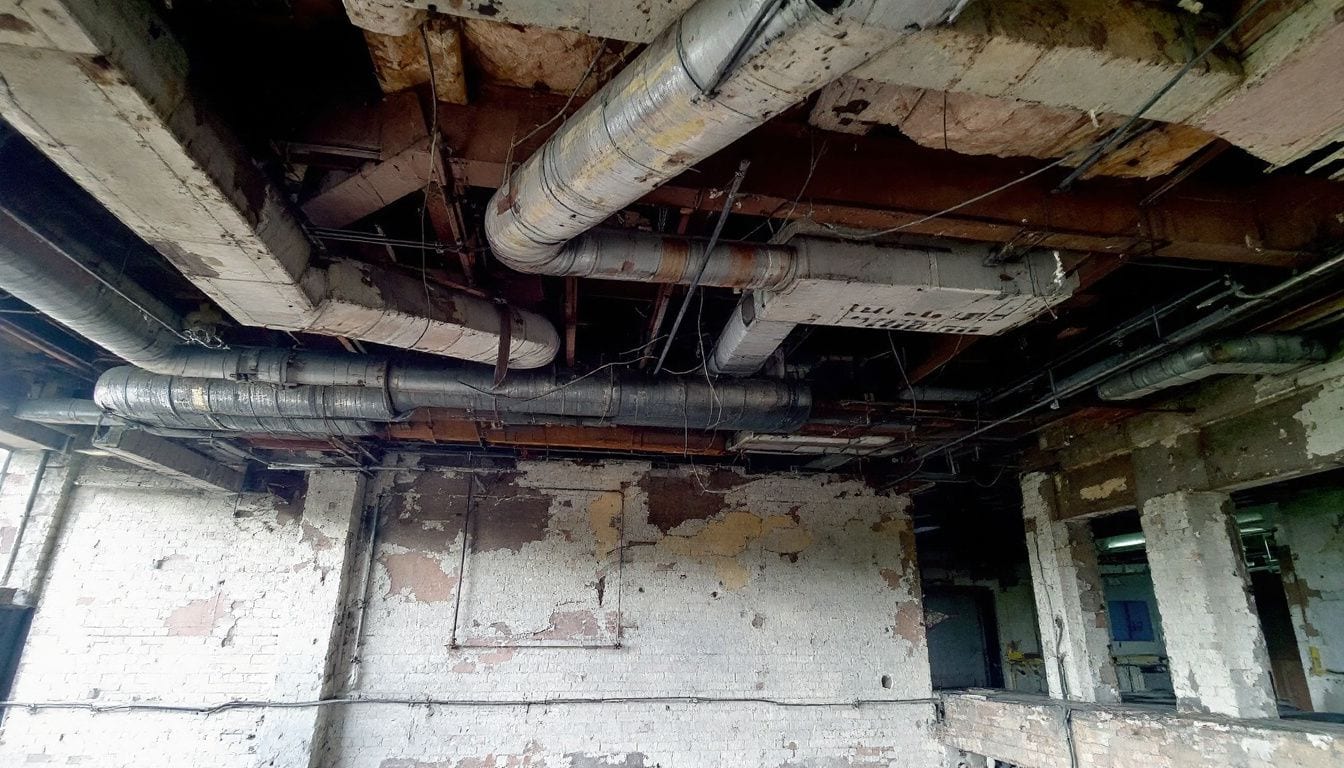
Why Asbestos Surveys for Healthcare Buildings Are a Legal and Moral Necessity
Hospitals, GP surgeries, care homes, and NHS estates sit among the most complex buildings to manage from an asbestos perspective. Patients, visitors, clinical staff, and maintenance teams all occupy the same spaces — often simultaneously — and many of those spaces were built or refurbished during the decades when asbestos was used extensively in UK construction.
Asbestos surveys for healthcare settings are not optional extras. They are a fundamental part of keeping vulnerable people safe, and in a sector where the duty of care extends to some of the most at-risk members of society, the consequences of getting this wrong are severe.
If you manage a healthcare property — whether that is an acute hospital, a community clinic, a dental practice, or a residential care facility — here is what you need to know.
The Scale of Asbestos in UK Healthcare Buildings
The NHS estate is one of the largest property portfolios in the country. A significant proportion of that estate was constructed between the 1950s and 1980s — the peak era for asbestos use in UK buildings. Asbestos-containing materials (ACMs) were used in ceiling tiles, floor tiles, pipe lagging, boiler rooms, fire doors, partition walls, and roof panels across hundreds of NHS sites.
Private healthcare facilities, care homes, and GP practices occupy similarly aged buildings. Many of these properties have changed hands, been refurbished multiple times, or had maintenance work carried out without proper asbestos management in place.
The result is that ACMs may be present in locations that are undocumented, unmonitored, and improperly managed. This is precisely why structured asbestos surveys for healthcare properties are so critical. Without a thorough survey, you simply cannot know what is there — or whether it is putting people at risk.
What Types of Asbestos Survey Does a Healthcare Building Need?
Not every survey is the same. The type required depends on how the building is being used and what work is planned. Healthcare property managers typically need to consider three main survey types.
Management Survey
A management survey is the standard survey for any building in normal occupation and use. It identifies the location, extent, and condition of any ACMs that could be disturbed or damaged during everyday activities — including routine maintenance.
For a healthcare building, this is your baseline legal requirement. The survey produces an asbestos register and a risk-rated management plan, telling you what ACMs are present, where they are, what condition they are in, and what action needs to be taken.
In a healthcare setting, this register must be accessible to maintenance contractors, facilities managers, and anyone else who may disturb the fabric of the building. An out-of-date or incomplete register is not just a compliance failure — it is a direct risk to the people working and receiving care in the building.
Refurbishment Survey
If any part of a healthcare building is being refurbished, extended, or altered, a refurbishment survey is legally required before work begins. This is a more intrusive survey, accessing areas that would not normally be disturbed — including voids, service ducts, and structural elements.
Healthcare refurbishment projects are common. Ward upgrades, theatre modernisation, new imaging suites, and care home extensions all require this level of survey before a single tool is picked up. Proceeding without one puts contractors, clinical staff, and patients at risk — and exposes the duty holder to serious legal liability.
Demolition Survey
Where full or partial demolition is planned, a demolition survey must be completed to ensure every ACM is identified and safely managed before any structural work commences. This is the most thorough and intrusive survey type, and it is a legal prerequisite — not a recommendation.
Healthcare estates undergoing major redevelopment must ensure this step is completed in full, regardless of how urgent the build programme feels. There are no shortcuts that are worth taking.
Re-inspection Survey
Where ACMs have been identified and a decision has been made to manage them in situ rather than remove them, those materials must be monitored over time. A re-inspection survey checks the condition of known ACMs on a periodic basis — typically annually — to confirm they remain safe and have not deteriorated.
In a busy healthcare environment, ACMs can be damaged by accidental impact, water ingress, or maintenance activities. Regular re-inspection is not just good practice — it is a legal obligation under the duty to manage asbestos.
Legal Duties for Healthcare Duty Holders
The legal framework governing asbestos management in the UK is clear and non-negotiable. Healthcare organisations — whether NHS trusts, private hospital groups, care home operators, or GP practice owners — all fall within the scope of these regulations.
The Control of Asbestos Regulations
The Control of Asbestos Regulations set out the core legal duties for anyone who manages non-domestic premises. Regulation 4 — the duty to manage — requires duty holders to take reasonable steps to find out whether ACMs are present, assess their condition, and manage the risk they pose.
This duty applies to all non-domestic premises, which includes every healthcare building in the UK. Failure to comply is not treated lightly. The Health and Safety Executive (HSE) has enforcement powers that include improvement notices, prohibition notices, and prosecution.
In a healthcare context, where the consequences of asbestos exposure can be catastrophic and long-lasting, regulators take a particularly serious view of non-compliance.
HSG264 — The Survey Standard
All asbestos surveys in the UK should be carried out in accordance with HSG264, the HSE’s definitive guidance on asbestos surveying. HSG264 sets out the methodology for both management surveys and refurbishment and demolition surveys, including sampling requirements, laboratory analysis standards, and report content.
When commissioning asbestos surveys for healthcare properties, always confirm that your surveying company works to HSG264 standards and uses a UKAS-accredited laboratory for sample analysis. This is not just about quality — it is about producing legally defensible documentation that will stand up to scrutiny from the HSE or a court.
The Health and Safety at Work Act
The Health and Safety at Work Act places a general duty on employers to protect the health, safety, and welfare of their employees and anyone else affected by their work activities. For healthcare organisations, this includes patients, visitors, contractors, and clinical staff.
Asbestos management is a central part of fulfilling that duty. Where an organisation can be shown to have failed in its asbestos obligations, the consequences — both legal and reputational — can be severe and long-lasting.
The Unique Challenges of Asbestos Management in Healthcare
Healthcare buildings present challenges that are not found in offices, schools, or standard commercial properties. Understanding these challenges is essential to managing asbestos effectively.
Continuous Occupation
Unlike an office that can be cleared for survey work, a hospital ward or care home cannot simply be vacated. Surveys must be planned around clinical activity, patient welfare, and infection control requirements. This demands a surveying team with genuine experience of working in live healthcare environments — not just a team that understands asbestos in isolation.
Coordination with clinical leads, estates teams, and infection control officers is essential before any survey begins. A surveying company that has never worked in a clinical setting is not the right choice for this type of commission.
Complex Building Structures
Healthcare buildings often have extensive service runs, plant rooms, ceiling voids, and basement areas that are difficult to access. ACMs in these locations are easily missed by inexperienced surveyors.
A thorough survey must account for the full complexity of the building’s structure, including areas that are not in regular use. Incomplete access during a survey is one of the most common reasons asbestos registers fail to reflect the true picture — and in a healthcare setting, that gap in knowledge carries real risk.
Vulnerable Occupants
Patients — particularly those who are immunocompromised, elderly, or have pre-existing respiratory conditions — are especially vulnerable to the effects of asbestos fibre release. Even low-level disturbance of ACMs in a clinical environment carries a disproportionate risk.
This makes the quality and thoroughness of asbestos surveys for healthcare settings more important than in almost any other property type. There is no margin for error when the people at risk are already medically vulnerable.
Frequent Maintenance and Minor Works
Healthcare facilities require constant maintenance — electrical upgrades, plumbing repairs, fire safety works, and IT infrastructure changes. Each of these activities has the potential to disturb ACMs if the asbestos register is not accurate, up to date, and properly communicated to contractors.
A robust management survey, followed by regular re-inspections, is the foundation of safe maintenance management. Every contractor entering the building should be briefed on the asbestos register before work begins — without exception.
What Happens During an Asbestos Survey in a Healthcare Building?
Understanding the survey process helps healthcare facilities managers plan effectively and set appropriate expectations with clinical teams. Here is what a properly conducted survey involves:
- Pre-survey planning: The surveying team reviews existing asbestos records, building plans, and maintenance history before attending site. In a healthcare setting, this also involves agreeing access arrangements with clinical leads and infection control teams.
- Visual inspection: A BOHS P402-qualified surveyor carries out a thorough visual inspection of all accessible areas, identifying materials suspected to contain asbestos based on their appearance, location, and age.
- Sampling: Representative samples are taken from suspect materials using correct containment procedures to prevent fibre release. In a healthcare environment, particular care is taken to minimise disruption and contain any disturbance.
- Laboratory analysis: Samples are sent to a UKAS-accredited laboratory for analysis using polarised light microscopy (PLM). This confirms whether asbestos is present and identifies the type — chrysotile, amosite, or crocidolite.
- Report delivery: A full written report is produced, including an asbestos register, condition ratings, risk assessments, and management recommendations. This report must be accessible to all relevant staff and contractors.
Asbestos and Fire Safety: A Combined Approach
Asbestos management does not exist in isolation. Healthcare buildings also carry complex fire safety obligations, and the two disciplines frequently intersect. Fire-resistant materials used in older buildings — including fire doors, ceiling tiles, and pipe lagging — frequently contain asbestos.
Any fire safety upgrade or inspection must take account of the asbestos register to avoid inadvertently disturbing ACMs during remediation work. Supernova Asbestos Surveys also provides a fire risk assessment service, allowing healthcare facilities managers to address both obligations through a single trusted provider.
This joined-up approach reduces the risk of conflicting advice and ensures that fire safety works are planned with full awareness of asbestos risks on site.
DIY Testing: When Is It Appropriate?
In some circumstances — particularly in smaller healthcare premises such as GP surgeries or dental practices — a facilities manager may wish to test a specific material before commissioning a full survey. A testing kit allows you to collect a sample from a suspect material and send it to an accredited laboratory for analysis.
It is important to be clear about the limitations of this approach. A testing kit is not a substitute for a management survey. It can confirm whether a specific material contains asbestos, but it cannot provide the systematic assessment, risk rating, or management plan that a full survey delivers.
For any property with a duty to manage obligation — which includes virtually every healthcare building in the UK — a proper survey conducted by a qualified surveyor is required. A testing kit is a useful supplementary tool, not a compliance solution.
Choosing the Right Asbestos Surveying Company for Healthcare
Not all asbestos surveying companies have the experience or protocols needed to work safely and effectively in healthcare environments. When selecting a provider, look for the following:
- Surveyors qualified to BOHS P402 or equivalent
- Demonstrated experience of working in live clinical environments
- Use of a UKAS-accredited laboratory for all sample analysis
- Compliance with HSG264 methodology throughout
- Clear infection control protocols for healthcare site working
- Ability to coordinate with estates, clinical, and infection control teams
- Comprehensive, clearly written reports that meet the requirements of the duty to manage
Supernova Asbestos Surveys has completed over 50,000 surveys across the UK, including a wide range of healthcare properties. Our surveyors are experienced in working around clinical activity, and our reports are produced to the standards required by the HSE and the Control of Asbestos Regulations.
Asbestos Surveys for Healthcare Across the UK
Healthcare properties requiring asbestos surveys are spread across the country, and Supernova operates nationally. Whether you need an asbestos survey in London for an NHS trust site, an asbestos survey in Manchester for a private clinic, or an asbestos survey in Birmingham for a care home group, our teams are available to mobilise quickly and work within your operational constraints.
We understand that healthcare estates cannot simply pause operations for survey work. Our approach is built around your clinical schedule, not the other way around.
Frequently Asked Questions
Are asbestos surveys legally required for NHS and private healthcare buildings?
Yes. Under the Control of Asbestos Regulations, all non-domestic premises — including every type of healthcare building — are subject to the duty to manage asbestos. This requires duty holders to identify whether ACMs are present, assess their condition, and manage the risk. A management survey is the standard method for fulfilling this obligation.
How often should a healthcare building’s asbestos register be updated?
The asbestos register should be reviewed and updated whenever there is a change to the building fabric — such as maintenance work, refurbishment, or any accidental damage to a known or suspected ACM. In addition, a formal re-inspection survey should be carried out at least annually for any ACMs that are being managed in situ, to confirm their condition has not deteriorated.
Can asbestos surveys be carried out in occupied wards or clinical areas?
Yes, but this requires careful planning and a surveying team with specific experience of working in live clinical environments. Access must be agreed in advance with clinical leads and infection control officers. Sampling work must follow strict containment protocols to prevent any fibre release in occupied areas. Supernova Asbestos Surveys has extensive experience of working in this type of environment.
What is the difference between a management survey and a refurbishment survey for healthcare buildings?
A management survey covers the building in its normal state of occupation and identifies ACMs that could be disturbed during everyday use or routine maintenance. A refurbishment survey is required before any building work begins and is more intrusive — accessing voids, service ducts, and structural elements that would not be reached during a management survey. Both are required at different stages of a healthcare building’s lifecycle.
What should I do if asbestos is found during a survey of a healthcare building?
Finding asbestos does not automatically require removal. The survey report will include a condition rating and risk assessment for each ACM identified. Many materials in good condition can be safely managed in situ, with regular re-inspection to monitor their condition. Where materials are damaged, deteriorating, or in a location where disturbance is likely, the report will recommend remediation or removal. Your surveying company should provide clear, practical guidance on next steps.
Get in Touch with Supernova Asbestos Surveys
Managing asbestos in a healthcare setting requires experience, precision, and a genuine understanding of the clinical environment. Supernova Asbestos Surveys has the qualifications, track record, and nationwide reach to support healthcare organisations of all sizes — from single GP practices to large NHS estate portfolios.
To discuss your requirements or arrange a survey, call us on 020 4586 0680 or visit asbestos-surveys.org.uk. Our team is ready to help you meet your legal obligations and protect the people in your care.