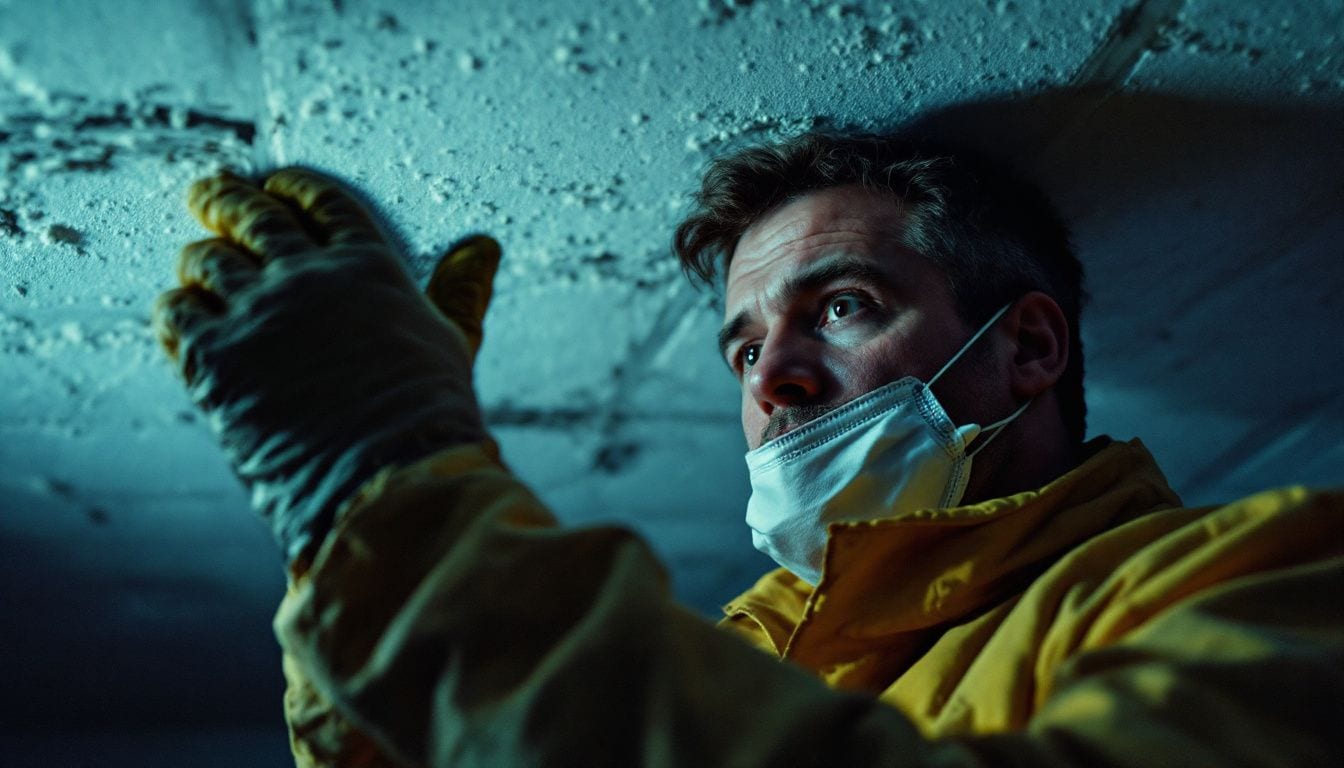
Why Asbestos Awareness Remains One of the UK’s Most Urgent Public Health Priorities
Asbestos was once considered a wonder material — fireproof, durable, and cheap enough to build into almost everything. For decades it was woven into the fabric of Britain’s homes, schools, hospitals, and offices. Today it remains the single largest cause of work-related deaths in the UK, and awareness education is one of the key steps in combating asbestos-related health risks in the UK.
Millions of people live and work in buildings that still contain it, often without any idea it’s there. That’s not a scare story — it’s a fact that demands a response.
The critical point is this: asbestos in good condition and left undisturbed does not automatically pose a risk. The danger comes from ignorance — from drilling into walls, ripping out ceiling tiles, or stripping insulation without knowing what lies behind them. Education and awareness are what stand between an uninformed decision and a potentially fatal one.
Understanding the Scale of the Asbestos Problem in the UK
Any building constructed before the year 2000 could contain asbestos-containing materials (ACMs). That covers an enormous proportion of the UK’s built environment — including a significant majority of school buildings, countless NHS facilities, and millions of private homes.
Asbestos was used across a remarkable range of applications:
- Sprayed coatings on structural steelwork and ceilings
- Pipe and boiler lagging
- Ceiling and floor tiles
- Roof sheeting and guttering
- Textured decorative coatings such as Artex
- Insulating boards used in partition walls and fire doors
- Gaskets and rope seals in heating systems
Three main types were used commercially in the UK. Chrysotile (white asbestos) accounts for the vast majority of asbestos found in British buildings. Crocidolite (blue asbestos) and amosite (brown asbestos) were banned earlier due to their particularly high toxicity — blue and brown asbestos were prohibited in 1984, while white asbestos followed in 1999, completing the UK’s full commercial ban.
The ban stopped new installation. It did nothing to remove what was already in place, and that material persists throughout the built environment to this day.
The Health Consequences of Asbestos Exposure
When ACMs are disturbed, microscopic fibres are released into the air. These fibres are invisible to the naked eye, can remain airborne for hours, and once inhaled cannot be expelled by the body. Over time, they cause irreversible damage to lung tissue and surrounding structures.
The diseases caused by asbestos exposure include:
- Mesothelioma — a cancer of the lining of the lungs or abdomen, almost exclusively caused by asbestos exposure. It carries a very poor prognosis and typically presents decades after initial exposure.
- Asbestosis — chronic scarring of the lung tissue that causes progressive breathlessness and significantly reduces quality of life.
- Lung cancer — asbestos exposure substantially increases the risk, particularly in those who have also smoked.
- Pleural plaques — thickening of the lining around the lungs, which can cause pain and breathing difficulties.
- Laryngeal and ovarian cancers — both have been linked to asbestos exposure through occupational and environmental pathways.
What makes these diseases so devastating is the latency period. Symptoms may not appear until 20 to 40 years after exposure, meaning many people diagnosed today were exposed during the 1970s and 1980s when asbestos use was at its peak.
There is no cure for mesothelioma. Prevention — through awareness, education, and proper management — is the only effective strategy.
Awareness Education: Key Steps in Combating Asbestos-Related Health Risks in the UK
The most powerful tool available against asbestos-related disease is knowledge. When workers, building owners, and the general public understand the risks, they make better decisions — and those decisions save lives.
Here is how awareness and education translate into practical protection.
Asbestos Awareness Training for Workers
Under the Control of Asbestos Regulations, employers are legally required to ensure that anyone who may come into contact with asbestos during their work receives appropriate training. This applies to a wide range of trades — not just those working directly with ACMs, but anyone whose work could disturb them.
Asbestos awareness training typically covers:
- The properties of asbestos and why it is dangerous
- The types of ACMs and where they are commonly found
- The health effects of asbestos exposure
- How to recognise materials that may contain asbestos
- What to do if asbestos is suspected or discovered
- Emergency procedures in the event of accidental disturbance
This foundational training must be refreshed regularly — annual refresher training is widely recommended and in many sectors required. Awareness training alone does not qualify workers to work with asbestos, but it equips them to avoid accidental exposure and respond correctly when ACMs are encountered.
Licensed and Non-Licensed Asbestos Work
Not all asbestos work is the same. The Control of Asbestos Regulations distinguish between licensed work, non-licensed work, and notifiable non-licensed work (NNLW), each with different training, notification, and supervision requirements.
Licensed work — such as the removal of sprayed coatings or heavily damaged insulation — must only be carried out by contractors holding a licence issued by the HSE. Workers undertaking this type of work require specific training and medical surveillance.
Non-licensed work carries lower risk but still demands that workers understand what they are dealing with and follow appropriate controls. A building manager who knows the difference between licensable and non-licensable work is far better placed to commission the right contractor and avoid inadvertently putting workers at risk.
The Duty to Manage: What Building Owners Must Know
One of the most important — and least understood — aspects of asbestos law in the UK is the duty to manage. Under Regulation 4 of the Control of Asbestos Regulations, those who have responsibility for non-domestic premises — whether they own them, manage them, or occupy them under a lease — have a legal obligation to manage the risk from asbestos.
This duty requires:
- Finding out whether ACMs are present, and if so, where and in what condition
- Assessing the risk of anyone being exposed to fibres from those materials
- Preparing and implementing a written asbestos management plan
- Reviewing and monitoring that plan regularly
- Providing information about the location and condition of ACMs to anyone who may disturb them
The starting point for fulfilling this duty is a management survey carried out by a qualified surveyor. HSE guidance document HSG264 sets out the standards that surveys must meet, including the qualifications and competence required of surveyors.
If you are responsible for a commercial or public building and you do not have an up-to-date asbestos register, you are likely already in breach of your legal obligations. That is not a position any building manager should be in.
Asbestos in Schools and Public Buildings
Schools present a particular challenge. A significant proportion of UK school buildings were constructed during the post-war era when asbestos use was at its height, and many of those buildings remain in use today.
Asbestos management in schools requires the same rigorous approach as any other non-domestic building — regular surveys, maintained asbestos registers, staff awareness training, and clear communication with contractors. Teachers, caretakers, and other school staff should receive appropriate asbestos awareness training so they understand what to look out for and how to report concerns.
This is not about creating alarm — it is about creating an informed, vigilant workforce that helps maintain safe conditions day to day.
The Legal Framework That Protects People
The UK’s approach to asbestos is underpinned by a robust legal framework. Understanding this framework is itself an important part of public education. The key legislation and guidance includes:
- The Health and Safety at Work etc. Act — the overarching legislation placing duties on employers to protect the health, safety, and welfare of their employees and others affected by their activities.
- The Control of Asbestos Regulations — the specific regulations governing the management, assessment, and removal of asbestos in the workplace. These set out the duty to manage, training requirements, licensing obligations, and standards for asbestos removal.
- HSG264 Asbestos: The Survey Guide — HSE guidance that defines the types of asbestos survey and sets out how they must be conducted.
Enforcement falls primarily to the HSE, which has powers to inspect workplaces, issue improvement and prohibition notices, and prosecute those who fail in their duties. Penalties can be severe — including unlimited fines and custodial sentences in the most serious cases.
Community Campaigns and Public Awareness Beyond the Workplace
Beyond the workplace, broader public awareness is essential. Many people who are not in high-risk trades still encounter asbestos — through DIY home renovations, for example, or simply as residents of older properties who commission building work without understanding the risks.
Effective public awareness campaigns share certain characteristics:
- Clear, jargon-free messaging that explains risk without causing unnecessary panic
- Practical guidance on what to do if asbestos is suspected
- Signposting to reliable sources of information and professional services
- Targeted outreach to communities most likely to encounter asbestos
The HSE runs ongoing public information campaigns and provides extensive guidance on its website. Organisations representing tradespeople, landlords, and building professionals also play a role in disseminating accurate information to their members.
One of the most effective forms of public education is simply making it easier for people to get a survey done. When property owners understand that safe management starts with knowing what is present, they are far more likely to commission a survey before undertaking any work — rather than after an incident has already occurred.
Asbestos Surveys: The Foundation of Safe Management
No amount of general awareness replaces the need for a properly conducted asbestos survey. A survey carried out by a qualified, accredited surveyor is the only reliable way to identify the presence, location, and condition of ACMs in a building.
Management Surveys
A management survey is the standard survey required to manage ACMs in a building during normal occupation. It locates, as far as reasonably practicable, all ACMs in the building that could be damaged or disturbed during normal use and maintenance.
Samples are taken and analysed to confirm whether materials contain asbestos, and the surveyor assesses the condition of any ACMs found. This survey forms the basis of your asbestos register and management plan — both of which are legal requirements for non-domestic premises.
Refurbishment and Demolition Surveys
Before any refurbishment or demolition work takes place, a more intrusive survey is required. A demolition survey must locate all ACMs in the areas affected by the planned work, including those that are hidden or difficult to access. It is fully intrusive and destructive where necessary, and it must be completed before any work begins — not during, and certainly not after.
Commissioning the wrong type of survey, or skipping the survey altogether, is one of the most common ways that workers are put at risk during refurbishment projects.
What Happens After a Survey
Once a survey has been completed, the findings must be acted upon. If ACMs are identified, the duty holder must decide whether those materials can be safely managed in place or whether they need to be removed.
In many cases, encapsulation or careful monitoring is the appropriate response — particularly where materials are in good condition and are unlikely to be disturbed. Where removal is necessary, it must be carried out by a suitably qualified contractor. Professional asbestos removal ensures that fibres are not released into the environment and that all waste is disposed of in accordance with legal requirements.
The survey report, along with records of any remedial work, should be retained and kept up to date as part of your ongoing asbestos management plan.
Practical Steps Every Property Owner and Manager Should Take
If you are responsible for a building constructed before 2000, here is a straightforward action plan:
- Commission a management survey if you do not already have one. This is your legal starting point.
- Review your asbestos register regularly and update it whenever work is carried out or conditions change.
- Ensure contractors are briefed on the location and condition of any ACMs before work begins.
- Arrange asbestos awareness training for relevant staff, including maintenance personnel and facilities managers.
- Commission a refurbishment or demolition survey before any significant building work — no exceptions.
- Use licensed contractors for any removal work that falls within the licensed category under the Control of Asbestos Regulations.
- Keep records of all surveys, risk assessments, and remedial actions. These documents are your evidence of compliance.
None of these steps are optional. They are legal obligations, and more importantly, they are the practical expression of awareness education as a key step in combating asbestos-related health risks in the UK.
Supernova Asbestos Surveys: Protecting People Across the UK
Supernova Asbestos Surveys has completed over 50,000 surveys nationwide, working with property managers, local authorities, schools, housing associations, and commercial landlords to help them meet their legal obligations and protect the people in their buildings.
Whether you need a survey in the capital or further afield, our qualified surveyors are available across the country. We provide asbestos survey London services for properties throughout Greater London, as well as dedicated coverage in the North West through our asbestos survey Manchester team and in the Midlands via our asbestos survey Birmingham service.
All our surveys are conducted in accordance with HSG264 by BOHS-qualified surveyors, and our reports are clear, actionable, and produced promptly so you can make informed decisions without delay.
To book a survey or discuss your requirements, call us on 020 4586 0680 or visit asbestos-surveys.org.uk. Our team is ready to help you take the right steps — before a problem becomes a crisis.
Frequently Asked Questions
How do I know if my building contains asbestos?
The only reliable way to know is to commission a professional asbestos survey. Visual inspection alone is not sufficient — many ACMs look identical to non-asbestos materials, and some are hidden within building structures. If your building was constructed before 2000, you should assume ACMs may be present until a survey confirms otherwise.
Is asbestos awareness training a legal requirement?
Yes. Under the Control of Asbestos Regulations, employers must ensure that anyone liable to disturb asbestos during their work receives appropriate asbestos awareness training. This applies to a broad range of trades and occupations, not just those working directly with ACMs. Training must be kept up to date — annual refresher training is widely recommended.
What is the difference between a management survey and a demolition survey?
A management survey is used to locate and assess ACMs during normal building occupation and forms the basis of your asbestos management plan. A demolition survey is a more intrusive investigation required before any refurbishment or demolition work, designed to locate all ACMs — including those that are concealed — in the areas affected by the planned work. Using the wrong type of survey for the task at hand can leave workers exposed to serious risk.
Can I remove asbestos myself?
In most cases, no. The Control of Asbestos Regulations require that certain categories of asbestos removal — including sprayed coatings, pipe lagging, and heavily damaged insulation — are carried out only by HSE-licensed contractors. Even for lower-risk, non-licensed removal tasks, strict controls apply. Attempting to remove asbestos without the appropriate knowledge, training, and equipment is dangerous and potentially illegal.
What should I do if I accidentally disturb asbestos?
Stop work immediately. Evacuate the area and prevent others from entering. Do not attempt to clean up any debris yourself. Contact a licensed asbestos contractor to assess the situation and carry out any necessary decontamination. Depending on the scale of the disturbance, you may also need to notify the HSE. The key is not to panic — but to act promptly and correctly.