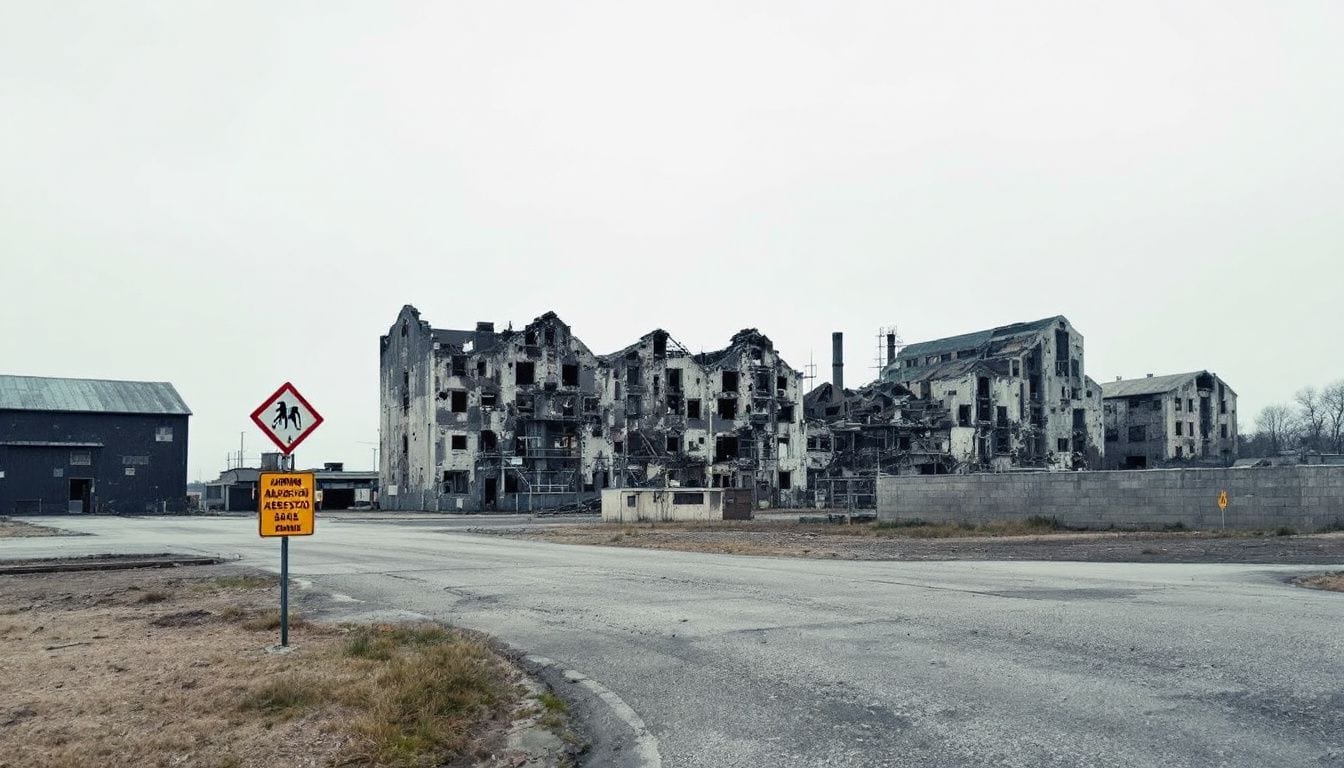
How Industrial Asbestos Use Shaped UK Public Health — And Why the Risk Persists
Asbestos was once celebrated as a wonder material. Cheap, fire-resistant, and extraordinarily versatile, it was woven into the fabric of British industry throughout most of the twentieth century. But tracing the impact of asbestos on UK public health from industry to environment reveals a legacy that continues to claim thousands of lives every year — long after the last asbestos mine closed and the last factory fell silent.
This isn’t a historical curiosity. Asbestos fibres are still present in an estimated 1.5 million UK buildings, from schools and hospitals to offices and homes. Understanding how we got here — and what it means for people living and working in those buildings today — is essential for anyone with responsibility for a property.
What Makes Asbestos So Persistent in the Environment?
Asbestos is a naturally occurring fibrous mineral, and its physical properties are precisely what make it so dangerous over the long term. When asbestos-containing materials are disturbed, they release microscopic fibres into the air. Those fibres don’t simply disappear — they can remain suspended in indoor air, settle into soil, and contaminate water sources for decades.
There are six recognised types of asbestos, but the three most commonly found in UK buildings are:
- Chrysotile (white asbestos) — the most widely used, found in roofing sheets, floor tiles, and pipe lagging
- Amosite (brown asbestos) — frequently used in insulation boards and ceiling tiles
- Crocidolite (blue asbestos) — considered the most hazardous, used in pipe insulation and spray coatings
Amosite and crocidolite have straight, needle-like fibres that penetrate deep into lung tissue and are extremely difficult for the body to expel. Even chrysotile, once thought to be less harmful, is now classified as a Group 1 carcinogen by the World Health Organisation.
Indoor environments where asbestos-containing materials have degraded can contain significant concentrations of fibres per cubic metre of air. There is no known safe level of exposure.
Tracing the Impact of Asbestos on UK Public Health: The Industrial Origins
Britain’s industrial heartlands — the shipyards of Glasgow and Belfast, the textile mills of Lancashire, the construction sites that rebuilt post-war Britain — were ground zero for mass asbestos exposure. Workers handled raw asbestos with little or no protection, often in poorly ventilated environments where fibres were visibly floating in the air.
Sites such as the Cape Asbestos factory in Barking became synonymous with occupational disease. Shipyard workers were particularly at risk, as asbestos was used extensively for lagging pipes, insulating engine rooms, and fireproofing hulls.
Many of these workers inadvertently brought fibres home on their clothing, exposing family members who had never set foot in an industrial building. The contamination didn’t stay within factory walls — asbestos fibres released into the atmosphere settled on surrounding land and in local waterways, creating environmental exposure that had nothing to do with occupational risk.
When Did the UK Act?
Regulation came, but slowly. Blue and brown asbestos were banned in 1985, but white asbestos remained in use until 1999. By that point, decades of industrial use had already embedded asbestos into the built environment on a massive scale.
The Control of Asbestos Regulations now set clear obligations for employers, building owners, and contractors — but they cannot undo the legacy of what came before. Hundreds of thousands of commercial premises across the UK are estimated to contain asbestos, and there is no government funding programme to assist property owners with the cost of safe removal.
The Health Consequences: Diseases That Take Decades to Appear
One of the most troubling aspects of tracing the impact of asbestos on UK public health is the latency period involved. Asbestos-related diseases typically take between 20 and 50 years to develop after initial exposure. This means people who worked in asbestos-heavy industries in the 1960s and 1970s are still being diagnosed today.
Approximately 5,000 people die from asbestos-related diseases in the UK every year. The principal conditions include:
- Mesothelioma — a cancer of the lining of the lungs, abdomen, or heart, almost exclusively caused by asbestos exposure. Around 2,500 people are diagnosed annually in the UK, and the prognosis remains poor.
- Asbestos-related lung cancer — distinct from mesothelioma, this form of lung cancer is directly attributable to fibre inhalation and carries a similarly serious outlook.
- Asbestosis — a chronic scarring of lung tissue caused by prolonged exposure, leading to progressive breathlessness and reduced lung function.
- Pleural thickening and pleural plaques — non-malignant changes to the lung lining that can cause significant respiratory impairment.
The average latency period for mesothelioma is around 32 years, though cases have been recorded up to 50 years after first exposure. This delayed onset means the full scale of historical industrial exposure is still working its way through the population.
Who Is Still at Risk Today?
The risk hasn’t been confined to former factory workers. Healthcare workers in older hospital buildings, teachers in schools built before the 1980s, and tradespeople who routinely disturb asbestos-containing materials during maintenance work all face elevated risk.
Children are particularly vulnerable because their developing lungs are more susceptible to fibre retention — a sobering consideration given the number of pre-1980s school buildings still in active use across the UK.
Tradespeople — electricians, plumbers, carpenters, and decorators — remain among the highest-risk groups today. Their work routinely brings them into contact with asbestos-containing materials in older properties, often without their knowledge. This is precisely why robust asbestos management in buildings isn’t just a legal formality — it’s a matter of life and death for the people working in them.
Environmental Contamination Beyond the Workplace
The environmental dimension of asbestos contamination is frequently overlooked in discussions that focus on occupational exposure. But the pathway from industry to environment is well established, and its public health implications extend far beyond factory gates.
Asbestos fibres released during manufacturing, demolition, and improper disposal have contaminated soil and water in communities across the UK. The scale of this environmental legacy is significant:
- Fly-tipping of asbestos waste — which remains a persistent problem — spreads contamination into parks, open land, and drainage systems
- Demolition of older industrial buildings without proper encapsulation or removal procedures continues to release fibres into surrounding environments
- Once in the environment, asbestos fibres are extraordinarily stable — they do not biodegrade and are not neutralised by weathering
They simply persist, posing a risk to anyone who disturbs contaminated ground or breathes air near a disturbed site.
Asbestos in Water Supplies
Older water infrastructure — including asbestos cement pipes used extensively in the mid-twentieth century — can release fibres into drinking water supplies as pipes age and degrade. While the current scientific consensus suggests that ingested asbestos fibres pose a lower risk than inhaled fibres, this remains an active area of research and a legitimate public health concern.
The degradation of buried asbestos cement pipework is an issue that water utilities and public health bodies continue to monitor closely. It represents one of the less visible but nonetheless real dimensions of the asbestos legacy.
The Legal Framework: What Building Owners Must Do
The UK’s regulatory response to the asbestos legacy is built around a clear legal duty to manage. Under the Control of Asbestos Regulations, owners and managers of non-domestic premises are legally required to identify asbestos-containing materials, assess the risk they pose, and maintain an up-to-date asbestos register.
The HSE’s HSG264 guidance — the definitive reference for asbestos surveying practice in the UK — sets out precisely how surveys must be conducted to meet legal requirements. Failure to comply can result in significant fines and, more critically, serious harm to building occupants and workers.
The three main types of survey that property owners and managers need to understand are:
- A management survey — required for the ongoing management of asbestos in occupied buildings, identifying materials that could be disturbed during normal use and maintenance
- A refurbishment survey — required before any refurbishment or demolition work, providing a more intrusive inspection of all areas to be disturbed
- A re-inspection survey — required at regular intervals to monitor the condition of known asbestos-containing materials and update the risk assessment accordingly
If asbestos is identified and poses an unacceptable risk, professional asbestos removal by a licensed contractor is the appropriate course of action. In many cases, however, well-maintained asbestos in good condition can be safely managed in situ — which is precisely what a management survey and regular re-inspections are designed to support.
For properties where fire safety is also a concern — as it frequently is in older industrial and commercial buildings — a fire risk assessment should be conducted alongside asbestos management activities. The two disciplines often intersect, particularly in buildings where fire-resistant asbestos-containing materials are present.
Practical Steps for Property Owners and Managers
If you own or manage a property built before the year 2000, assume asbestos may be present until a survey proves otherwise. Here’s a practical framework for managing the risk effectively:
- Commission a survey. Don’t guess. A professional survey by a BOHS P402-qualified surveyor will identify exactly what is present, where it is, and what condition it’s in.
- Maintain your asbestos register. Once asbestos-containing materials are identified, they must be recorded in a register and kept up to date. Anyone working on the building must have access to it before they start work.
- Schedule regular re-inspections. The condition of asbestos-containing materials changes over time. Annual re-inspections are standard practice for most commercial premises.
- Never disturb asbestos without appropriate precautions. If you’re planning renovation or maintenance work, always check your asbestos register first and commission a refurbishment survey if needed.
- Use a testing kit for initial checks. If you suspect a material contains asbestos and want a preliminary answer before commissioning a full survey, a professional testing kit allows you to collect a sample safely for laboratory analysis.
If you’re based in the capital, our team provides expert asbestos survey London services across all boroughs. We also cover the North West, with dedicated asbestos survey Manchester services, and the Midlands, where our asbestos survey Birmingham team operates across the wider region.
Why the Asbestos Problem Demands Ongoing Vigilance
It would be comforting to think that the asbestos problem is largely solved — that with the ban in place and regulations on the books, the worst is behind us. The evidence suggests otherwise.
Construction, refurbishment, and demolition activities continue to disturb asbestos-containing materials in older buildings every day. Tradespeople who are unaware that a material contains asbestos, or who take shortcuts under time pressure, continue to expose themselves and others to dangerous fibres.
Fly-tipped asbestos waste remains a persistent environmental hazard. The death toll from asbestos-related diseases in the UK is not declining at a rate that suggests the problem is resolving itself. The UK has one of the highest rates of mesothelioma in the world — a direct consequence of the scale of industrial asbestos use during the twentieth century and the long latency periods of the diseases it causes.
Ongoing vigilance is not optional. It is the only rational response to a hazard that remains embedded in the built environment and continues to cause preventable deaths at scale.
The Role of Awareness and Education
One of the most effective tools in reducing ongoing exposure is awareness. When building owners understand their legal obligations, when tradespeople know how to check an asbestos register before starting work, and when the public understands why fly-tipped asbestos waste must be reported and not disturbed, the risk of accidental exposure falls significantly.
Organisations such as the HSE and Mesothelioma UK continue to produce guidance and support resources for those affected by asbestos-related disease and those seeking to manage the risk in their buildings. Engaging with that guidance — and acting on it — is the foundation of responsible property management.
The Generational Dimension
It is worth remembering that the people being diagnosed with mesothelioma today were often exposed to asbestos decades ago — in some cases before many current property managers were born. The decisions made by building owners and managers today will shape the health outcomes of workers and building occupants in the 2040s and 2050s.
That long-term perspective is not alarmist. It is the straightforward consequence of how asbestos-related disease works. Acting responsibly now — commissioning surveys, maintaining registers, scheduling re-inspections, and never disturbing suspected asbestos without proper precautions — is the only way to break the chain of exposure.
Frequently Asked Questions
Is asbestos still a public health risk in the UK today?
Yes. Asbestos is estimated to be present in around 1.5 million UK buildings, and approximately 5,000 people die from asbestos-related diseases in the UK every year. The risk is ongoing because asbestos-containing materials in older buildings continue to be disturbed during maintenance, refurbishment, and demolition work.
Which types of asbestos are most dangerous?
All forms of asbestos are hazardous, but crocidolite (blue asbestos) and amosite (brown asbestos) are generally considered the most dangerous due to their needle-like fibres that penetrate deep into lung tissue. Chrysotile (white asbestos) is also classified as a Group 1 carcinogen and should not be treated as safe.
Who has a legal duty to manage asbestos in buildings?
Under the Control of Asbestos Regulations, owners and managers of non-domestic premises have a legal duty to manage asbestos. This includes identifying asbestos-containing materials, assessing the risk, maintaining an asbestos register, and ensuring that anyone working on the building is aware of its contents before starting work.
What should I do if I think my building contains asbestos?
Do not disturb any suspected material. Commission a professional asbestos survey by a qualified surveyor — either a management survey for an occupied building or a refurbishment survey if you are planning building work. If you want a preliminary check, a professional testing kit can be used to collect a sample for laboratory analysis before a full survey is arranged.
Can asbestos be left in place rather than removed?
In many cases, yes. Asbestos-containing materials that are in good condition and are not likely to be disturbed can be safely managed in situ. A management survey will assess the condition and risk level of any materials found. Where asbestos is damaged, deteriorating, or in a location where it is likely to be disturbed, professional removal by a licensed contractor will be recommended.
Speak to Supernova Asbestos Surveys
Supernova Asbestos Surveys has completed over 50,000 surveys nationwide, working with property owners, facilities managers, and contractors across the UK to identify, manage, and remove asbestos safely and in full compliance with the Control of Asbestos Regulations.
Whether you need a management survey for an occupied commercial building, a refurbishment survey ahead of planned works, or a re-inspection to keep your asbestos register current, our BOHS-qualified surveyors are ready to help.
Call us on 020 4586 0680 or visit asbestos-surveys.org.uk to book your survey or request a quote.