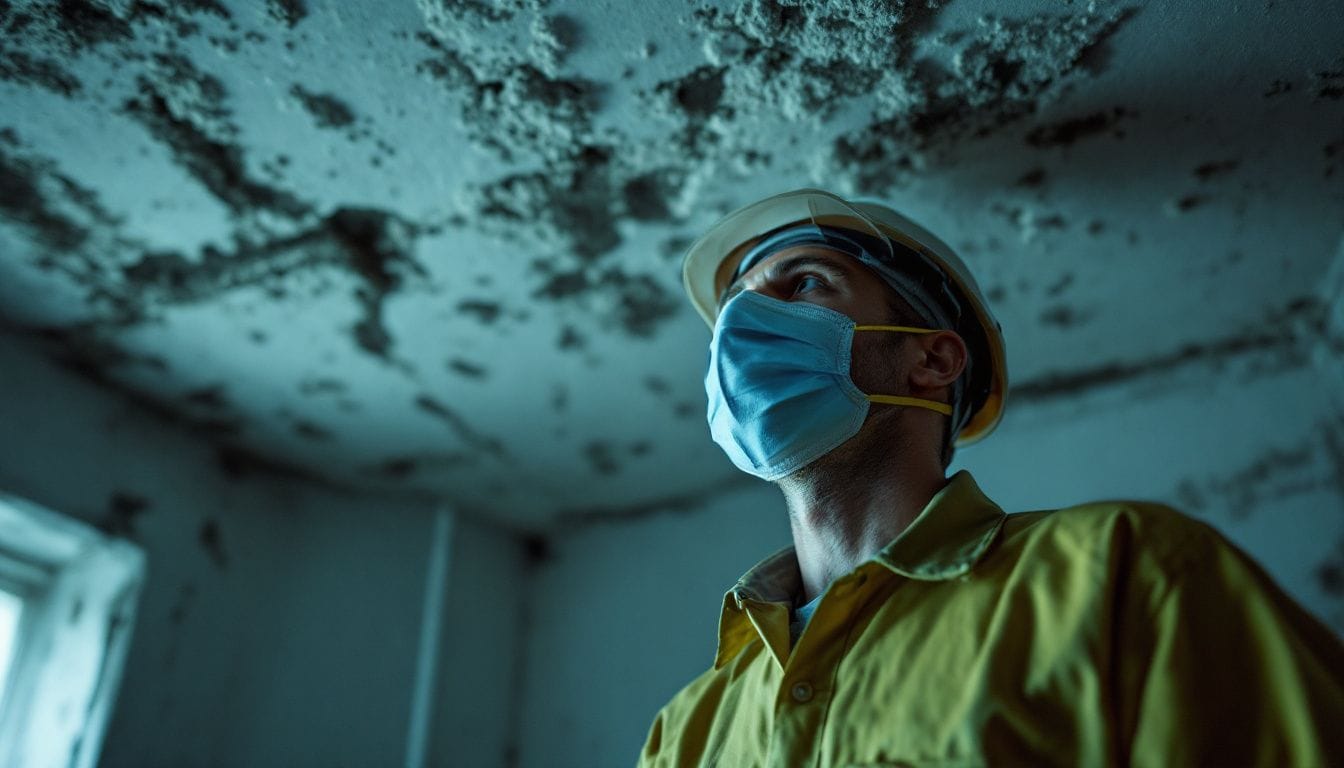
Asbestos Is Still Killing People in the UK — and the Fight Is Far From Over
Asbestos was once celebrated as a wonder material — fireproof, durable, and cheap to produce at scale. Decades later, Britain is still counting the cost. Protecting public health in the fight against asbestos across the UK’s health system, workplaces, and homes remains one of the most urgent safety challenges the country faces.
Despite bans introduced in the 1980s and 1990s, asbestos-containing materials (ACMs) are still embedded in thousands of buildings across Britain, and the diseases they cause continue to claim lives every single year. Many of those deaths stem from exposures that happened a generation ago.
That latency is what makes asbestos so insidious — and why complacency is so dangerous.
How the UK Came to Ban Asbestos: A Hard-Fought Legislative Journey
The UK’s legal response to asbestos was not swift. It was a slow, contested process driven by mounting scientific evidence that the industry resisted for decades. Understanding that journey helps explain why so much ACM-containing built fabric still exists today.
Early Steps Towards Worker Protection
The first formal attempts to regulate asbestos in the UK introduced basic protective measures for workers in asbestos manufacturing. Limited in scope, they nonetheless marked a critical acknowledgement that the material posed genuine risks to human health.
The Health and Safety at Work Act later laid the groundwork for the modern regulatory framework. It established the Health and Safety Executive (HSE) as the primary enforcement body and created a broader duty of care for employers across all industries — including those where asbestos exposure was routine.
The Bans That Changed the Industry
The UK banned blue asbestos (crocidolite) and brown asbestos (amosite) in 1985, recognising these as the most hazardous forms of the mineral. White asbestos (chrysotile) was banned in 1999, completing a total prohibition on the importation, supply, and use of all asbestos types in Britain.
These were landmark moments. But they did not make existing asbestos disappear. Any building constructed before 2000 may still contain ACMs, and those materials remain in place unless disturbed or professionally removed.
The Control of Asbestos Regulations
The Control of Asbestos Regulations represent the current backbone of asbestos law in Great Britain. They set out licensing requirements for high-risk asbestos work, notification duties, and — critically — the duty to manage asbestos in non-domestic premises.
Regulation 4 places a legal obligation on dutyholders to identify ACMs, assess their condition, and maintain an up-to-date asbestos register. Failure to comply can result in significant fines, prosecution, and — most seriously — harm to the people who live or work in your building.
The Scale of the Health Crisis Facing the UK
The UK has one of the highest rates of mesothelioma in the world — a direct consequence of the widespread industrial use of asbestos throughout the twentieth century. Mesothelioma is a cancer of the lining of the lungs, abdomen, or heart, and it is almost exclusively caused by asbestos exposure. There is no cure.
The International Agency for Research on Cancer (IARC) classifies all forms of asbestos as Group 1 carcinogens — meaning the evidence of cancer causation in humans is conclusive. Beyond mesothelioma, asbestos exposure is linked to a significant number of lung cancer deaths in the UK each year.
Asbestosis — a chronic scarring of lung tissue — and other serious respiratory conditions also affect thousands of people exposed decades ago. The latency period for these diseases can be 20 to 50 years, meaning people are still being diagnosed today from exposures that occurred in the 1970s and 1980s.
This is precisely why protecting public health in the fight against asbestos across the UK’s health system cannot be treated as a historical issue — it is happening right now, in real buildings, affecting real people.
Who Is Most at Risk?
Certain groups face compounding risks from ongoing asbestos exposure:
- Construction and maintenance workers — electricians, plumbers, joiners, and decorators regularly work in older buildings where ACMs may be present and undocumented
- Healthcare staff — those working in NHS buildings constructed before 2000 may be unknowingly exposed during maintenance or renovation if asbestos registers are incomplete
- Teachers and school staff — a large proportion of the UK’s school estate was built during the post-war period and still contains ACMs in varying conditions
- Residents in older housing stock — homeowners and tenants can be exposed during DIY work or renovation if ACMs are present and disturbed
- People with pre-existing respiratory conditions — and those first exposed at a young age face the most severe long-term consequences
Asbestos in NHS Buildings and the Wider Health System
The NHS estate is vast, and a significant proportion of it was built during the post-war construction boom — precisely the period when asbestos use was at its peak. Hospitals, health centres, and administrative buildings constructed before 2000 are statistically likely to contain ACMs in some form, whether in insulation, floor tiles, ceiling panels, or pipe lagging.
This creates a unique and serious challenge. Healthcare environments must remain operational around the clock, with patients, staff, and visitors moving through these buildings constantly. Any disturbance of ACMs — during maintenance, renovation, or emergency repair work — carries the risk of fibre release into occupied spaces.
What the HSE Requires of Healthcare Dutyholders
The HSE requires dutyholders in non-domestic premises, including NHS trusts and healthcare providers, to conduct regular asbestos surveys and maintain accurate asbestos registers. The starting point for any building is a management survey — a thorough inspection that identifies the location, type, and condition of ACMs so that an informed management plan can be developed and maintained.
Where renovation or refurbishment work is planned, a refurbishment survey is legally required before any work begins. This is a more intrusive inspection that ensures no ACMs are disturbed without proper precautions in place — a requirement that applies equally to a ward upgrade in a hospital and a kitchen refit in a small commercial property.
For buildings where full demolition is planned, a demolition survey is required. This is the most thorough form of asbestos survey, covering every accessible area of the structure to ensure all ACMs are identified and safely managed before any demolition work proceeds.
In buildings where ACMs have already been identified, the condition of those materials must be regularly reassessed. A periodic re-inspection survey — typically carried out annually — ensures the asbestos register remains accurate and reflects any changes in the condition of known materials. This is a legal expectation, not an optional extra.
Managing Asbestos Safely: A Practical Guide for Dutyholders
If you manage or own a non-domestic building — whether that is a hospital, school, office, or commercial property — you have clear legal responsibilities under the Control of Asbestos Regulations. Here is what effective asbestos management looks like in practice.
Step 1: Commission a Professional Survey
The first step is always to find out what you are dealing with. A qualified surveyor will carry out a thorough inspection of the property, take samples from suspect materials, and send them to a UKAS-accredited laboratory for analysis.
Results are used to produce a detailed asbestos register and a risk-rated management plan. If you are based in the capital, an asbestos survey in London can typically be arranged within days, with a full written report delivered in line with HSG264 guidance.
Step 2: Test Before You Disturb Anything
If you are unsure whether a material contains asbestos, do not disturb it. Commission asbestos testing before any work begins. Samples are analysed under polarised light microscopy at a UKAS-accredited laboratory, giving you a definitive result.
For smaller-scale situations where a full survey is not immediately practical, a testing kit can be used to collect samples safely for laboratory analysis — a straightforward and cost-effective first step that gives you documented evidence before any tradesperson puts a drill through a wall.
Step 3: Use Proper Controls During Any Work
Where licensed contractors are working with asbestos, strict controls must be in place. This includes appropriate personal protective equipment (PPE), respiratory protective equipment (RPE), and the use of wet methods to suppress airborne fibre release during removal or encapsulation work.
Air monitoring before, during, and after any licensed asbestos work is standard practice and provides a documented record that the environment is safe for re-occupation.
Step 4: Never Attempt DIY Removal
The HSE is unequivocal on this point: DIY asbestos removal is dangerous and, in many cases, illegal. Disturbing ACMs without proper training, equipment, and controls can release millions of invisible fibres into the air.
Professional asbestos removal by licensed contractors is the only safe and legally compliant option for high-risk materials — and this applies to homeowners and commercial dutyholders alike.
The Link Between Asbestos Management and Fire Safety
Asbestos management and fire safety are more closely linked than many property managers realise. In older buildings where ACMs are present, fire damage or structural compromise can disturb asbestos materials and create a secondary contamination risk that complicates emergency response and subsequent remediation.
A thorough fire risk assessment should always be considered alongside your asbestos management plan — particularly in healthcare settings, schools, and multi-occupancy buildings where life safety is paramount. Managing the two disciplines in isolation creates dangerous gaps in your overall safety strategy.
In buildings with known ACMs, fire wardens and emergency responders should be made aware of the asbestos register so that any emergency work — including cutting through walls, ceilings, or pipe runs — can be approached with appropriate caution.
Why Vigilance Cannot Slip: The Ongoing Public Health Challenge
Protecting public health in the fight against asbestos across the UK’s health system is not a problem that resolves itself with the passage of time. The material is still present in millions of square metres of built fabric across Britain. As buildings age, ACMs deteriorate. As refurbishment programmes accelerate, the risk of disturbance increases.
The solution in every case is the same: identify, assess, manage, and monitor. You can find out more about what to expect from the asbestos testing process before booking a survey or requesting samples.
The regulatory framework exists precisely because voluntary compliance alone was never enough. The Control of Asbestos Regulations, underpinned by HSG264 guidance, provide a clear and enforceable structure — but that structure only works when dutyholders take their obligations seriously and act on them.
Buildings do not manage themselves. Asbestos registers do not update themselves. And ACMs in deteriorating condition do not become safer simply because nobody has looked at them recently.
What to Expect From an Asbestos Survey With Supernova
When you book an asbestos survey with Supernova Asbestos Surveys, a BOHS P402-qualified surveyor will contact you to confirm a convenient appointment — often available within the same week. On arrival, the surveyor carries out a thorough visual inspection of the property and takes samples from any materials suspected to contain asbestos.
Samples are sent to our UKAS-accredited laboratory for analysis under polarised light microscopy. You receive a detailed written report that includes a full asbestos register, photographic evidence, condition ratings for each identified material, and a prioritised management plan — all produced in line with HSG264.
Our surveyors work across the whole of the UK, from large NHS estates and commercial portfolios to individual residential properties and schools. With over 50,000 surveys completed nationwide, we have the experience and accreditation to support dutyholders at every stage of their asbestos management obligations.
Whether you need a first-time survey, an urgent re-inspection, or specialist support ahead of a refurbishment programme, the team at Supernova is ready to help. Call us on 020 4586 0680 or visit asbestos-surveys.org.uk to book your survey or request a quote today.
Frequently Asked Questions
Is asbestos still a public health concern in the UK today?
Yes, absolutely. Although all forms of asbestos were banned in the UK by 1999, ACMs remain present in a large number of buildings constructed before that date. The diseases caused by asbestos exposure — including mesothelioma, lung cancer, and asbestosis — have a latency period of up to 50 years, meaning new cases are still being diagnosed from historical exposures. The risk of new exposure also remains real wherever older buildings are maintained, refurbished, or demolished without proper asbestos management in place.
Which buildings are most likely to contain asbestos?
Any building constructed or refurbished before 2000 may contain ACMs. This includes NHS hospitals and health centres, schools, offices, factories, and residential properties. The post-war construction boom of the 1950s to 1970s saw particularly heavy use of asbestos in insulation, ceiling tiles, floor tiles, pipe lagging, and textured coatings. If your building dates from this era and has not been professionally surveyed, commissioning a management survey is the essential first step.
What are my legal obligations as a dutyholder under the Control of Asbestos Regulations?
If you own, manage, or have maintenance responsibility for a non-domestic premises, you are legally required to identify whether ACMs are present, assess their condition and risk, produce and maintain an asbestos register, and develop a written management plan. You must also share this information with anyone who may disturb ACMs during their work. Regular re-inspection of known materials is also required to ensure the register remains current. The HSE’s HSG264 guidance sets out the technical standards that surveys and registers must meet.
Can I remove asbestos myself?
For most ACMs, no. The Control of Asbestos Regulations require that work on licensed asbestos materials — including most forms of asbestos insulation, asbestos insulating board, and sprayed coatings — is carried out only by HSE-licensed contractors. Attempting to remove these materials without a licence is illegal and extremely dangerous. Even for non-licensed work, strict controls and notification requirements apply. Professional asbestos removal by a licensed contractor is always the safest and legally compliant approach.
How often does an asbestos register need to be updated?
An asbestos register must be reviewed and updated whenever the condition of known ACMs changes, or when any work is carried out that may have affected them. In addition, a formal re-inspection survey is typically recommended on an annual basis to check the condition of all identified materials and update the register accordingly. The frequency may increase where materials are in poor condition, in high-traffic areas, or where building works are planned. Keeping your register current is a legal requirement, not a matter of discretion.